

Pop Power
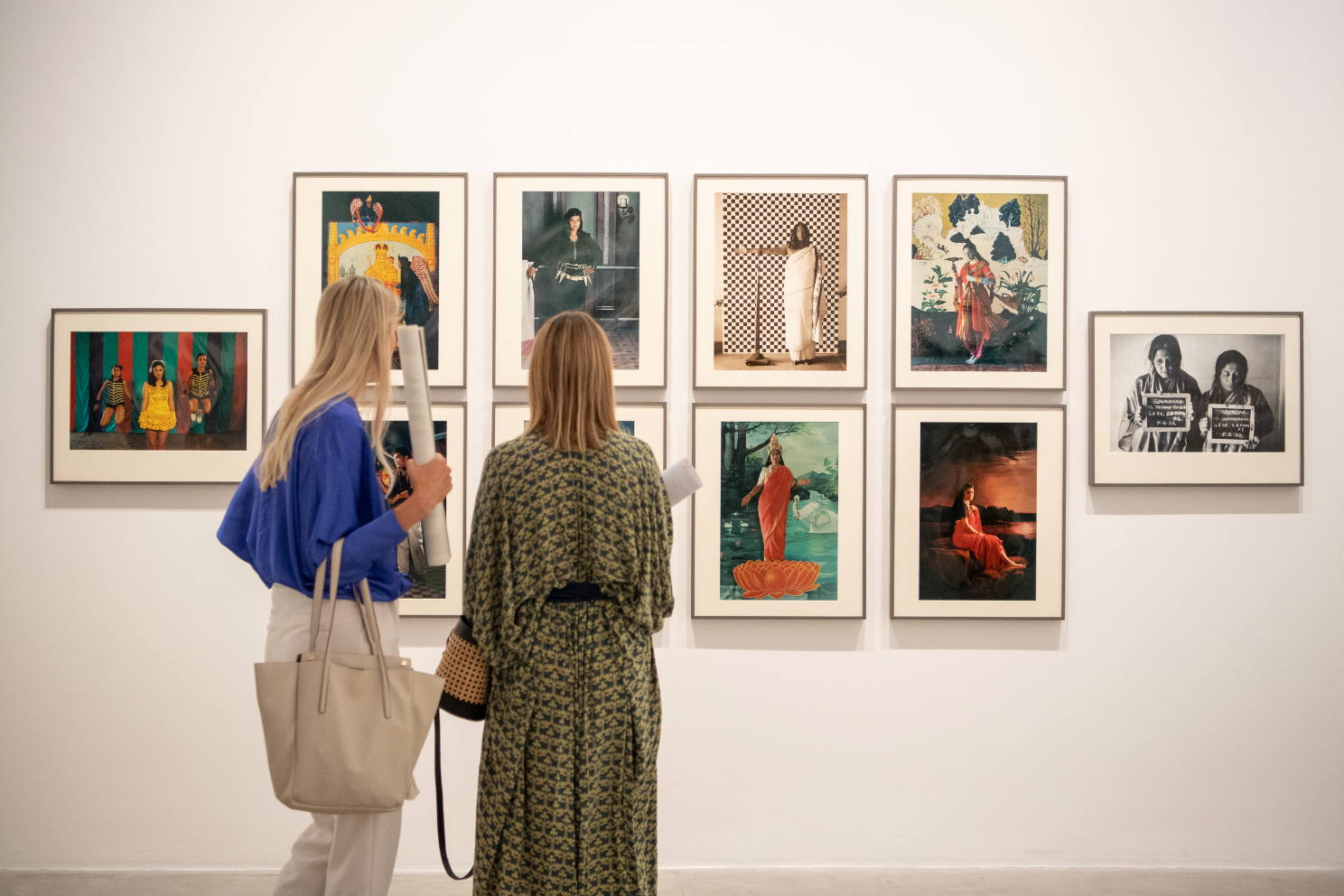
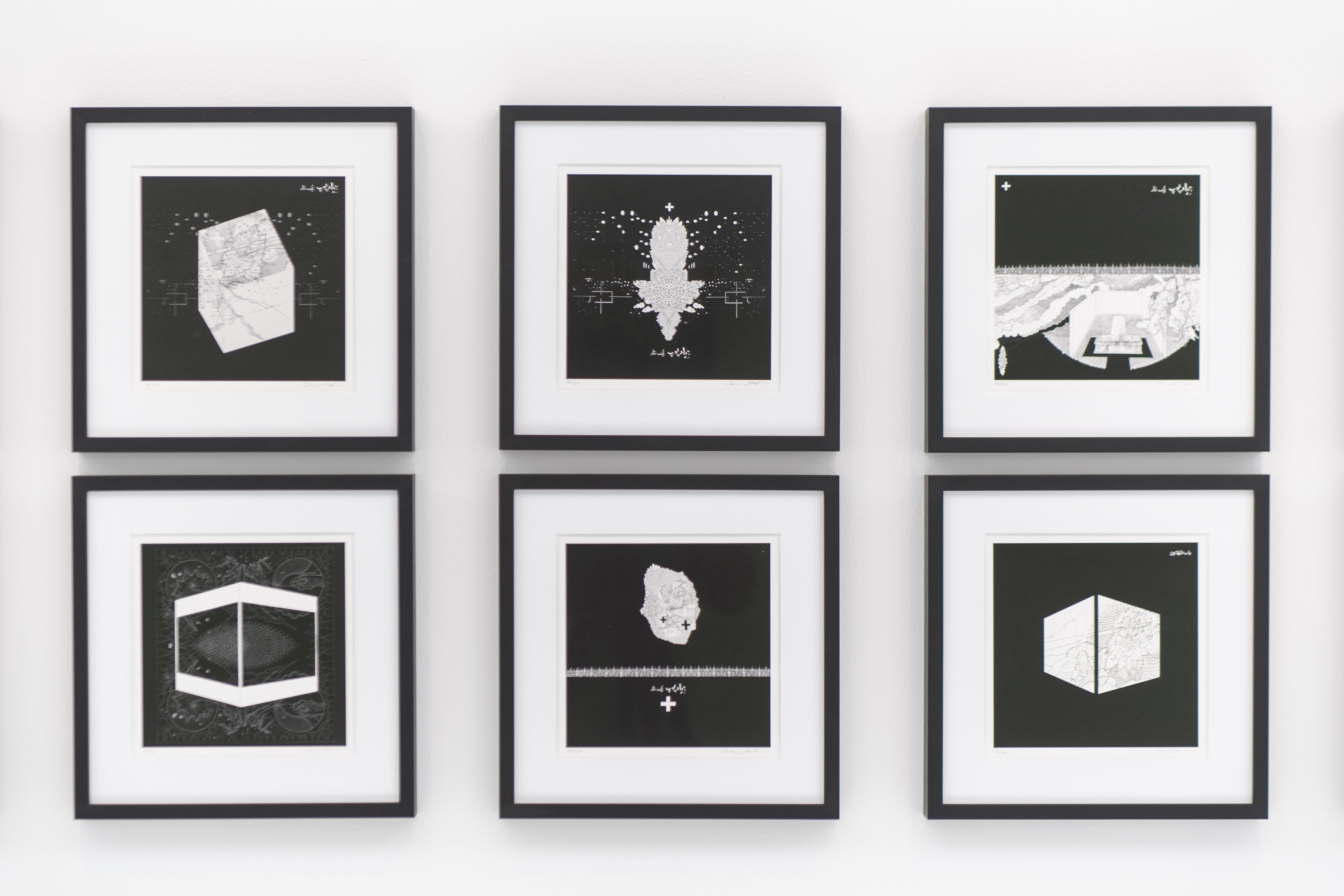
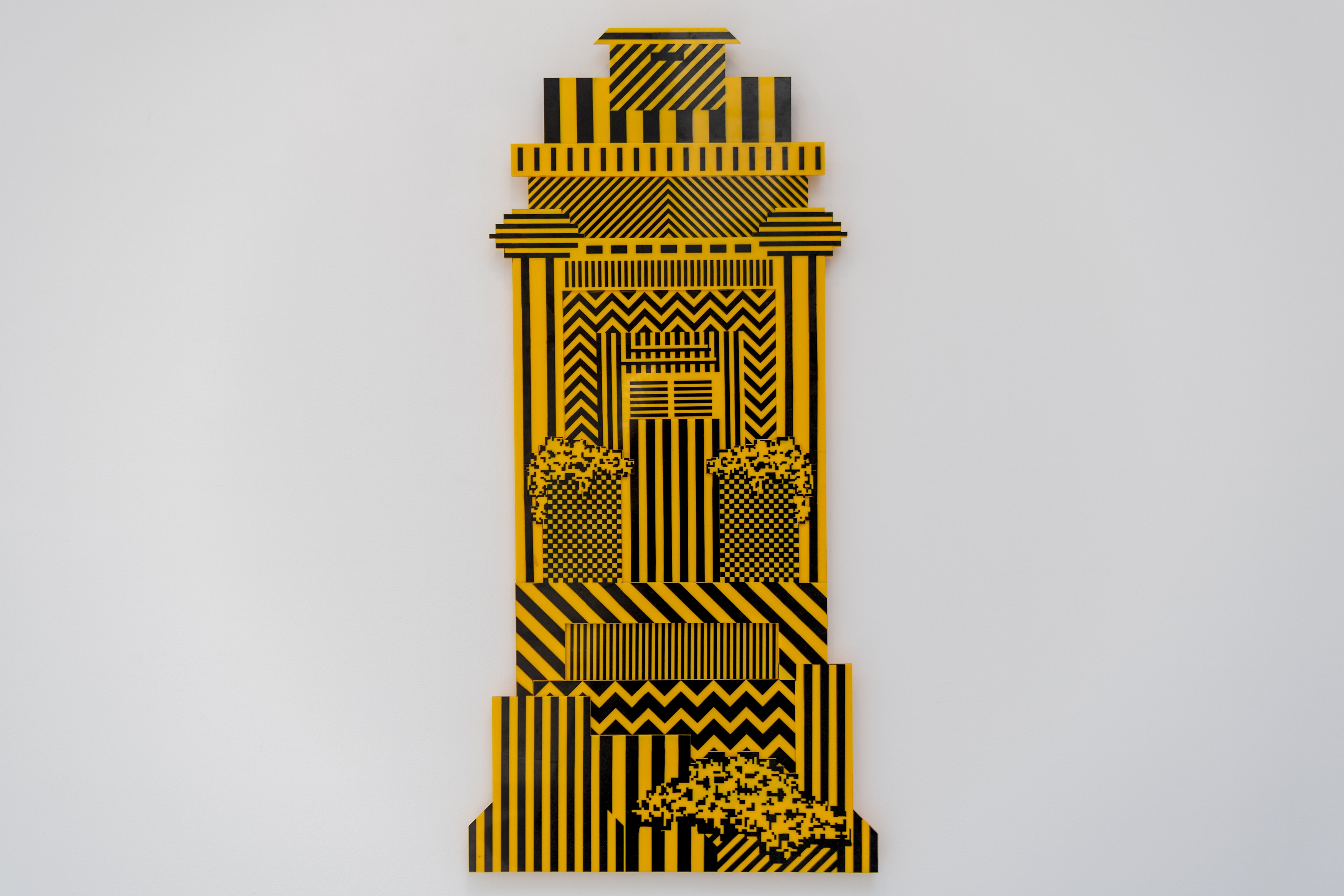
Pop Art has become synonymous with Western origin stories. The term immediately conjures images by icons from Warhol to Lichtenstein, Shepard Fairey and Yayoi Kusama at a stretch. At Sharjah Art Foundation, ‘Pop South Asia’ conveys the extent of the region’s claim to its own vernacular of the form. With more than 100 works from India, Pakistan, Bangladesh, Nepal, Sri Lanka and Afghanistan, curators Iftikhar Dadi and Roobina Karode, widen the scope of what Pop Art means for the region, and the world at large.
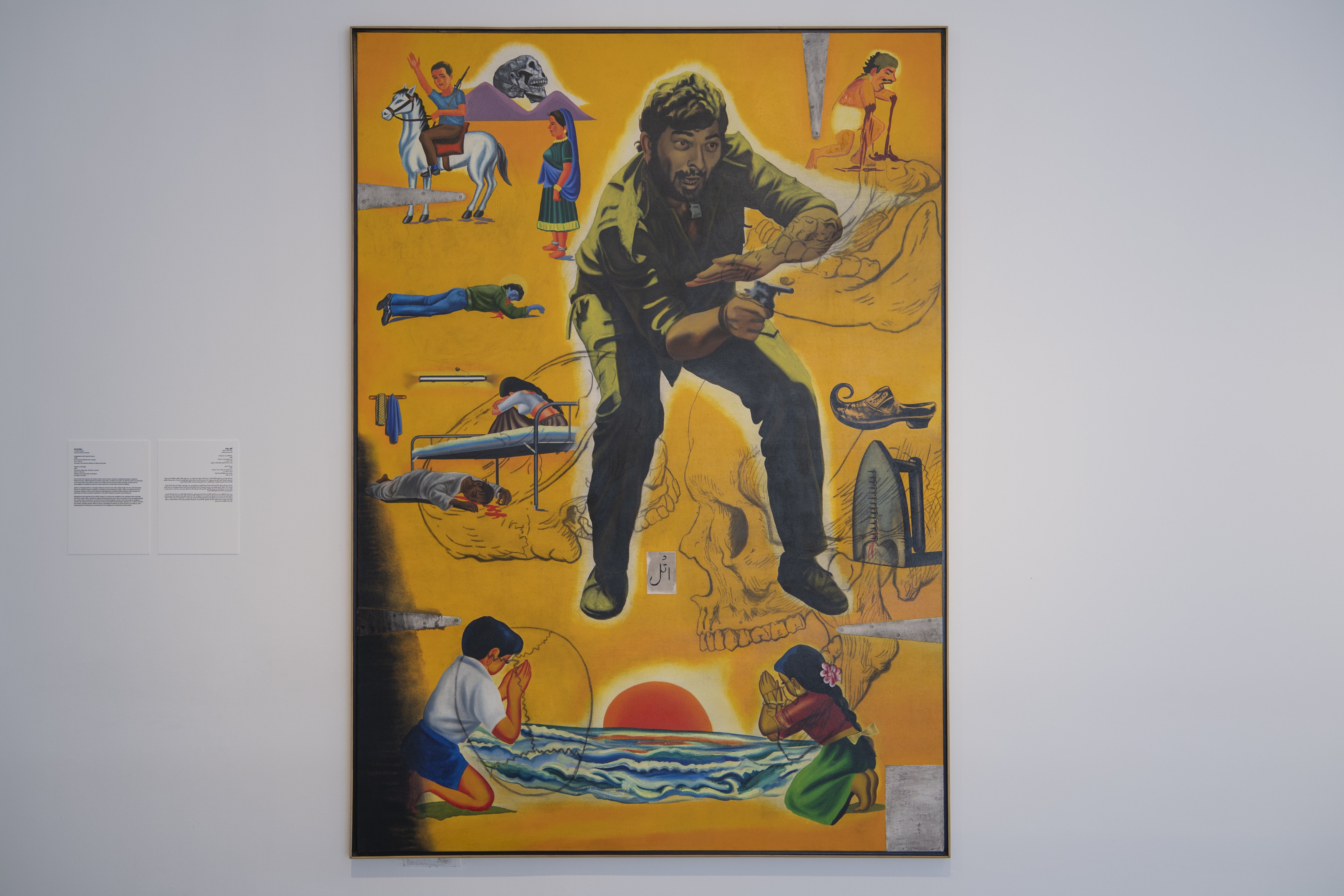
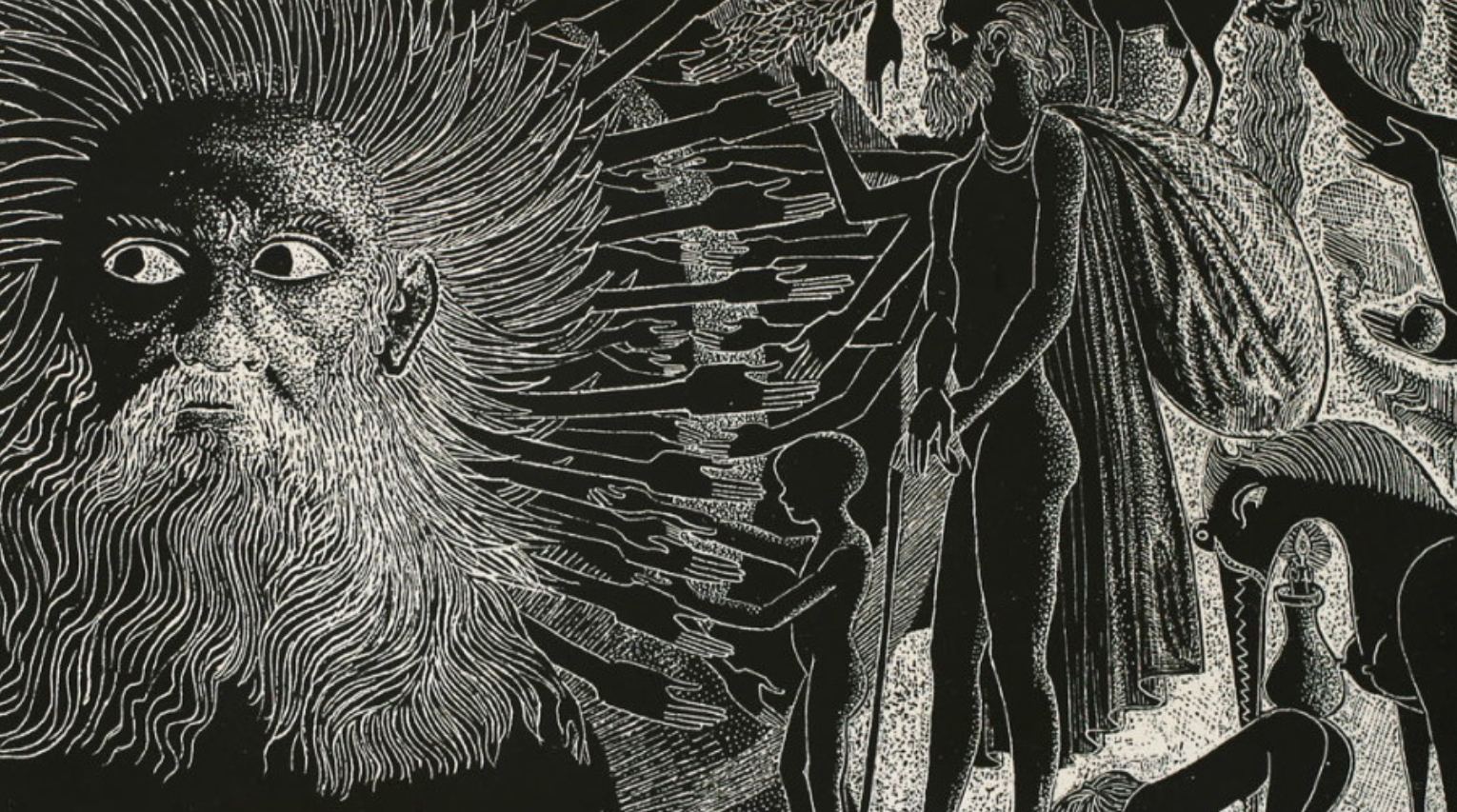
Atul Dodiya’s paintings glean visuals from Bollywood and Hindu mythology to underline the pervasiveness of such symbolism and ideology in everyday Indian life. There’s the legendary film villain Gabbar Singh from the Hindi cinema classic, Sholay (1975) in action as a commanding subject against a backdrop of mustard yellow, pointing a gun while surrounded by symbolic scenes of death and violence in Gabbar on Gamboge (1997). At his feet, two children supplicate towards a sunset in a comment on Indian reverence. In Gangavataran after Raja Ravi Varma (1998), Dodiya recreates a 1930s poster by the artist that depicts the descent of a deity from the heavens, by replacing the central goddess with Duchamp’s Nude Descending a Staircase (1912). Varma is widely considered an unwitting 19th Century pioneer of Indian popular art, having married European realism with his depiction of Hindu mythological figures. Using a lithograph, his express intent was to disseminate the images widely, and for all, despite any associations with elitism considering his birth into an aristocratic family. Duchamp, a forebear of the Dada movement is cited as the enfant terrible who eventually sowed the seeds for Western Pop Art. By bringing the two into the frame, with his own, embracing silhouette in the foreground, Dodiya demonstrates a collage of play, and perhaps his own entry into the conversation on what Pop Art in a wider context might mean.
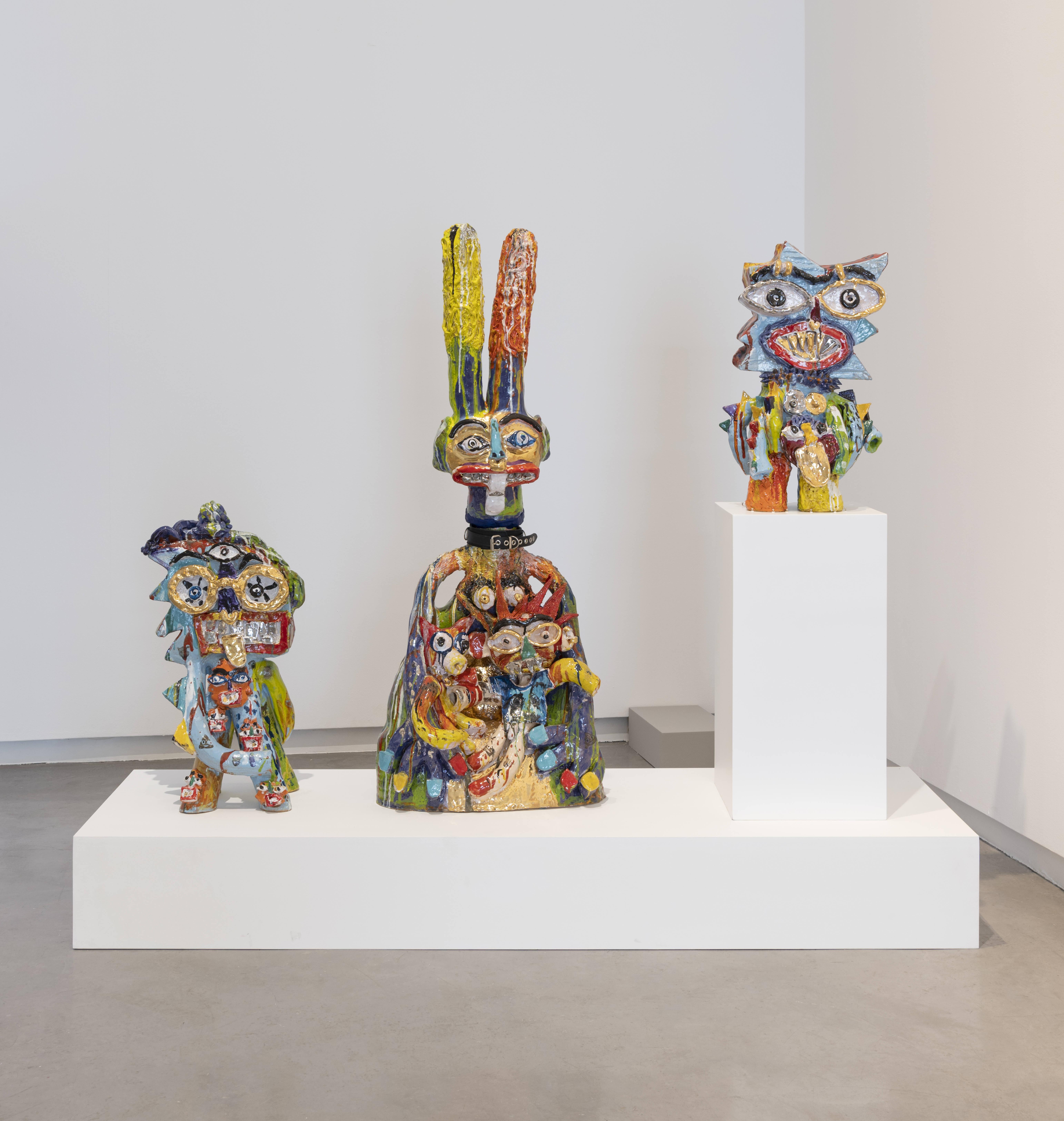
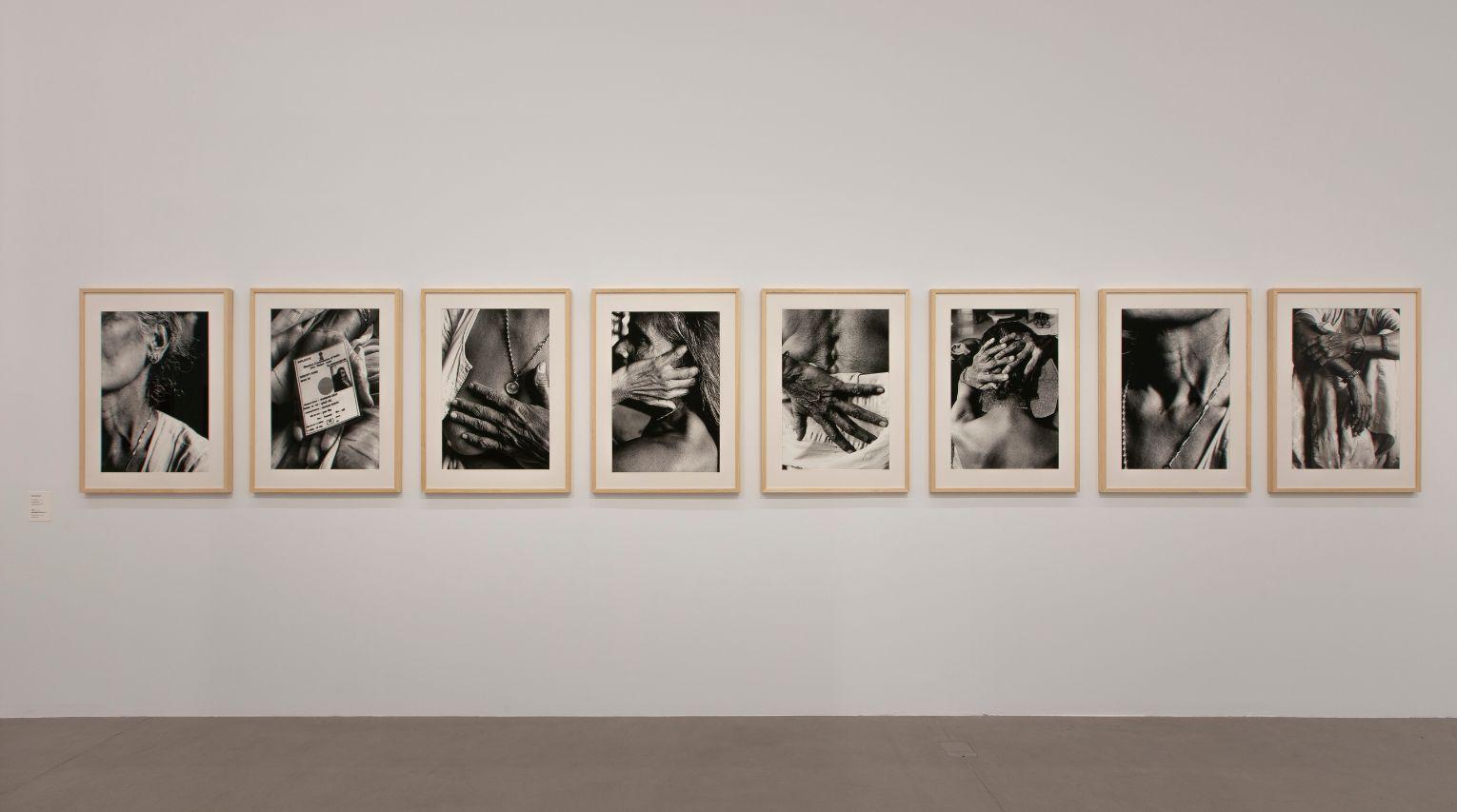
There’s yet more reappropriation and recreation in the show, as in Pushpamala N’s Native Women of India: Manners and Customs (2000-2004), a photographic series that recasts imagery of South Indian women from colonial ethnographic archives, paintings and film in a new, empowering light. Bharti Kher’s sculptural Intermediaries, on the other hand, takes religious figures and turns them into variegated creatures that exude more monstrosity than harmony. There is subversion in her depiction and recreation of some of the self-same idols that Varma so piously committed to canvas.
Such repurposing, questioning and abstraction of the sacred or totemic, to the quotidian, is of course, central to popular art in the region. The works in this survey exhibition chart new territories in the genre, supplying alternative geographies and timelines with artists from varying generations displayed side-by-side, offering a patchwork narrative of the colour, wit and idiom of a region not immediately associated with having its own roots in the popular art timeline. As a reaction to modernism, Pop Art is often attributed to artists who sought to break with tradition in 1960s Britain and the US. The movement’s objective was to poke a finger in the eye of the purported differences between high and low art, and elevate the ordinary to the realms of fine art. ‘Pop South Asia’ seeks to widen this definition by including more of what constitutes mass expression, widely available materials, the socially critical and the popular into the mix.
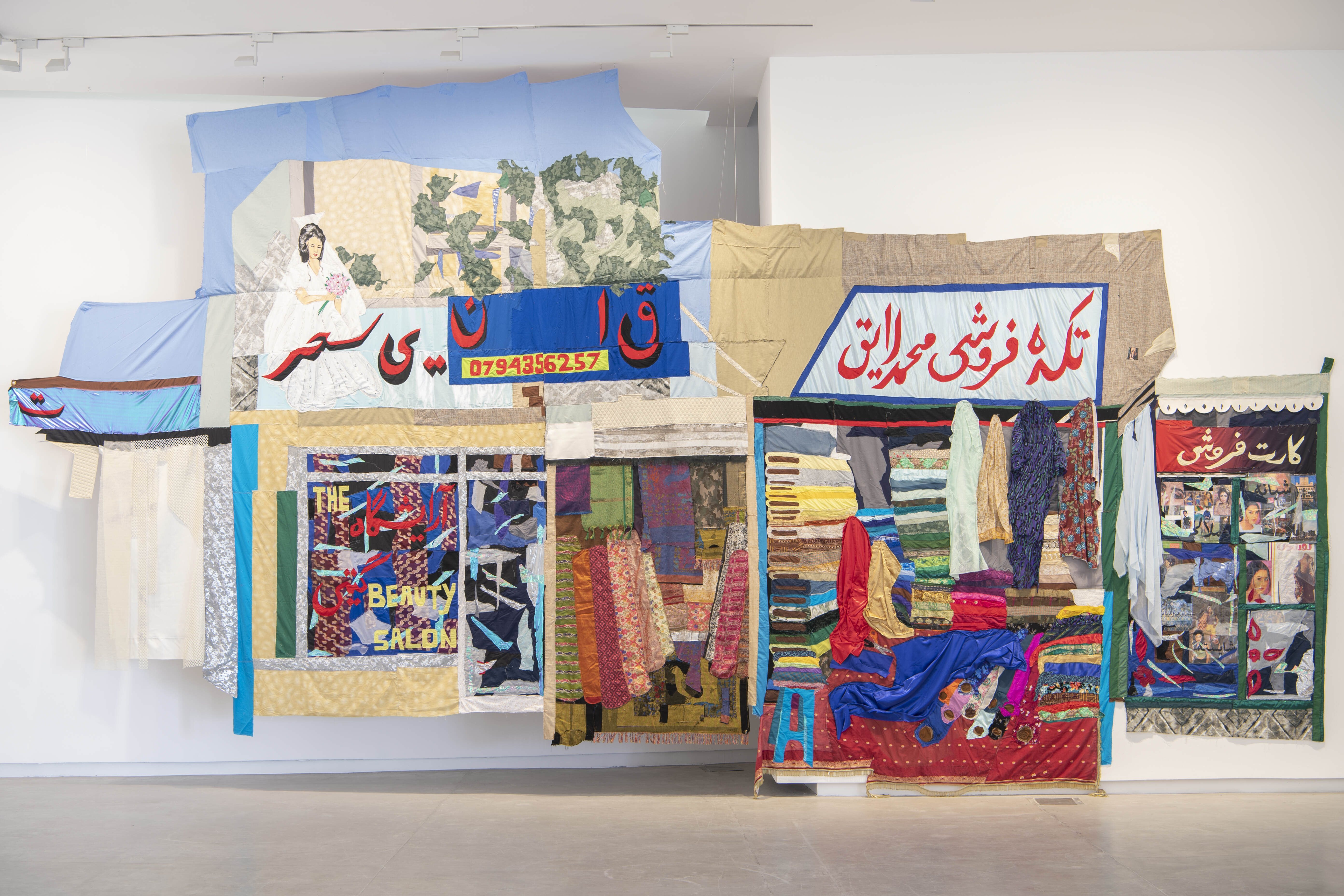
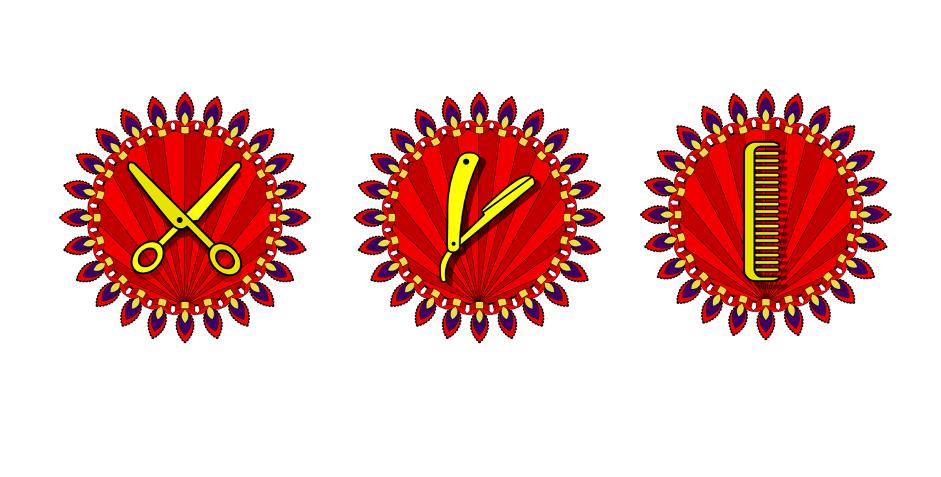
Bhupen Khakhar’s 1972 paintings of tailors and watch repair workers (Janata Watch Repairing; De-luxe Tailors) does much the same, giving us a glimpse into the refuge of modest shopkeepers, in his seemingly child-like, yet vibrant canvases. Jeanno Gaussi also engages in this more humanist approach. For Family Stories (2011-2012), she asked Ustad Sharif Amin, a Kabul-residing billboard and sign painter, to recreate photographs that Gaussi’s family had taken with them when they left Afghanistan. The installation at Sharjah showcases these portraits, fashioned after Afghani billboard ads or pulp fiction cover art and treated to a lavish array of pop colour backgrounds. Likewise, MF Husain’s photographs depicting hand-painted movie posters from the streets of Chennai reflect Amin’s pedestrian style. Ironically, having been a movie poster painter himself, Husain’s use of the photographic lens captures the larger-than-life, technicolour visages of film heroes and heroines, towering over their milling publics below them.
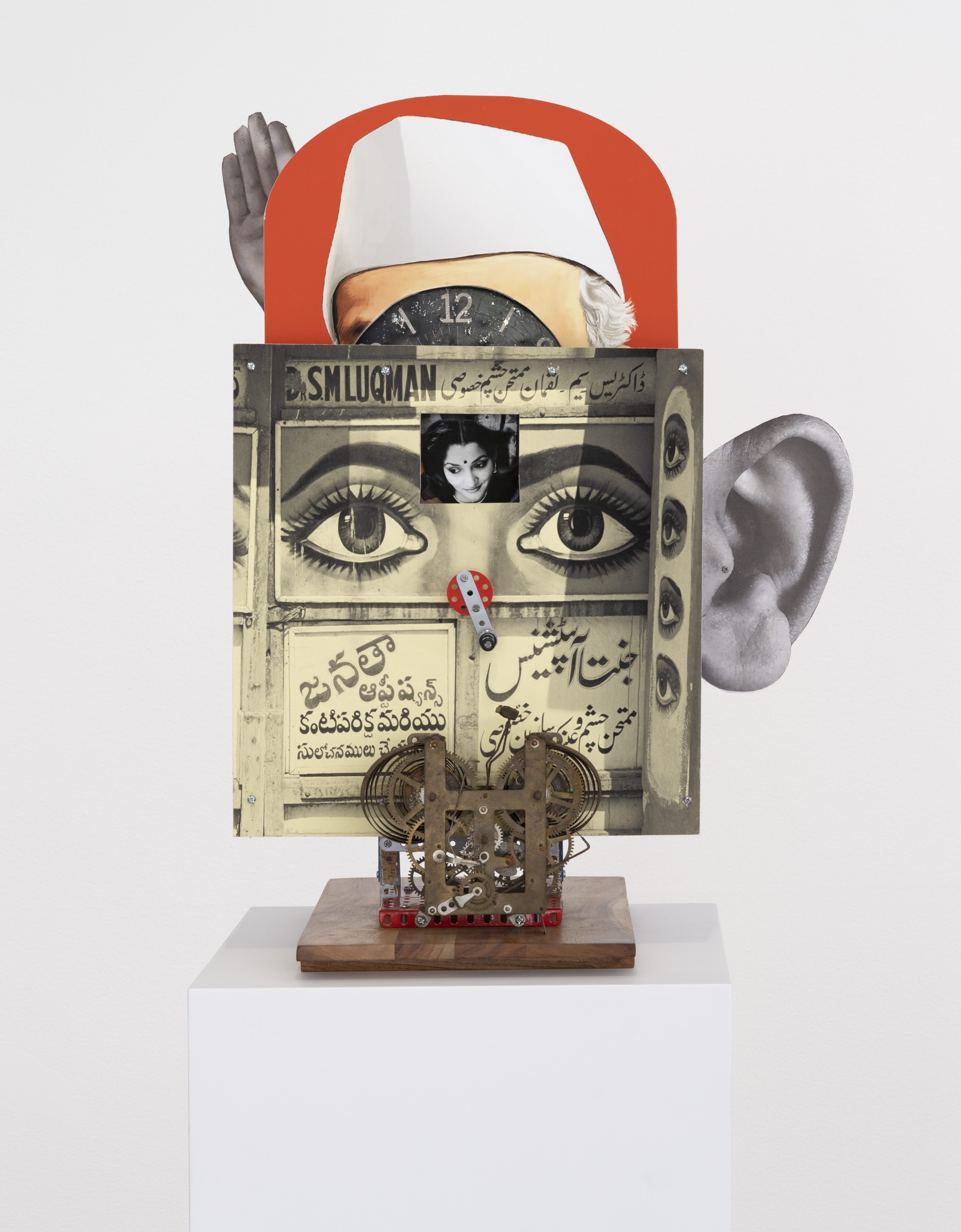
Western Pop Art’s preoccupation with the objects and visuals of consumerism and mass production also comes to the fore in this show, to critical effect. CK Rajan’s Mild Terrors II (1991-1996) is a series of collages that borrows imagery from advertisements and popular media, depicting cutouts of body parts with industrial or historical and urban landscapes. India’s economic liberalisation in the 1990s precipitated the rise of mass consumer culture and brought with it capitalism’s promise of social mobility. But Rajan challenges this notion by constructing a sardonic and unsettling view. By creating jarring juxtapositions of the inequalities of economic disparity, symbolised by human elements and monumental architecture, Rajan suggests that this promise is out of reach for the ordinary Indian.
Shishir Bhattacharjee’s satirical paintings from the 1980s liken autocratic Bangladeshi figures to the grotesque from film posters. In an artist note, Bhattacharjee said that he felt caricature and pop art were the only forms that lent themselves to the situation of Bangladesh in the 1990s, with everything appearing ‘valueless and comical’ in a way that ‘serious painting’ could not communicate.
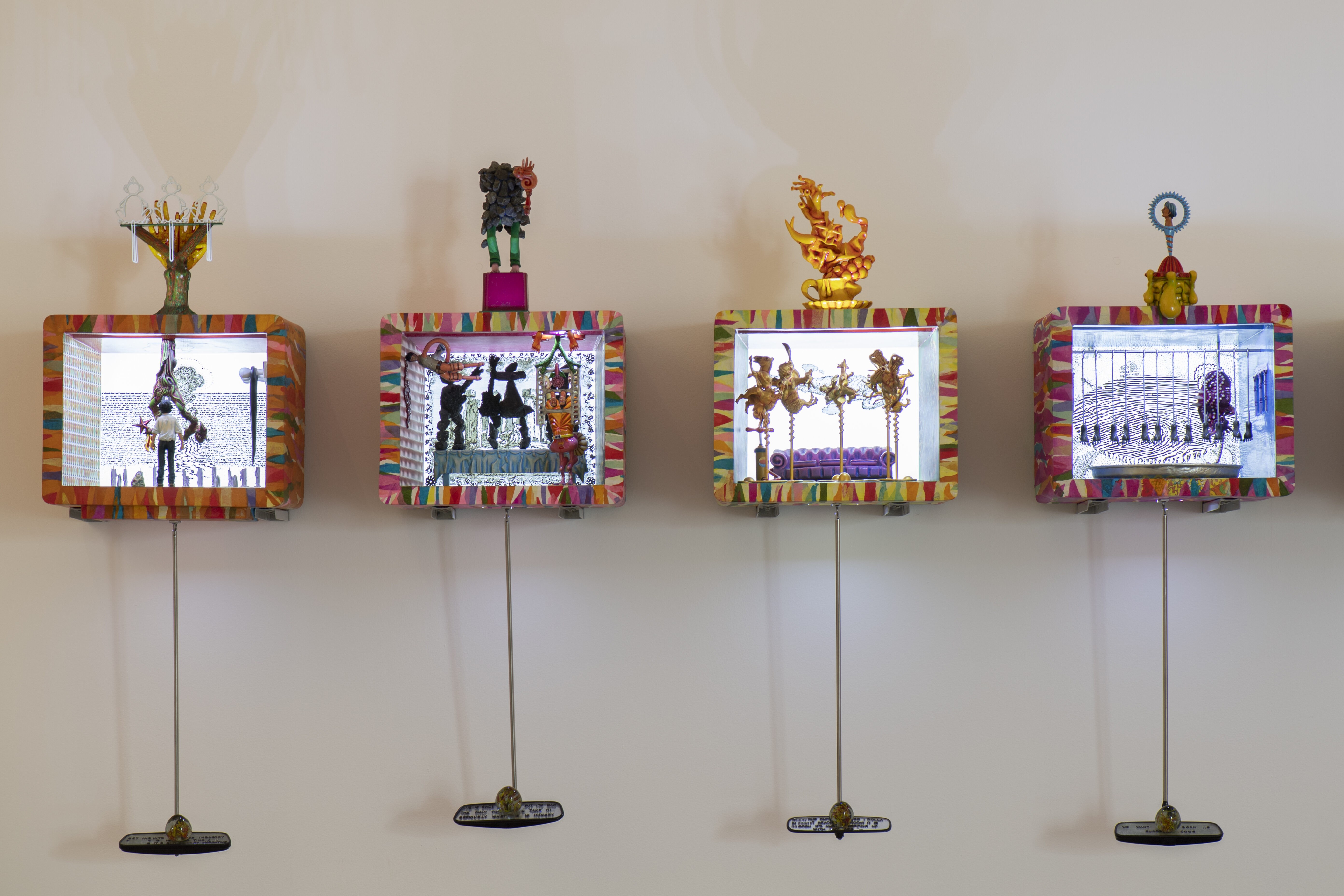
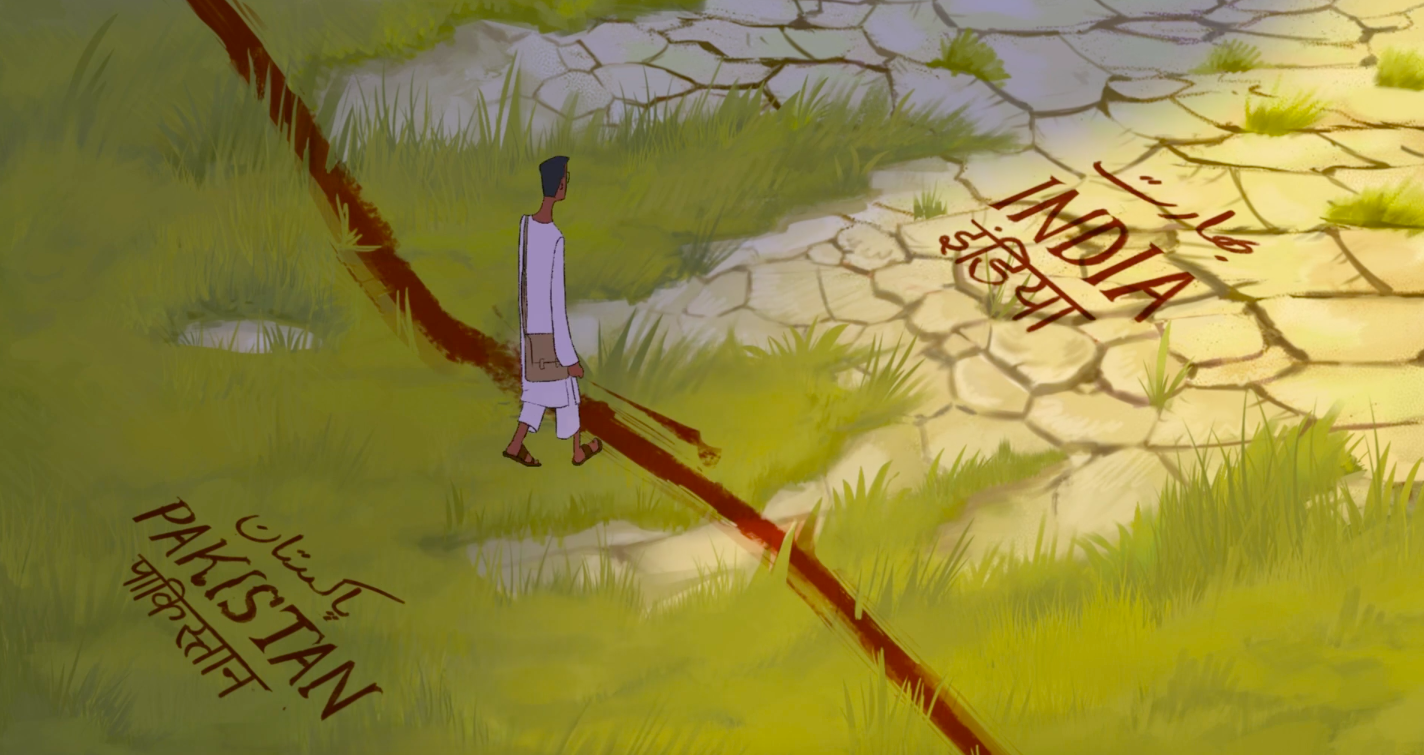
Political commentary can also be found in Saba Khan’s neon cross-stitch pieces that reflect on conflict and culture in present-day Pakistan. Using common kit patterns of fruit and landscape, the artist embeds political codes into the fabric, commenting on Partition, class, and gender. Meanwhile, Anant Joshi presents fantastical and striking dioramas in Happy New Year (2013) that refer to political protests and events from each month of 2013 ー from the anti-corruption protests in India to the aftermath of the Arab Spring. Within each of these is an alternative world filled with ready-mades and trinkets that make use of the seemingly ordinary to manifest larger meanings.
Impressively put together, and a feat in being the first major survey of its kind, ‘Pop South Asia’ seeks to reframe the discussion around Pop Art, asking whether the form exists derivatively if it is given meaning and shape by the accepted definitions that we take from established Western discourse. If we were to drop our notions of existing paradigms of a form, what language might we come to understand using our own visual language, tools, symbols and impetus. In an ongoing conversation of shows relevant to the region, ‘Pop South Asia’ makes good on progressively incorporating voices relevant to the UAE and the wider region with Sharjah Biennale 14, Leaving the Echo Chamber, which interrogated the Global South, and the recent March Meeting that discussed ‘The Afterlives of the Postcolonial.’
‘Pop South Asia’ evinces the power of popular culture on our collective psyches, emphasising it as a tool of influence, politically and artistically. It provides familiarity and fluency with its form of critique and care, and the exhibition offers plenty of moments of exuberance and viscerality, while still giving us something to take home and think about; mainly, that we need to drop the chicken and egg narrative of which came first by accepting that the cross-currents of culture are mutually transformative and extant. As long as we accept that all cultures have their own vocabulary for what constitutes Pop Art, or any other form, we should focus not on proprietary elements of the movement or the strictures of accepted definitions, but explore and seek to redefine, reappropriate and reassemble. ‘Pop South Asia’ stakes a claim to our own definitions of where we stand in the conversation of art and its vocabulary.
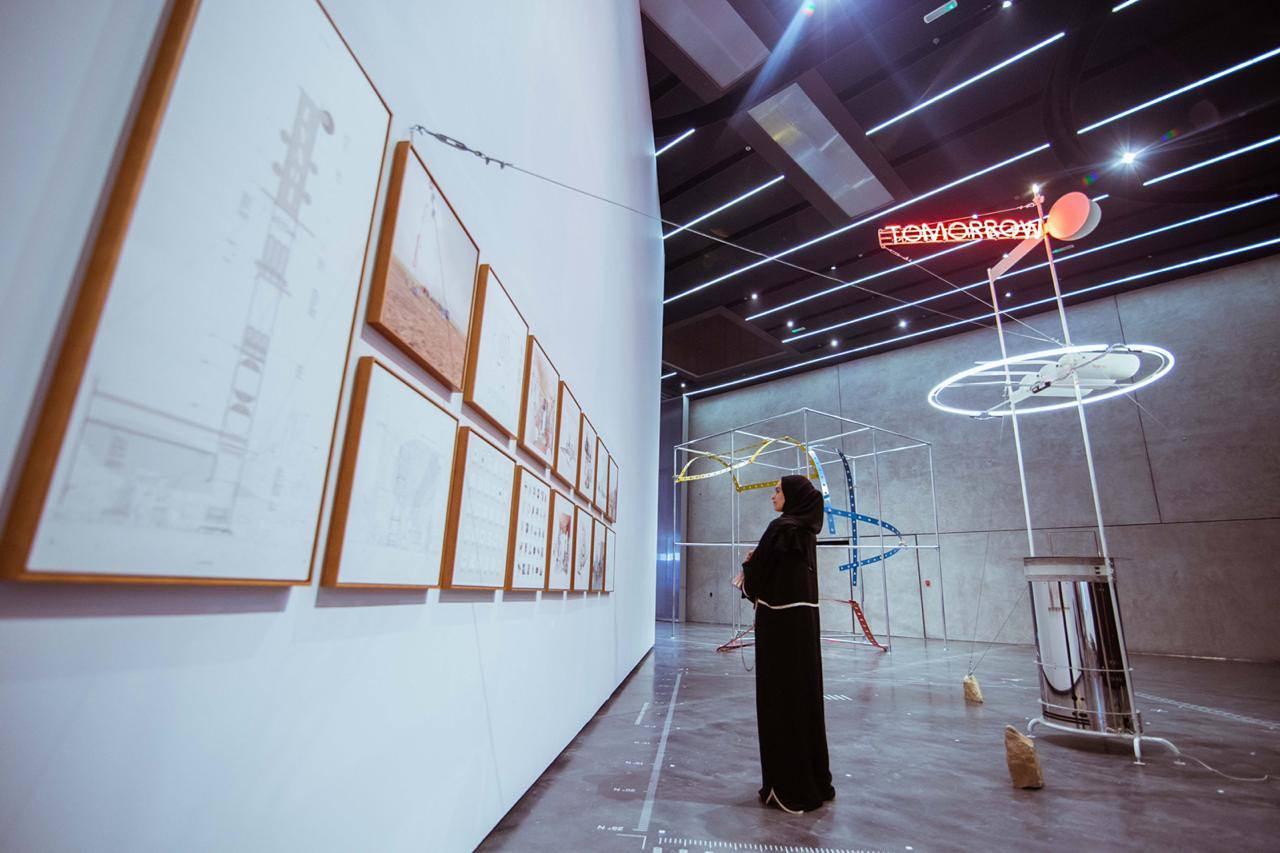
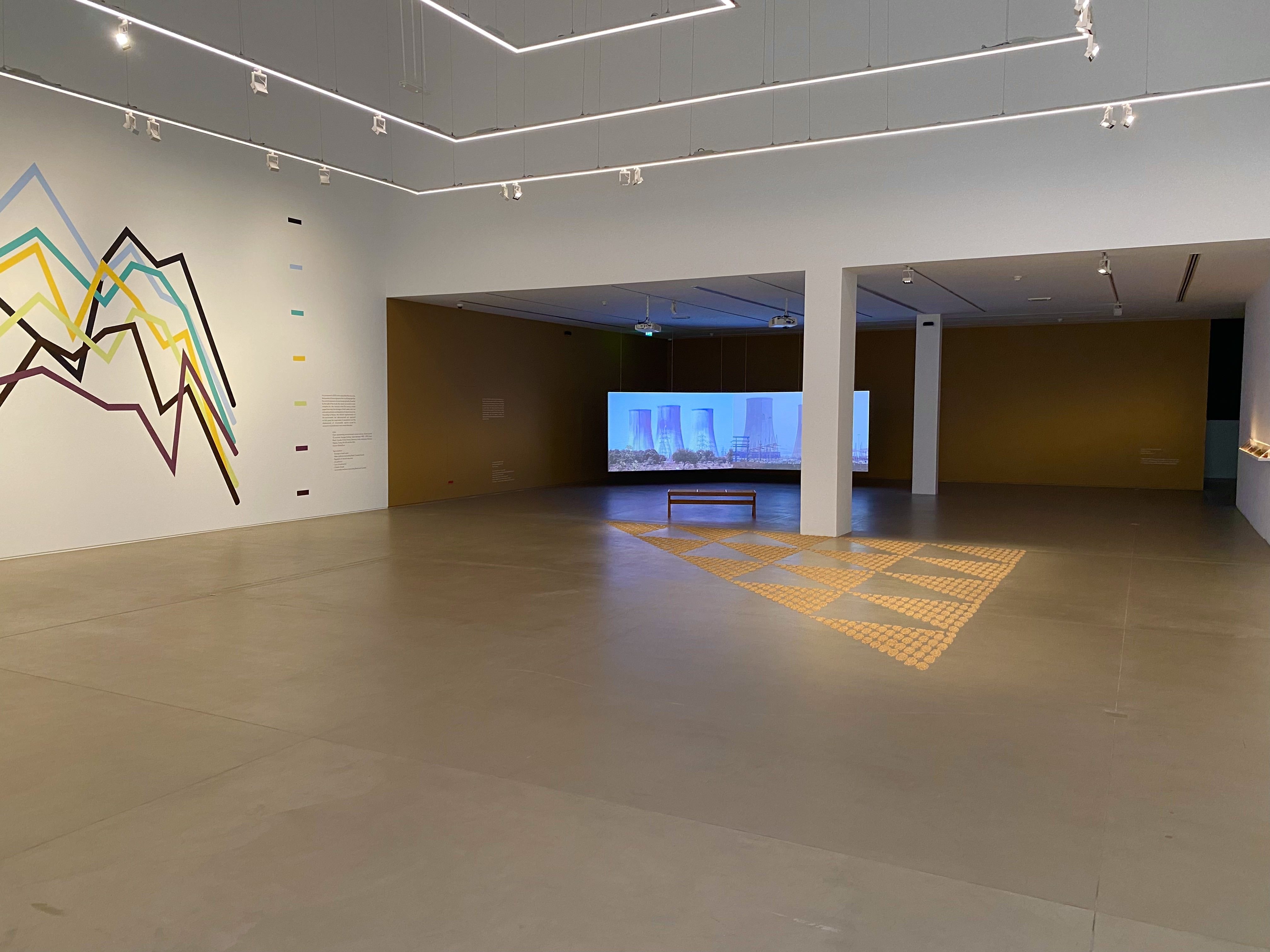
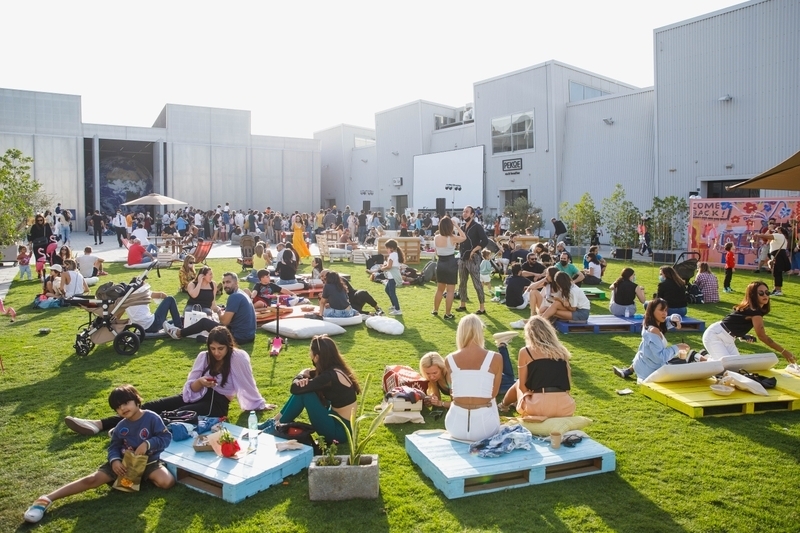
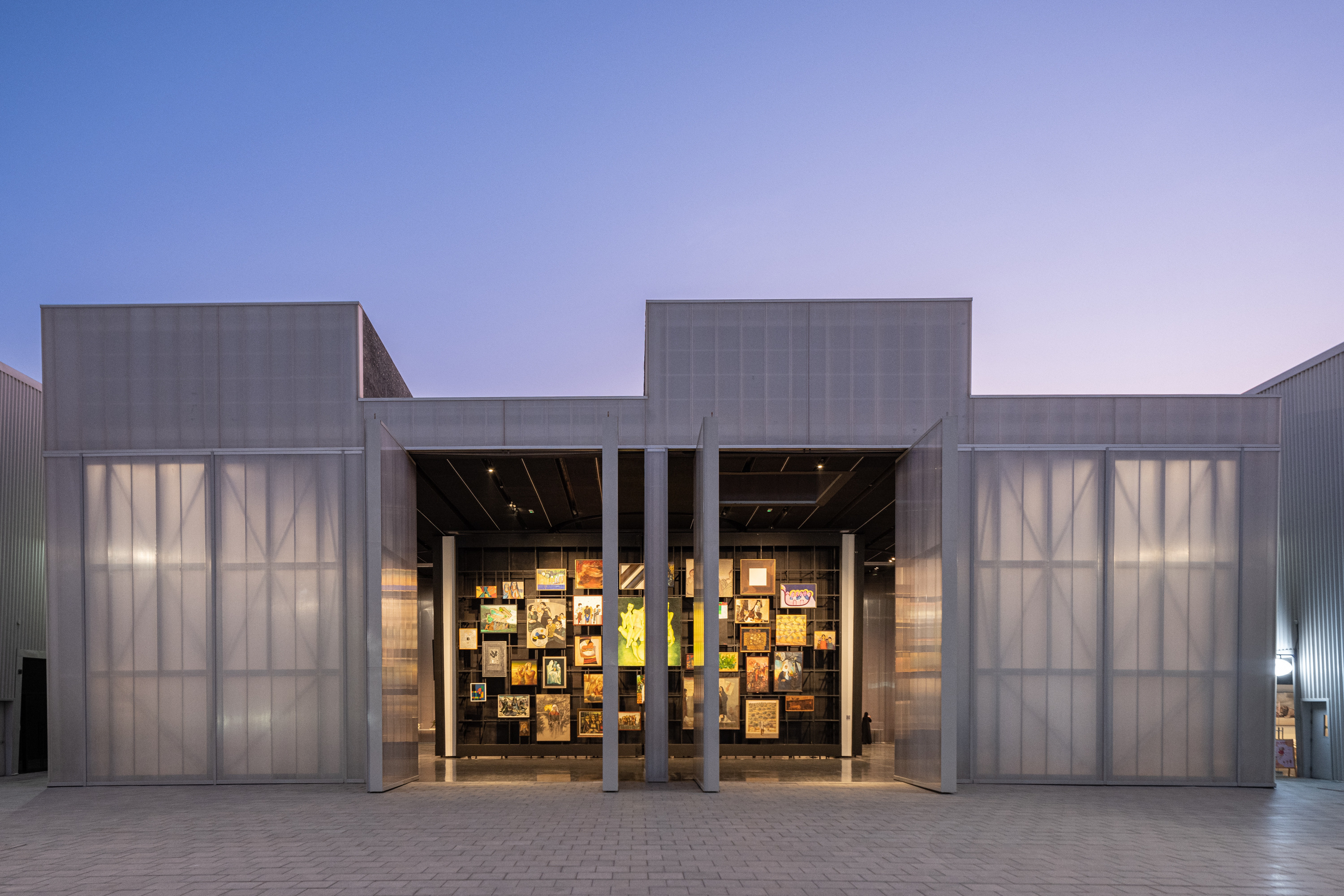
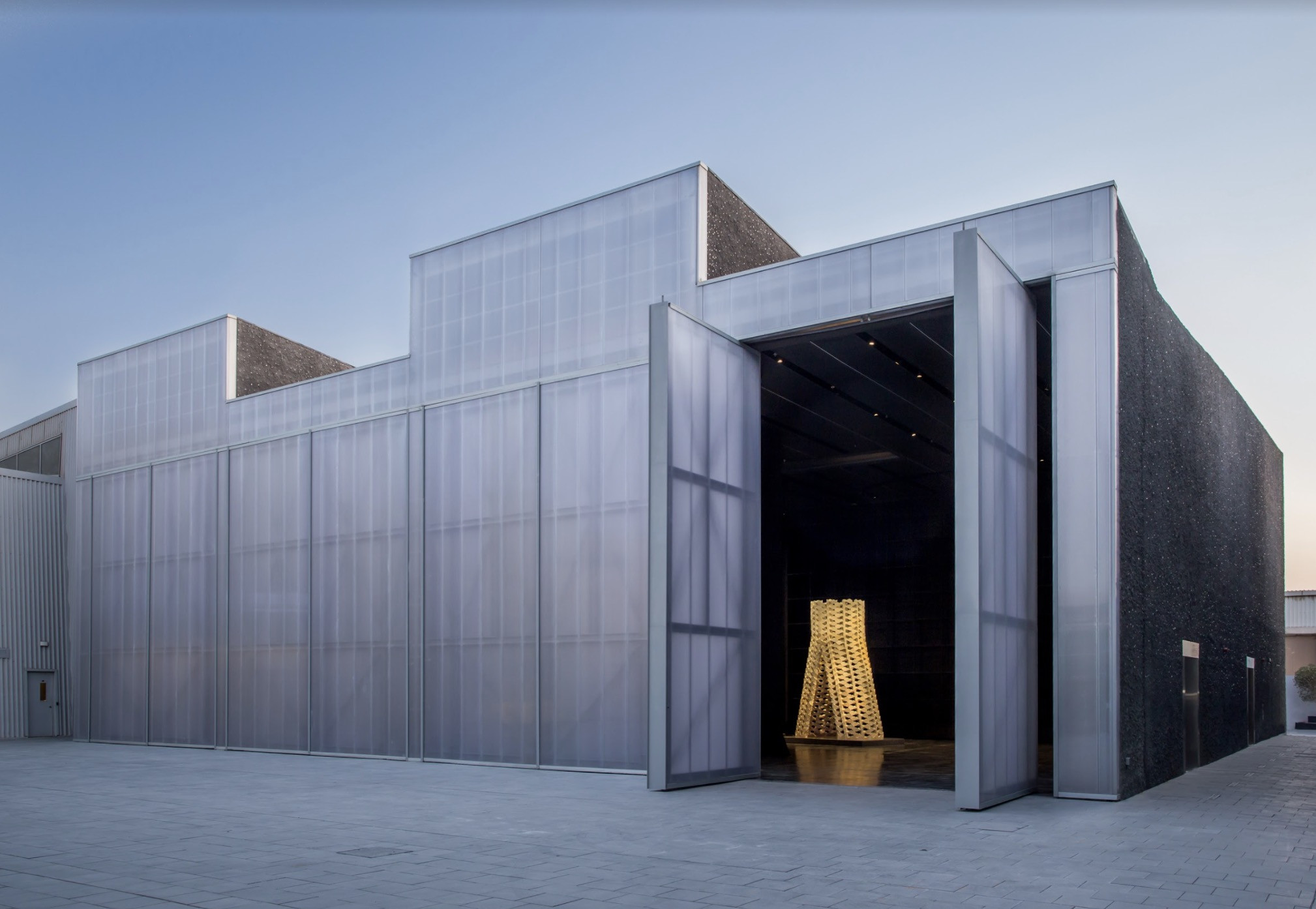
‘Pop South Asia’ is on show at Al Mureijah Spaces at Sharjah Art Foundation and runs till December 11.








Stay tuned...

Stay tuned...

Stay tuned...





Stay tuned...