

Mohamed Melehi and the Casablanca Art School Archives
INTRODUCTION
An introduction by the co-curator Morad Montazami
ABOUT THE EXHIBITION
Mohamed Melehi (1936, Asilah, Morocco – 2020, Paris France) is regarded as a major figure for postcolonial Moroccan art and within the history of transnational modernism.
This retrospective exhibition will bring a pioneering artist’s multi-faceted career to life, giving UAE audiences a unique insight into a practice that feels critical and relevant for contemporary concerns in this region. It also tells the story of the Casablanca Art School during its most radical period, when Melehi taught there between 1964-1969.
In Melehi’s art, we sense the spirit of aesthetic revolution and the exhilaration of post-Independence Morocco. His creative energy and visual innovation are palpable in this unique selection of key works, dating from the 1950s to the 1980s. We trace Melehi’s artistic developments in the 1960s, from experiments with abstraction in Rome and New York, to the fullest expression of the wave, his emblematic motif, in the 1970s. We also recognise his importance in the history of transnational art; Melehi’s work resists the East/West divide that developed during the Cold War period. His wavy Third World frescoes take us on a cosmopolitan journey, drawing together the Mediterranean and the Atlantic. A painter, photographer, muralist, graphic and urban designer, art teacher, and cultural activist, Melehi challenged convention and freed painting from the gallery and studio, breaking down hierarchies and reclaiming public space for the visual arts.
Read the digital exhibition guide here.
Curated by Morad Montazami and Madeleine de Colnet of Zamân Books & Curating, this iteration expands their research into lesser known aspects of Melehi’s work, such as his photographic practice. It also reveals his in-depth exploration of Afro-Berber art and craft.
Texts by Morad Montazami, approved by Mohamed Melehi and Toni Maraini
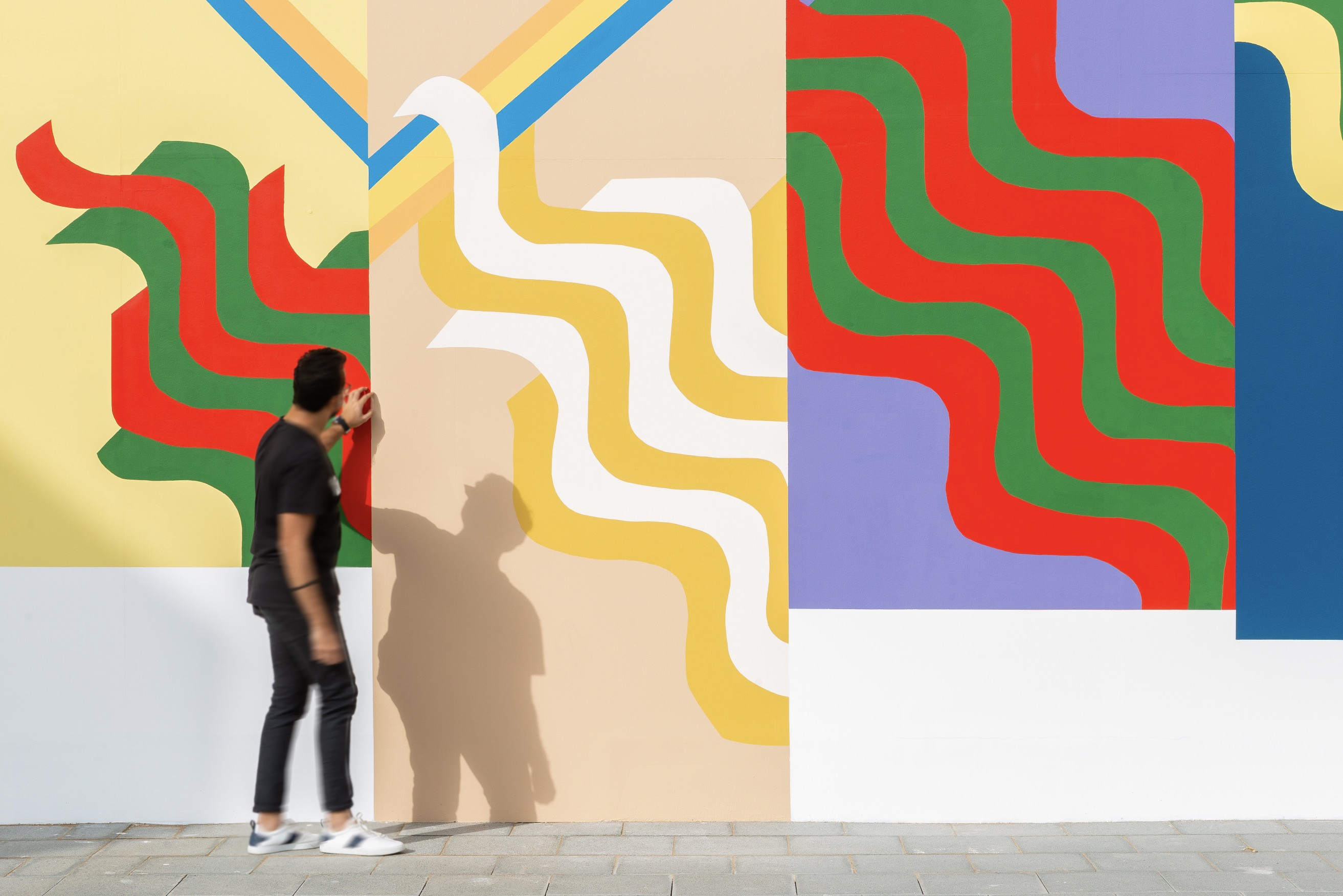
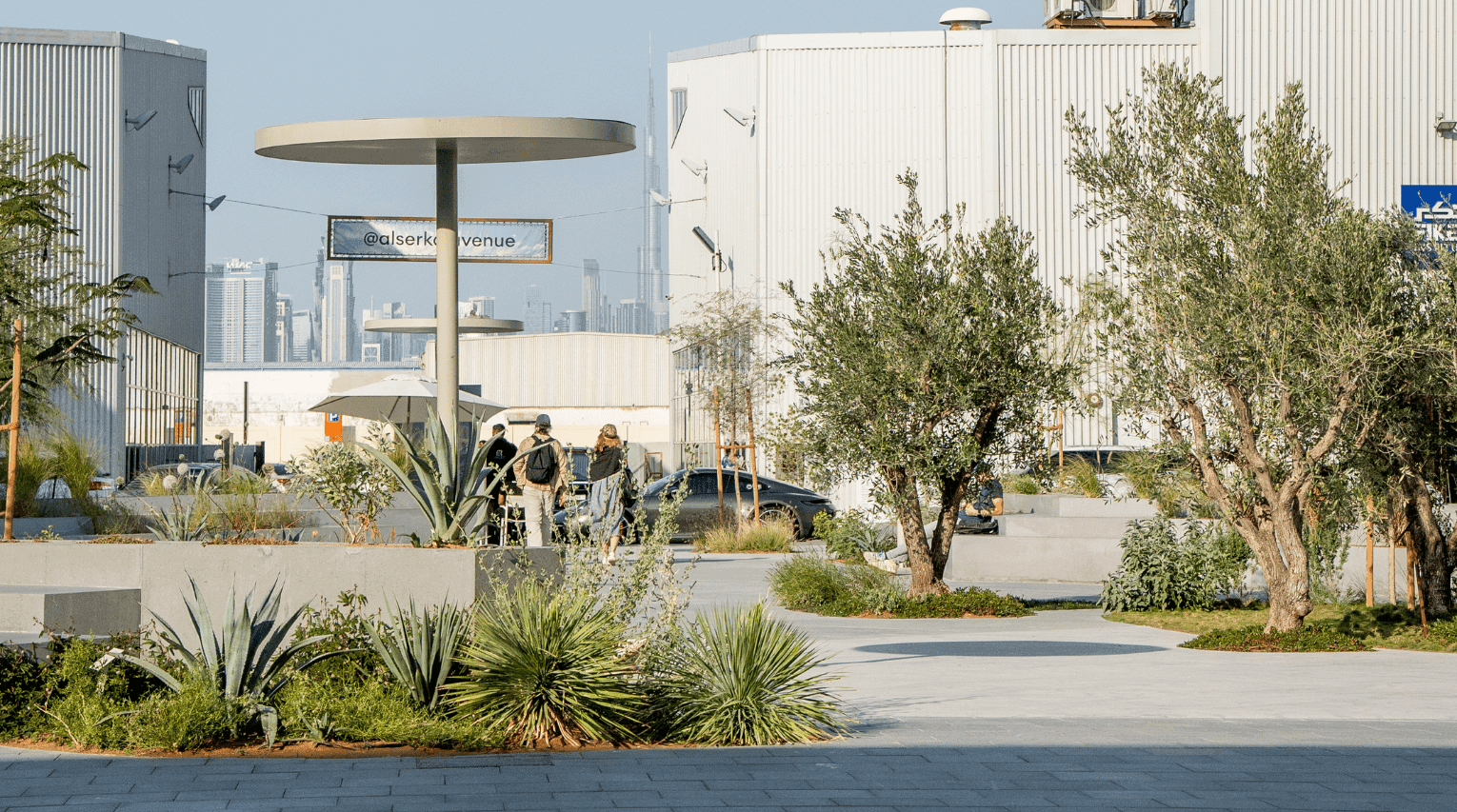
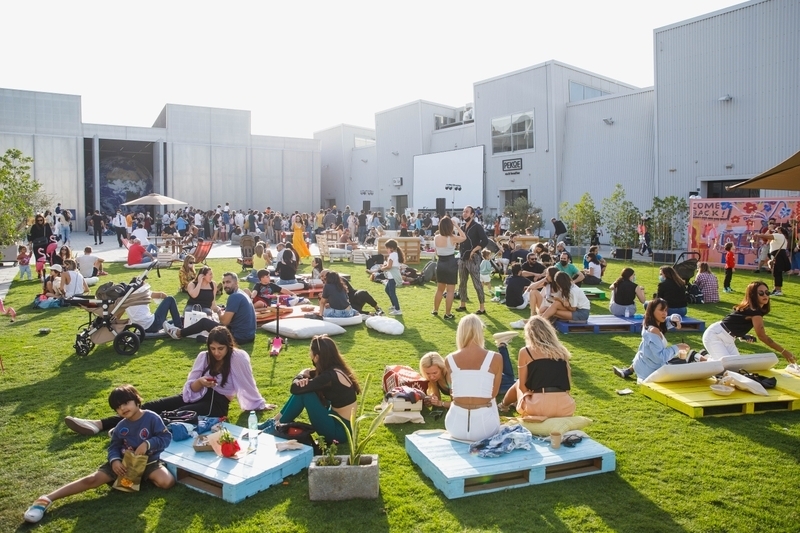
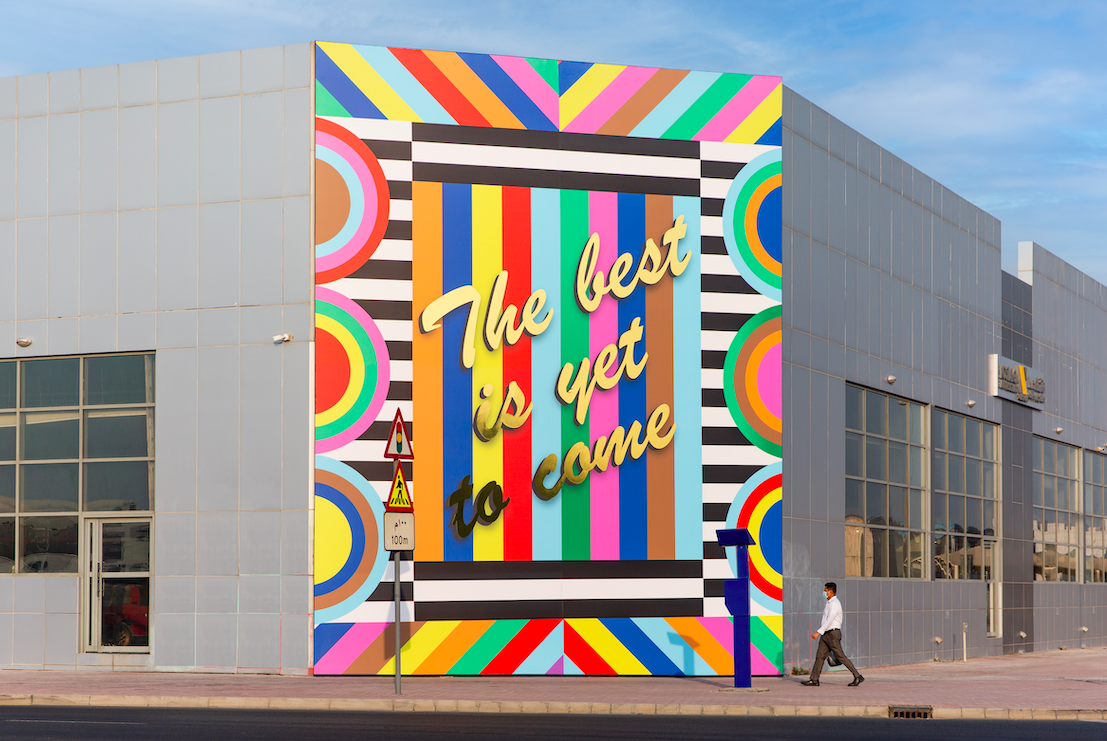
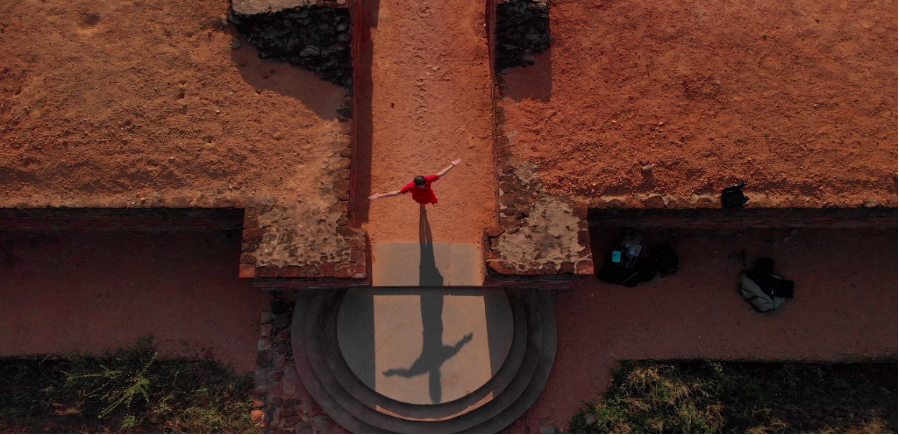
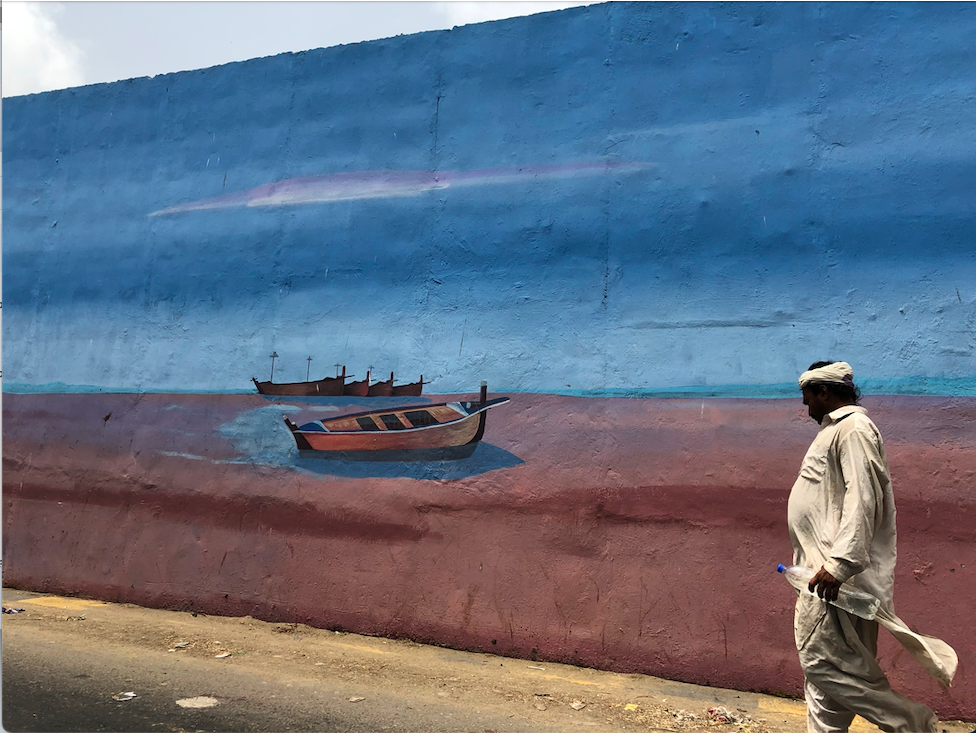
In the spirit of Melehi’s commitment to bringing art out of the gallery into the public realm, this exhibition extends into The Yard, with an adapted recreation of a mural from the first Asilah Moussem Festival of the Arts in 1978. Photo credit: Alserkal / Ismail Noor (Seeing Things)
This mural was made possible by the team from Jotun Paints UAE along with Zayed University students: Noora Hassan Ahli, Ameena Bader Alnuaimi, Hadeel Ahmed Alshalan, Yusra Zain Alzubaidi, Muhammad Ebrahim, Bilal, Brabakran, Buman, Karapya, Krishnan Kutty, Manikam, Manoj, Mehboob, Morgan, Azhar Nasir, Naveen, Avanthi Panicker, Perumal, Tanga Raj, Shafiq, and Vasant.
SECTION 1: 1957-1964
Discover more from the co-curator Morad Montazami
Learn more about Solar Nostalgia
FROM ROME TO NEW YORK CITY:
PRIMARY STRUCTURES AND SOFT EDGE PAINTING
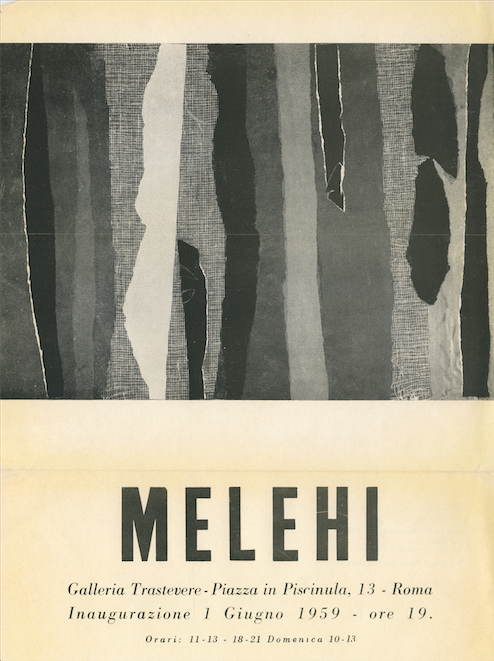
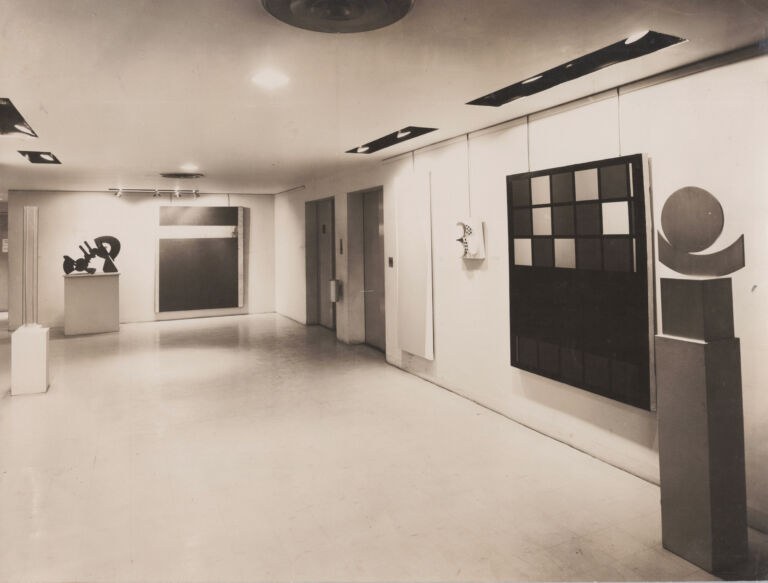
It was in the 1950s in Rome, Italy, after a brief stay in Seville, Spain, that Melehi took his first artistic steps internationally. This was primarily through his memorable collaboration with Galleria Trastevere, founded by the visionary Topazia Alliata. His geometric experiments, which played with horizontality and verticality on canvas, emerged from the environment of the Accademia di Belle Arti in Rome, where he studied in Toti Scialoja’s influential Bianco e Nero (White and Black) workshop, alongside artists such as Jannis Kounellis and Pino Pascali.
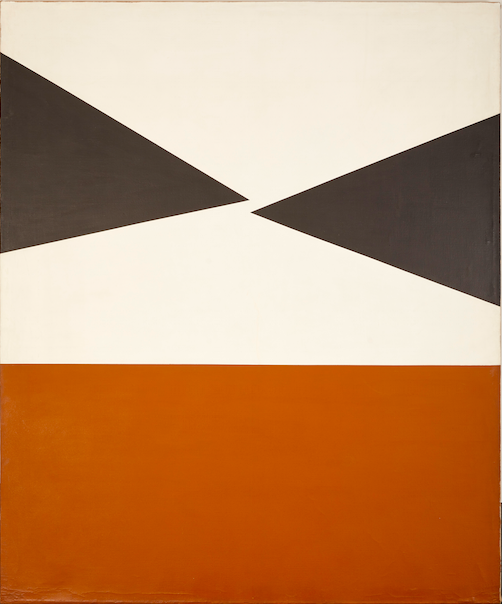
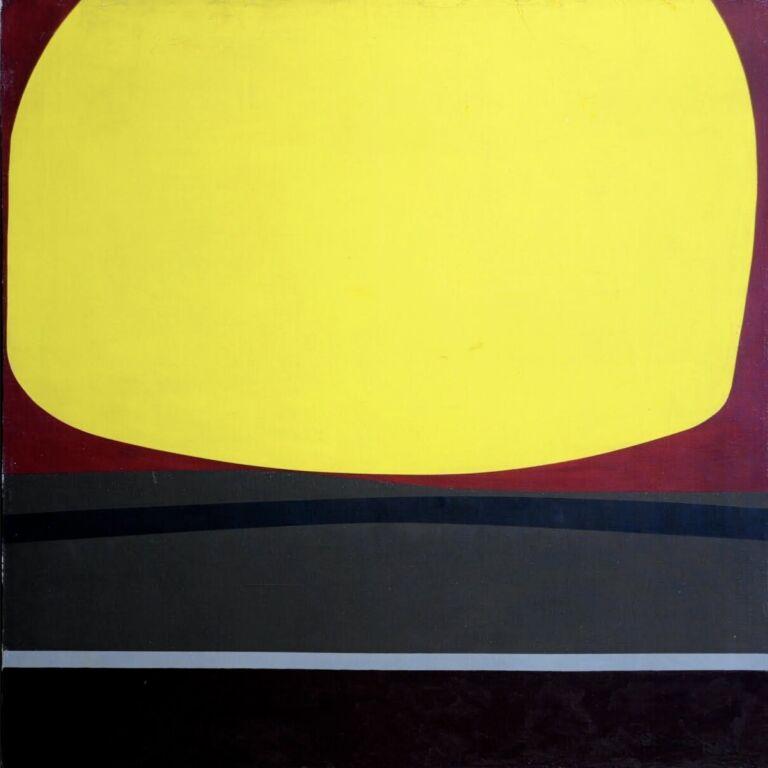
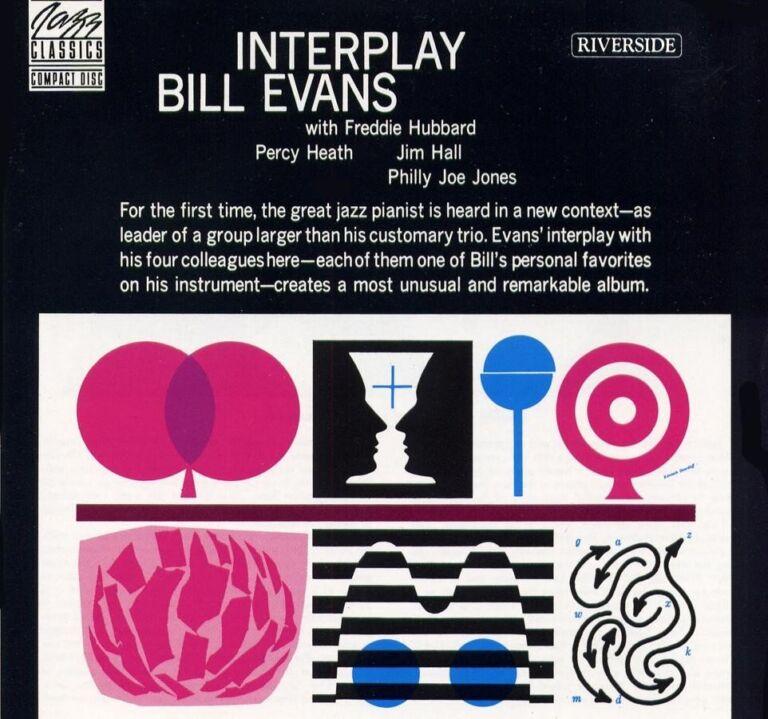
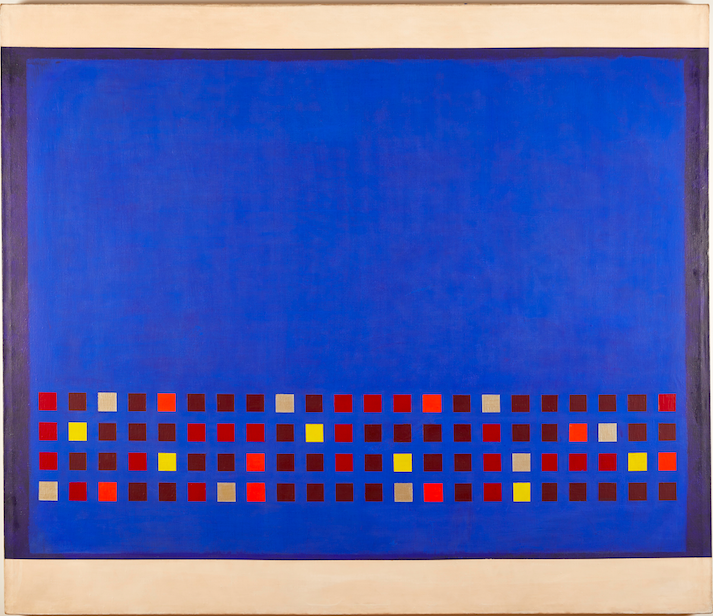
From 1962-1964, Melehi lived and worked in New York, near the famous Five Spot Club. There, he pursued his love of jazz, attending concerts by great masters including Thelonious Monk and Charles Mingus. In the studio he shared with Italian artist Lucio Pozzi, he developed his own pictorial style, pitting experimental geometry against technology, speed, and the power of ubiquity. After his participation in Hard Edge and Geometric Painting at New York’s MoMA in 1963, his compositions continued to evolve; with multi-dimensional squares laid out like sparkling windows, or dizzying impressions of the city’s skyscrapers.
The artist’s early works reveal that before the wave took over the canvas entirely, it first appeared at the work’s edges. Around 1962, the wave surreptitiously turned away from the straight edges of the modernist canvas – as Melehi developed his own style of “soft-edge” painting, in which right angles seem to give way to the volubility of rounded, circular volumes.
SECTION 2: 1964-1978
Discover more from the co-curator Morad Montazami
Hear more about Sleeping Manhattan
FROM NEW YORK CITY TO CASABLANCA:
A THOUSAND WAVES IN HYPERSPACE
By 1964, new waves had clearly developed along with Melehi’s programme of divergent geometry. His multiple and overflowing variations on the “wave” suggest cosmic relations, playing out between the sun, the sea, the horizon; but also new possibilities for transnational solidarities and utopias. He explored this pattern beyond painting, through prints, posters, and books, in his role as a cultural activist with organisations such as the Union of Arab Plastic Artists, which met throughout the 1970s in Damascus, Rabat, and Baghdad – where Melehi and his Casablanca colleagues participated in the first pan-Arab Biennale, in 1974.
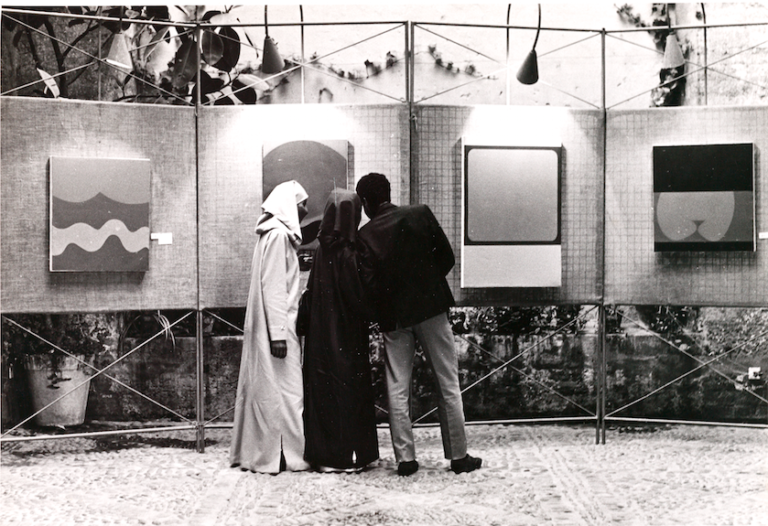
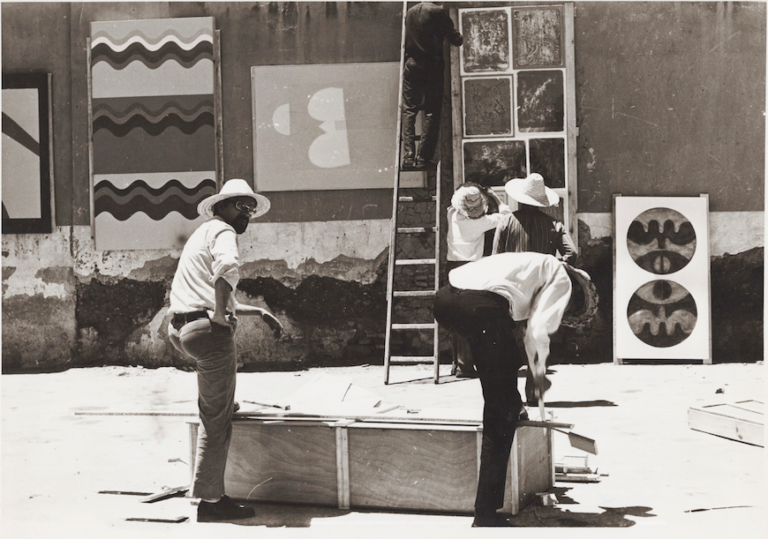
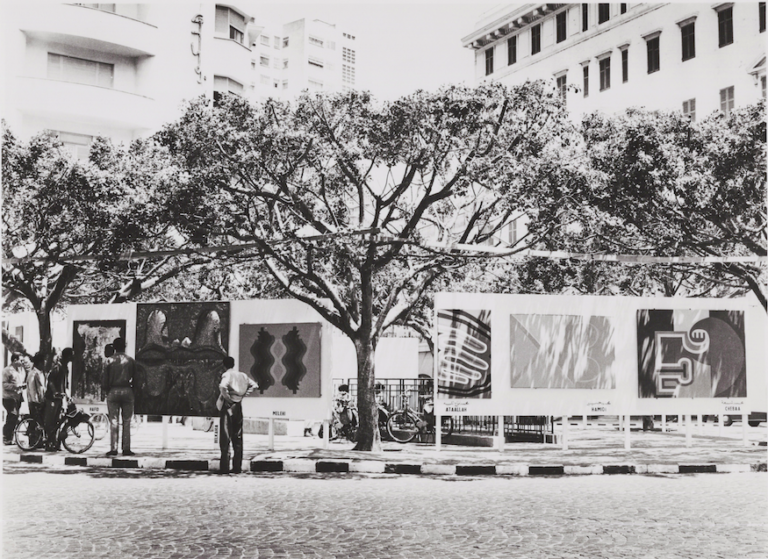
Hear more about Présence Plastique, outdoor exhibition
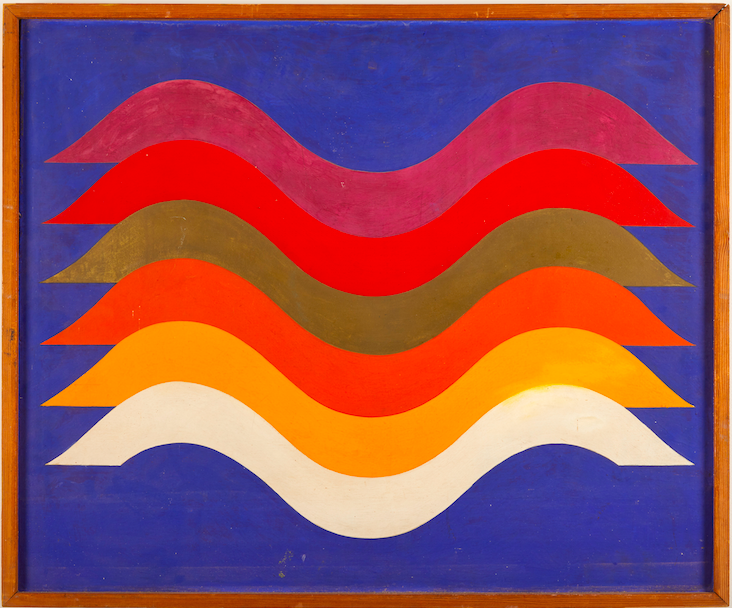
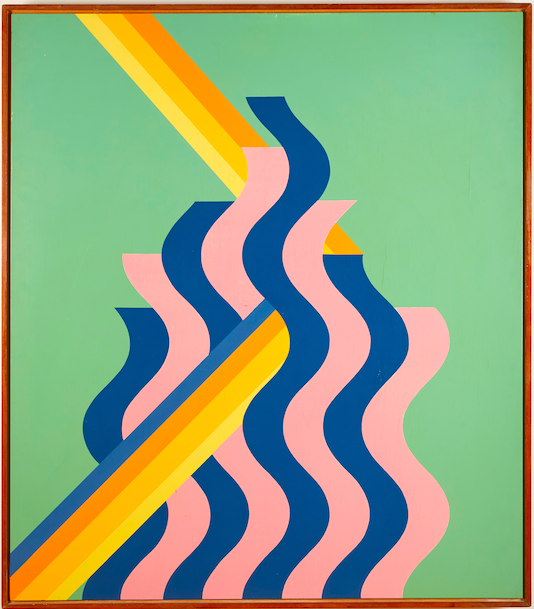
The flame-wave became a sort of compass to navigate these constellations of cities, eventually dissolving in an ever-changing rhythm, its pulsating patterns suggesting water, earth, air and fire… But also, at times, an anthropomorphic eroticism, or a unique form of unconscious landscapes.
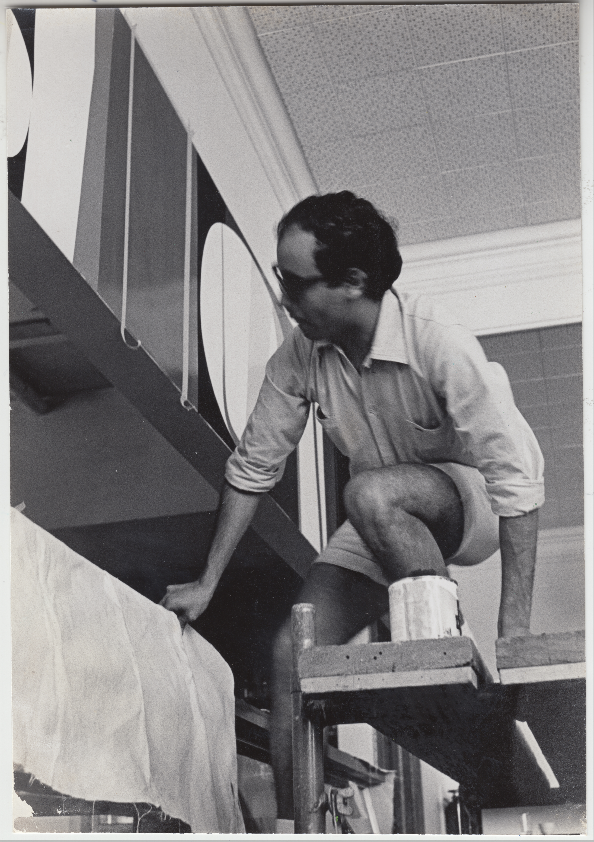
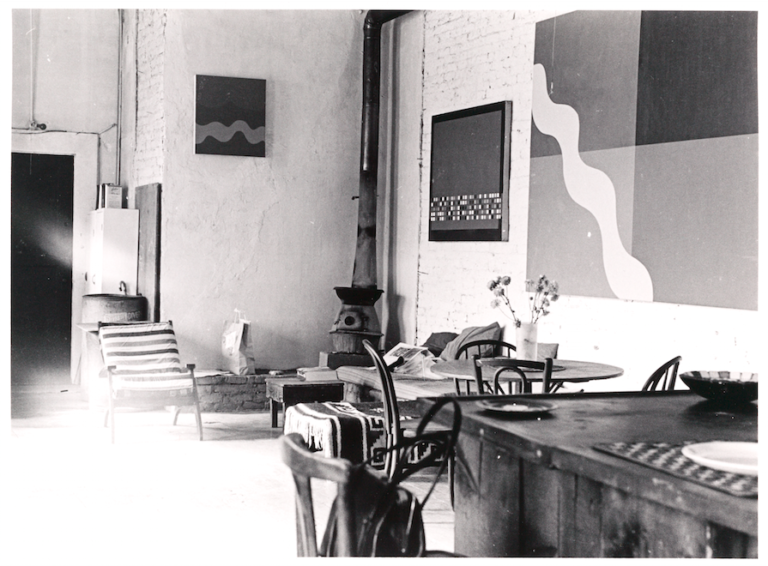
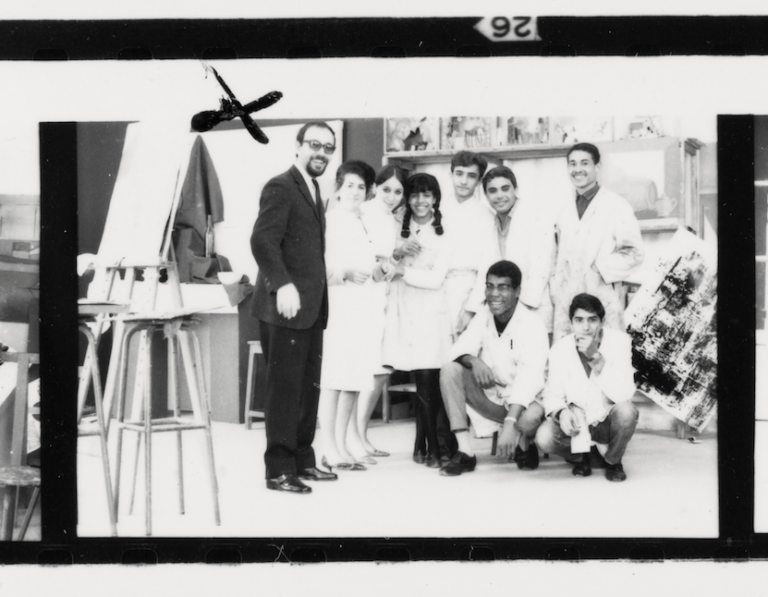
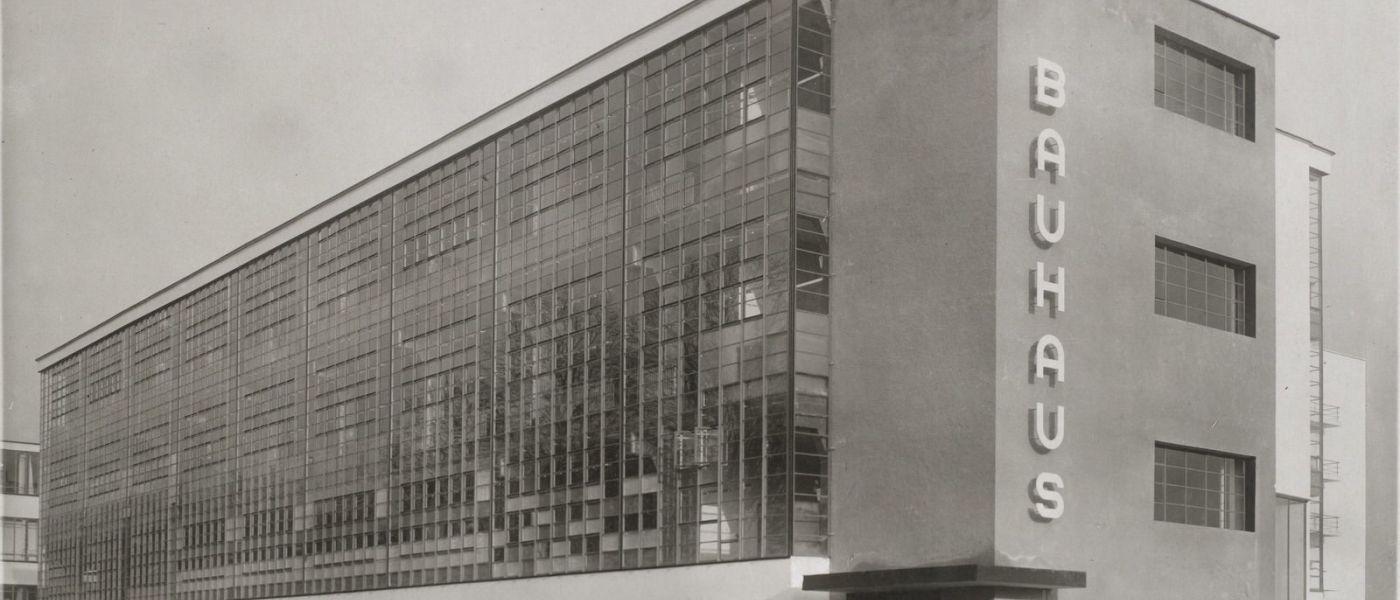
Melehi and his then partner Toni Maraini returned to Morocco from the US, and in 1964 joined the Casablanca Ecole des Beaux-Arts. He taught painting, sculpture, collage, and graphic design. Both of them were hired by artist Farid Belkahia, who had been appointed director of the school in 1962. Mohammed Chabâa was the other key member in the interconnection between graphic art, architecture, and painting. One should also mention the collector and anthropologist Bert Flint who, alongside Maraini, renewed the school’s theoretical teachings. Their most compelling challenge would be to align the popular arts and crafts and architecture – which Melehi photographed extensively – with their modernist language. Today, scholars of comparative modernities and curators are opening new paths for the Casablanca Art School by stimulating dialogue with, for example, the Bauhaus or the Khartoum School.
FROM INTEGRAL JOURNAL TO SHOOF PUBLISHING: ARTIST, PUBLISHER, MIGRATOR
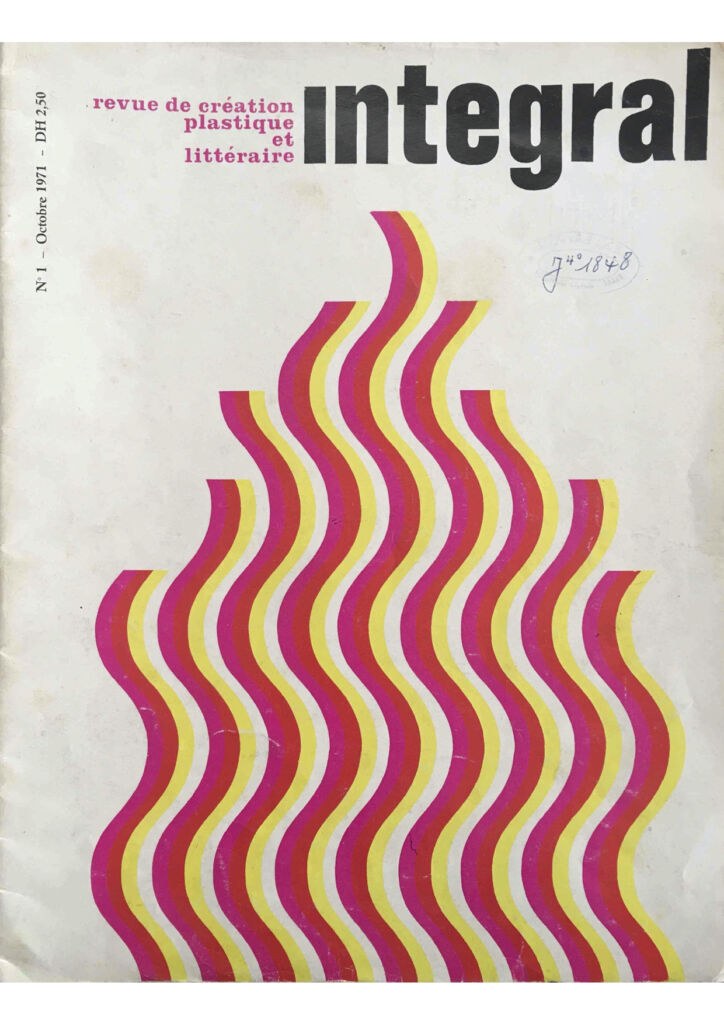
Melehi’s flame – one of the best-known variations of his wave matrix – appeared for the first time in Peintures et sérigraphies (Paintings and Serigraphs), the 1971 inaugural exhibition of the Rabat-based gallery L’Atelier, a foundational space in the history of Arab and Mediterranean art, which was founded by Pauline de Mazières — for whom Melehi also designed the L’Atelier logo (just as he created one as well for Leila Faraoui and Nadar gallery in Casablanca). That same year, the flame also appeared on the cover of the first issue of Integral (1971). This influential review, conceived within Morocco but resolutely Maghrebian, even pan-Arab in scope, brought together poetry, visual and graphic arts (self-described as “a journal of plastic and literary creation”).
Melehi was already involved in creating the cover and graphic identity for Souffles (1966-1969), the cultural journal founded by Abdellatif Laâbi. But with Integral, he also assumed the mantle of artistic director. As a next step, Melehi brought about a new synthesis of his multiple talents as a photographer, layout artist, and activist-graphic designer when he founded SHOOF publishing in 1974. SHOOF was the first house to publish a monograph on Moroccan pioneer Ahmed Cherkaoui, and Melehi expanded its activity with a graphic design studio, producing commercial design for retail and private businesses in addition to publishing fine art books.
This global approach is reflected in the official logo and letterhead of SHOOF: “Environment, graphic design, audio-visual, publishing, advertising”.
SECTION 3: 1980'S
Discover more from the co-curator Morad Montazami
REFRAMING THE WAVE
BETWEEN AFRO-BERBERISM AND POSTCOLONIAL ARCHITECTURE
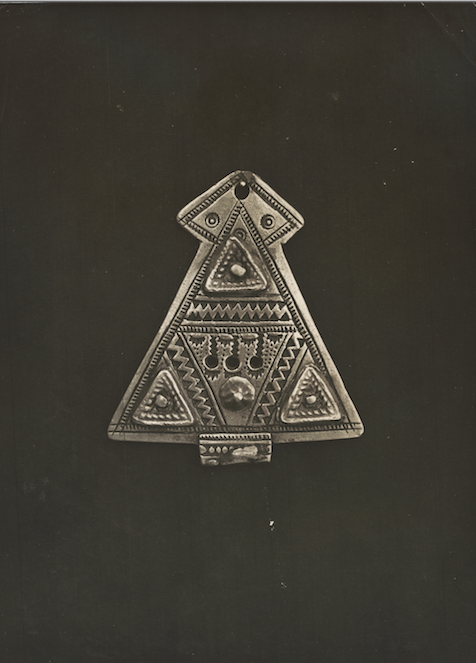
Since the 1960s, artists and activists of the Casablanca Art School called for a return to African and Berber sources. Together, they encouraged their students to study rugs, jewellery, leatherwork, tattoos, “decorative” painting in mosque and zawiyas (religious schools or monasteries) of the Souss region; to seek the potential of these popular Moroccan art forms in terms of geometric abstraction and “modernism”. A multi-cultural repertoire of forms and symbols with complex interconnections between Berber and African, Islamic and Mediterranean, as well as the deeper archaeological layers of Mesopotamia and Phoenicia.
While Mohamed Melehi was fully involved in the development of mural paintings and urban design in the context of the Asilah Arts Festival, his works from the 1980s seem to open a new space for reframing the wave (either through craft objects or architecture). The wave is expanded and turned into a structural thread for the re-integration of decorative arts and everyday aspirations into his avant-garde project.
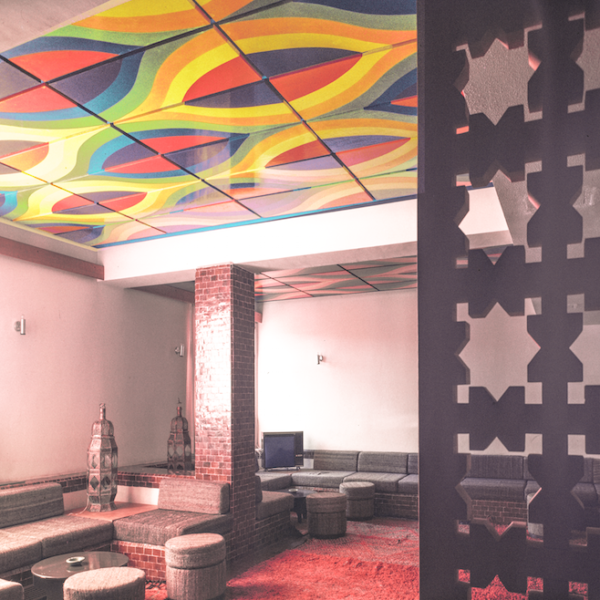
Hear more about the ceiling fresco
Hear more about the Berber jewel photograph
For his 1965 Galerie Bab Rouah exhibition in Rabat, he chose to display a Berber carpet (from the private collection of Bert Flint) next to his soft and angular paintings. From that time to the 1980s, Melehi’s works continued to maintain the flow of new waves as synonymous to “new craft” and to a certain aesthetic fluidity.
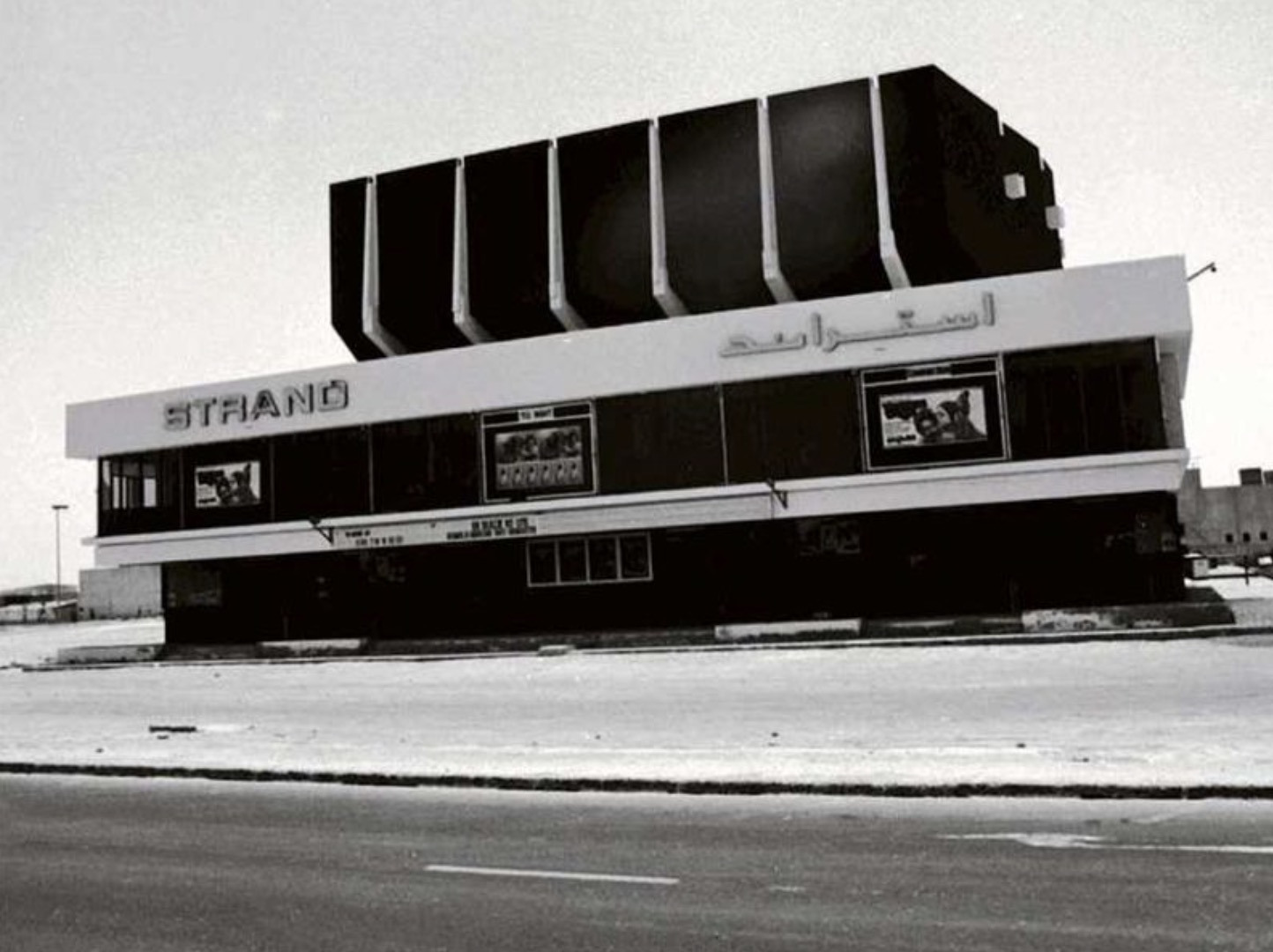
In parallel to these experiments, a selection of visual archives presents the architecture of various buildings and hotels (from the 1970s) where Belkahia, Chabâa and Melehi created in-situ reliefs, frescoes, and furniture design – in an “integrated art” style that was both minimalist and grassroots. Commissioned by architectural studio Faraoui & De Mazières, these structural and decorative elements demonstrate a timely dialogue between the labyrinthine patterns of these works and the modular shapes of buildings designed by Patrice de Mazières. It is a rare example of visual artists and architects from Arab regions (one might mention the Baghdad Modern Art Group in the 1950-1960s) coming together as an innovative and hybrid group to imagine a new kind of postcolonial architecture.
SECTION 4: 1960'S
Discover more from the co-curator Morad Montazami
MOHAMED MELEHI AND THE CASABLANCA ART SCHOOL ARCHIVES
MELEHI THE PHOTOGRAPHER: DOCUMENTING MODERNITY
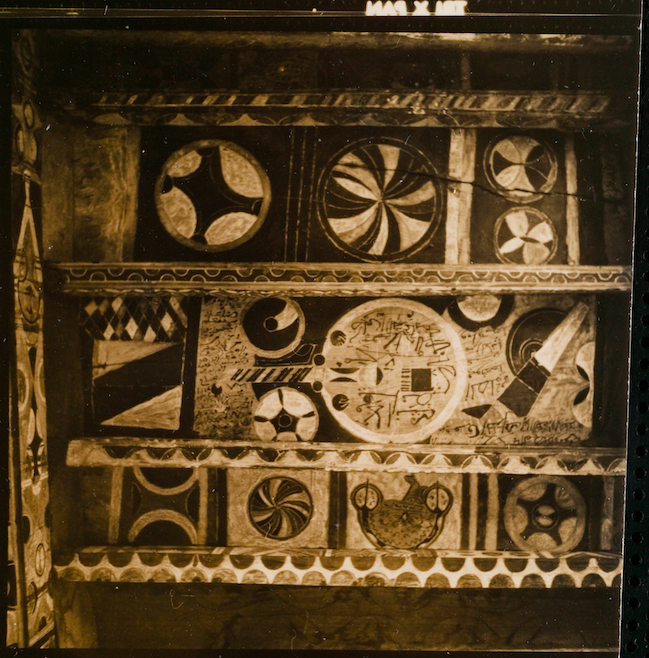
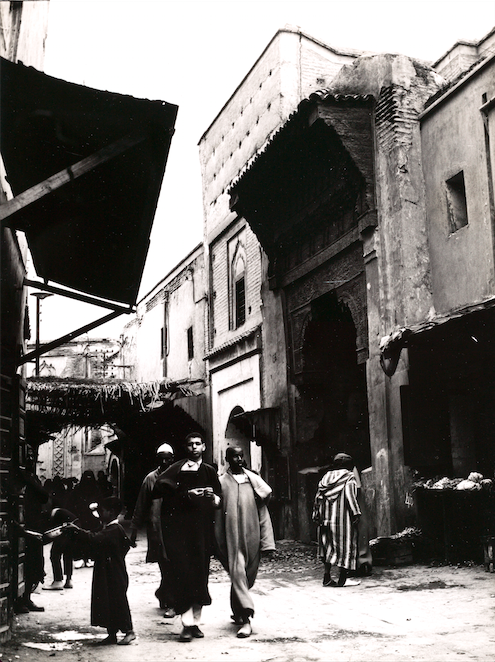
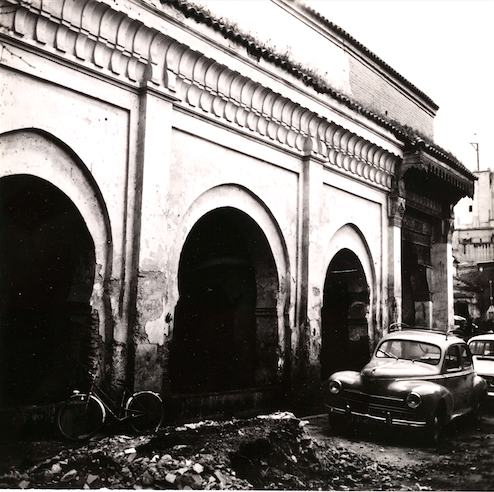
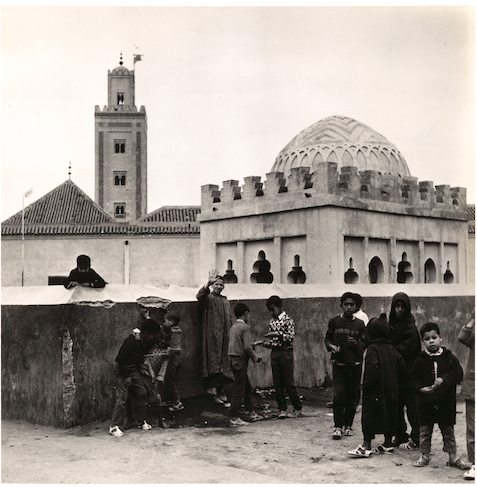
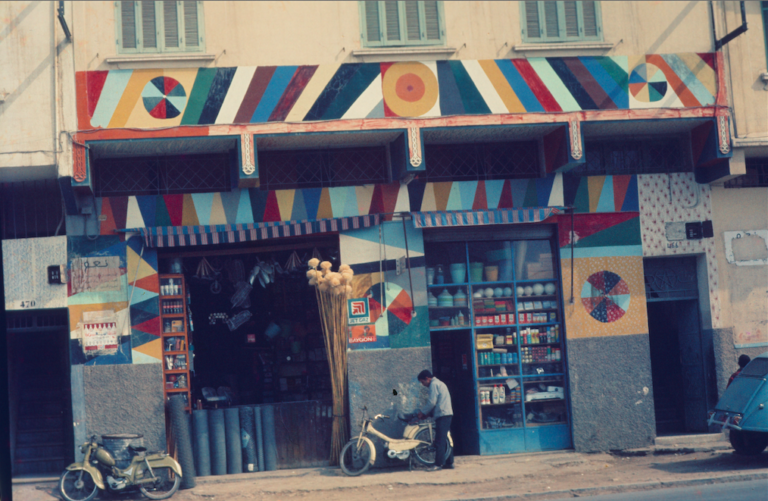
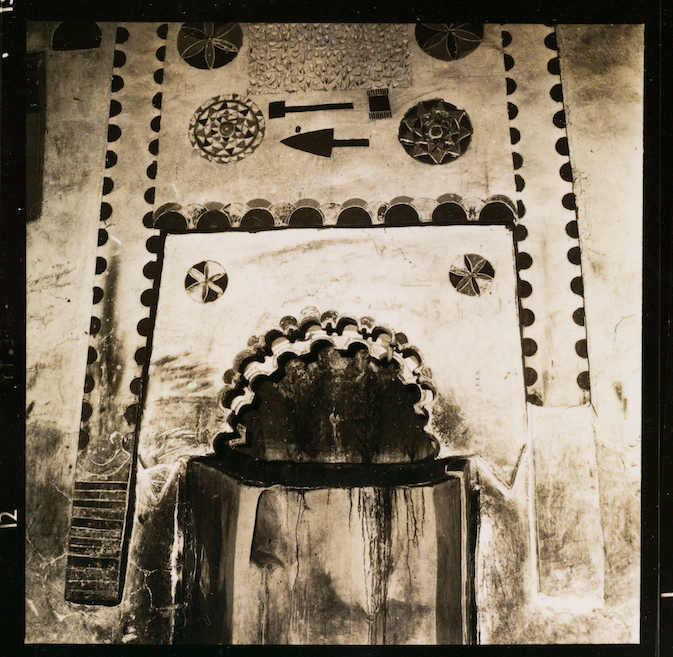
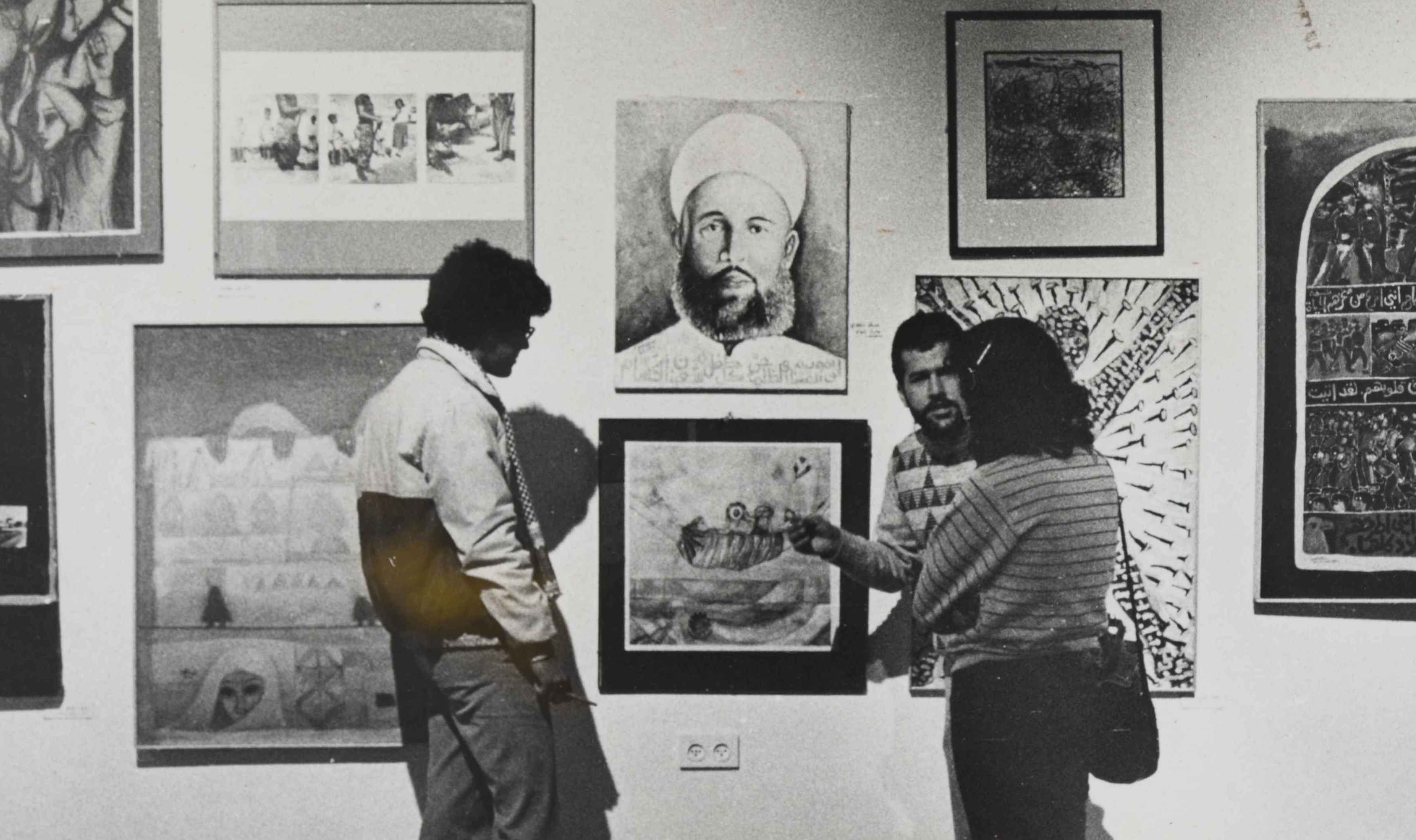
Mohamed Melehi developed a compelling photographic eye and practice, from the early 1960s, mainly inspired by his travels, exhibitions and encounters. A display of selected photographs from this corpus is assembled here for the first time, revealing the diverse streams of his experience. Beyond his work as painter, designer and visual activist, Melehi often performed the role of a documentary photographer, commenting on the complex post-Independence Moroccan society, alongside the visual richness of its architecture, local arts, and creativity, both urban and outside the city. Hence, this unique selection of vintage photographs by the archivist of the Casablanca Art School takes us between the traditional landscapes, villages, and souks around Marrakech, and the modernised landscape of Casablanca – where the impulse for modernist art slowly makes it to the streets. In and out of exhibition spaces, the photographs also tell us about the fruitfulness of experimental displays shared and developed collectively by the students and the professors of the school. These images capture and chronicle the unique momentum of local avant-gardism, which echo and relate to the transnational history of arts and crafts — for instance, the renowned Bauhaus school.
CREDITS
New Waves: Mohamed Melehi and the Casablanca Art School Archives is presented by Alserkal Arts Foundation. Curated by Zamân Books & Curating, the original exhibition was produced by The Mosaic Rooms, A.M. Qattan Foundation. This exhibition was organised in collaboration with the Museum of Contemporary African Art Al Maaden (MACAAL).
With additional thanks to Jotun Paints UAE, and to our logistics partner Crown Fine Art.








Stay tuned...

Stay tuned...

Stay tuned...





Stay tuned...