

The Alserkal Ecology Reader | Three Lectures on Architecture and Landscape in the Gulf

Letters to the past and the future
It's 1985, a year before I was born. In Belgrade, the winter has loosened its grip, though its memory lingers in the bones and in the rationing of coffee, electricity and fuel. For twenty-four consecutive, blistering winter days in December and January, the daily temperature never rose above 0 °C. It was one of the longest freezing streaks in the city's recorded history. Now the cold and the blackouts have subsided and in an office on 6 Lenin Street, warmed by little more than resolve, someone, or several someones, bend over a page, searching for words of solidarity that Yugoslav women might send to the Palestinian women due to gather in Tunis.
It's the same year, and spring lingers over Tunis as April turns to May. The air is mild and the light gentle. Inside the Hotel Amilcar, the Fourth Conference of the General Federation of Palestinian Women is in session. In attendance are “Palestinian sisters” who spent long years in the Zionist occupation's prisons, freed from captivity in late 1983. Some important men sit in the front row. A representative of the Federal Conference for the Issues of the Social Status of Women of Yugoslavia is about to deliver the greetings that travelled down the Adriatic and across the Mediterranean, a message carried by the same waters that touched different shores. She begins;
“Dear comrades,
I am very pleased to have the honour of conveying greetings to you on behalf of the Conference for the Issues of the Social Status of Women of Yugoslavia, and on behalf of all the women of Yugoslavia I thank you for the invitation you extended to the conference, and I hope that the work of your conference will be crowned with success.
[...]
The people of Yugoslavia and the women of Yugoslavia are aware of your just struggle for freedom and for the establishment of a free, independent Palestinian state, and of the difficulties you face in your popular liberation struggle. The contribution of women to your struggle is immense and an integral part of it. Without it, the goal, which is freedom, cannot be achieved.
The women of Yugoslavia, [...], led by the Communist Party of Yugoslavia, entered the field of struggle against fascism and Nazism and their collaborators during the Second World War. These days, and specifically on May 9th, Yugoslavia celebrates the victory over fascism, a victory achieved through the common struggle alongside other progressive peoples and nations, in which all the peoples and nationalities of Yugoslavia actively participated, including women on an equal footing. As we mark this anniversary, we highlight the great contribution women made to the people's liberation struggle and to the development of socialism. Since we ourselves have this experience, we sincerely affirm our support for your just struggle. We too lived through the siege of war and the fight for liberation, and at the same time, together with the other progressive forces in our society, our socio-political system declared the principles of a socialist society, in which men and women participate equally in all areas of decision-making. This is guaranteed by the constitution and laws of our socialist self-managing country.
[...]
We still encounter certain difficulties, and we must keep working for the consistent application of the constitution and the law, until the remnants of patriarchal consciousness and traditions are completely overcome, and until all the rights women gained through their contribution to the people's war, the revolution and the rebuilding of the country after the war are fully and lastingly realised. Women, the working class and all working people today take part in carrying out the tasks of completing the development of the political system of socialist self-management, accelerating material prosperity, completing the economic stabilisation program, strengthening brotherhood and unity among our nations and nationalities, and holding firm in international relations on the basis of the principles and aims of the policy of non-alignment, whose foundations were laid during President Tito's lifetime.
[...]
The Socialist Federal Republic of Yugoslavia [...] unequivocally support the struggle of the Palestinian people and insist on Israel's withdrawal, without conditions or restrictions, from all the Arab and Palestinian territories occupied in 1967, and for the realisation of the Palestinian people's inalienable rights to self-determination, independence and sovereignty, and to the establishment of their own state on their own land. [...]
[...]
Dear comrades, I wish once more that your conference's proceedings will be crowned with success, and that you will continue to improve the situation of Palestinian women. I also express our readiness to continue cooperation between the General Federation of Palestinian Women and the Conference for the Issues of the Social Status of Women of Yugoslavia.”
It's October 2026, and the weather in London has turned. The summer was apocalyptic. The heat that pressed down on the city for weeks left the parks faded to a dusty orange I have never seen here before. Now autumn seems to be arriving, and I am relieved by its crispness. My hands are cold.
I sit to read these messages from the past once more. The pages are cream-coloured and slightly skewed in their scans. I am using modern technology to decipher them, feeding the scans into a machine that reads the Arabic lines that I cannot. I am reminded that I really should have committed to learning the language. Maybe it's not too late. I should really do it soon.
I notice that page 3 of the speech appears to be missing. The numbers run 2, then 4, and I wonder whether it’s a typo, a slip of the numbering, or whether a whole page really is gone. Was it lost, misfiled, never scanned or kept? Did it even exist?
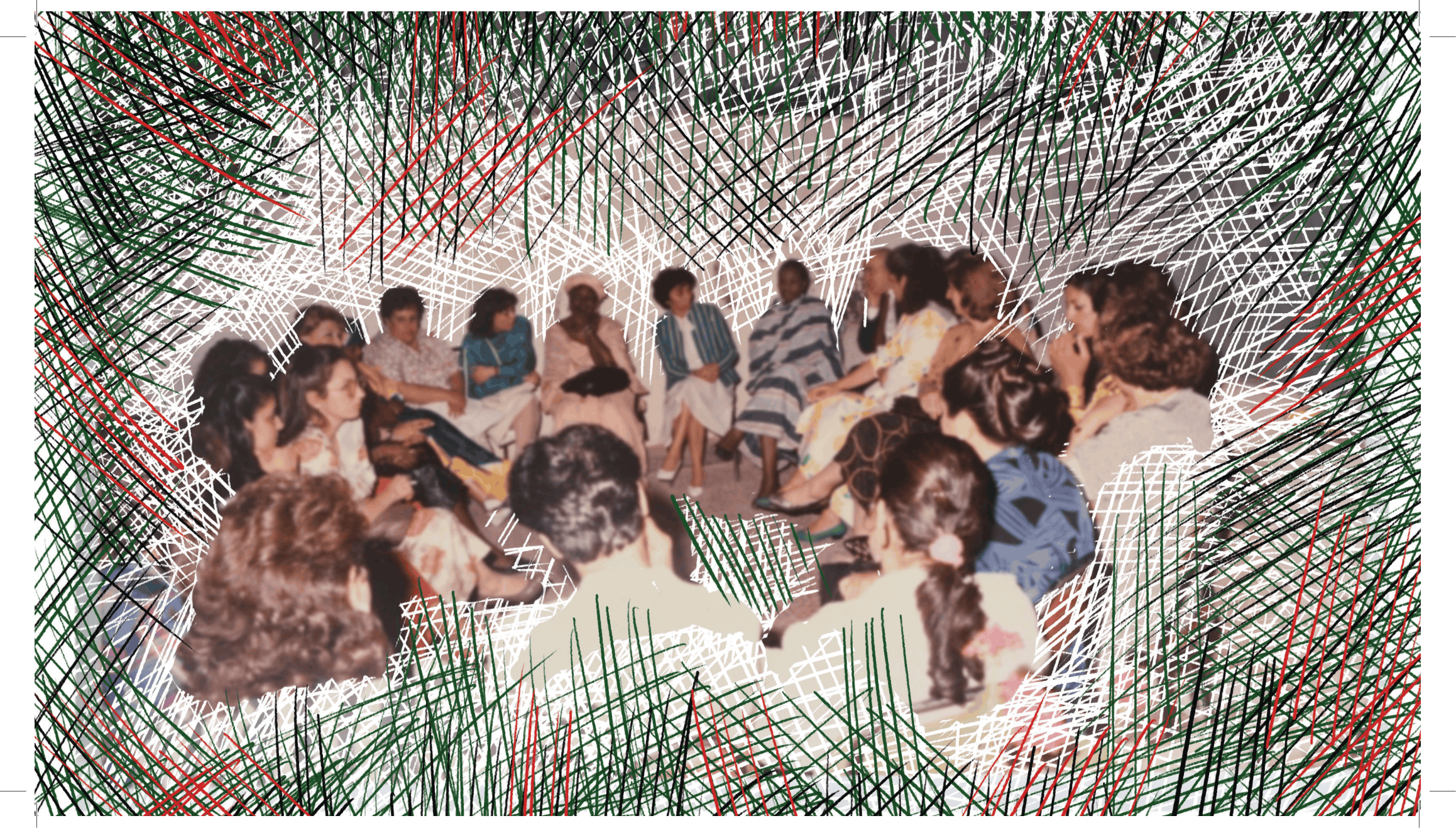
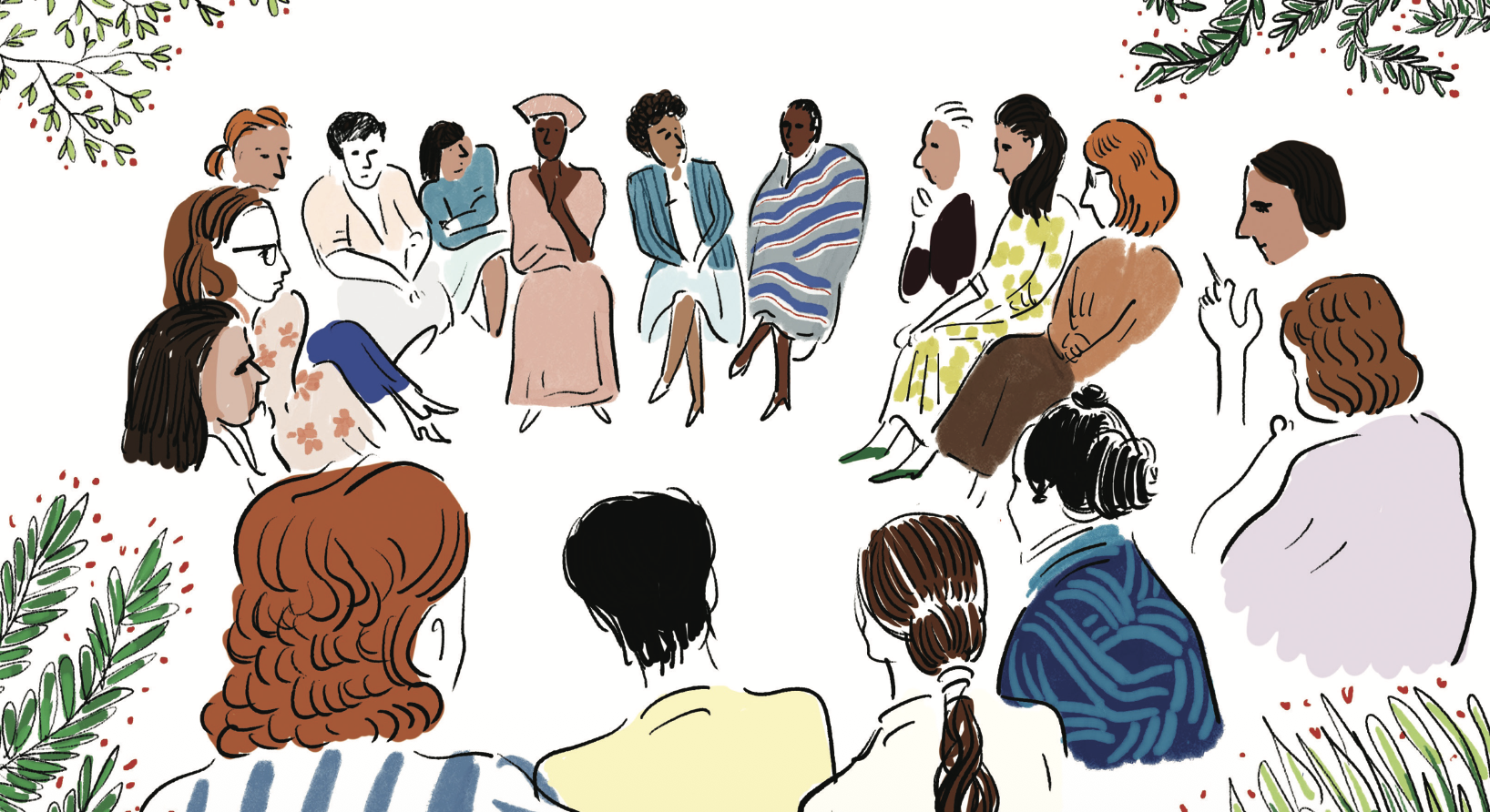
I think about the gaps in archives, and about my desire to fill them. I think about time travel and generational disappointments, and I wonder if the women in that hall thought of this too. I scan the photograph of the meeting held at the sidelines of the conference for signs of this. Impossible to know.
Just a few short months following the conference, on 1 October 1985, in an operation they called Wooden Leg, Israeli jets bombed the PLO's headquarters outside Tunis. In Belgrade, the brotherhood and unity named in the speech has a few years left, and the stabilisation programme will give way to inflation, then to war, and the country that sent the greeting will be gone before I am old enough to remember it.
In Celtic Christian tradition, a thin place is where two realms press so closely they almost touch. As I disappear deeper into the letters and speeches, I find myself in the orbit of familiar vocabulary. Time starts to feel like a thin place too. The distance between these pages and today feels more permeable than linear chronology allows. I am caught in the arc of a returning boomerang, suspended in constellations, not timelines.
Today, a free Palestine has yet to arrive. But we promise that it will. We insist that it will.
Prompted by Munira Khayyat, I think about what tense all this belongs in. I think about October. I think about ellipses. You sit in them too. Are the three dots comfortable?
I ask myself if time is a traitor and the archive a trickster. I drift into a daydream about the women at that conference, tasting freedom after years in the occupation's prisons. I think of the letters and poems I have written for almost two years to a friend who is held in one of those prisons today. Letters I cannot send. I think about his freedom as a debt that is owed to the sky.
Outside, the Sunday light is low. The sun slants in through my windows, bringing with it an unnerving sense of calm. I realise that I have already resolved to write in the present. I pour a second cup of coffee, and turn to another letter. I begin;
Dear A,
[...]
Angelina Radaković
London, UK


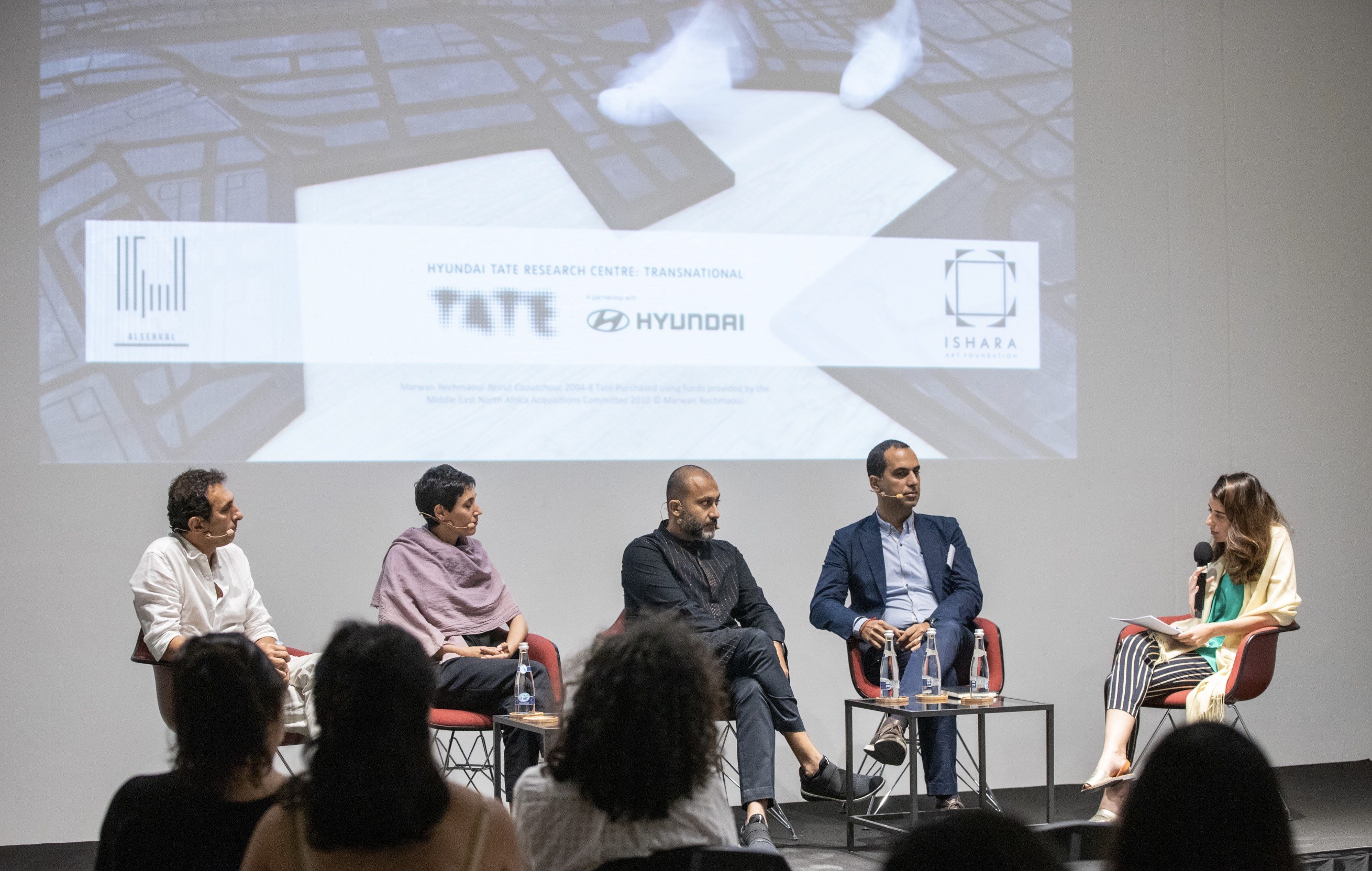
The Alserkal Ecology Reader is a compilation of three lectures held in 2018 and 2019 in relation to Civil Architecture’s summer residency at Alserkal Arts Foundation.
The lectures are centered around architecture's relationship to ecology, landscape and life in the Gulf. Civil Architecture invited interlocutors from the region and abroad to discuss larger trends in the discipline and their connection to the context of Dubai.
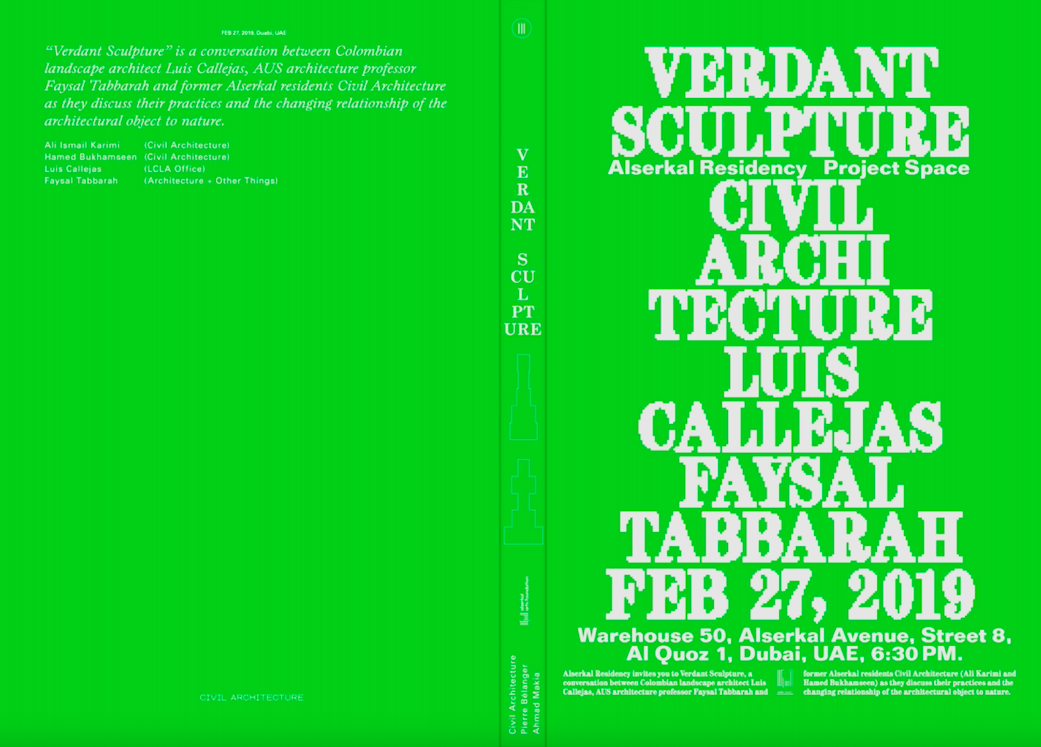
“We Have Never Been Urban” invited Pierre Bélanger and Ahmed Makia to discuss the idea of land and our relationship to territory. “Wishful Tropics” featured MILLIØNS and Common Accounts for a discussion on the aspirational qualities of climate control, and forming architectural environments. “Verdant Sculpture” with Luis Callejas and Faysal Tabbarah was a discussion on the nature of objects in the landscape and the blurring of boundaries between the ecological and architectural.
These three lectures form a summary of on-going issues in the discipline and are intended to be a loose primer for architects of the Gulf.
Download The Alserkal Ecology Reader here

Biographies
Civil Architecture is a cultural practice preoccupied with the making of buildings and books about them. The work of Civil asks what it means to produce architecture in a decidedly un-civil time, presenting a new civic character for a global condition. Since its founding by Hamed Bukhamseen and Ali Karimi, the practice has attracted a strong following for their provocative works and their offer of an alternate future for a nascent Middle East.
Pierre Bélanger is a landscape architect and urban planner with the Landscape Infrastructure Lab who has published several books including “Landscape as Infrastructure”, “Ecologies of Power”, “Going Live”, “Risk Ecologies”, “Wet Matter”, “Extraction Empire”. Collaborative public works projects include the Zakim Bridge Underpass Skatepark in Boston for the Massachusetts Department of Conservation (US), the Ontario Food Terminal in Toronto for the Ministry of Agriculture and Transportation (Canada), YVR International Airport Expansion for the Greater Vancouver Airport Authority (Canada), the Disaster Evacuation Park System in the Artibonite Valley for the Department of Civil Protection (Haiti), and the 2016 Canadian Pavilion at the 2016 Venice Architecture Biennale (Italy).
MILLIØNS is a Los Angeles-based experimental design practice, founded by John May and Zeina Koreitem. MILLIØNS conceives of architecture as a speculative medium for exploring the central categories of contemporary life: technology, politics, energy, media, and information. Their approach insists on an expansive parallel project of technical, historical and cultural analysis, which surrounds and informs their work. MILLIØNS’ work has been featured in numerous solo and group exhibitions, including a commissioned furniture set by Friedman Benda Gallery NYC and Chamber, shows at La Triennale Di Milano, Storefront for Art and Architecture in New York, The Architecture + Design Museum of Los Angeles, Jai & Jai Gallery in Los Angeles, the Museum of The City of New York, the MIT Keller Architecture Gallery, and the Harvard Graduate School of Design, among others.
Ahmad Makia is a geographer from Dubai. He writes about wet matters, Gulf landscapes, and sex, particularly tormented expressions of masculinity. He also makes books.
Luis Callejas is an associate professor at the Oslo School of Architecture and Design. He is an architect, founding partner and former director of Paisajes Emergentes and founder and director of lcla office. Having obtained diverse recognition in multiple public space design competitions, Luis Callejas was awarded with the Architectural League of New York Prize for Young Architects in 2013 and selected as one of the world’s ten best young practices by the Iakov Chernikhov International Foundation in 2010. Callejas was nominated again for the award in 2012 and 2014. In 2016 Callejas was one of the three finalists for the Rolex mentor and protege award.
Common Accounts, founded by Igor Bragado and Miles Gertler at Princeton University in 2015, is a design practice which operates between Madrid, Toronto, and Seoul. Their work Three Ordinary Funerals: Home for the Virtual Afterlife was exhibited at the 2017 Seoul International Biennale on Architecture and Urbanism and Going Fluid: The Cosmetic Protocols of Gangnam at the Third Istanbul Design Biennial in 2016. Bragado and Gertler have lectured in Beijing, Toronto, Istanbul, Dubai, Seoul, Ithaca and New York, and recent work has appeared at the A+D Museum in Los Angeles, in Uncube Magazine, Frame Magazine, Artsy, and Dezeen. They have taught at Cornell University, University of Toronto, University of Waterloo and The Cooper Union, their work has been acquired by the National Museum of Modern and Contemporary Art of Korea.
Faysal Tabbarah is Associate Dean and Associate Professor at the College of Architecture, Art and Design at the American University of Sharjah, and co-founder of the architecture and design studio Architecture + Other Things (A+OT). Tabbarah’s teaching, research and practice interrogates the relationships between environmental and architectural imaginaries to develop alternative building solutions that are rooted in their surrounding material and cultural environments. Tabbarah works with computational tools, emergent technologies, materials research as well as historical archives.



What We Plant, What We Owe
I grew up in a small village in southern Slovenia, surrounded by forests. My grandmother gathered herbs; my father and grandfather worked in forestry. From our elders, we learned that the forest gives and the forest takes. We also learned to take only what we needed, and to understand that the forest was not ours to possess.
This knowledge has stayed with me. It shapes how I think about our relationship with the living world, and how I approach the history of the Non-Aligned Movement: not only as a political project of decolonisation and independence, but also as an unfinished experiment in imagining how we might live together, across differences, without submitting to the centres of power.
At the founding conference of the Non-Aligned Movement in Belgrade in 1961, political leaders planted plane trees. Similar ceremonies took place at later summits, with trees chosen for their particular meanings and origins. Flowers, too, were carefully arranged for meetings and diplomatic encounters. These gestures might seem ceremonial, even ornamental. Yet a tree is never only a symbol. It takes root in a particular place, draws water from the earth, grows through time, and outlives those who plant it. It reminds us that political futures, like forests, require conditions in which different forms of life can exist together. But still, we must ask. Who plants, and on whose land? Who decides what should grow, what must be cleared, and which forms of life are considered expendable? The planting of trees, like the language of conservation itself, can also carry the legacy of colonial control over land and people. Colonial forestry turned forests into sources of timber and revenue, closing them to those who had lived from them for generations. Many protected areas were created by displacing the very communities who had cared for the land.
Environmental concerns were not at the centre of the Non-Aligned Movement’s early programme. Gradually, however, ecological balance became inseparable from issues of sovereignty, development and global inequality. The point was larger than protecting nature: it was to ask who profited from its destruction, who controlled its resources, and who was expected to pay the price. These questions remain urgent.
From oil extraction and poisoned landscapes to deforestation and the destruction of ecosystems through war, environmental devastation follows the unequal distribution of power. In Gaza today, the destruction of land, water, farms and olive groves, what many describe as ecocide, shows how the erasure of a people and the erasure of their living environment go hand in hand. To uproot an olive grove is to undo the act of planting, and with it a people’s claim to a future on their own land. There is only one Earth, but we do not inhabit it on equal terms.
Perhaps flowers and trees offer a way of thinking about solidarity beyond political declarations. Not as a universal language that erases differences, but as a practice grounded in specific places, histories and responsibilities. A seed carries the possibility of a future, but never guarantees it. What grows depends on the soil, the climate, the hands that tend it, and the forces that threaten its survival.
To return to the Non-Aligned Movement today is not to restore an idealised past. It is to ask what remains of its unfinished promises, and what new forms of solidarity they might make possible. What would it mean to treat the Earth not as property or an inexhaustible resource, but as a shared condition of life?
We are guests here.
Bojana Piškur
Ljubljana, Slovenia
About the Non-Aligned Constellations Working Group
Grounded in the concept of ‘constellations’ and derived from the Southern Constellations exhibition series (launched in 2019 at Moderna galerija, Ljubljana, Slovenia), this research explores the intersection of art, history, and geography, with a particular focus on the global relationships fostered through the Non-Aligned Movement (NAM). The project investigates the legacy of the Gallery of Art of the Non-Aligned Countries Josip Broz Tito (Titograd, 1981–1995), whose collection, comprising 800 works from 56 NAM countries, is now housed at the Museum of Contemporary Art of Montenegro. Curators Angelina Radaković, Bojana Piškur, and Natalija Vujošević (the initiator of the Art Collection of Non-Aligned Countries Laboratory project at MSUCG) aim to revive the collection through participatory, experimental, and interdisciplinary methods. By engaging with its historical and political context, they seek to reestablish connections with cultural actors from the Global South. Tracing the exchanges of solidarity, this project will reframe the artworks, offering new perspectives on the cultural and political dialogues that shaped both the past and present.
Bojana Piškur is a senior curator at Moderna galerija in Ljubljana. Her research and curatorial work focus on the Yugoslav and post-Yugoslav context, the Non-Aligned Movement, and the evolving concept of the ‘East(s)’. Since 2019, Piškur has curated and co-curated Southern Constellations exhibitions at institutions such as Moderna galerija (Ljubljana), Asia Culture Center, Gwangju (South Korea), Filodrammatica Gallery (Rijeka, Croatia), Museumof Contemporary Art of Montenegro (Podgorica), the Qattan Foundation (Ramallah, Palestine), National Opera and Ballet (Skopje, North Macedonia), and The Mosaic Rooms (London, UK).
Bodies expanding, bodies contracting
I will tell you exactly where the Gallery of Art of the Non-Aligned Countries is located in my memory, in my body, and in the body of the building itself.
It was sometime around 1986, and I was a ten-year-old girl. As part of a school activity, we visited the Gallery of Art of the Non-Aligned Countries “Josip Broz Tito.” The Gallery was housed in the Petrović Palace, in Kruševac Park. We are in the attic, and it is crowded. The air is stuffy, my sweater is itching, I can feel myself sweating, and my feet hurt because of my flat arches. We are having a music lesson, looking at a collection of musical instruments from Indonesia, Burma, and Congo. Our teacher tells us that we belong to the Non-Aligned Movement. She explains that these instruments were gifts to the Gallery from friendly countries. She tells us that, together with these countries, we form a community committed to peaceful coexistence, one that refuses to join military alliances seeking to dominate others through the law of the strongest. She speaks about anti-colonial and anti-imperialist politics, and about how the community of non-aligned countries holds a different vision of the world, one in which relationships are built on mutual support, respect for others, and recognition of differences.
I do not know how much of the political language our teacher used to explain non-alignment I understood at the time. But I clearly remember the feeling that came with realizing that we belonged to something much larger than the country we lived in. My itchy, sweaty body expands from within, and I am filled with a joyful sense of belonging, pride, and responsibility.
Today, this memory feels like an abandoned utopia. But that utopia had its own public infrastructure. The building has shrunk and fallen into neglect. Since the 1990s, three different institutions have occupied it. Behind it, a new and much larger building housing the American Embassy has appeared. For decades, the collection has remained largely out of public view, while the struggle to bring it back into public life continues, with uncertain outcomes.
For years, researchers supported by grants from European, Canadian, and American universities have been visiting the museum to study and write about the non-aligned collection. Their interest often makes an important contribution to the collection’s visibility and understanding. Yet the question remains of how the resources, authority, and outcomes of such research are distributed. Who gets the opportunity to produce knowledge, build an academic career, and determine interpretive frameworks, and who remains the custodian of archival materials and a provider of information? Do the methodologies and principles underpinning these research relationships reflect the very values that are the subject of the research itself? Are these relationships anti-colonial, reciprocal, and grounded in solidarity?
Young people from the local community who visit the museum know almost nothing about this heritage, or about the Non-Aligned Movement. Their political education takes place within the horizon of Euro-Atlantic integration and the market economy, while historical experiences of alternative forms of international relations have almost disappeared from public education. At the same time, cultural heritage is increasingly valued in terms of its tourism and market potential.
In the post-Cold War order, marked by new forms of neocolonial domination, the heritage of non-alignment is becoming increasingly visible within international academia, while remaining difficult to access for the communities from which it emerged. It acquires new value as an object of research, but not necessarily as public knowledge or social practice. Today, narratives surrounding the political imagination of non-alignment circulate predominantly through the channels of Western academia and within the specialized discourse of contemporary art, in publications and at panels where access is restricted by class, economic, and institutional barriers.
These barriers determine whose bodies can expand from within today, and whose contract. They are not merely obstacles to accessing information, but part of a broader asymmetrical distribution of resources, knowledge, and the possibility of imagining the world differently. In postsocialist societies, where decades of privatization have transformed material and collectively held goods, the question arises whether a similar fate threatens heritage, ideas, and political imagination itself.
I wonder how we can learn from the Non-Aligned Movement today without turning its heritage into yet another resource for academic and market valorization. How can we re-establish the principles of solidarity, reciprocity, and collective action as practices, beginning with research exchanges and the production of knowledge themselves? How can we once again create places where bodies can expand from within, where knowledge can generate a sense of belonging, solidarity, and the possibility of imagining the world differently?
And who will have access to those places?
Natalija Vujošević,
Podgorica, Montenegro
About the Non-Aligned Constellations Working Group
Grounded in the concept of ‘constellations’ and derived from the Southern Constellations exhibition series (launched in 2019 at Moderna galerija, Ljubljana, Slovenia), this research explores the intersection of art, history, and geography, with a particular focus on the global relationships fostered through the Non-Aligned Movement (NAM). The project investigates the legacy of the Gallery of Art of the Non-Aligned Countries Josip Broz Tito (Titograd, 1981–1995), whose collection, comprising 800 works from 56 NAM countries, is now housed at the Museum of Contemporary Art of Montenegro. Curators Angelina Radaković, Bojana Piškur, and Natalija Vujošević (the initiator of the Art Collection of Non-Aligned Countries Laboratory project at MSUCG) aim to revive the collection through participatory, experimental, and interdisciplinary methods. By engaging with its historical and political context, they seek to reestablish connections with cultural actors from the Global South. Tracing the exchanges of solidarity, this project will reframe the artworks, offering new perspectives on the cultural and political dialogues that shaped both the past and present.
Natalija Vujošević is a curator, researcher and cultural organiser based in Montenegro. Her work is particularly concerned with Yugoslav and post-Yugoslav cultural and political histories and with the relationships between historical material, institutional memory, and contemporary conditions. In 2024, she received the Igor Zabel Grant, awarded in recognition of outstanding achievements by curators, art historians, theorists, writers, and critics working in the field of visual.




















Stay tuned...


Stay tuned...


Stay tuned...










Stay tuned...