

A Slightly Curving Place
Letters to the past and the future
It's 1985, a year before I was born. In Belgrade, the winter has loosened its grip, though its memory lingers in the bones and in the rationing of coffee, electricity and fuel. For twenty-four consecutive, blistering winter days in December and January, the daily temperature never rose above 0 °C. It was one of the longest freezing streaks in the city's recorded history. Now the cold and the blackouts have subsided and in an office on 6 Lenin Street, warmed by little more than resolve, someone, or several someones, bend over a page, searching for words of solidarity that Yugoslav women might send to the Palestinian women due to gather in Tunis.
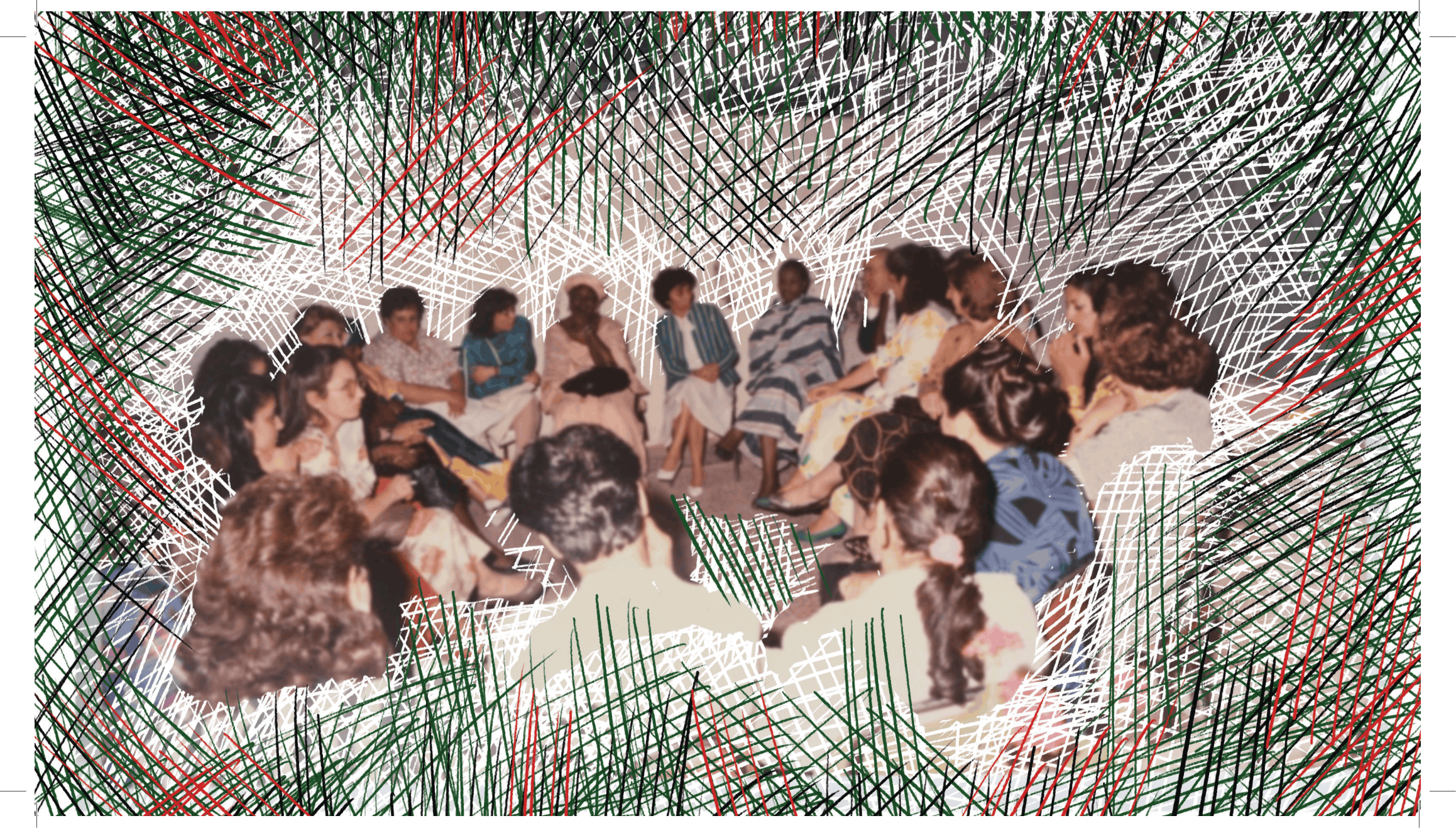
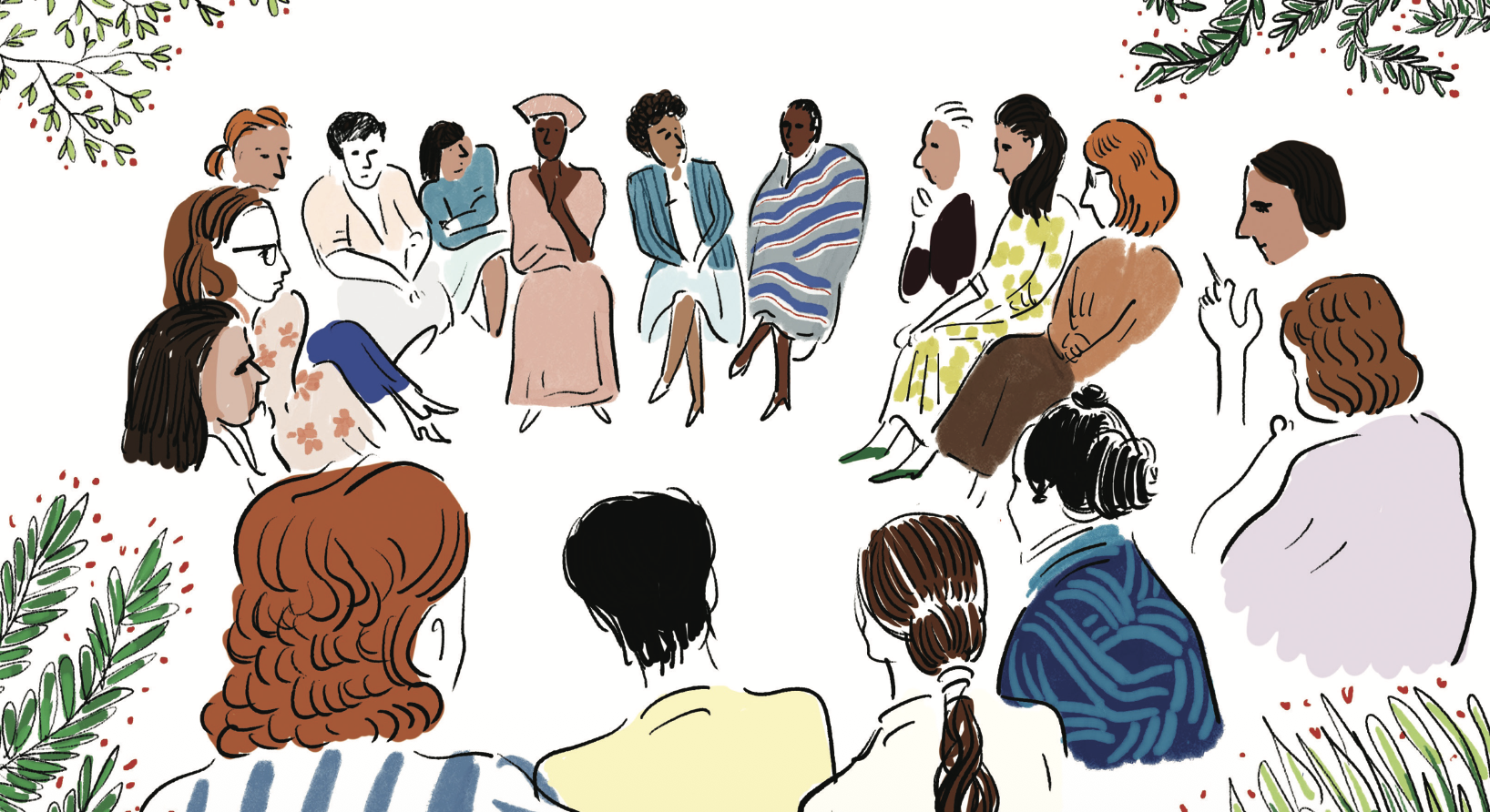
It's the same year, and spring lingers over Tunis as April turns to May. The air is mild and the light gentle. Inside the Hotel Amilcar, the Fourth Conference of the General Federation of Palestinian Women is in session. In attendance are “Palestinian sisters” who spent long years in the Zionist occupation's prisons, freed from captivity in late 1983. Some important men sit in the front row. A representative of the Federal Conference for the Issues of the Social Status of Women of Yugoslavia is about to deliver the greetings that travelled down the Adriatic and across the Mediterranean, a message carried by the same waters that touched different shores. She begins;
“Dear comrades,
I am very pleased to have the honour of conveying greetings to you on behalf of the Conference for the Issues of the Social Status of Women of Yugoslavia, and on behalf of all the women of Yugoslavia I thank you for the invitation you extended to the conference, and I hope that the work of your conference will be crowned with success.
[...]
The people of Yugoslavia and the women of Yugoslavia are aware of your just struggle for freedom and for the establishment of a free, independent Palestinian state, and of the difficulties you face in your popular liberation struggle. The contribution of women to your struggle is immense and an integral part of it. Without it, the goal, which is freedom, cannot be achieved.
The women of Yugoslavia, [...], led by the Communist Party of Yugoslavia, entered the field of struggle against fascism and Nazism and their collaborators during the Second World War. These days, and specifically on May 9th, Yugoslavia celebrates the victory over fascism, a victory achieved through the common struggle alongside other progressive peoples and nations, in which all the peoples and nationalities of Yugoslavia actively participated, including women on an equal footing. As we mark this anniversary, we highlight the great contribution women made to the people's liberation struggle and to the development of socialism. Since we ourselves have this experience, we sincerely affirm our support for your just struggle. We too lived through the siege of war and the fight for liberation, and at the same time, together with the other progressive forces in our society, our socio-political system declared the principles of a socialist society, in which men and women participate equally in all areas of decision-making. This is guaranteed by the constitution and laws of our socialist self-managing country.
[...]
We still encounter certain difficulties, and we must keep working for the consistent application of the constitution and the law, until the remnants of patriarchal consciousness and traditions are completely overcome, and until all the rights women gained through their contribution to the people's war, the revolution and the rebuilding of the country after the war are fully and lastingly realised. Women, the working class and all working people today take part in carrying out the tasks of completing the development of the political system of socialist self-management, accelerating material prosperity, completing the economic stabilisation program, strengthening brotherhood and unity among our nations and nationalities, and holding firm in international relations on the basis of the principles and aims of the policy of non-alignment, whose foundations were laid during President Tito's lifetime.
[...]
The Socialist Federal Republic of Yugoslavia [...] unequivocally support the struggle of the Palestinian people and insist on Israel's withdrawal, without conditions or restrictions, from all the Arab and Palestinian territories occupied in 1967, and for the realisation of the Palestinian people's inalienable rights to self-determination, independence and sovereignty, and to the establishment of their own state on their own land. [...]
[...]
Dear comrades, I wish once more that your conference's proceedings will be crowned with success, and that you will continue to improve the situation of Palestinian women. I also express our readiness to continue cooperation between the General Federation of Palestinian Women and the Conference for the Issues of the Social Status of Women of Yugoslavia.”
It's October 2026, and the weather in London has turned. The summer was apocalyptic. The heat that pressed down on the city for weeks left the parks faded to a dusty orange I have never seen here before. Now autumn seems to be arriving, and I am relieved by its crispness. My hands are cold.
I sit to read these messages from the past once more. The pages are cream-coloured and slightly skewed in their scans. I am using modern technology to decipher them, feeding the scans into a machine that reads the Arabic lines that I cannot. I am reminded that I really should have committed to learning the language. Maybe it's not too late. I should really do it soon.
I notice that page 3 of the speech appears to be missing. The numbers run 2, then 4, and I wonder whether it’s a typo, a slip of the numbering, or whether a whole page really is gone. Was it lost, misfiled, never scanned or kept? Did it even exist?
I think about the gaps in archives, and about my desire to fill them. I think about time travel and generational disappointments, and I wonder if the women in that hall thought of this too. I scan the photograph of the meeting held at the sidelines of the conference for signs of this. Impossible to know.
Just a few short months following the conference, on 1 October 1985, in an operation they called Wooden Leg, Israeli jets bombed the PLO's headquarters outside Tunis. In Belgrade, the brotherhood and unity named in the speech has a few years left, and the stabilisation programme will give way to inflation, then to war, and the country that sent the greeting will be gone before I am old enough to remember it.
In Celtic Christian tradition, a thin place is where two realms press so closely they almost touch. As I disappear deeper into the letters and speeches, I find myself in the orbit of familiar vocabulary. Time starts to feel like a thin place too. The distance between these pages and today feels more permeable than linear chronology allows. I am caught in the arc of a returning boomerang, suspended in constellations, not timelines.
Today, a free Palestine has yet to arrive. But we promise that it will. We insist that it will.
Prompted by Munira Khayyat, I think about what tense all this belongs in. I think about October. I think about ellipses. You sit in them too. Are the three dots comfortable?
I ask myself if time is a traitor and the archive a trickster. I drift into a daydream about the women at that conference, tasting freedom after years in the occupation's prisons. I think of the letters and poems I have written for almost two years to a friend who is held in one of those prisons today. Letters I cannot send. I think about his freedom as a debt that is owed to the sky.
Outside, the Sunday light is low. The sun slants in through my windows, bringing with it an unnerving sense of calm. I realise that I have already resolved to write in the present. I pour a second cup of coffee, and turn to another letter. I begin;
Dear A,
[...]
Angelina Radaković
London, UK


Introduction
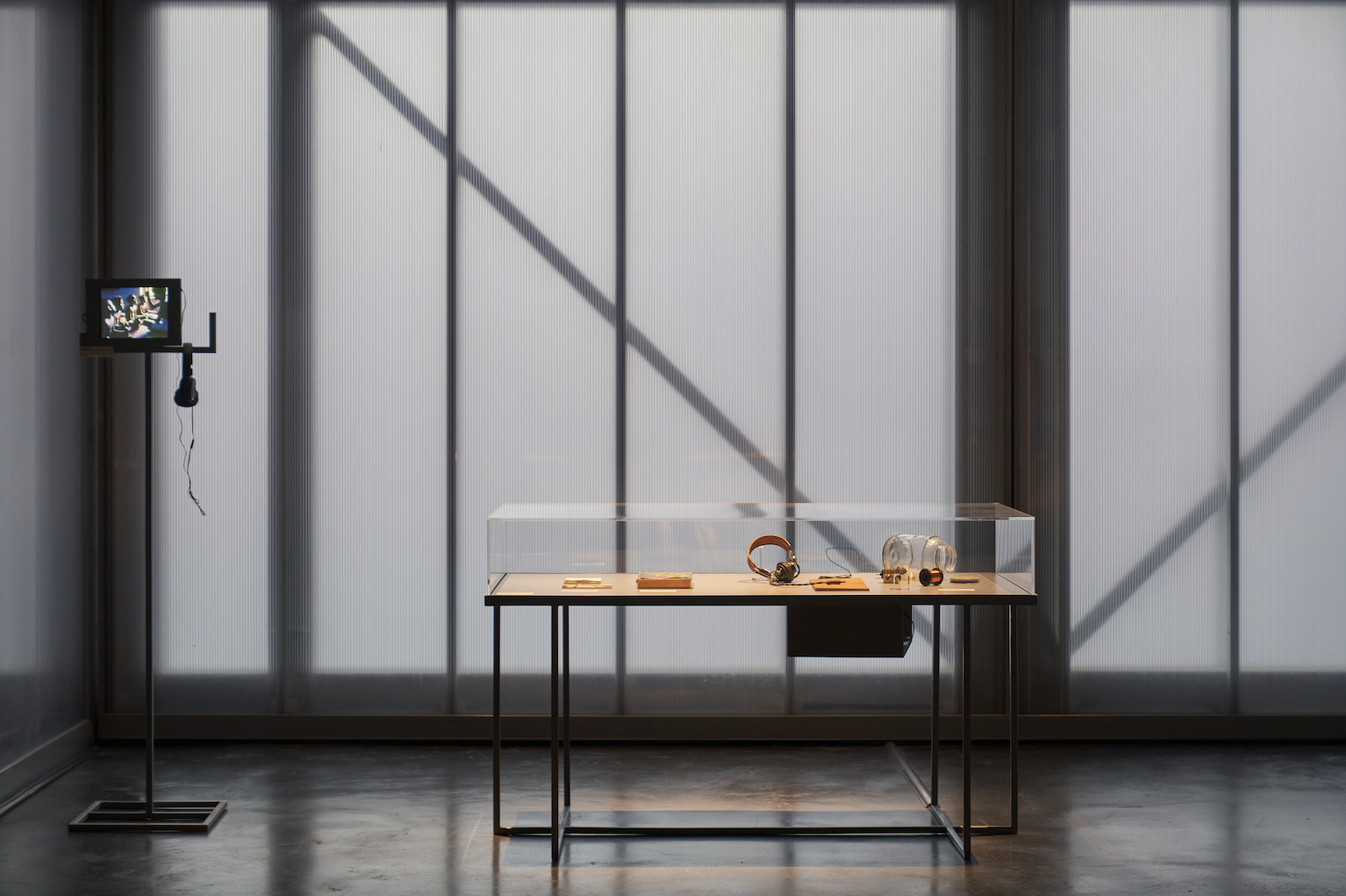
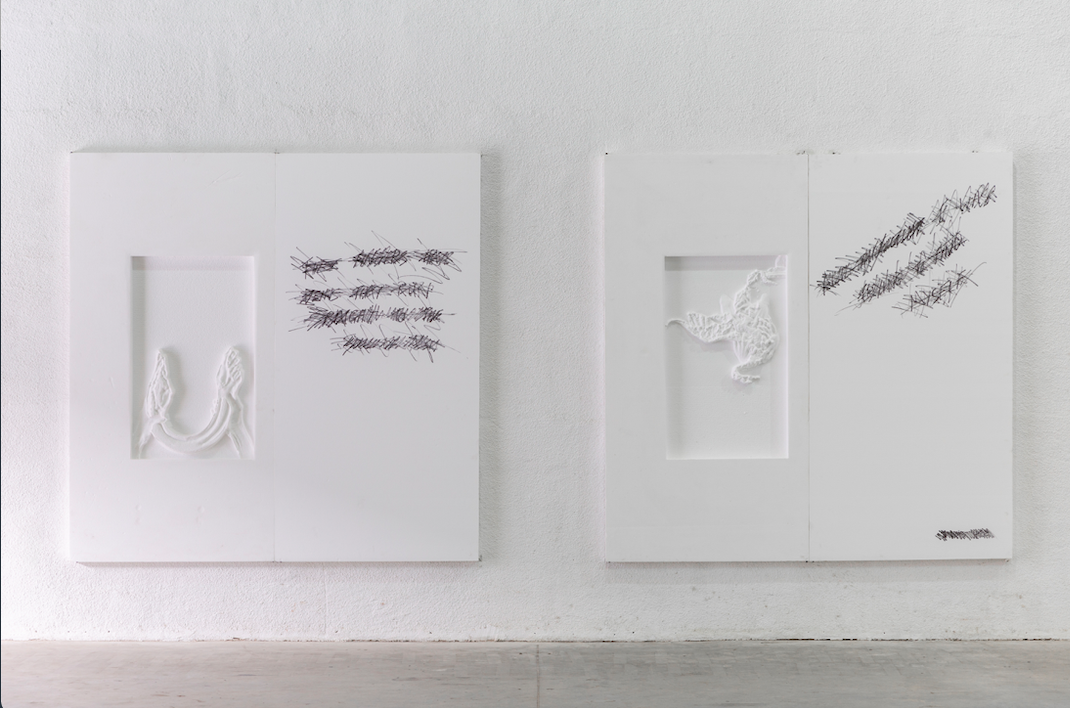
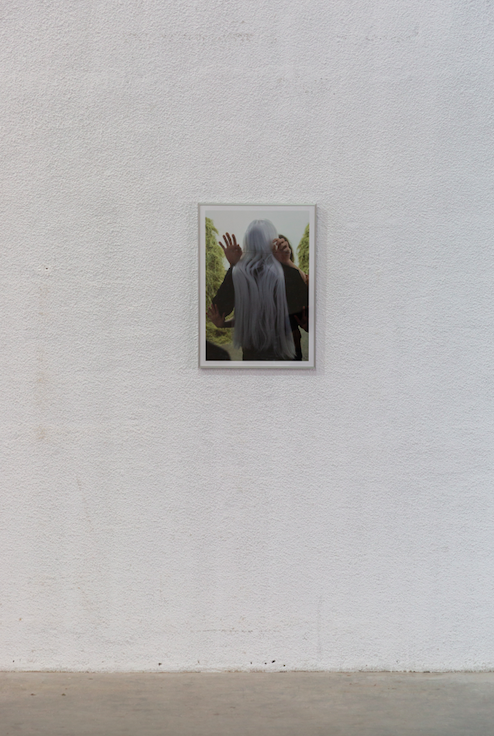
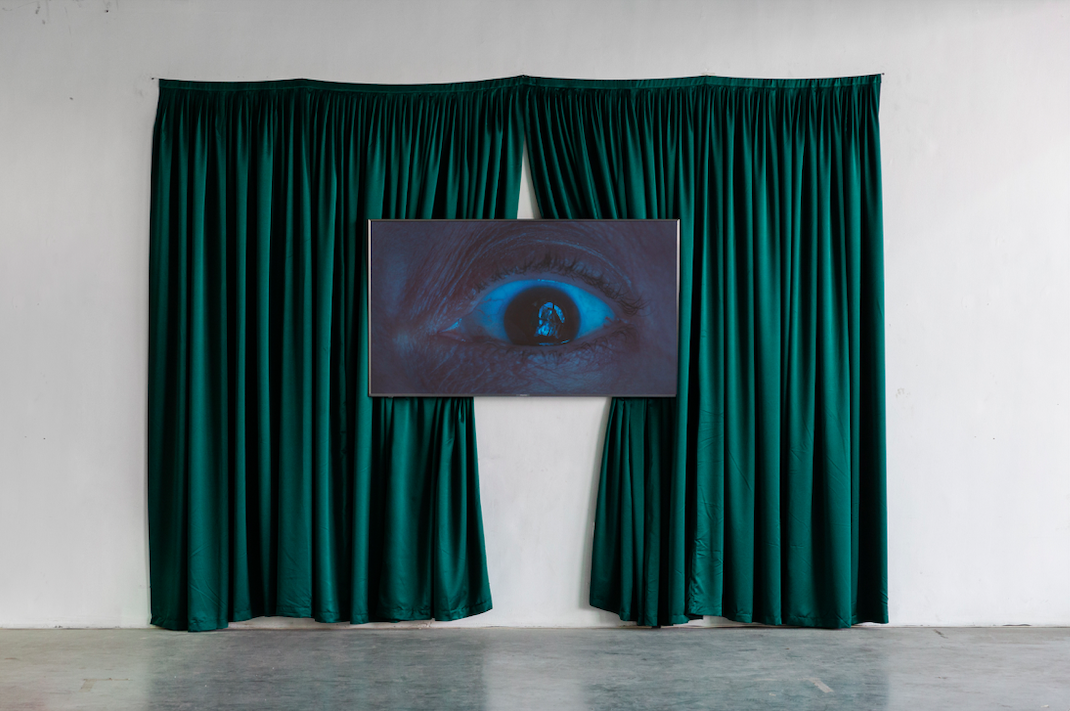
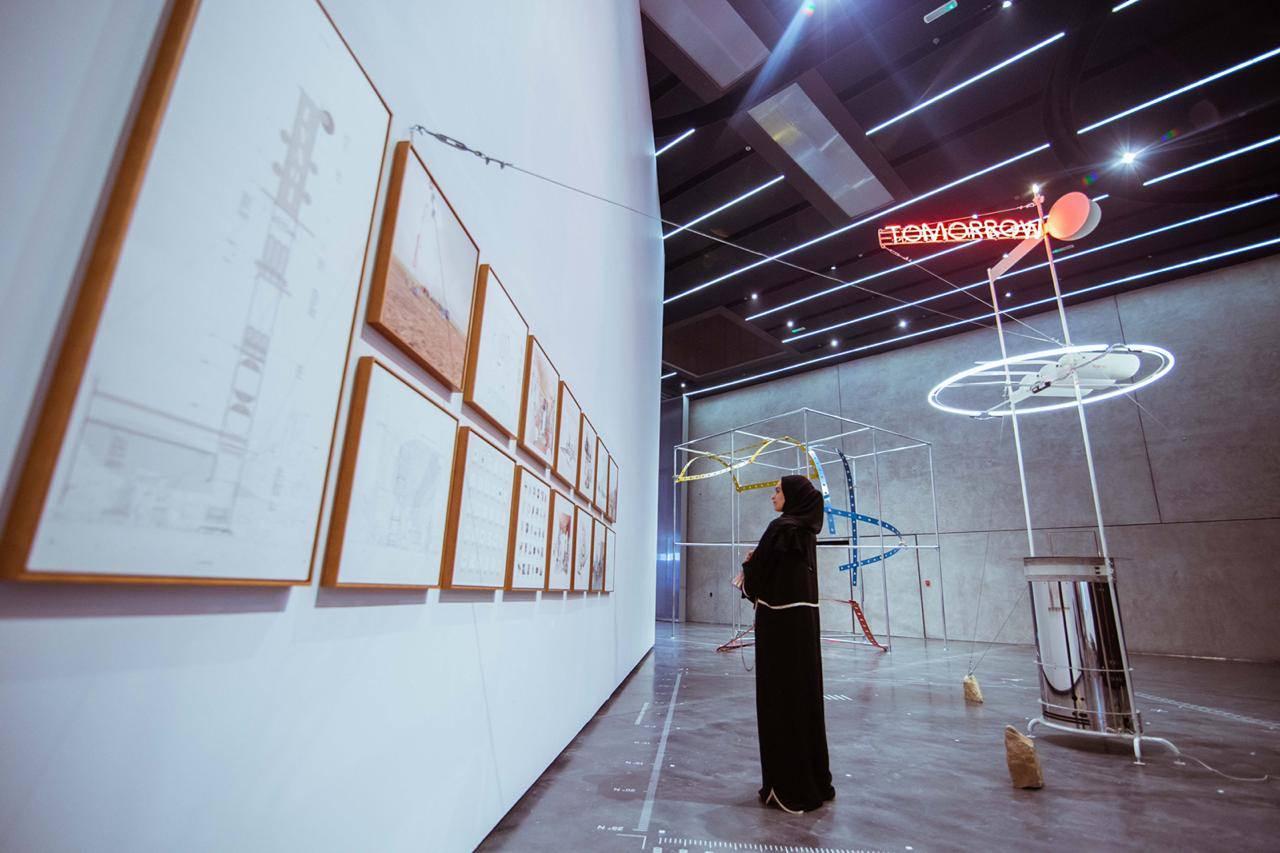
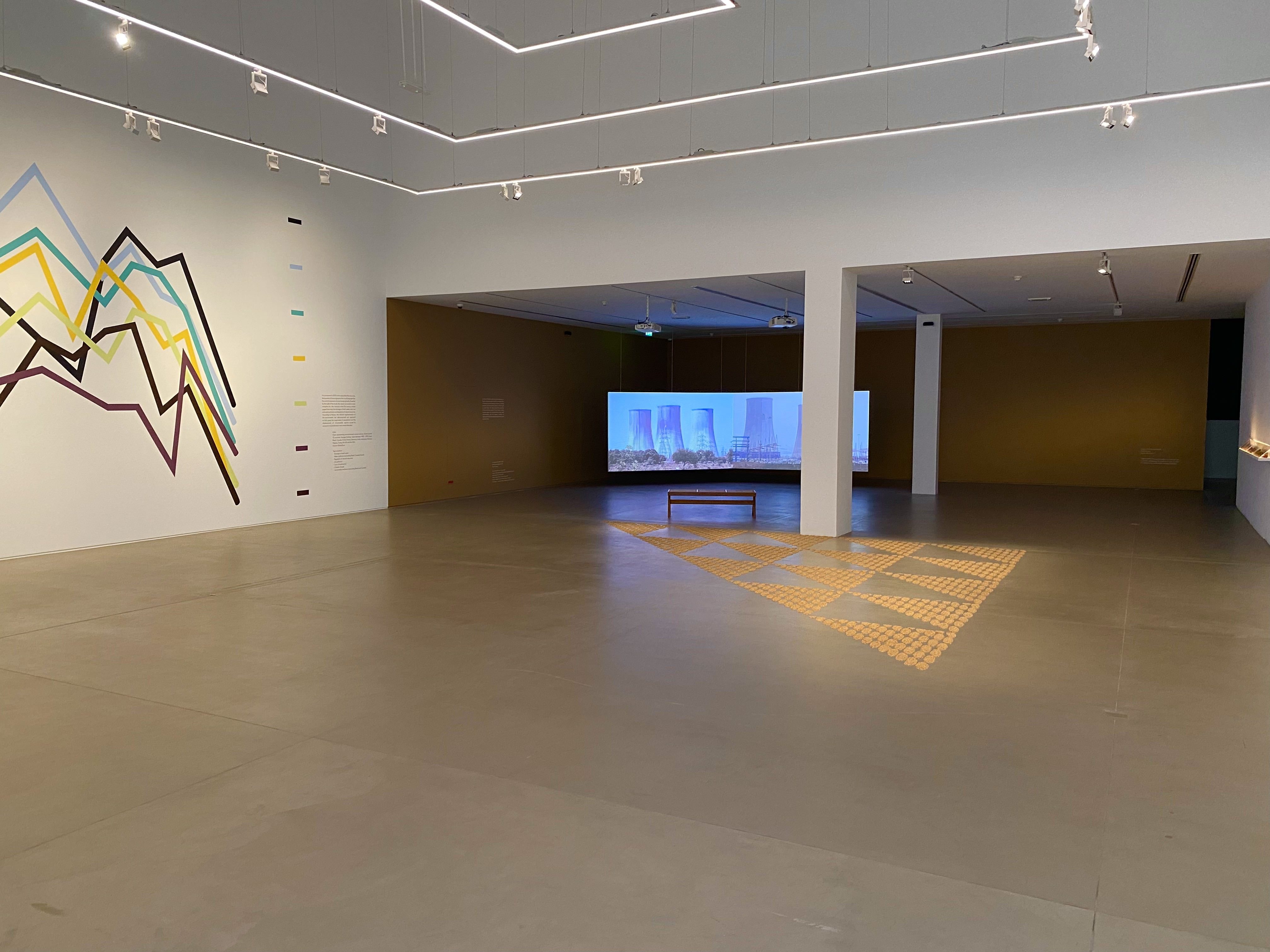
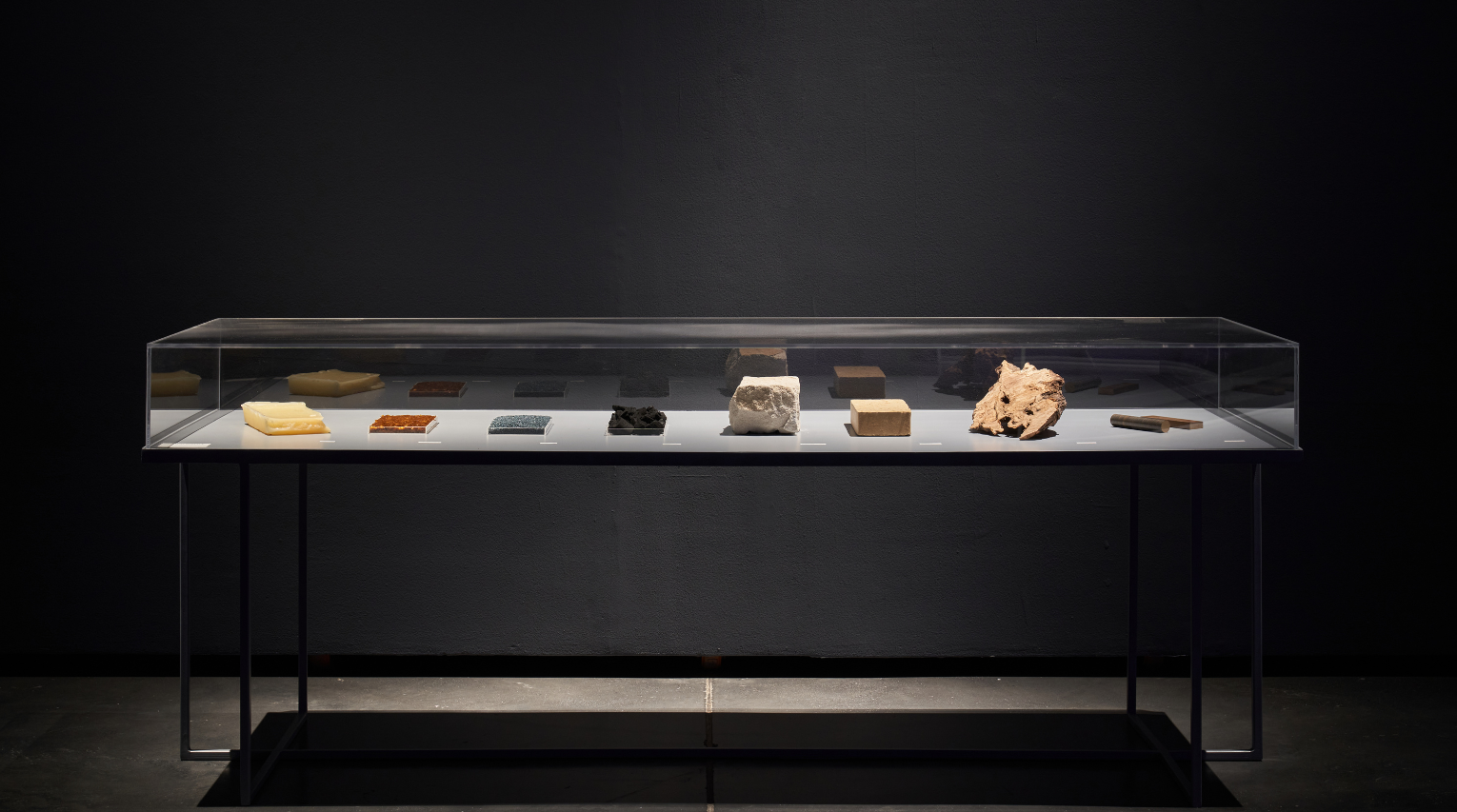
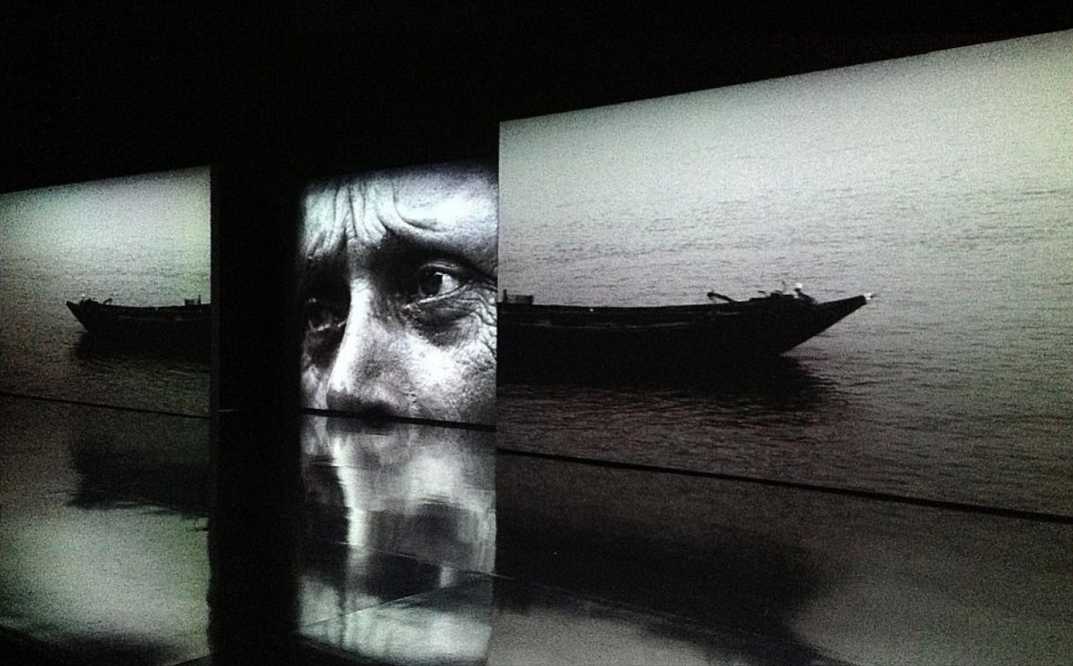
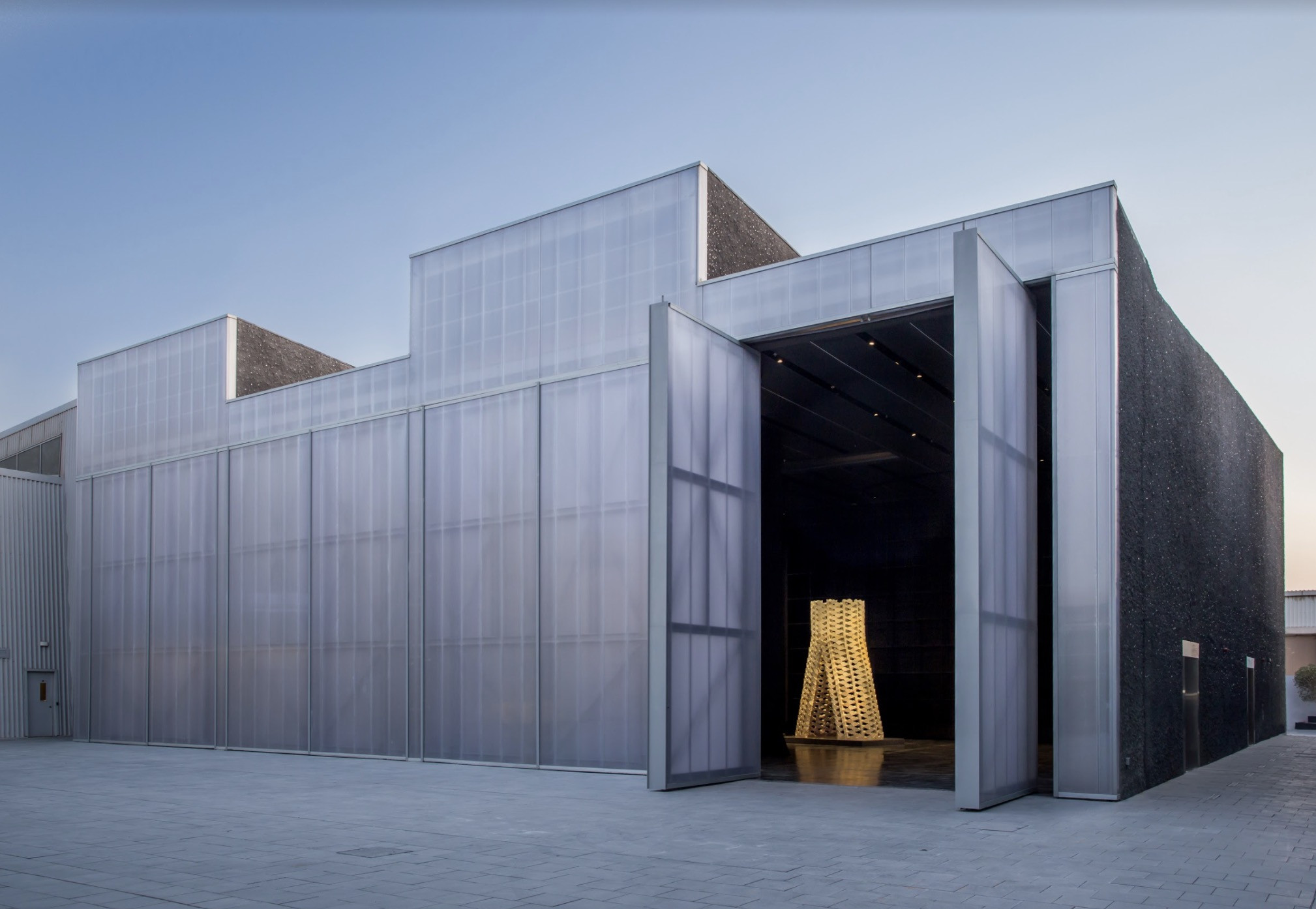
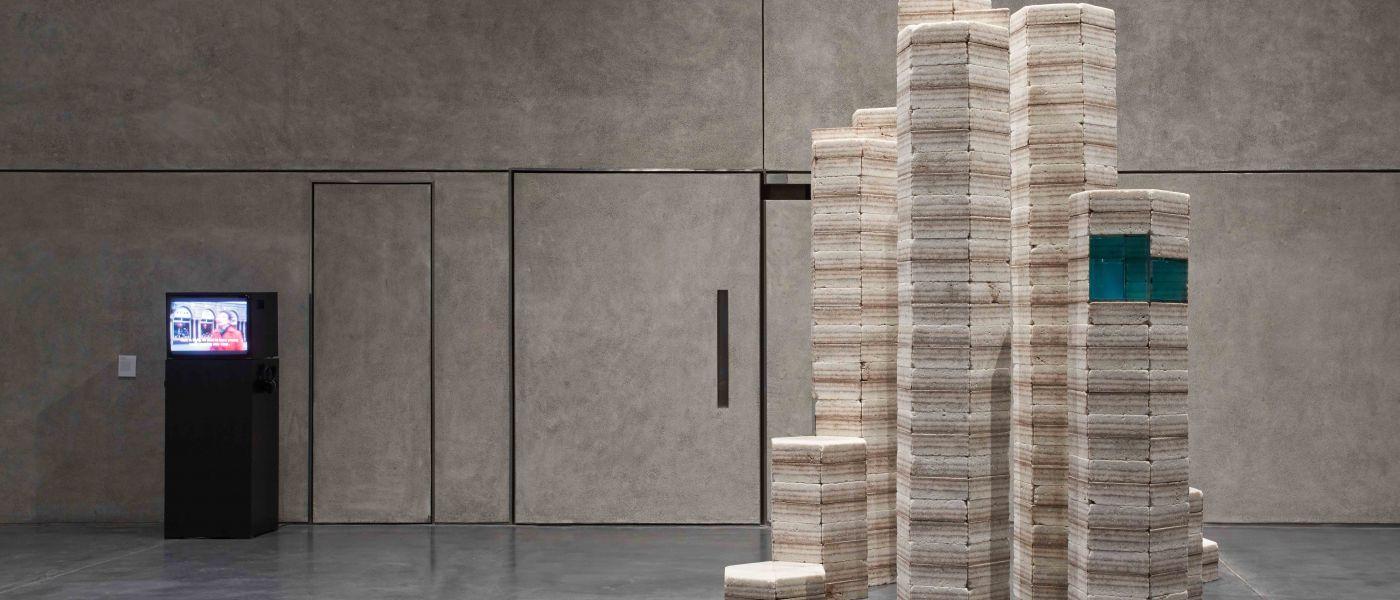
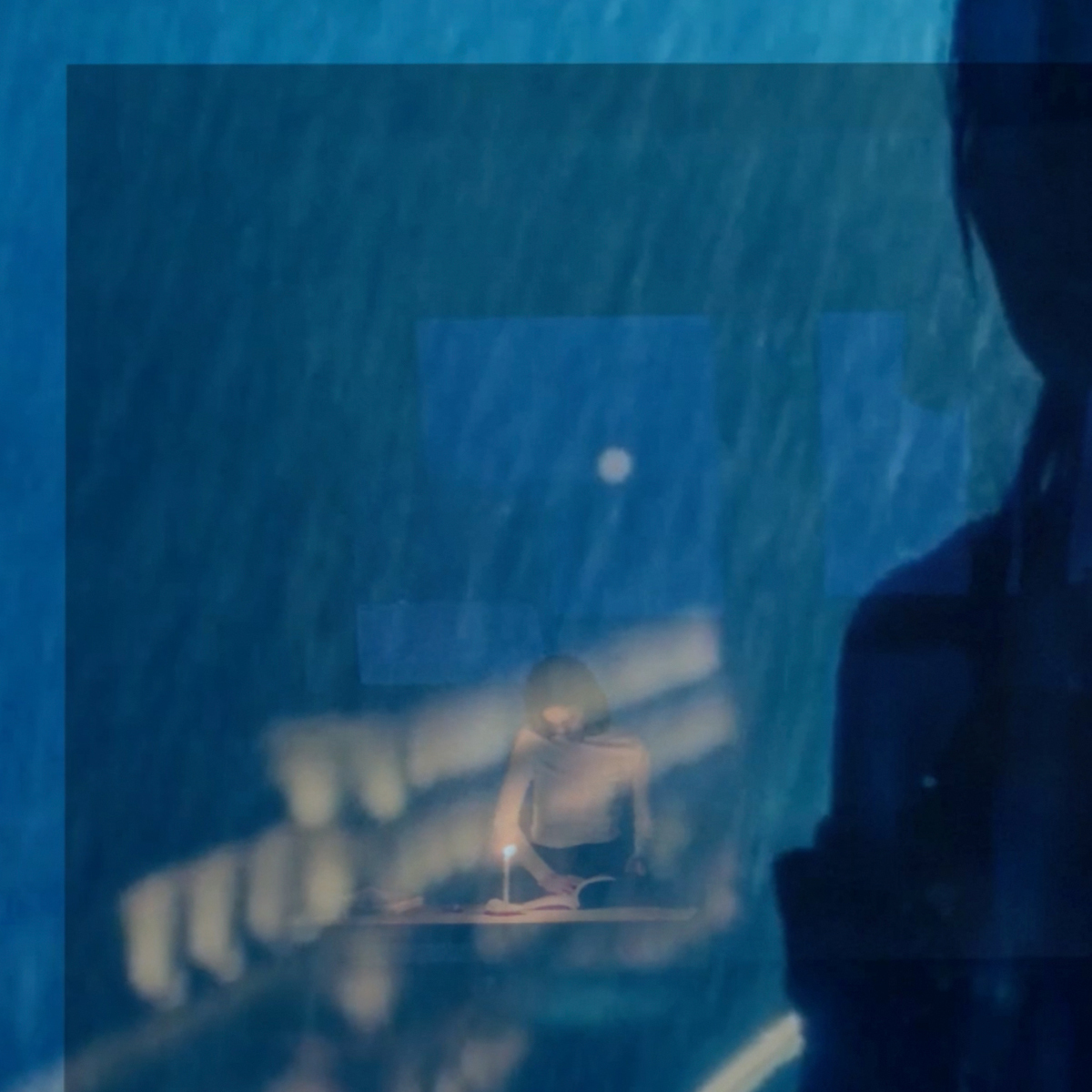
Curated by Nida Ghouse, A Slightly Curving Place responds to the practice of self-taught acoustic archaeologist Umashankar Manthravadi and proposes possibilities for listening to the past and its absence which remains. Centred around an audio play and a video installation, it brought together writers, choreographers, composers, actors, dancers, musicians, field recordists, and sound, light, and graphic designers who engage and transform not just each other’s work, but also that of many others. Elements from Umashankar’s biography served as a compass amid the material in vitrines, as a dancing body positions the endlessness of time in relation to a series of ruptures that is history.
The exhibition draws its title from Jain cosmology. Isipabbharabhumi is a Prakrit phrase referring to a special place above the heavens shaped like a parasol. It is where the disembodied souls of the perfected ones go to live in eternal isolation. There, sealed off from the rest of the cosmos, they are unable to interact with other souls, unable to hear them or be heard.
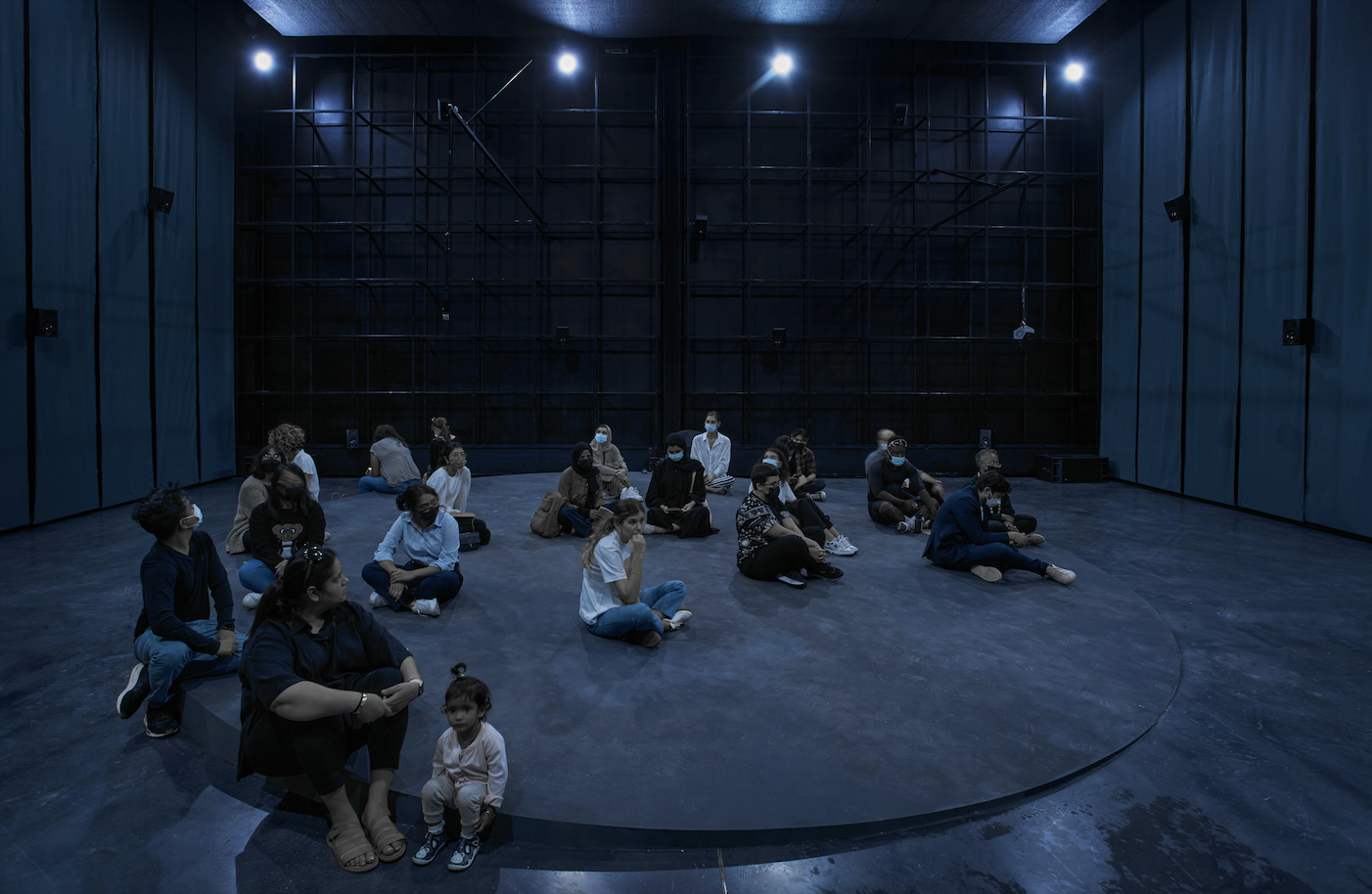
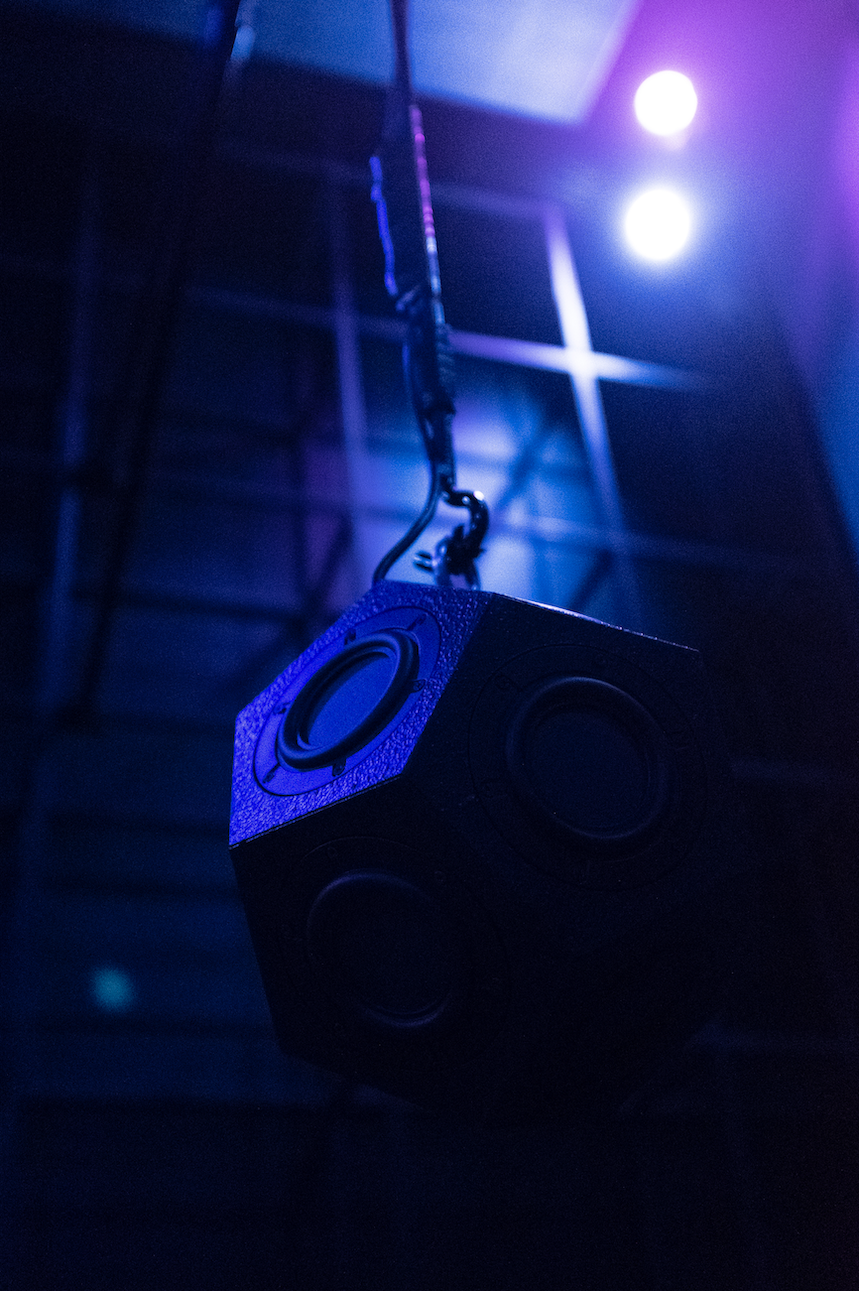

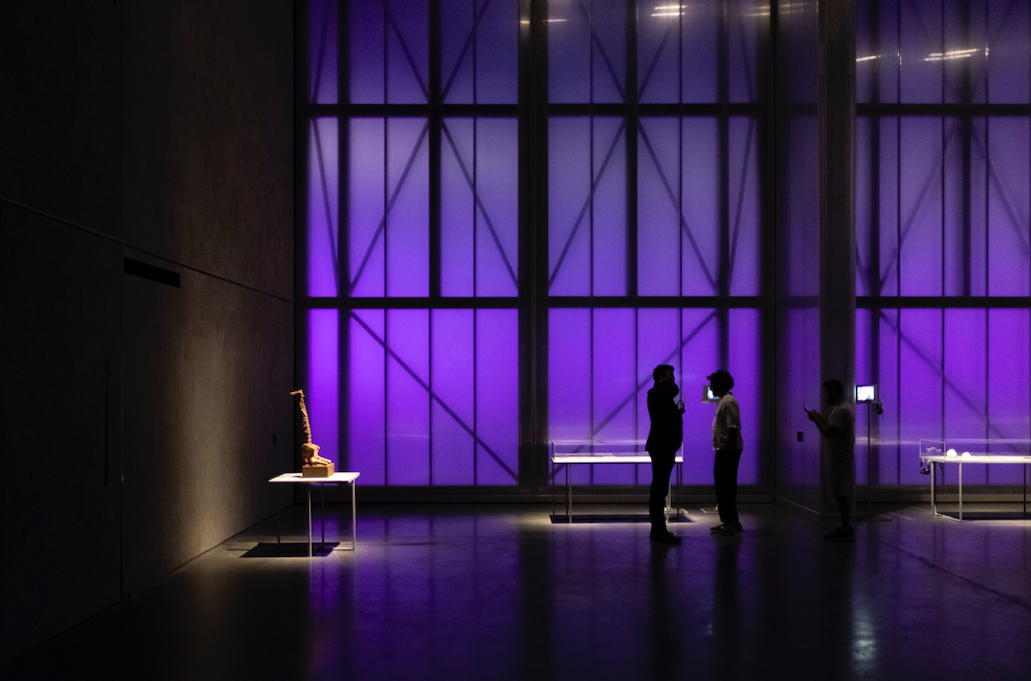
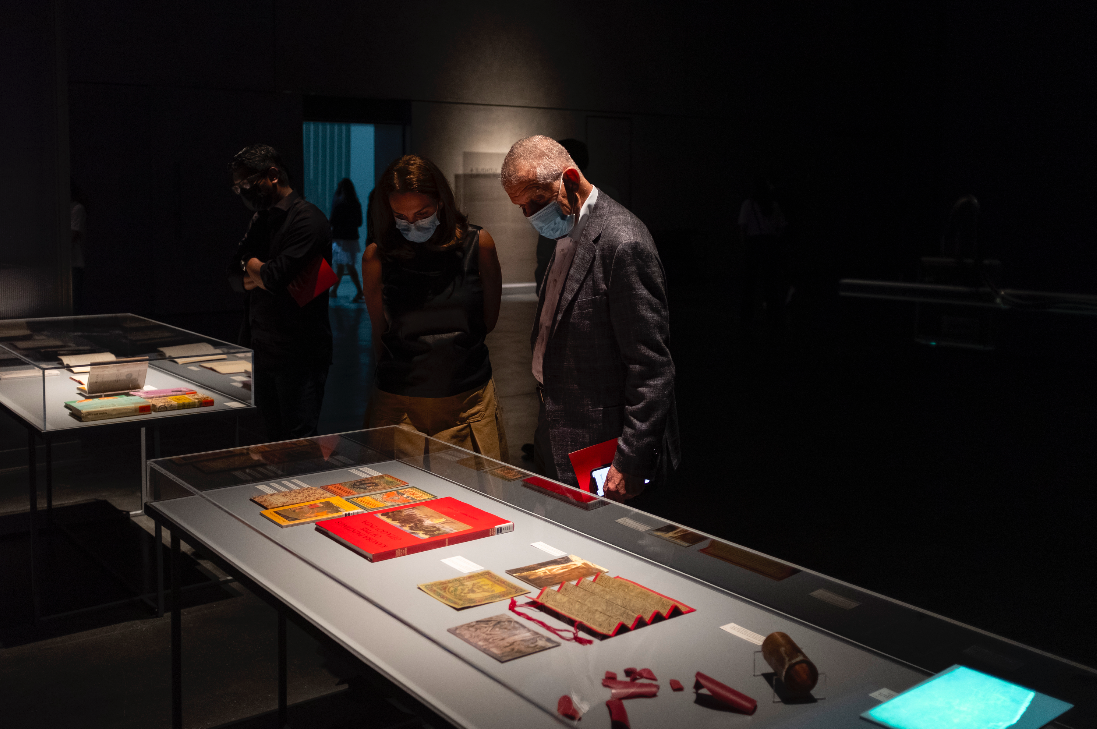
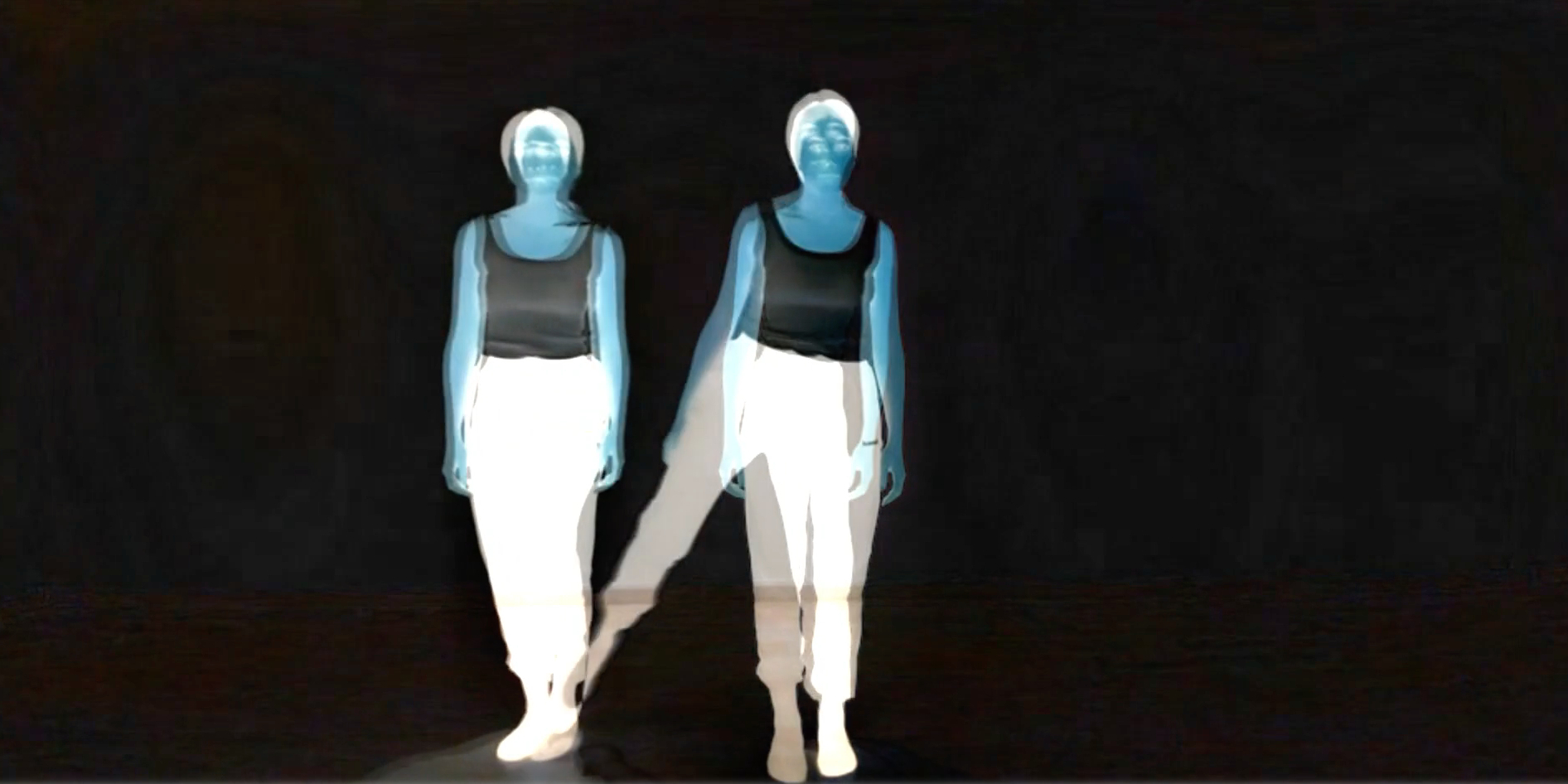
A Slightly Curving Place with Padmini Chettur
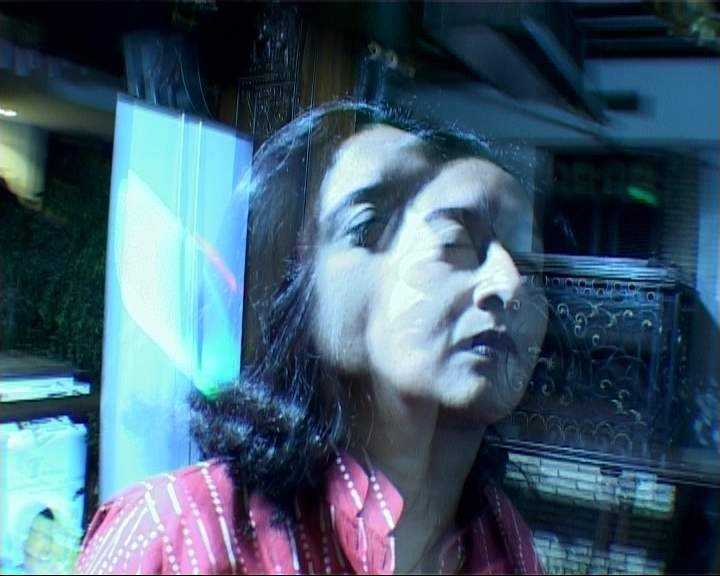
A Slightly Curving Place with Moushumi Bhowmik
Public Programme
Coming to Know
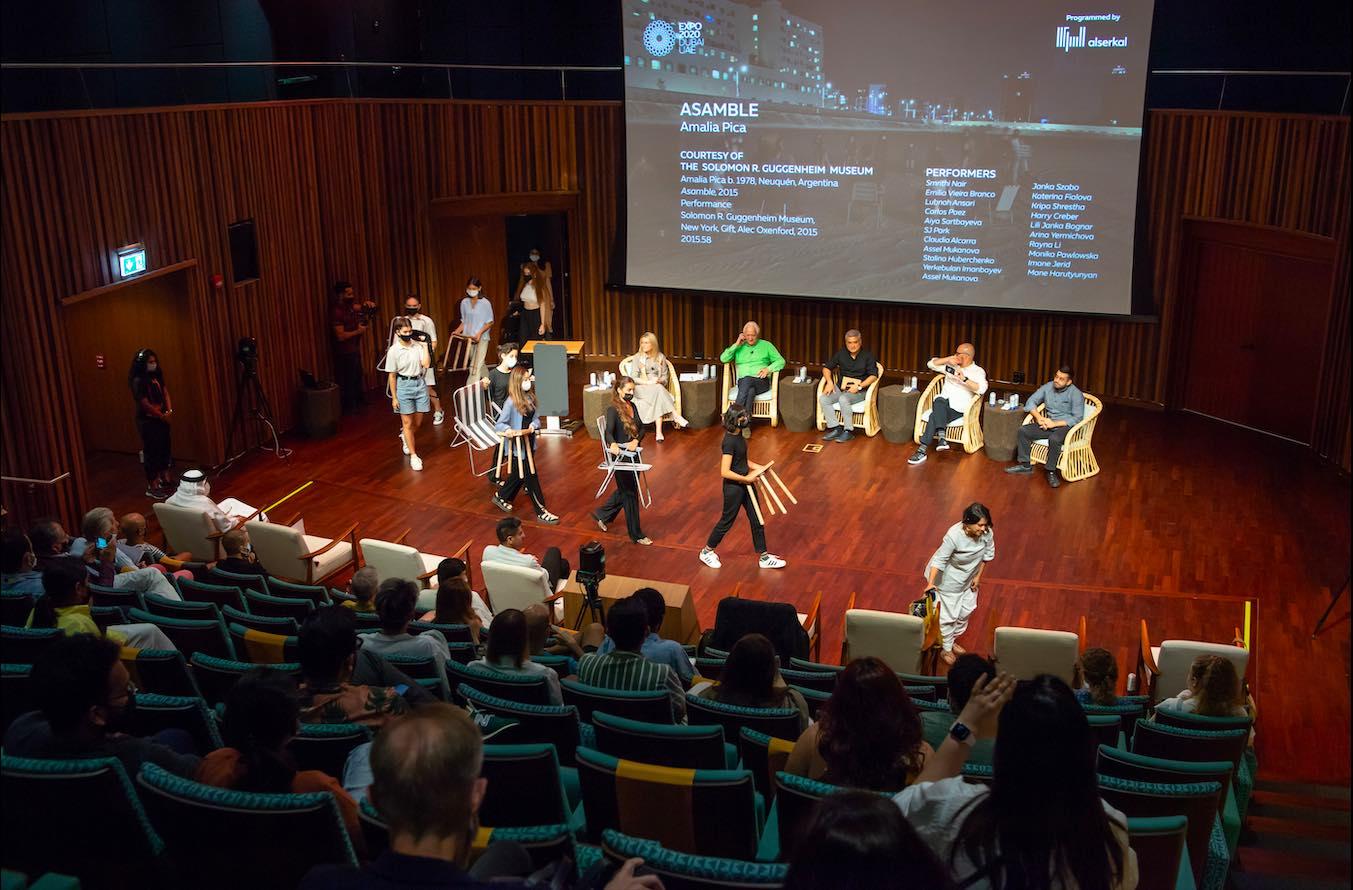
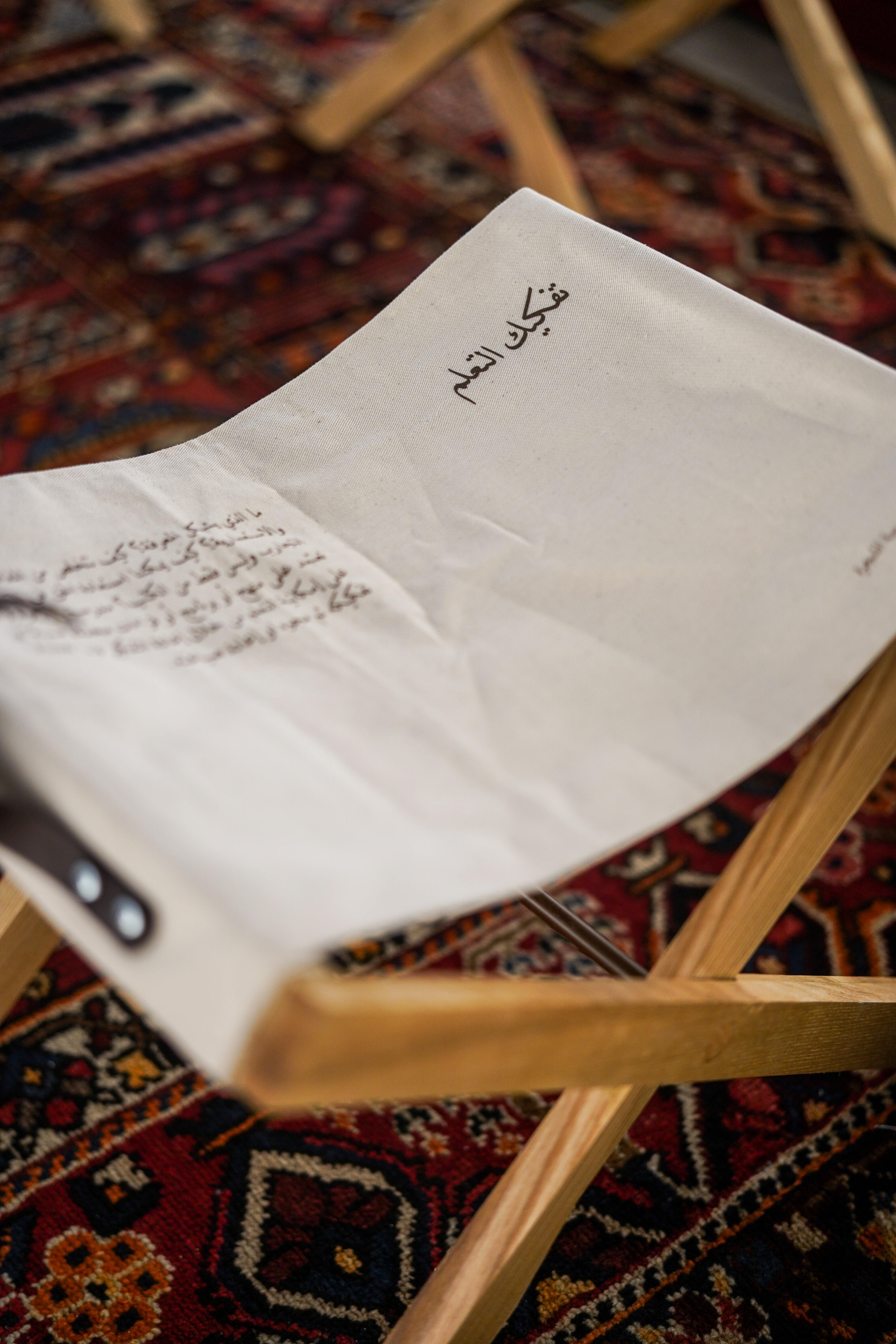
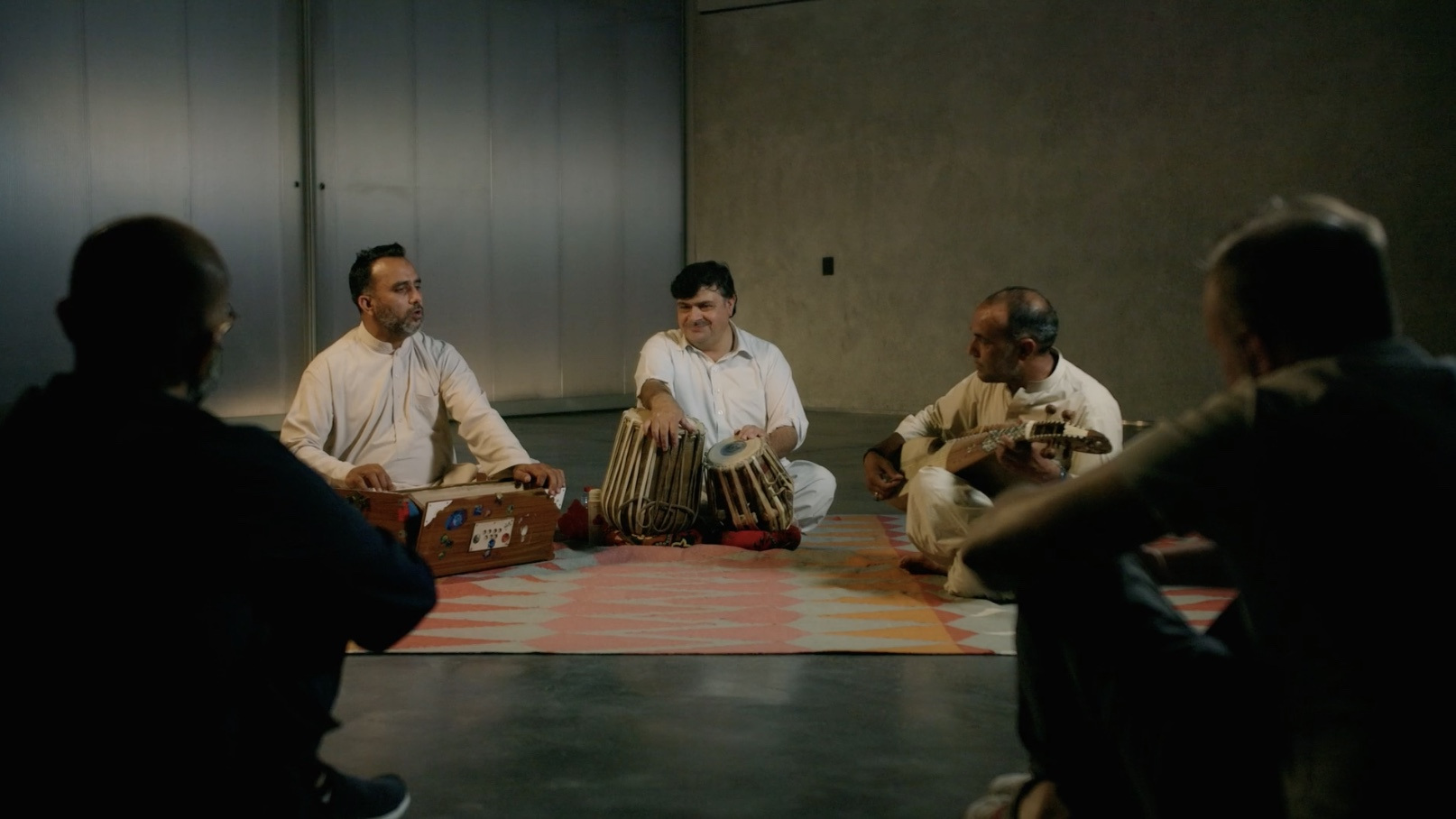
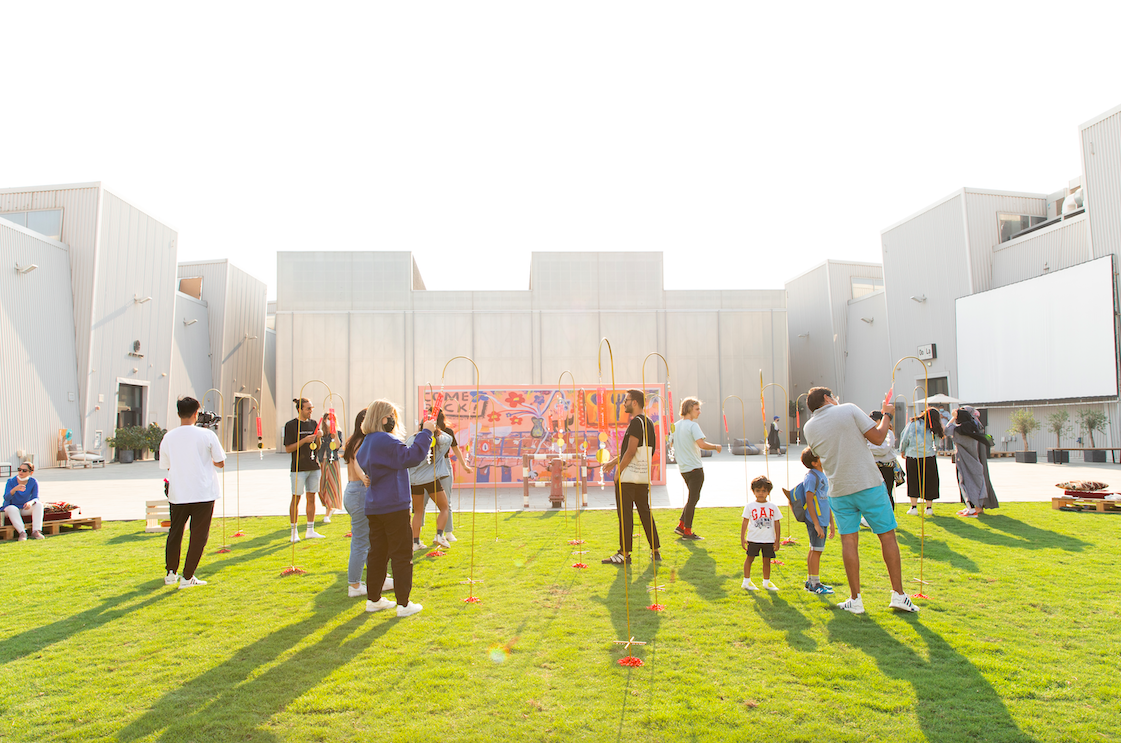
Coming to Know was the public programme extending from the exhibition A Slightly Curving Place, organised by Nida Ghouse and Brooke Holmes with Moushumi Bhowmik, Padmini Chettur, Hugo Esquinca, Umashankar Manthravadi, v ness, Tanvi Solanki, Sukanta Majumdar and Yashas Shetty.
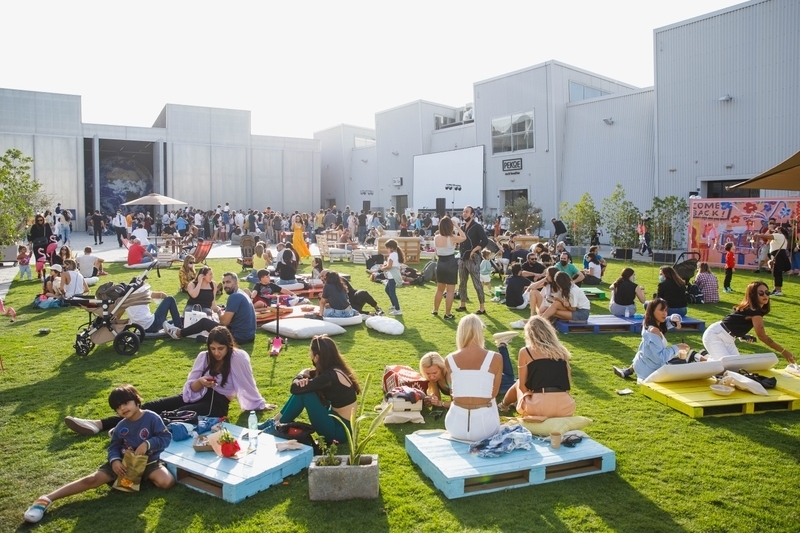
The programme was presented by Alserkal Arts Foundation in collaboration with the Department of Classics, Princeton University. Made possible by Durjoy Bangladesh Foundation.
What does it mean to listen to the past, together?
Listening assumes the existence of sound at a frequency we can hear. Coming to Know instead imagined sounds of the past as co-produced by artifacts and contemporary technologies of eliciting audibility. In between these two instruments is an interminable feedback loop that refracts the process of listening itself while also protracting it to include echoes that may not have been recorded, of events that did not enter history—the simultaneity of the past in the present, a collectivity across time beyond possession and accumulation. If we put things like this, we start to understand listening to the premodern past as —a mode of coming to know that never arrives at its object, a mode that is resolutely processual and porously social.
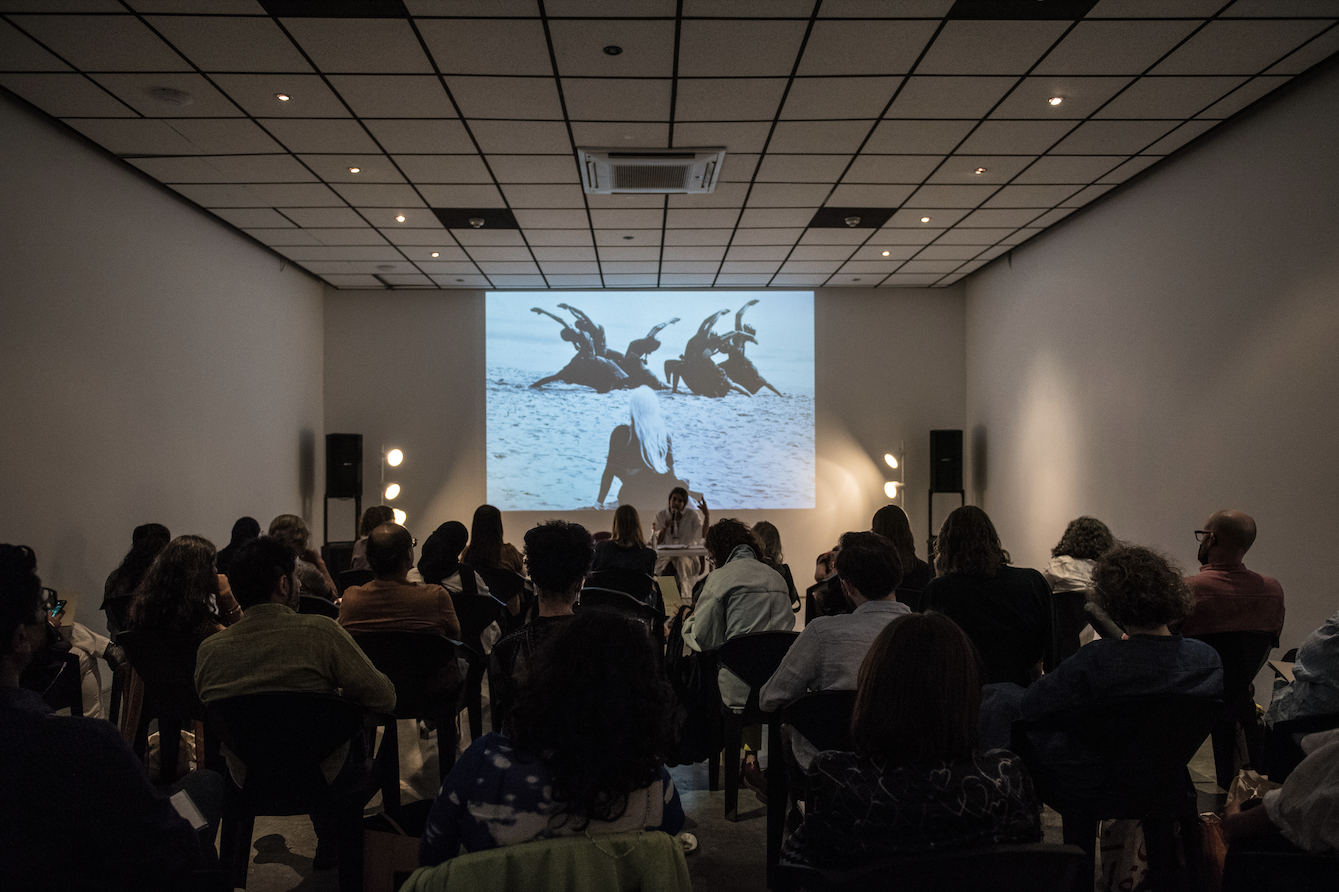
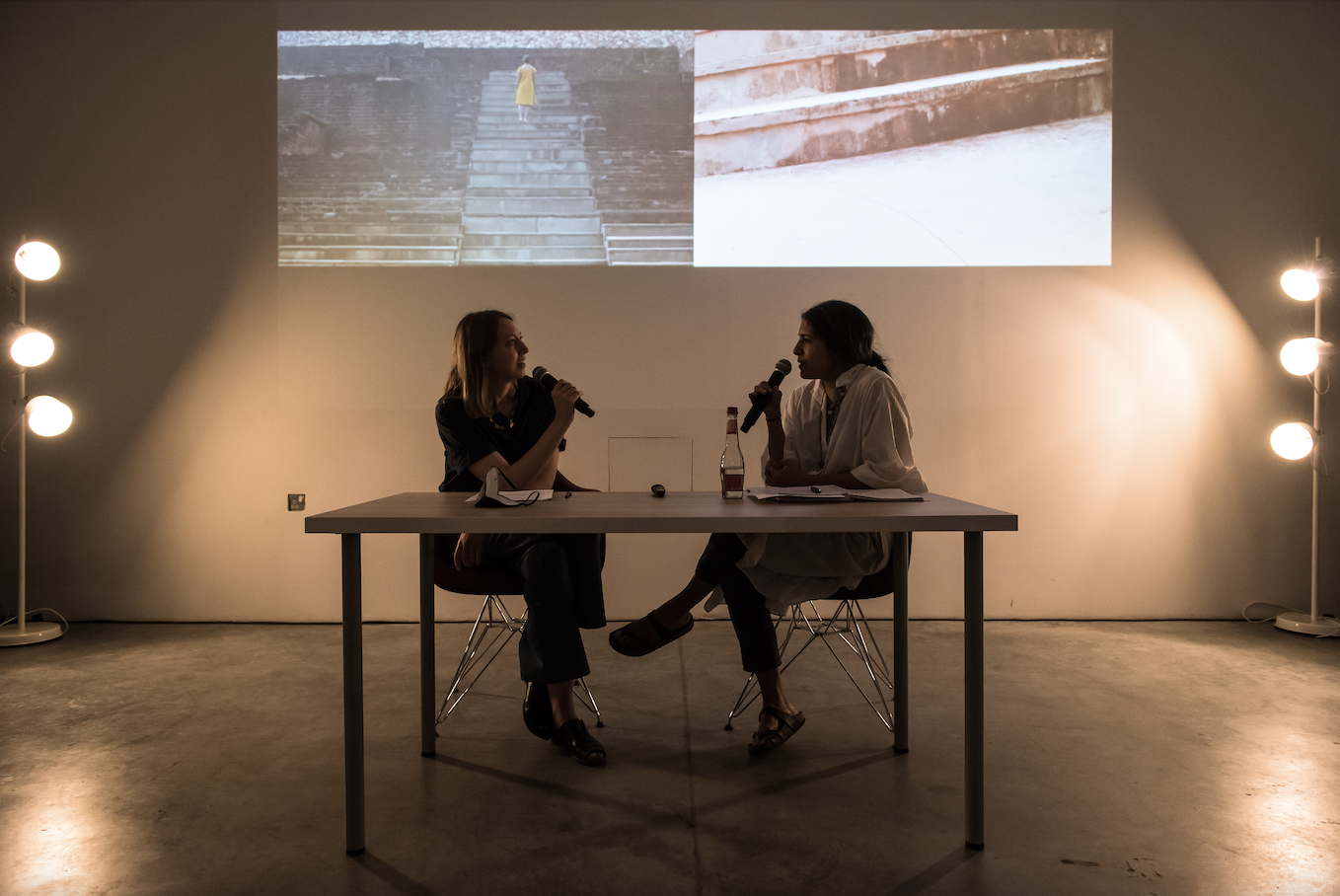
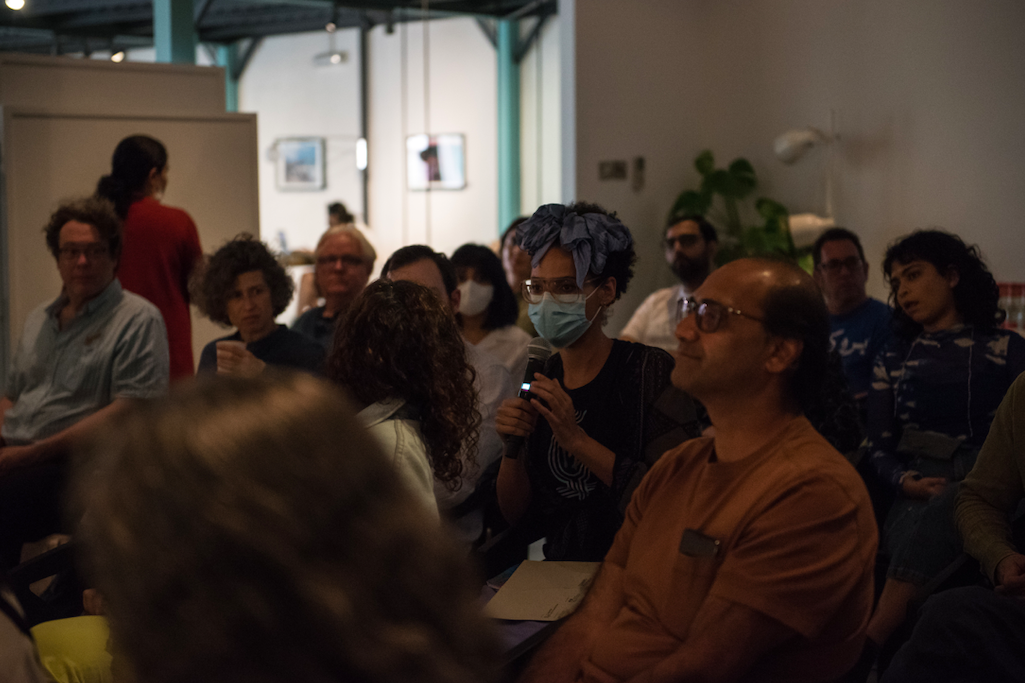
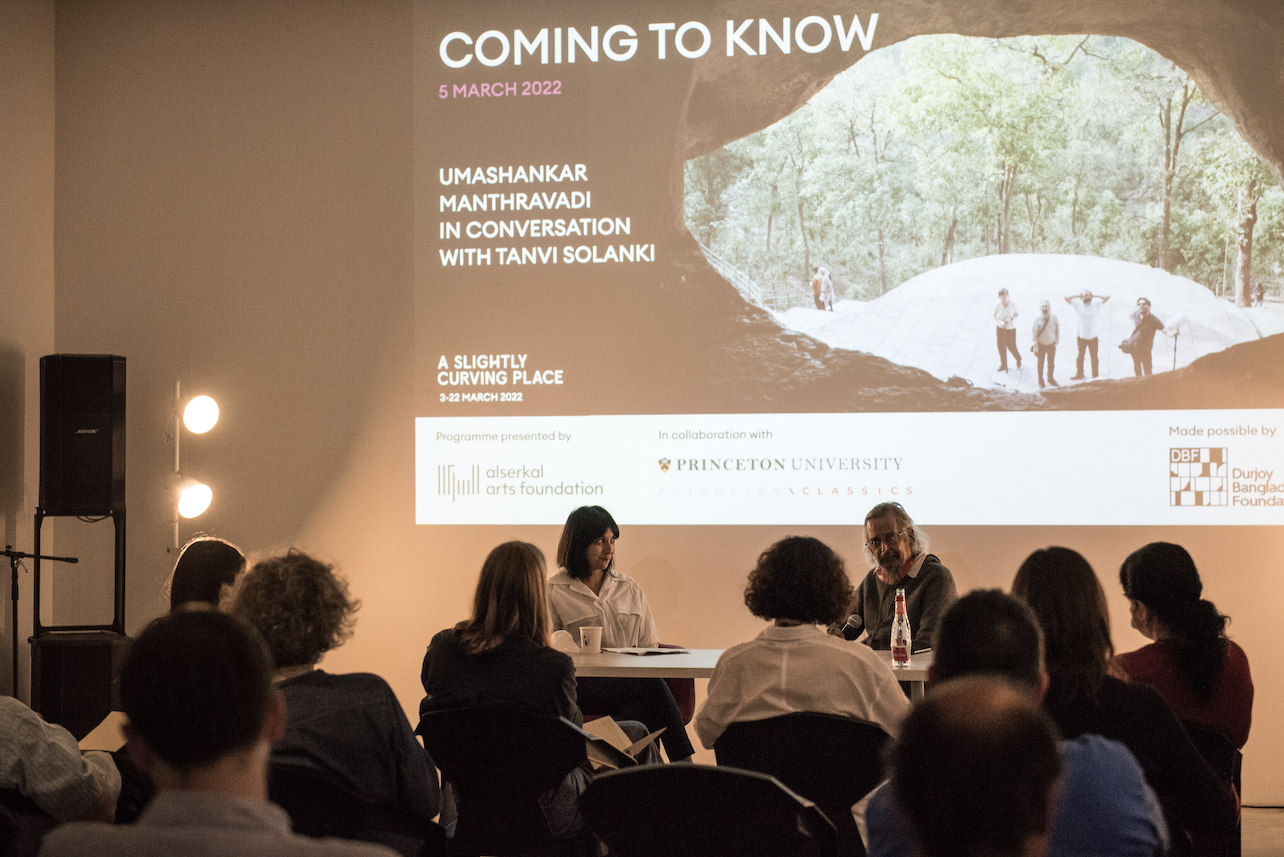
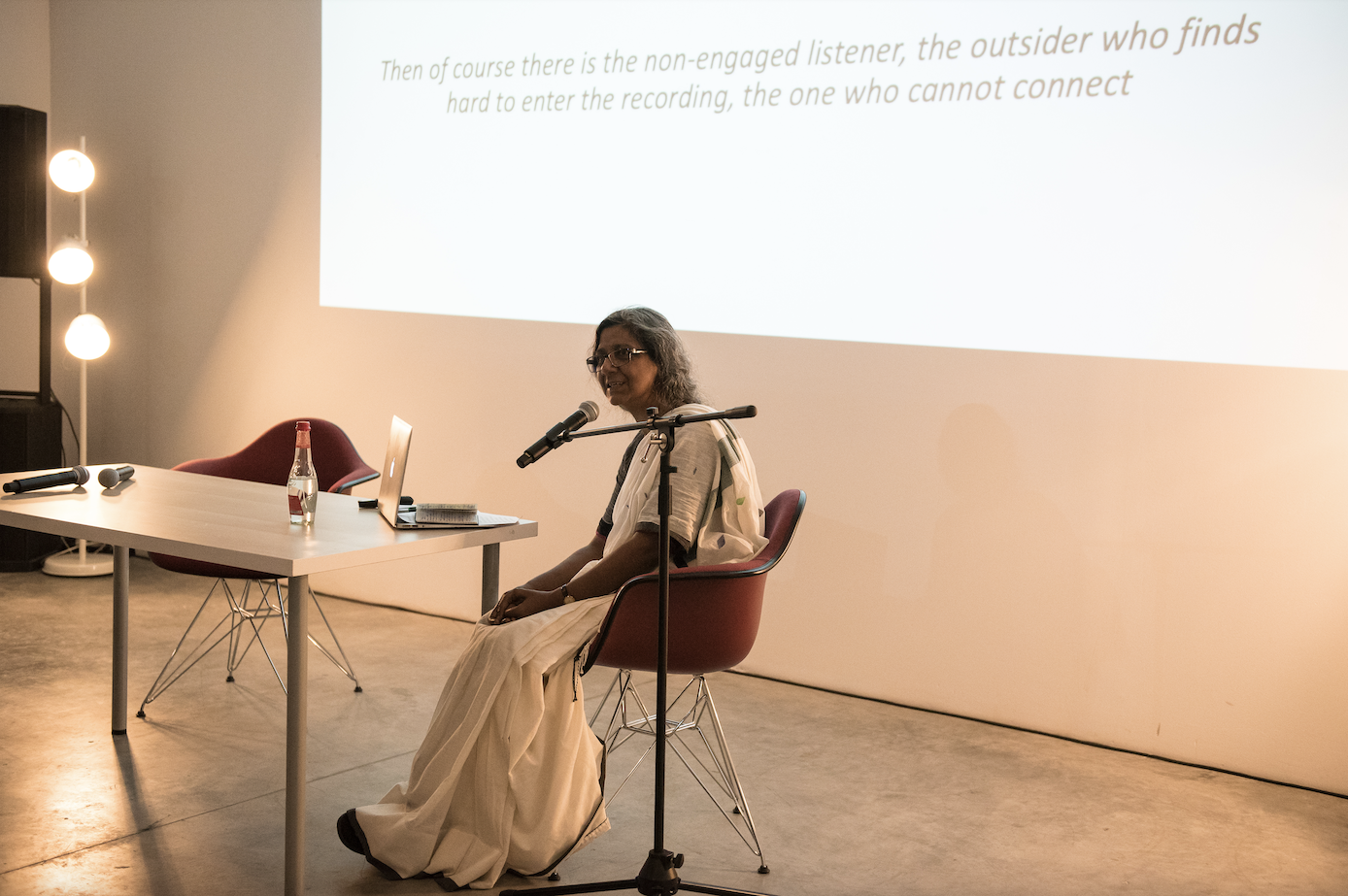
Coming to Know was thus an experiment in ways of forming communities around a shared attention to a premodern past. “To come to know” something speaks to the desire that brings a subject to a place where they might learn, as well as to the promise of a form of recognition that transforms one’s relationship with what seems other, foreign, and distant. In proposing this kind of listening as a modality for approaching the past, we set aside the predominantly visual techniques employed by the archaeological site, the museum, and the larger project of colonial modernity in an effort to possess the past, as an object of timeless value capable of legitimating the present. We also set aside the public program as a didactic supplement to an alien, premodern place and time. We instead ask how the process of coming to know a premodern past together transforms our sense of the knowledge held in common as well as the community that holds it.
5 March | Introductions
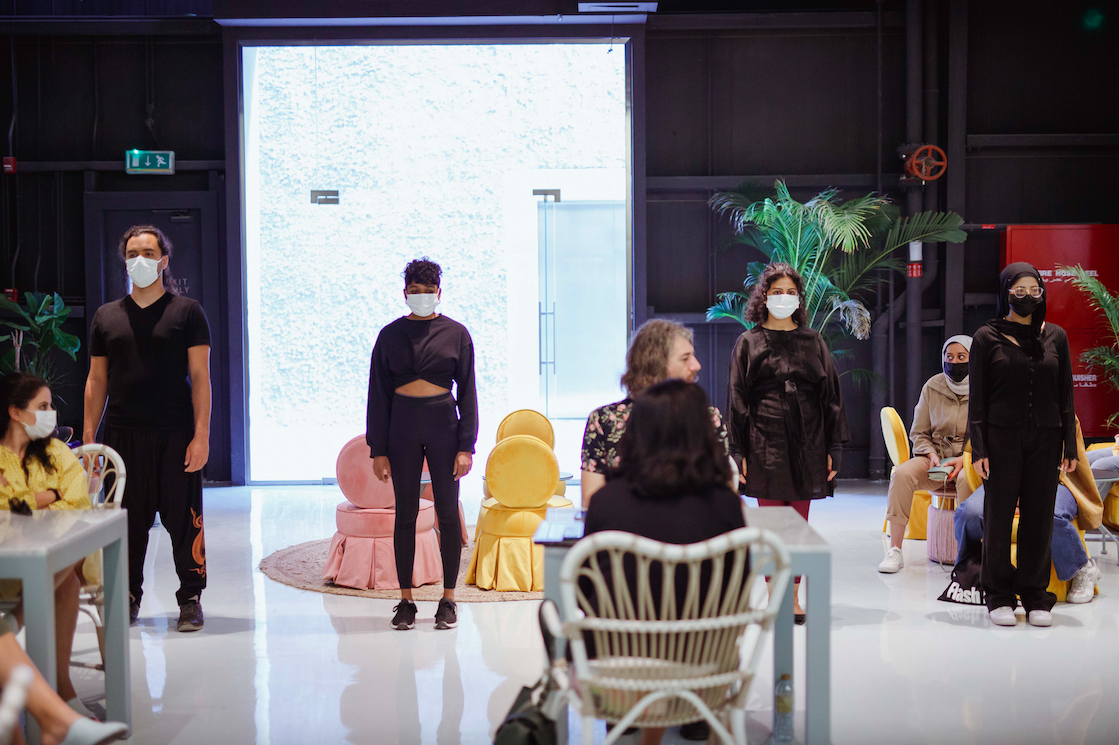
Artist Talk | Padmini Chettur | A Temporal Body
Padmini Chettur in conversation with Brooke Holmes + Q&A
In the 1980s the Indian classical dance Bharathanatyam underwent a radical intervention at the hands of the choreographer Chandralekha, who began to slow the form down to an unrecognizable pace—an anti consumerist, feminist stance. Four decades later, Padmini Chettur—who trained and performed with Chandralekha—searches for a contemporary moment for dance in India through a practice that is deeply embedded in the body's relationship to time, as well as to past histories. Following her four-day workshop at Alserkal, Padmini speaks about her practice—a fluid negotiation of pedagogy and choreography: a research that brings the individual as well as the collective body into a temporal presence.
Umashankar Manthravadi in conversation with Tanvi Solanki | Q&A
Artist talk | Moushumi Bhowmik | Listening within a Flow of Time
Moushumi Bhowmik in conversation with v ness | Q&A
Asinger and listener and a collector and keeper of sounds from the field, working mainly in ‘Bengal’ in the eastern part of the Indian subcontinent, but elsewhere too, Moushumi’s work of several decades has involved both listening in and to the field as well as in the sound archive. Keeping a ninety-year-old wax cylinder recording of a centuries old musical tradition from a village in Bengal at the centre of this talk, she weaves a story of a time which moves around it in circular motions, as in a potter’s wheel, where past present and future meld into one another, as inseparable strands.
Performance | Hugo Esquinca | +ACCIÓN_032
[FOR EXPANSE DISARRANGEMENT]
This performance takes the form of a low frequency intervention executed as a live dig of the exhibition space of A Slightly Curving Place through extensive manipulation of the site's stationary waves and an exploitation of its modal resonance.
35Hz-65Hz @ 130dB SPL.
Closing conversation with Nida Ghouse
22 March | Closing Programme with Uzma Rizvi and Sukanta Majumdar
On the Sound of Salt
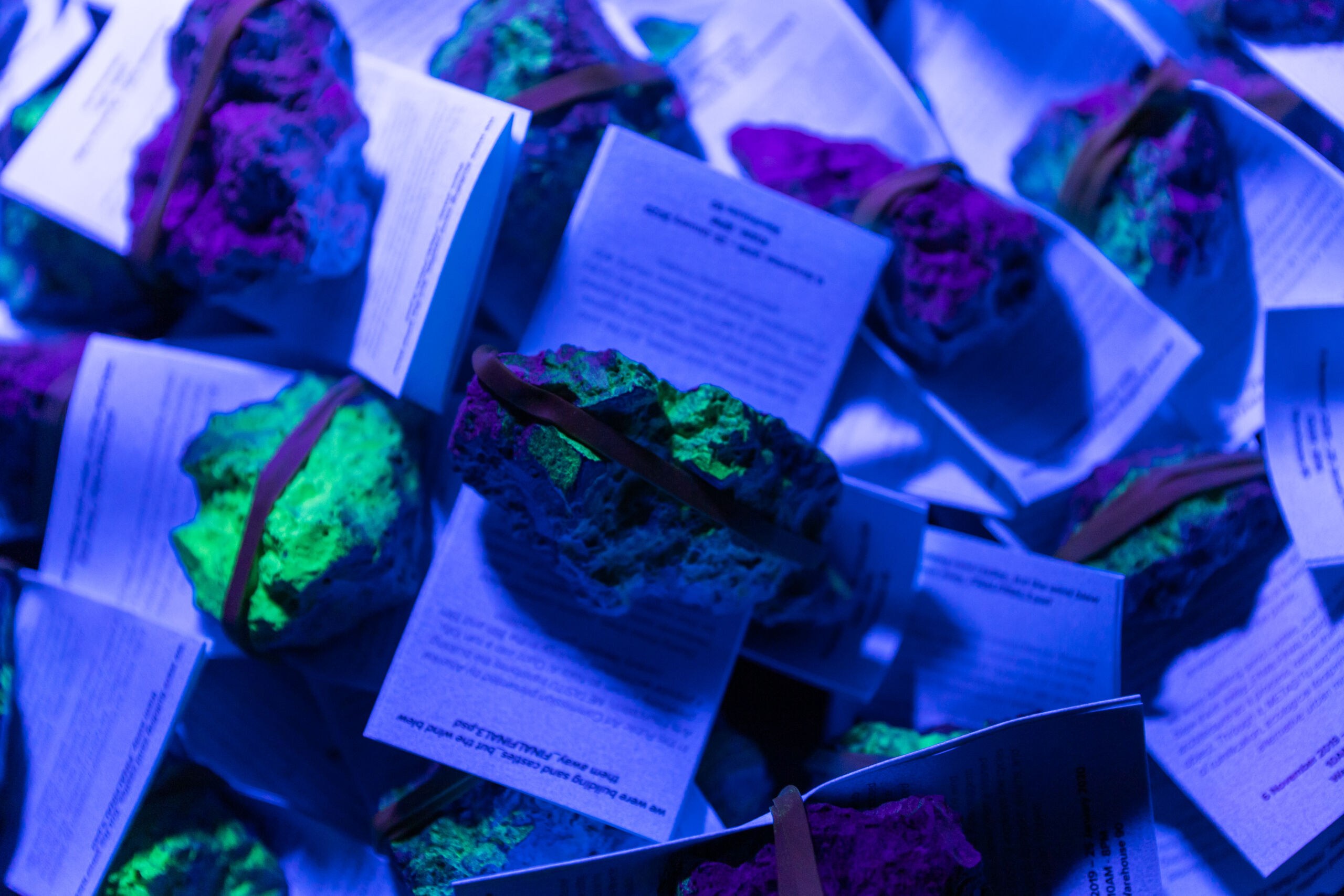
This talk takes us through the third-millennium BCE archaeological site of MohenjoDaro, Pakistan. In particular, we will spend time listening to the salt and considering how one experiences the salt crystals that are ubiquitous throughout the site. How do we hear sites like MohenjoDaro today? What might an acoustic archaeology provide to our understanding of the ancient world? An archaeology of listening includes many non/human modes of communication, but also, once we hear the site, what does that do for our understanding? Centering these queries, this talk reflects upon the experience of seeing sound.
Ways of Listening to Spaces
This talk is an extension of thoughts reflected in the text "Ways of Listening" from A Slightly Curving Place, the first volume of the series An Archaeology of Listening published with Archive Books. How do we listen to spaces/places? Not only to archaeological sites, but also to spaces that we encounter and inhabit everyday? And why do we need to listen to them? As a sound practitioner and student, Sukanta addresses different modes of listening and how these shape our understanding and hence our relationship with the world.
Biographies
Moushumi Bhowmik is a singer, writer and collector of songs and sounds. Her work is largely centred on the question of what and where home is. Whilst based in Kolkata, she travels between India, Bangladesh and the UK, collaborating with artists and scholars across disciplines and languages. Moushumi is also the main caregiver/caretaker of The Travelling Archive: Field Recordings and Field Notes from Bengal (www.thetravellingarchive.org), co-created with sound recordist Sukanta Majumdar. She has recently submitted her doctoral thesis on the wax cylinder recordings of Arnold Bake from Bengal at Jadavpur University, Kolkata.
Padmini Chettur began her contemporary dance career in 1990 as a member of the troupe of Chandralekha, the radical modernist Bharatanatyam choreographer whose opus dealt with a rigorous deconstruction of the form. Over the past two decades, since leaving the troupe in 2001, Padmini has defined her own choreographic idiom as minimalist, abstract, and formal— stripping movement down to an essential anatomical investigation, prioritizing a sense of tension over emotion. Her approach to dramaturgy reveals the complex layers of connection between a dancing body and its environment, both in the sense of performative parameters, and in the sense of socio-cultural context—one's place in history.
Hugo Esquinca produces actions and conditions utilising audio electronics at excessive levels of amplification. His previous work has been presented in diverse contexts and venues such as Stedelijk Museum-Amsterdam, National Centre for Contemporary Arts NCCA- Moscow, Museum Nikola Tesla-Zagreb, Festspielhaus HELLERAU-Dresden, Namba BEARS-Osaka, 20000V-Tokyo, MIRA Ploschad of Modern Art Siberia-Krasnoyarsk, Fondazione Antonio Ratti-Como, Ujazdowski Castle for Contemporary Art-Warsaw, Haus der Kulturen der Welt, and Berghain-Berlin among others.
Nida Ghouse is a writer and curator. She is visiting lecturer at the Interdisciplinary Doctoral Program in the Humanities at Princeton University for spring 2022 and co-artistic director of the Singapore Biennale 2022. With Vic Brooks, she received the 2021 Andy Warhol Foundation curatorial fellowship for the exhibition Shifting Center, upcoming at EMPAC in 2023. At Haus der Kulturen der Welt, she curated A Slightly Curving Place (2020) in the framework of An Archaeology of Sound, a collaborative project responding to the acoustic archaeologist Umashankar Manthravadi. The project travels to Alserkal Arts Foundation over 2021–22 and encompasses Coming to Know, a discourse programme with Brooke Holmes; A Supplementary Country Called Cinema, a film programme with Surabhi Sharma; and An Archaeology of Listening, a publication series with Archive Books. Previously, she co-curated Parapolitics: Cultural Freedom and the Cold War (2017) and co-edited its accompanying publication (Sternberg 2021), also at HKW.
Brooke Holmes teaches at Princeton University, where she previously directed the Interdisciplinary Doctoral Program in the Humanities and served as the PI on the “Postclassicisms” project from 2012-2020. Her research and teaching range widely over the history of the body and nature, Greek literature and philosophy, classical reception, and critical theory, including critical studies of antiquity. Her first book, The Symptom and the Subject: The Emergence of the Physical Body in Ancient Greece, appeared in 2010. She is also the author of Gender: Antiquity and its Legacy (2012) and, as a member of the Postclassicisms Collective, Postclassicisms (2019), and she has co-edited a number of volumes, most recently, the experimental book/exhibition Liquid Antiquity (2017), accompanied by a video installation designed by Diller Scofidio + Renfro at the Benaki Museum in Athens, and Antiquities beyond Humanism (2019).
Umashankar Manthravadi began his career as a journalist with the Indian Express in Madras in 1967. He quit during the Emergency and moved to Delhi, where he went on to become a freelance sound recordist for independent film and TV productions. Umashankar served as head technician of the Archives and Research Centre for Ethnomusicology from its founding in 1982 until his retirement in 2015. His forays into the field of archaeoacoustics date back to the mid-1990s, when he started a project to map and measure the acoustic properties of various ancient and mediaeval performance spaces in India. He has presented findings internationally, including at the Acoustical Society of America (Columbus, Ohio, 1999; Cancun, Mexico, 2002), International Federation for Theatre Research (Amsterdam, Netherlands, 2002; Jaipur, India, 2003), Asia Society (New York, 2017), and Kiran Nadar Museum (Delhi, 2017), and in publications like the Sarai Reader 03 (Delhi, 2003). His collaboration with Lawrence Abu Hamdan and Nida Ghouse between 2014 and 2018 led to experiments with new formats and participation in exhibition contexts, including Art Dubai Projects (2015), and Centre Pompidou (Paris, 2017). He has received grants from India Foundation for the Arts (2018–19). Since 2008, Umashankar has been producing a line of affordable ambisonic microphones named Brahma and is currently developing an all-digital third-order microphone. He has lived in Bangalore since 2015, and occasionally teaches at the (Art) ScienceBLR lab at Srishti Institute of Art, Design, and Technology. In 2019, he created a portable 3D ambisonic sound system during a residency at Wisp Kollektiv in Leipzig. He has never ceased writing poetry and published a collection, From a Previous Century, with Lulu Press in 2007.
v ness is an independent artist and interdisciplinary scholar (the latter under her full name, Vanessa Stovall) who works with genres of mythical music and musical myth across antiquity into the contemporary. She is a classically trained harpist, has composed stage productions for over a decade, and received her Bachelors of Arts from The Evergreen State College and Masters of Arts from Columbia University studying Greek tragedy. In these pandemic times, she has worked as a composer for digital productions of Greek tragedies, most notably the Barnard-Columbia Ancient Drama Group production of Iphigenia in Aulis (2021, dir. Elizabeth McNamara) and the Committee of Ancient and Modern Performance production of hippolytos (2022, dir. Lane Flores). She is currently writing the score for her first in-person Greek tragedy, the Whitman College production of Medea (2022, dir. Anna Conser).
Tanvi Solanki is Assistant Professor of German and Comparative Literature at Yonsei University’s Underwood International College. Previously, she was a Stanford H. Taylor Postdoctoral Associate at Cornell University, after receiving her Ph.D. at Princeton University and B.A. at the University of Chicago. A guiding concern of her work is to develop innovative, critical methodologies to study the sensory and embodied dimensions of German literature, culture, and media, particularly that of sound. Throughout her work, she foregrounds how concepts and practices of ‘difference,’ ‘diversity’ and ‘alterity’ can and must be productively deployed within readings of the German literary and philosophical canon. She is currently finishing a book manuscript on ‘Listening to Difference,’ a critical disciplinary history of media studies which explores how and why practices of knowledge-making and pedagogy which emerged from the German philological tradition during the origins of the research university remain current in certain disciplinary approaches in the ‘modern’ university.
Yashas Shetty is an artist, biohacker, and musician whose practice includes the use of biotechnology, visual programming languages, and interactive media. His work is located at the intersections of pedagogy, art, and science, and aims to create spaces of discourse and dialogue between artists, scientists, and the larger public. Yashas is a faculty member of the Srishti Institute of Art Design and Technology and a founding member of the Center for Experimental Media Art, both in Bangalore. He currently runs (Art)ScienceBLR, the public laboratory at Srishti, and the Indian Sonic Research Organization. With Felix Deufel and Umashankar Manthravadi, Yashas co-founded the 3D Soundlab Bengaluru in 2017, one of the first laboratories in India for spatial sound.
Uzma Z. Rizvi is an anthropological archaeologist who is associate professor of anthropology and urban studies at the Pratt Institute, New York, and a visiting scholar at the Department of Archaeology at Shah Abdul Latif University, Khairpur. Her research interests include decolonizing archaeology, ancient urbanism, critical heritage studies, new materialism, and post-colonial critique. Uzma interweaves archaeology with cultural criticism, philosophy, critical theory, art, design, and architecture. Her latest monograph, The Affect of Crafting: Third Millennium BCE Copper Arrowheads from Rajasthan, India (2018), follows edited volumes such as Archaeology and the Postcolonial Critique (2008) and Connections and Complexity: New Approaches to the Archaeology of South Asia (2013).
Sukanta Majumdar is a sound artist and audiographer specialized in field recording and sound design for films and theatre. A graduate of the Satyajit Ray Film and Television Institute of India, he has worked as a sound designer for many films and video works, most recently Jole Dobe Na by Naeem Mohaiemen (2020), Cat Sticks by Ronny Sen (2019), and The Kali of Emergency by Ashish Avikunthak (2017). He also co-created The Travelling Archive with Moushumi Bhowmik in 2003, a project for field recording, documenting, and disseminating the folk music of Bengal. In his practice, Sukanta often works with ambient sound and spoken words, and is interested in the sounds of religious and non-religious ritual.
Acknowledgements
The exhibition was realised in collaboration with and with contributions by Umashankar Manthravadi, Bani Abidi, Lawrence Abu Hamdan, Mojisola Adebayo, vinit agarwal, Athira, Anurima Banerji, Lilia Di Bella, Moushumi Bhowmik, Madhuri Chattopadyay, Padmini Chettur, Arunima Chowdhury, Hugo Esquinca, Jenifer Evans, Tyler Friedman, Eunice Fong, Janardan Ghosh, Brooke Holmes, Alexander Keefe, Arun Mahadevan, Sukanta Majumdar, Robert Millis, Farah Mulla, Sachin Patil, RENU, Uzma Z. Rizvi, Sara, Kaustavi Sarkar, Yashas Shetty, The Travelling Archive, Umashankar and the Earchaeologists, Upendra Vaddadi, Maarten Visser, Todd Vos and others.



What We Plant, What We Owe
I grew up in a small village in southern Slovenia, surrounded by forests. My grandmother gathered herbs; my father and grandfather worked in forestry. From our elders, we learned that the forest gives and the forest takes. We also learned to take only what we needed, and to understand that the forest was not ours to possess.
This knowledge has stayed with me. It shapes how I think about our relationship with the living world, and how I approach the history of the Non-Aligned Movement: not only as a political project of decolonisation and independence, but also as an unfinished experiment in imagining how we might live together, across differences, without submitting to the centres of power.
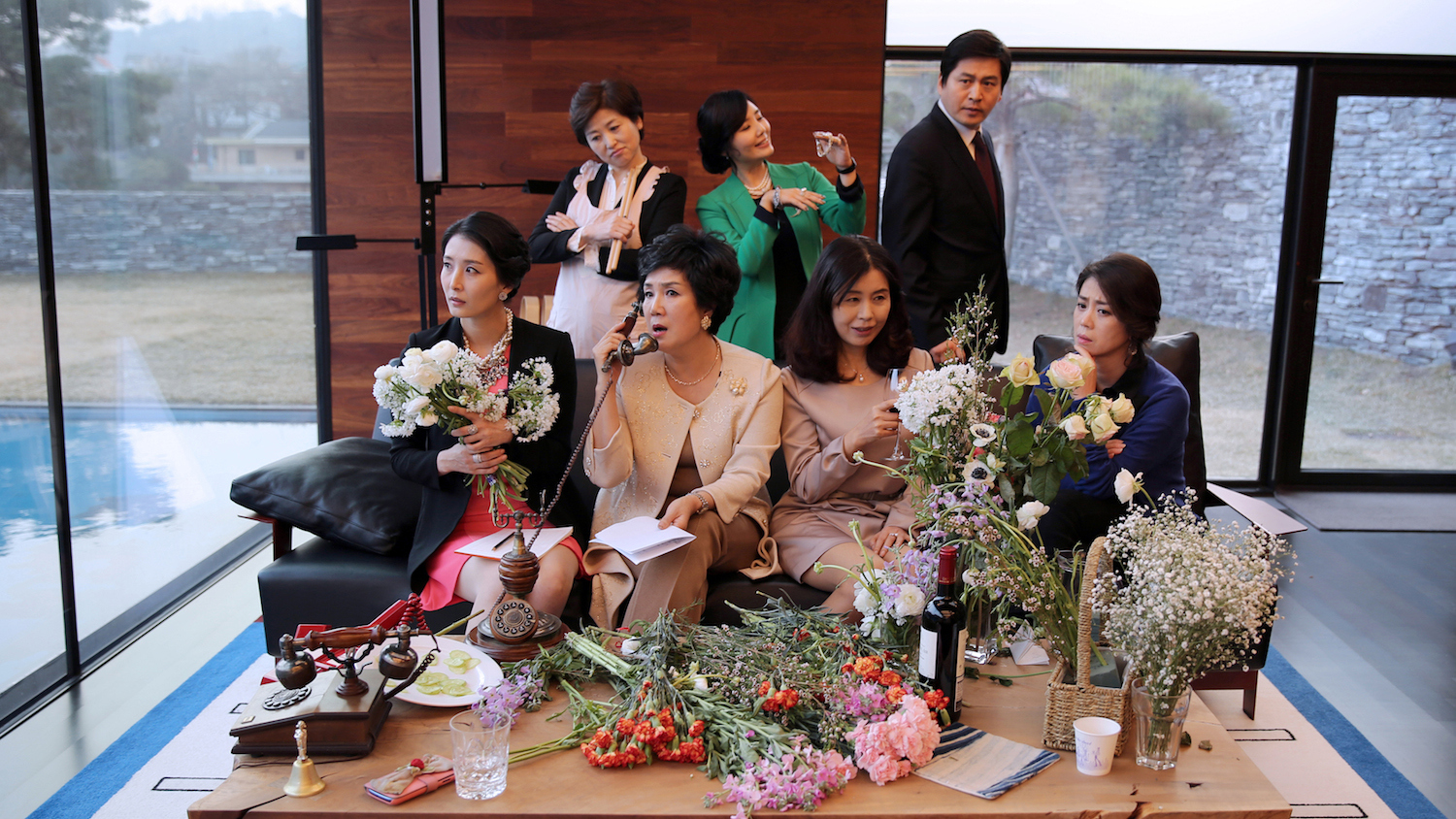
At the founding conference of the Non-Aligned Movement in Belgrade in 1961, political leaders planted plane trees. Similar ceremonies took place at later summits, with trees chosen for their particular meanings and origins. Flowers, too, were carefully arranged for meetings and diplomatic encounters. These gestures might seem ceremonial, even ornamental. Yet a tree is never only a symbol. It takes root in a particular place, draws water from the earth, grows through time, and outlives those who plant it. It reminds us that political futures, like forests, require conditions in which different forms of life can exist together. But still, we must ask. Who plants, and on whose land? Who decides what should grow, what must be cleared, and which forms of life are considered expendable? The planting of trees, like the language of conservation itself, can also carry the legacy of colonial control over land and people. Colonial forestry turned forests into sources of timber and revenue, closing them to those who had lived from them for generations. Many protected areas were created by displacing the very communities who had cared for the land.
Environmental concerns were not at the centre of the Non-Aligned Movement’s early programme. Gradually, however, ecological balance became inseparable from issues of sovereignty, development and global inequality. The point was larger than protecting nature: it was to ask who profited from its destruction, who controlled its resources, and who was expected to pay the price. These questions remain urgent.
From oil extraction and poisoned landscapes to deforestation and the destruction of ecosystems through war, environmental devastation follows the unequal distribution of power. In Gaza today, the destruction of land, water, farms and olive groves, what many describe as ecocide, shows how the erasure of a people and the erasure of their living environment go hand in hand. To uproot an olive grove is to undo the act of planting, and with it a people’s claim to a future on their own land. There is only one Earth, but we do not inhabit it on equal terms.
Perhaps flowers and trees offer a way of thinking about solidarity beyond political declarations. Not as a universal language that erases differences, but as a practice grounded in specific places, histories and responsibilities. A seed carries the possibility of a future, but never guarantees it. What grows depends on the soil, the climate, the hands that tend it, and the forces that threaten its survival.
To return to the Non-Aligned Movement today is not to restore an idealised past. It is to ask what remains of its unfinished promises, and what new forms of solidarity they might make possible. What would it mean to treat the Earth not as property or an inexhaustible resource, but as a shared condition of life?
We are guests here.
Bojana Piškur
Ljubljana, Slovenia
About the Non-Aligned Constellations Working Group
Grounded in the concept of ‘constellations’ and derived from the Southern Constellations exhibition series (launched in 2019 at Moderna galerija, Ljubljana, Slovenia), this research explores the intersection of art, history, and geography, with a particular focus on the global relationships fostered through the Non-Aligned Movement (NAM). The project investigates the legacy of the Gallery of Art of the Non-Aligned Countries Josip Broz Tito (Titograd, 1981–1995), whose collection, comprising 800 works from 56 NAM countries, is now housed at the Museum of Contemporary Art of Montenegro. Curators Angelina Radaković, Bojana Piškur, and Natalija Vujošević (the initiator of the Art Collection of Non-Aligned Countries Laboratory project at MSUCG) aim to revive the collection through participatory, experimental, and interdisciplinary methods. By engaging with its historical and political context, they seek to reestablish connections with cultural actors from the Global South. Tracing the exchanges of solidarity, this project will reframe the artworks, offering new perspectives on the cultural and political dialogues that shaped both the past and present.
Bojana Piškur is a senior curator at Moderna galerija in Ljubljana. Her research and curatorial work focus on the Yugoslav and post-Yugoslav context, the Non-Aligned Movement, and the evolving concept of the ‘East(s)’. Since 2019, Piškur has curated and co-curated Southern Constellations exhibitions at institutions such as Moderna galerija (Ljubljana), Asia Culture Center, Gwangju (South Korea), Filodrammatica Gallery (Rijeka, Croatia), Museumof Contemporary Art of Montenegro (Podgorica), the Qattan Foundation (Ramallah, Palestine), National Opera and Ballet (Skopje, North Macedonia), and The Mosaic Rooms (London, UK).
Bodies expanding, bodies contracting
I will tell you exactly where the Gallery of Art of the Non-Aligned Countries is located in my memory, in my body, and in the body of the building itself.
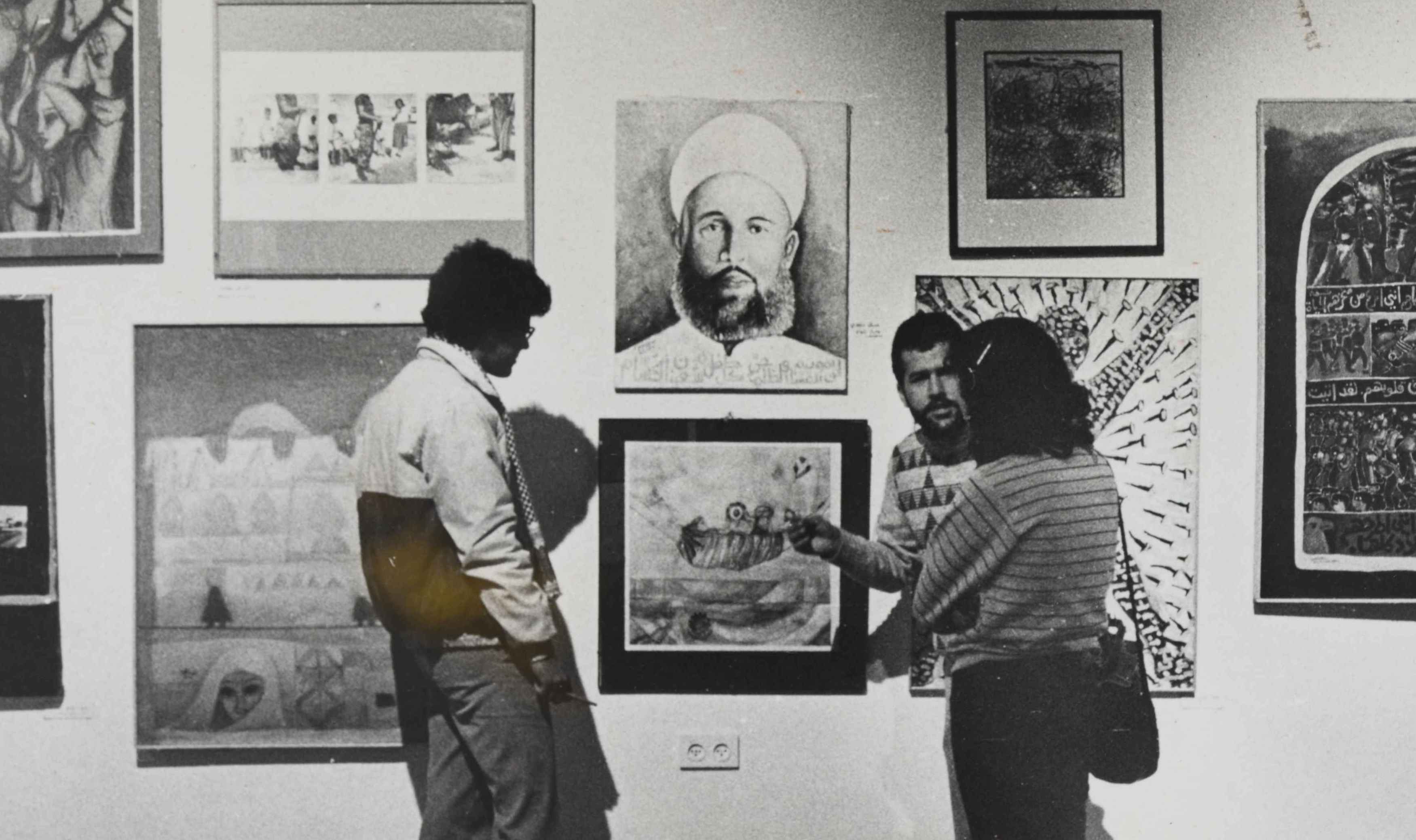
It was sometime around 1986, and I was a ten-year-old girl. As part of a school activity, we visited the Gallery of Art of the Non-Aligned Countries “Josip Broz Tito.” The Gallery was housed in the Petrović Palace, in Kruševac Park. We are in the attic, and it is crowded. The air is stuffy, my sweater is itching, I can feel myself sweating, and my feet hurt because of my flat arches. We are having a music lesson, looking at a collection of musical instruments from Indonesia, Burma, and Congo. Our teacher tells us that we belong to the Non-Aligned Movement. She explains that these instruments were gifts to the Gallery from friendly countries. She tells us that, together with these countries, we form a community committed to peaceful coexistence, one that refuses to join military alliances seeking to dominate others through the law of the strongest. She speaks about anti-colonial and anti-imperialist politics, and about how the community of non-aligned countries holds a different vision of the world, one in which relationships are built on mutual support, respect for others, and recognition of differences.
I do not know how much of the political language our teacher used to explain non-alignment I understood at the time. But I clearly remember the feeling that came with realizing that we belonged to something much larger than the country we lived in. My itchy, sweaty body expands from within, and I am filled with a joyful sense of belonging, pride, and responsibility.
Today, this memory feels like an abandoned utopia. But that utopia had its own public infrastructure. The building has shrunk and fallen into neglect. Since the 1990s, three different institutions have occupied it. Behind it, a new and much larger building housing the American Embassy has appeared. For decades, the collection has remained largely out of public view, while the struggle to bring it back into public life continues, with uncertain outcomes.
For years, researchers supported by grants from European, Canadian, and American universities have been visiting the museum to study and write about the non-aligned collection. Their interest often makes an important contribution to the collection’s visibility and understanding. Yet the question remains of how the resources, authority, and outcomes of such research are distributed. Who gets the opportunity to produce knowledge, build an academic career, and determine interpretive frameworks, and who remains the custodian of archival materials and a provider of information? Do the methodologies and principles underpinning these research relationships reflect the very values that are the subject of the research itself? Are these relationships anti-colonial, reciprocal, and grounded in solidarity?
Young people from the local community who visit the museum know almost nothing about this heritage, or about the Non-Aligned Movement. Their political education takes place within the horizon of Euro-Atlantic integration and the market economy, while historical experiences of alternative forms of international relations have almost disappeared from public education. At the same time, cultural heritage is increasingly valued in terms of its tourism and market potential.
In the post-Cold War order, marked by new forms of neocolonial domination, the heritage of non-alignment is becoming increasingly visible within international academia, while remaining difficult to access for the communities from which it emerged. It acquires new value as an object of research, but not necessarily as public knowledge or social practice. Today, narratives surrounding the political imagination of non-alignment circulate predominantly through the channels of Western academia and within the specialized discourse of contemporary art, in publications and at panels where access is restricted by class, economic, and institutional barriers.
These barriers determine whose bodies can expand from within today, and whose contract. They are not merely obstacles to accessing information, but part of a broader asymmetrical distribution of resources, knowledge, and the possibility of imagining the world differently. In postsocialist societies, where decades of privatization have transformed material and collectively held goods, the question arises whether a similar fate threatens heritage, ideas, and political imagination itself.
I wonder how we can learn from the Non-Aligned Movement today without turning its heritage into yet another resource for academic and market valorization. How can we re-establish the principles of solidarity, reciprocity, and collective action as practices, beginning with research exchanges and the production of knowledge themselves? How can we once again create places where bodies can expand from within, where knowledge can generate a sense of belonging, solidarity, and the possibility of imagining the world differently?
And who will have access to those places?
Natalija Vujošević,
Podgorica, Montenegro
About the Non-Aligned Constellations Working Group
Grounded in the concept of ‘constellations’ and derived from the Southern Constellations exhibition series (launched in 2019 at Moderna galerija, Ljubljana, Slovenia), this research explores the intersection of art, history, and geography, with a particular focus on the global relationships fostered through the Non-Aligned Movement (NAM). The project investigates the legacy of the Gallery of Art of the Non-Aligned Countries Josip Broz Tito (Titograd, 1981–1995), whose collection, comprising 800 works from 56 NAM countries, is now housed at the Museum of Contemporary Art of Montenegro. Curators Angelina Radaković, Bojana Piškur, and Natalija Vujošević (the initiator of the Art Collection of Non-Aligned Countries Laboratory project at MSUCG) aim to revive the collection through participatory, experimental, and interdisciplinary methods. By engaging with its historical and political context, they seek to reestablish connections with cultural actors from the Global South. Tracing the exchanges of solidarity, this project will reframe the artworks, offering new perspectives on the cultural and political dialogues that shaped both the past and present.
Natalija Vujošević is a curator, researcher and cultural organiser based in Montenegro. Her work is particularly concerned with Yugoslav and post-Yugoslav cultural and political histories and with the relationships between historical material, institutional memory, and contemporary conditions. In 2024, she received the Igor Zabel Grant, awarded in recognition of outstanding achievements by curators, art historians, theorists, writers, and critics working in the field of visual.
















Stay tuned...


Stay tuned...

Stay tuned...









Stay tuned...