

Cultures in Conversation by Alserkal Advisory
Case Studies
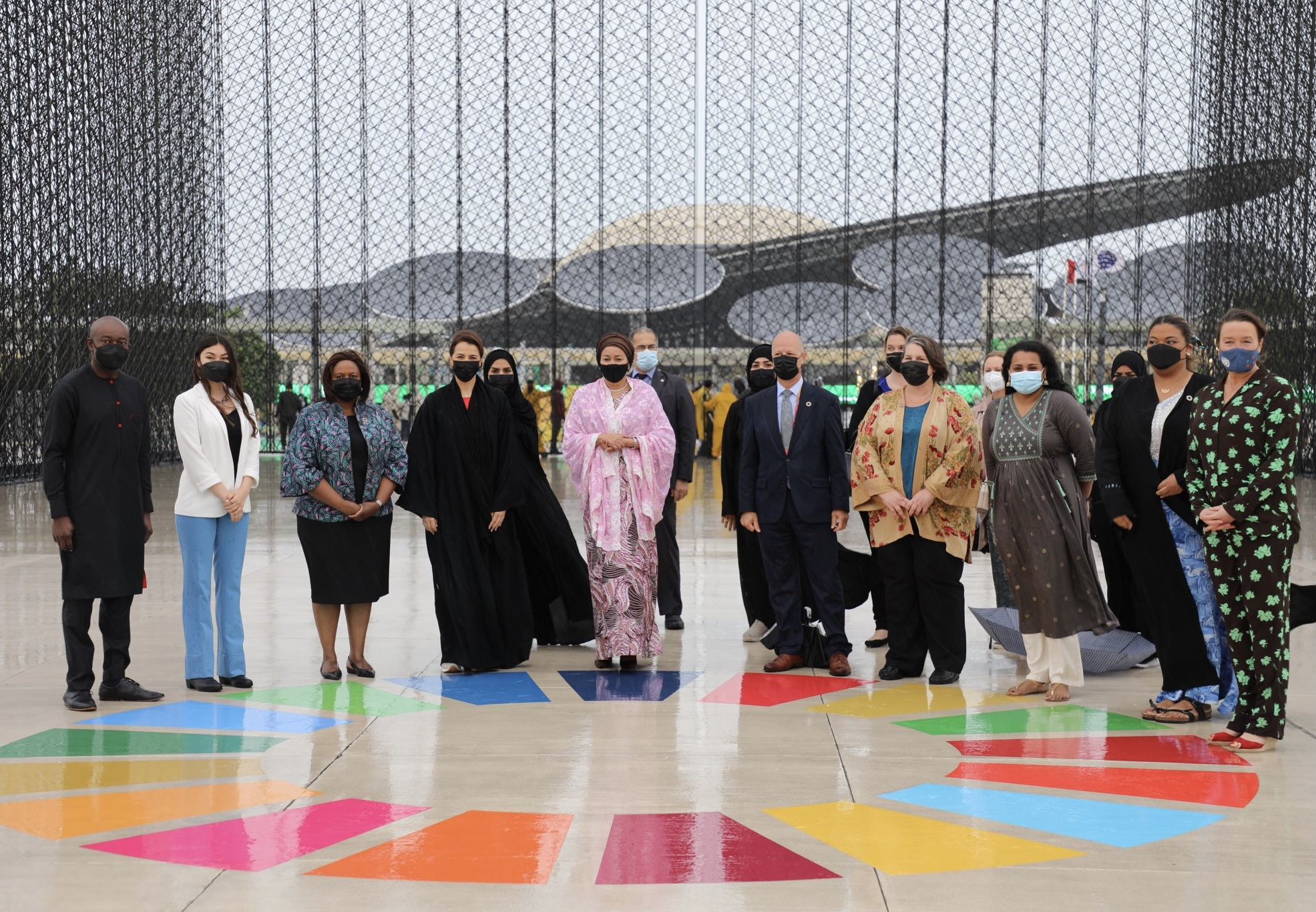
It's been a long summer for anyone who has been working on what we endearingly call CIC, formally known as Cultures in Conversation. Cultures in Conversation received so much of our creative and programming attention because it is a once-in-a-lifetime project: there will never be another Expo 2020; the planet and its people are at a crucial inflection point on many fronts.
So, what is Cultures in Conversation?
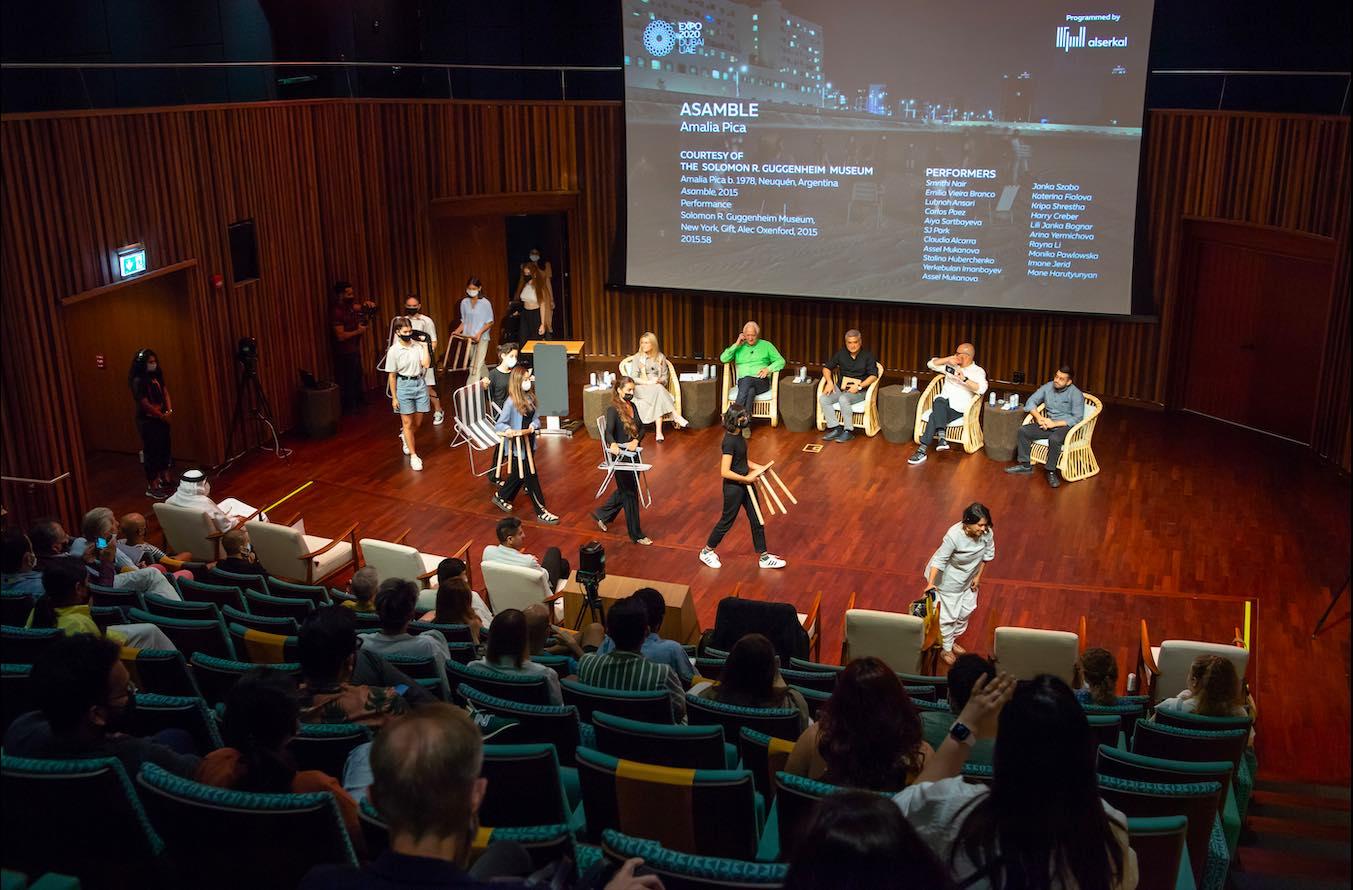
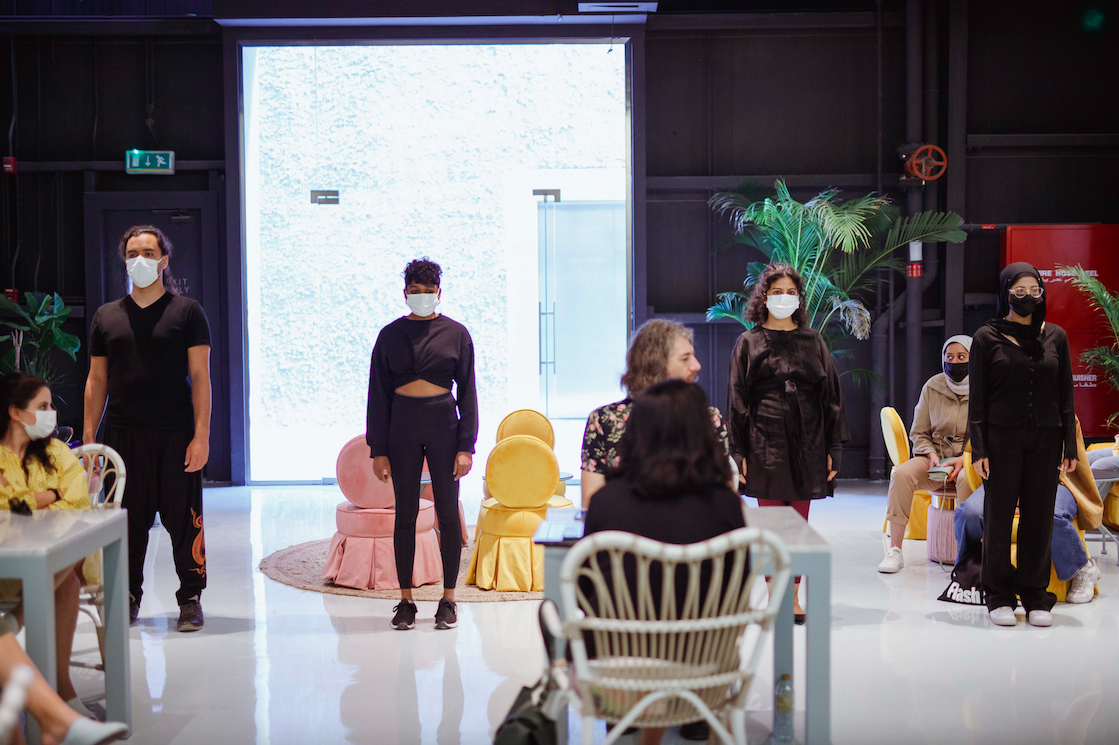
Commissioned by Expo2020 and programmed by Alserkal, Cultures in Conversation consists of ten theme weeks of events and interventions that challenge the typical 'talks' format. Multi-disciplinary and cross-cultural, the programme unites people who are normally unlikely to even be in the same room—poets, diplomats, theorists, artists, environmental agents of change, academics.
Abdelmonem Bin Eisa Alserkal, Founder of Alserkal, said: “At Alserkal we share Expo 2020's commitment to sustainable innovation and providing a platform for global exchange. Alserkal is proud to help shape thinking around these urgent issues.”
Nadia Verjee, Chief of Staff, Programme for People and Planet, Expo 2020 Dubai, added: “An integral part of the Programme for People and Planet focuses on the power of cultural exchange. We believe that intercultural dialogue is key to breaking down boundaries between people.”
Cultures in Conversation, commissioned by Expo 2020 Dubai, programmed by Alserkal
A rigorous approach
Cultures in Conversation is emblematic of Alserkal Advisory's approach to cultural production: it is rigorous, galvanises practitioners from across disciplines and cultures, and consistently challenges and diversifies conventional formats. Participants include Charles Landry, Lumumba Di-Aping, Nujoom Al-Ghanem, Mary Ellen Carroll, 3 137, and the Engage 101 collective, among others.
Vilma Jurkute, Executive Director of Alserkal, comments: “At the heart of Alserkal and Alserkal Advisory we challenge conventional business practices and craft audience-specific public programmes that resonate with our communities while assessing our impact on society, the environment, and local economies. Cultures in Conversation allows for a meta-narrative that offers reflection, awareness, and re-envisioned approaches.”
Looking back at Cultures in Conversation
CULTURES IN CONVERSATION: PRELUDES & POSTSCRIPTS
Podcast Series with Alserkal and powered by afikra
This 3-episode bi-monthly podcast series is a collaboration between Alserkal Advisory and afikra designed to discuss culturally meaningful spaces that inspire communities and increase their curiosities.
Episode 01 | Humanising Cities
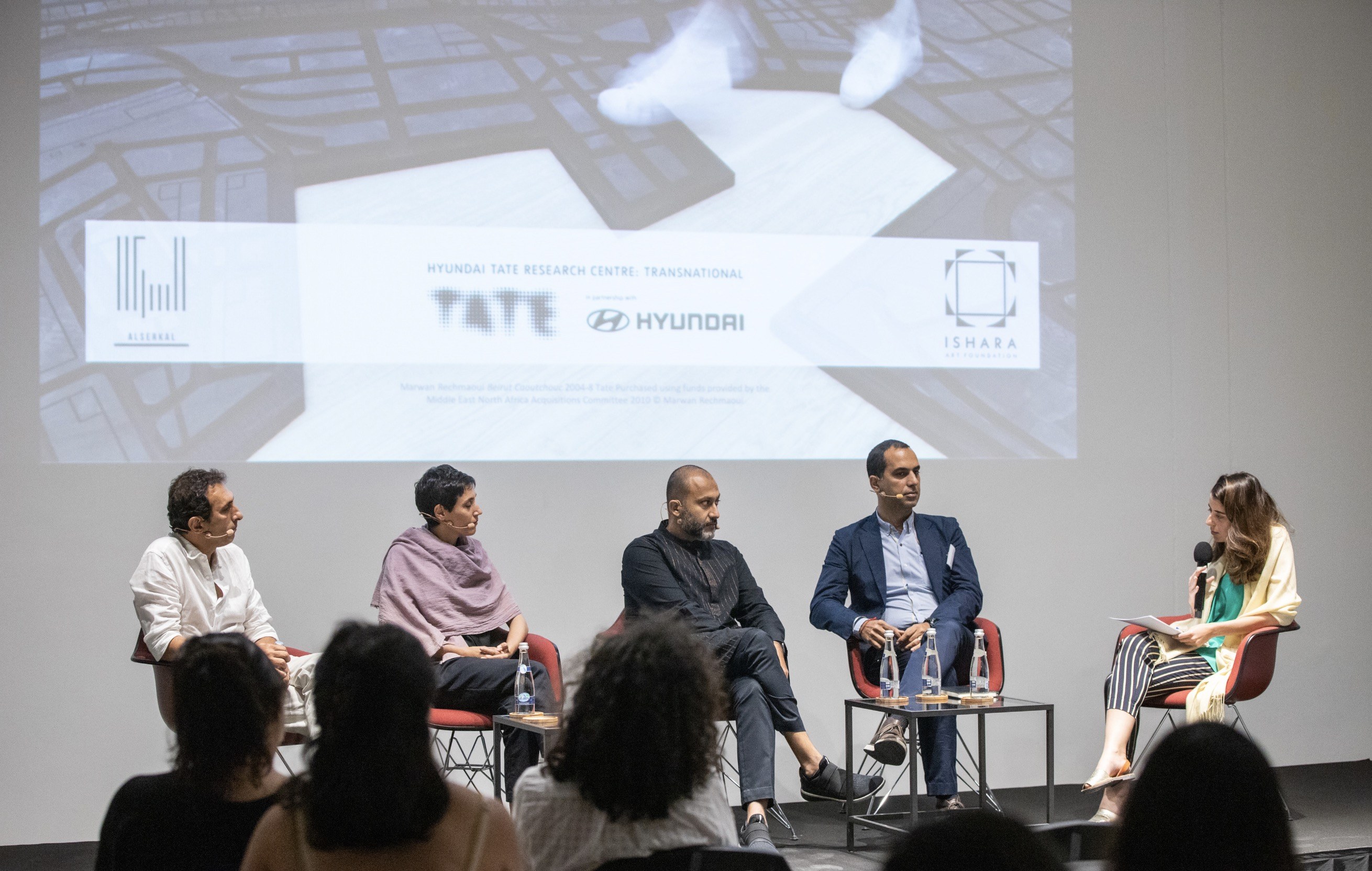
Featuring: Vilma Jurkute (Executive Director, Alserkal), Charles Landry (author and international authority on urban change), Rupali Gupte & Prasad Shetty (co-founders Bard Studio), and Hamed Bukhamseen (Co-founder, Civil Architecture).
Episode 02 | Burning Issues
Featuring: Mary Ellen Carroll (artist and activist), Adib Dada (architect, eco activist, founder theotherdada) & Tansha Vohra (researcher, resident serendipity arts foundation).
Episode 03 | An Outlook on Change
Featuring: Nataša Petrešin-Bachelez (curator, educator, writer), Lara Rudar (artist, filmmaker, environmental advocate), Philip Mawn Maughan (writer, editor, co-founder black almanac).
Climate and Biodiversity
Climate and Biodiversity Week
Climate change in the classroom, living room, street and beyond
We live at the epicentre of an ecological catastrophe with unimaginable consequences. Our task is to highlight the urgency for the need to acknowledge the inseparability of biodiversity and climate change, and the necessity for climate justice, equality, and equity worldwide.
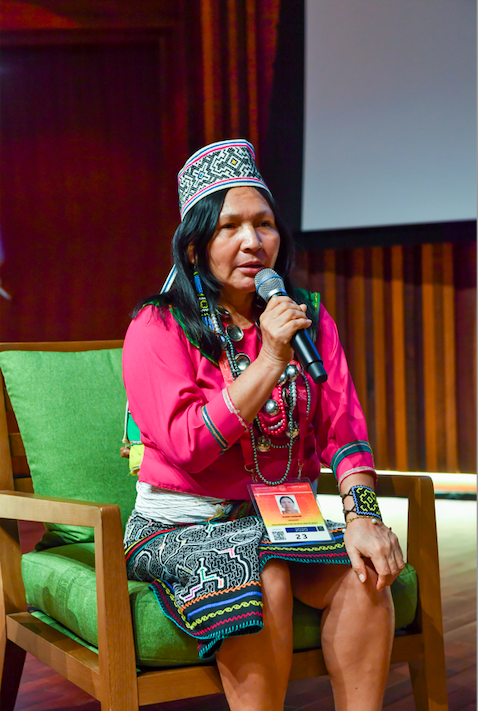
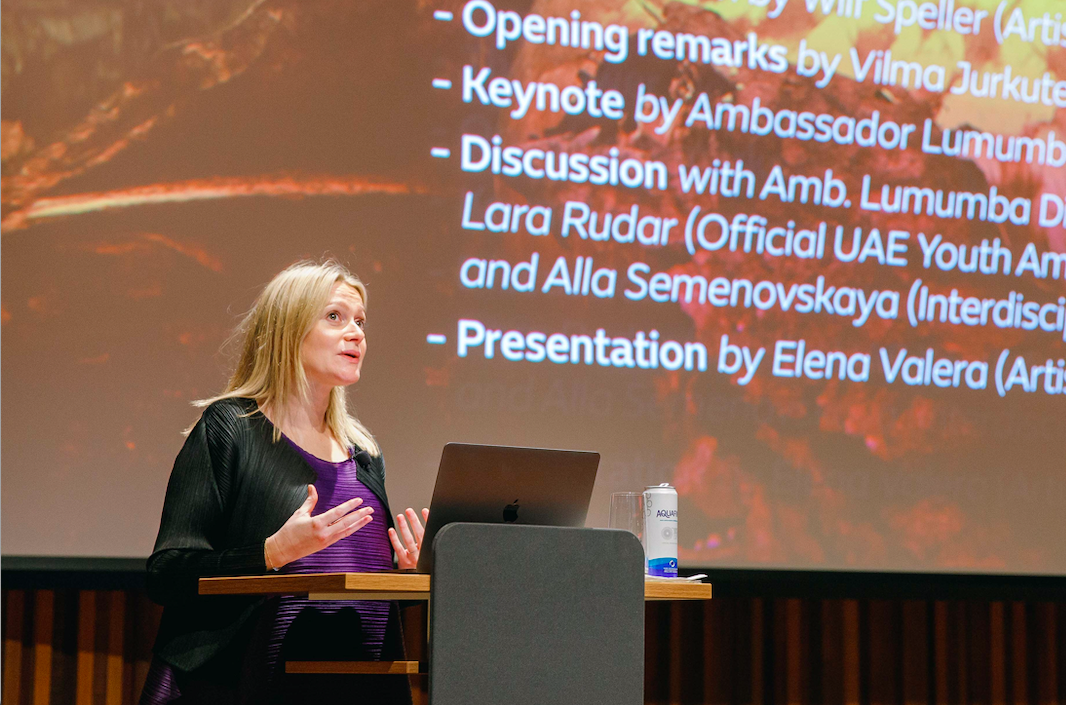
Participants: Ambassador Lumumba Di-Aping, Wilf Speller, Lara Rudar, Alla Semenovskaya, Elena Valera
Cultures in Conversation | Climate change in the classroom, living room, street and beyond
Ocean vs teaspoon
By Reshma Mehra
I grew up in India in the 1980s—life was green. Cloth bags were the order of the day. There were no supermarkets, no weekly shop. My mother and grandmother reused plastic bags until holes rendered them useless. I had enough, and all of my clothes fit into a small armoire. All of our food came straight from farm to table. We traded in our Limca and Thums Up soda bottles for 5 paise each. We never thought about being ‘environmentally friendly’; it was just the way we did things.
By the time I was in my 20s and employed, my satisfaction with a ‘comfortable life’ had lost its lustre. I acquired scores of shoes, more outfits than there are days in a year, a nice car, and stuff. So much stuff…
In recent years, I’ve become less acquisitive, more conscious of my environmental footprint. But since I attended Climate Change in the Classroom, Living Room, Street and Beyond, part of Expo 2020 Dubai’s Programme for People and Planet, I feel an existential paralysis. Have all my efforts been for nought?
Half-measures
As Ambassador Lumumba Di-Aping delivered his presentation on the inextricable intersection between climate change, waning biodiversity and dubious social justice, one thing quickly became clear: all our efforts thus far have been half-measures. The Conference of the Parties 26 (COP26) took place from 31 October to 12 November 2021, harking back to the Paris Agreement, where the majority of the world’s countries agreed to keep global warming under 2 degrees Celsius. More notable is what they didn’t agree on: an actionable framework — the “Paris Rulebook.”
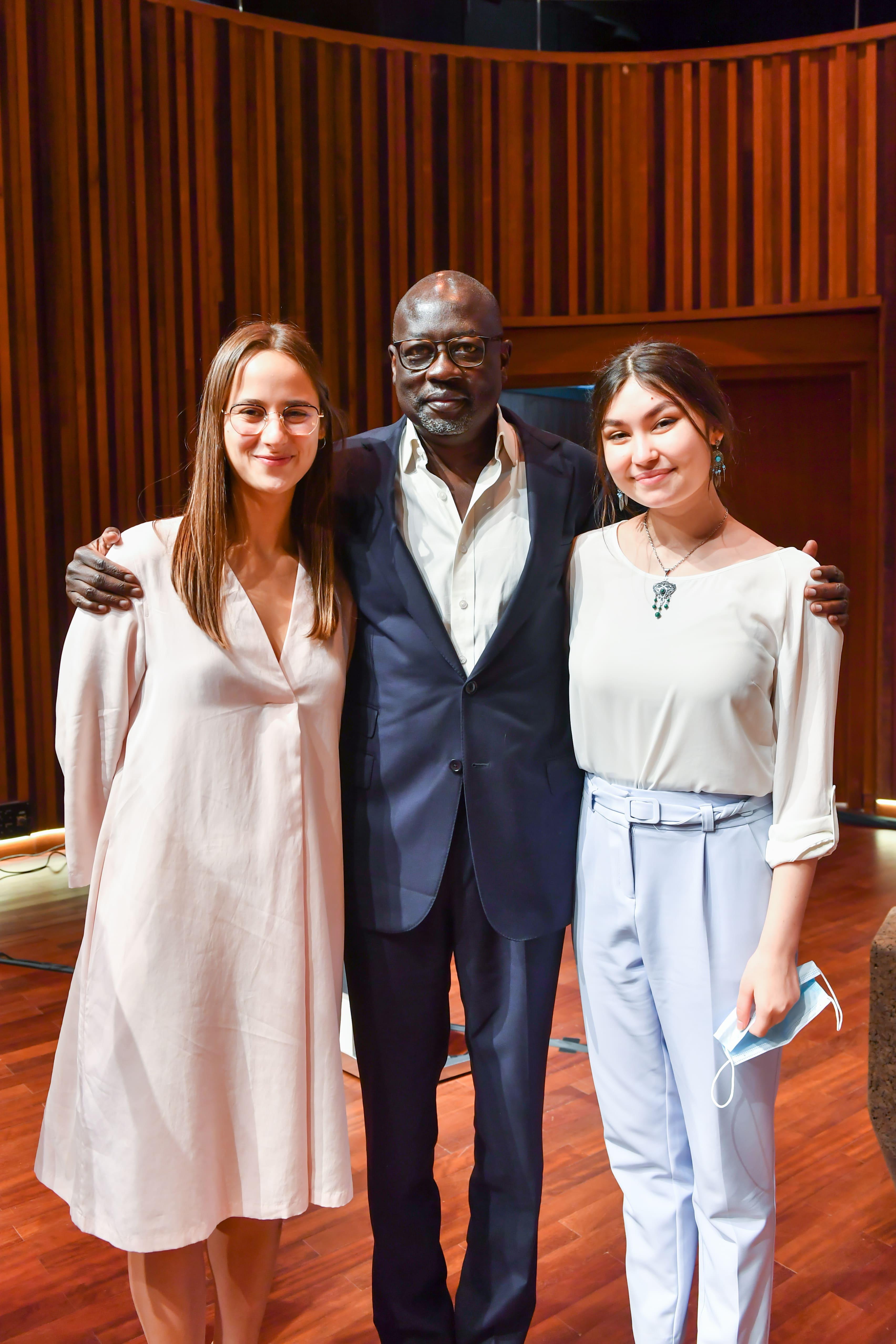
Di-Aping drove the point home in his indictment of the colonial hegemonic systems that fueled much of the developed world’s progress, asserting that “the history of biodiversity loss and the advent of climate change is a…history of global injustice, oppression and dehumanization.” As youth climate advocate Lara Rudar put it: “The climate crisis has exacerbated decades of injustice towards historically marginalised communities and is deeply intertwined with racial injustice.”
It can be better
U.N. Secretary-General António Guterres made a rallying cry: “Inclusive and green economies, prosperity, cleaner air and better health are possible for all if we respond to this crisis with solidarity and courage.” It’ll never be the way it was, but it can be better than the way it is. And so I wake up from my paralysis and resume my half-measures, one teaspoon at a time.
Space
Space Week
Never Be Lost: Learn to Read the Stars
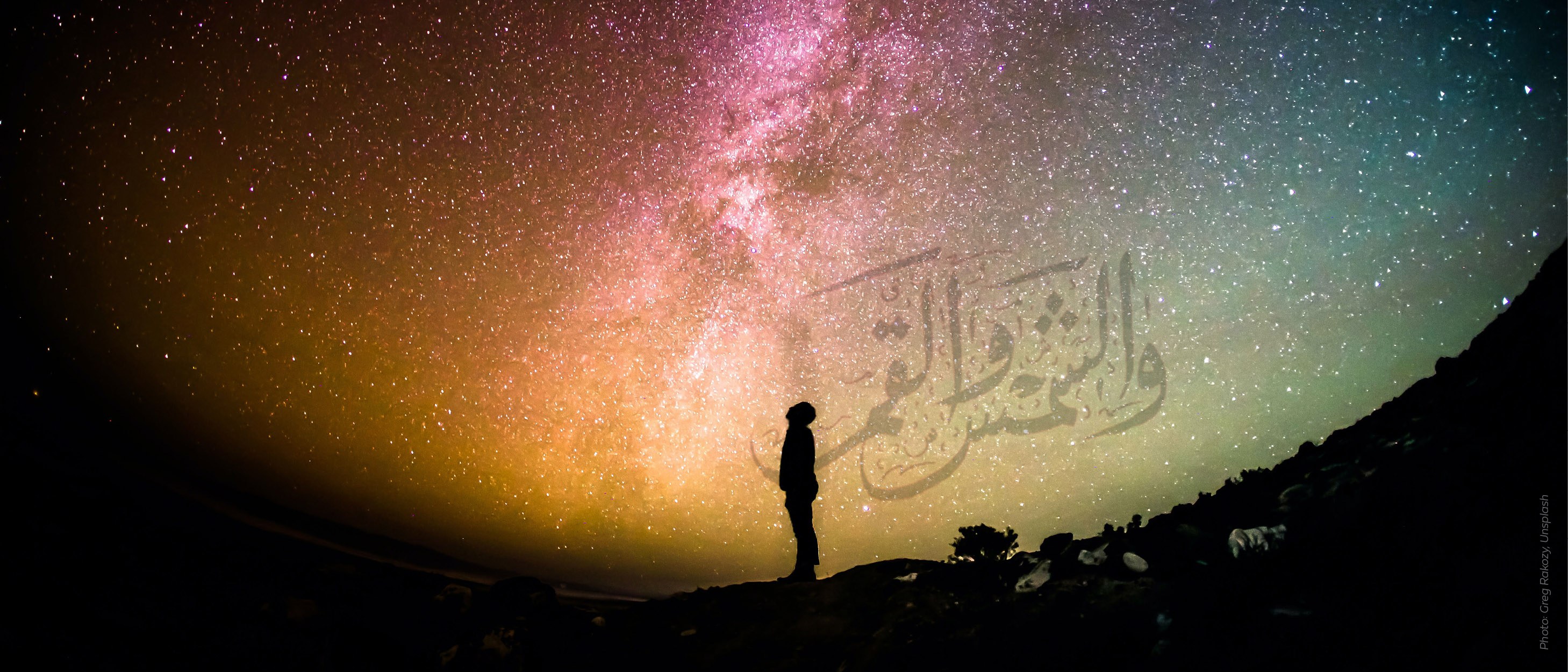
This programme considers the cultural imagination of the celestial and how important systems of knowledge have been passed down through literature, memory, and oral narratives, continuing to hold meaning as we imagine space futures.
Participants: Nujoom Alghanem, Duane Hamacher, Mashhoor Ahmad Al Wardat, Rangi Mātāmua
Cultures in Conversation | Never Be Lost: Learn to Read the Stars
Never Be Lost: Learn to Read the Stars
Govind Dhar
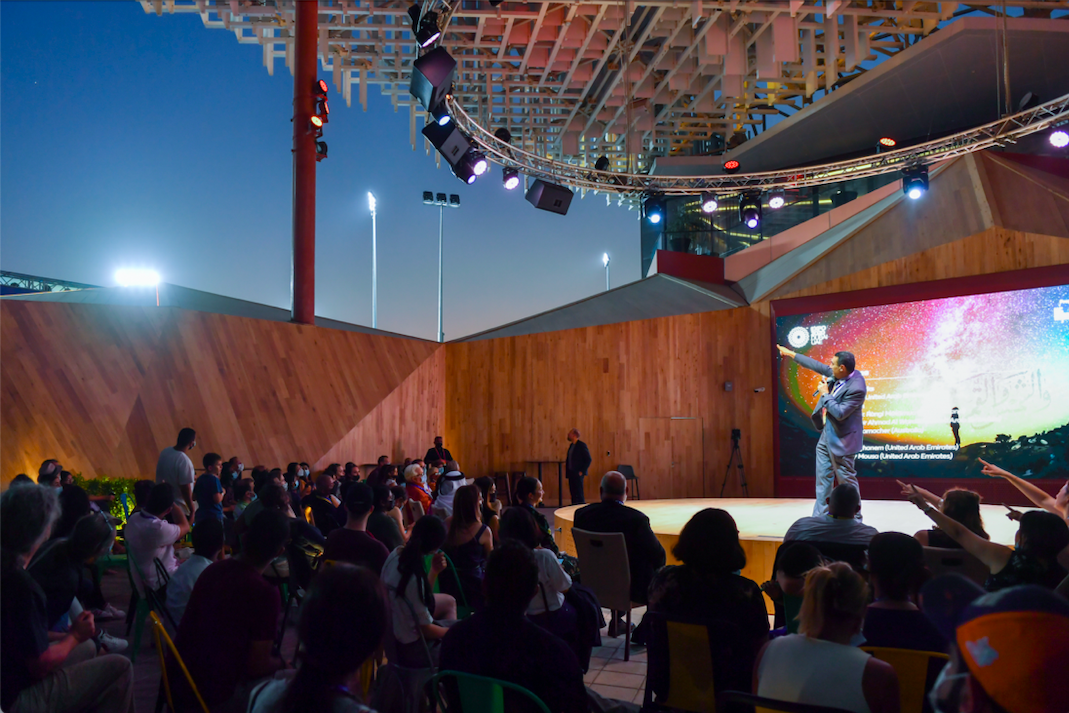
Alserkal Advisory has curated a programme of talks and artist interventions that aims to build, exchange and challenge the ways in which we experience the buzzwords of the age. The topic to cap off Space Week was ‘Never Be Lost: Learn to Read the Stars,’ urging us to think laterally about the stories that have bound stargazers from ancient times.
Maori Astronomy and the Future
Rangi Mātāmua—an academic, stargazer and professorial storyteller on Maori astronomy—told us how the stars formed the very fundament of Maori history, culture, and religious practice, farming, navigation and timekeeping. He heralded an ‘uprising, a reclamation, and a renaissance’ for knowledge of Maori astronomy among a new generation of New Zealanders.
"The great symphony"
Mashhoor Ahmad al-Wardat, professor of astrophysics at the University of Sharjah, pitched us headlong into ancient facts, star charts, and mythological nomenclature from ancient Arab astronomers, adding, “This is the great symphony created by Allah!”
The Sea and The Stars
Duane Hamacher—associate professor of cultural astronomy at the University of Melbourne—talked about the wisdom gleaned from stars in the Torres Strait, thanks to Tagai, a southern sky deity, and Uncle Segar Passi, an indigenous Australian elder who encoded ancient astronomical wisdom in his paintings.
Poetry about the Night Sky
Nujoom Alghanem, Emirati artist and poet, concluded the evening with a poem read in turns in Arabic and English, a tapestry of ‘tears of meteors’ and ‘guardian stars.’ The common thread between speakers was a belief in the power of the heavens to give us a deeper understanding of our shared ancestral history.
Urban and Rural Development
Urban and Rural Development
What Makes a City: Dimensions of culture and possibility of community
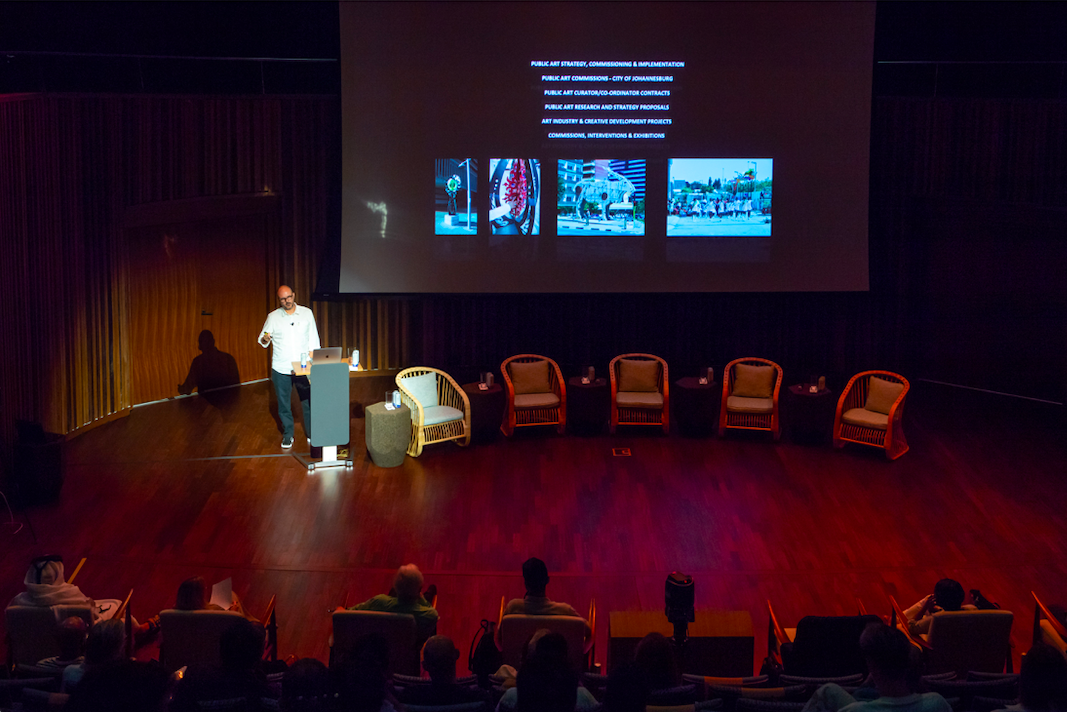
The invisible ties that bind urban communities together become visible in the construction and use of shared public spaces. This event explores how these spaces are used, claimed, co-opted and transformed, and how citizens contribute to building a city.
Participants: Charles Landry, Bard Studio, Civil Architecture, Stephen Hobbs
The City at the End of the Rainbow
Govind Dhar
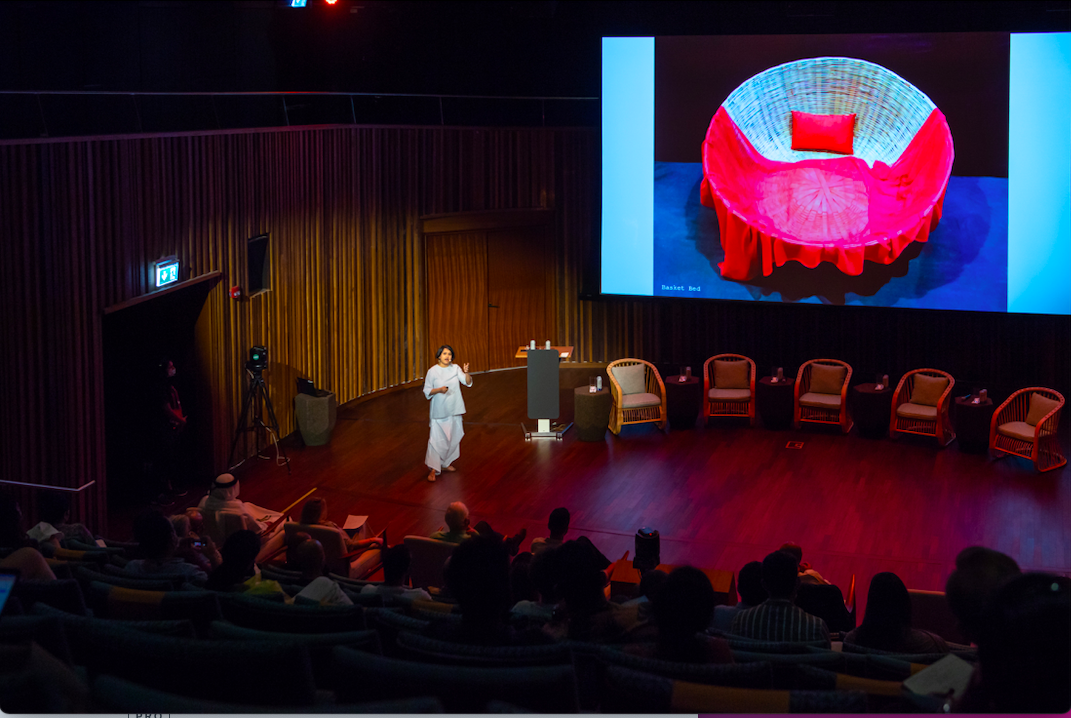
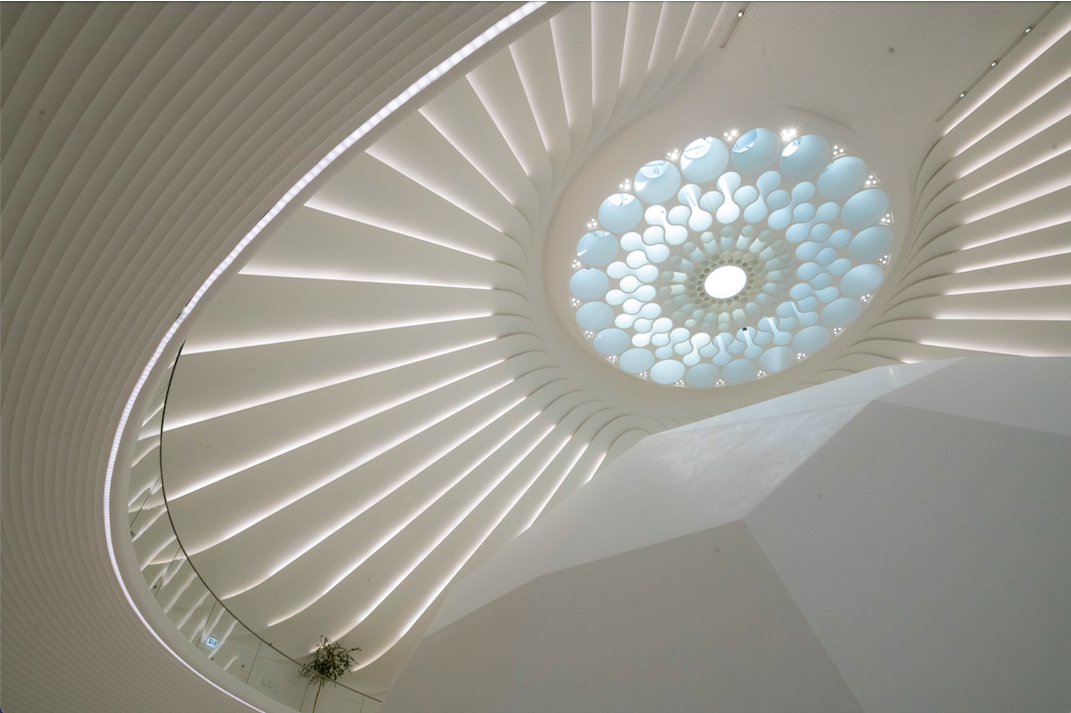
In the Sustainability Pavilion at EXPO2020, Alserkal's third talk for its Cultures in Conversation series contemplated the invisible thread of community-building in cities. Executive Director of Alserkal Advisory, Vilma Jurkute, opened with stark facts: “The number of people in urban areas is projected to increase from 55% to 68% by 2050. Cities account for 75% of total resource consumption.”
Cultures in Conversation | What Makes a City: Dimensions of Culture and Possibility of Community
Dreamscapes and Spirituality
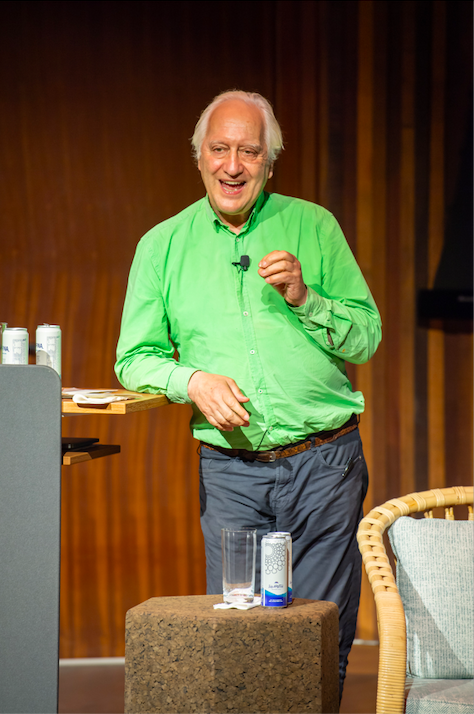
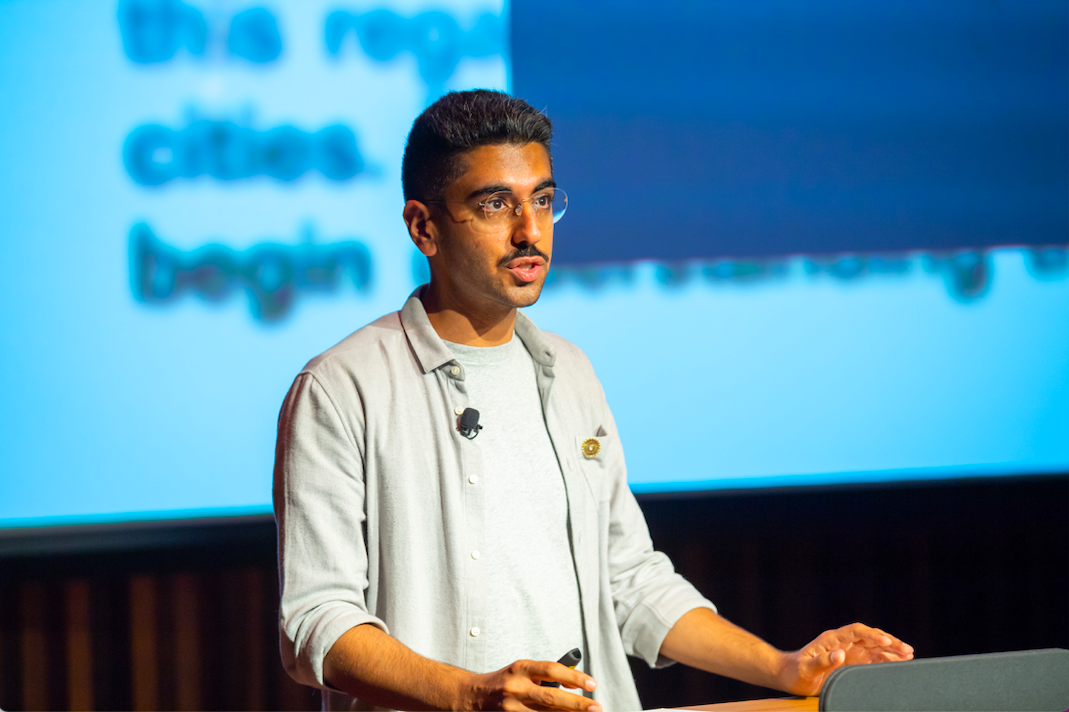
Charles Landry, behind the iconic 1990s urban planning manifesto The Creative City, kicked off proceedings, citing the ‘15-minute city’ concept by Carlos Moreno as a real example where work, home and play would become accessible within a short walk or cycle ride.
The People are the City
BARD Studio’s Rupali Gupte and Prasad Shetty from Mumbai suggested urbanism cannot be approached from a top-down diktat. “Cities happen; they’re not made,” said Mr. Shetty.
History Cleaves the City
Stephen Hobbes of Trinity Sessions in Johannesburg described a community-building project in Noordgesig, a township so marginalised during Apartheid it wasn’t even documented on spatial planning maps, rallying around social activist icons Mama Betty Glover and Ma Vesta Smith under the banner #ArtMyJozi.
Success is a Double-Edged Sword
Ali Ismail Karimi and Hamed Bukhamseen of Civil Architecture revitalised a former palm grove in Bahrain with floodlights and benches. “Success and failure ebb and flow,” said Mr. Karimi.
Tolerance and Inclusivity
Tolerance and Inclusivity
Openness and the Path to Prosperity
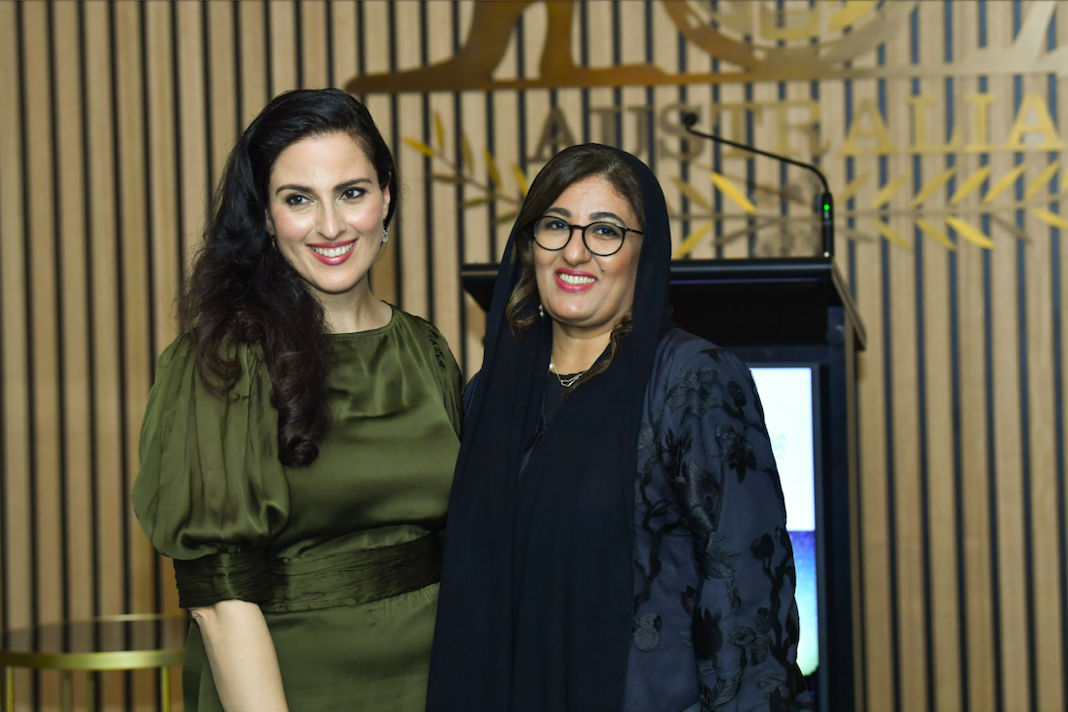
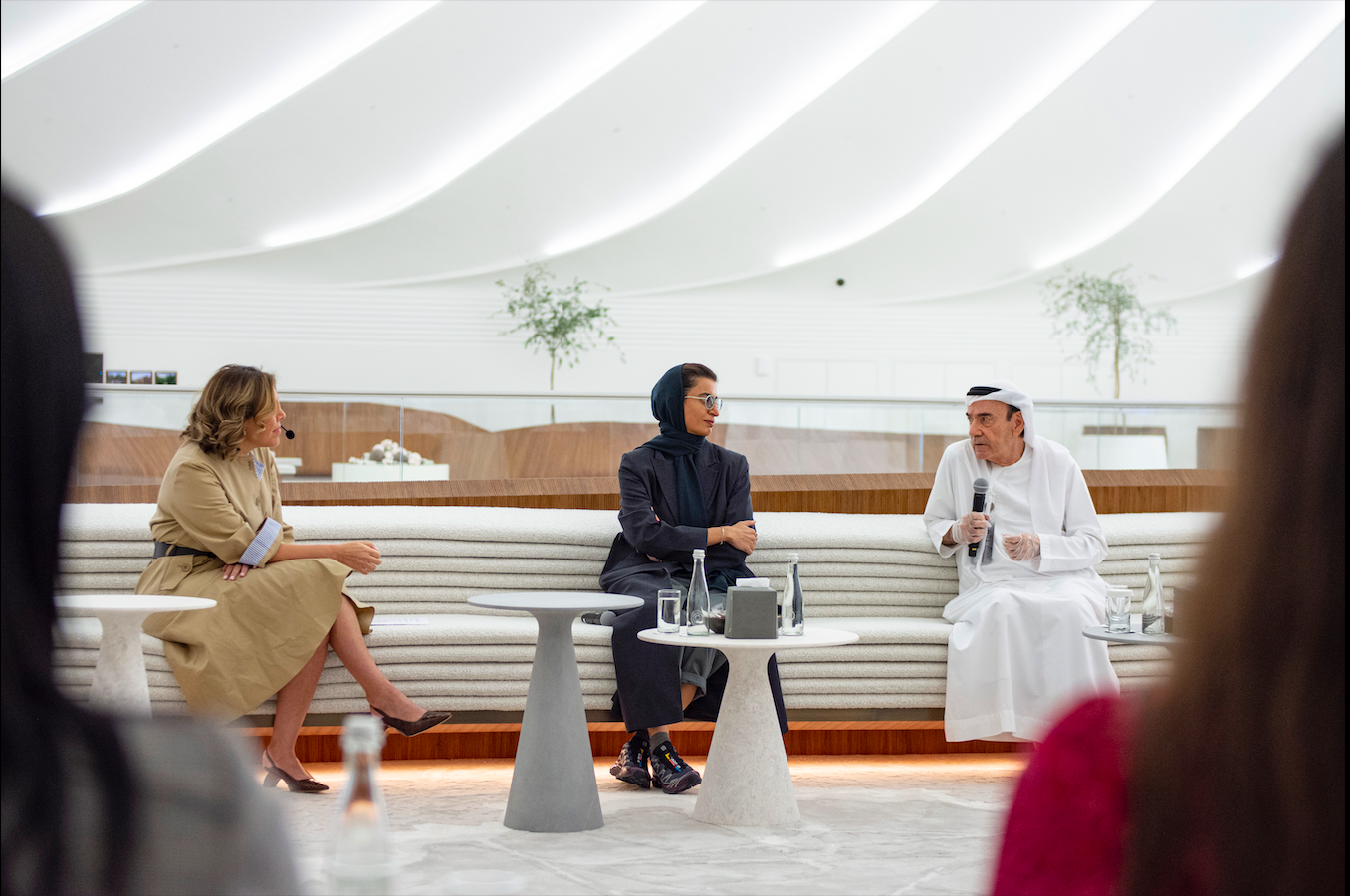
Kinship, belonging, exchange, and acceptance are cornerstones of the UAE identity, harking back to ancient times. This openness is not the by-product of statecraft, but rather has been hardwired into our culture for millennia. This intimate conversation unites two prominent UAE voices in diplomacy, culture, and education.
Are Nations Built on Tolerance or Empathy?
Govind Dhar
His Excellency Dr. Zaki Nusseibeh, Cultural Advisor to the President of the UAE, and Her Excellency Noura Bint Mohammed Al Kaabi, UAE Minister of Culture and Youth, spoke to cultural strategist Myrna Ayad about tolerance as the foundation of nation-building, and its importance to founding father Sheikh Zayed bin Sultan Al Nahyan's vision.
Defining Tolerance
HE Zaki Nusseibeh said he preferred to think of tolerance as empathy, citing Milan Kundera's Unbearable Lightness of Being. “To be able to have close to 200 nationalities living together in harmony in UAE demonstrates that tolerance is the very foundation of the UAE.”
Tolerance Requires Women
“If we had more women negotiators, I can assure you we would have better peace treaties,” said HE Zaki Nusseibeh. “Tolerance requires women at the helm.”
Cultures in Conversation | Openness and the Path to Prosperity
A Divided World
“We are in an age of virtual extremism, of virtual shame, taking things out of context, of cancel culture,” said HE Noura Al Kaabi. “We would rather go back to Sheikh Zayed's edict of focusing on goodness.”
Hope is a Poem
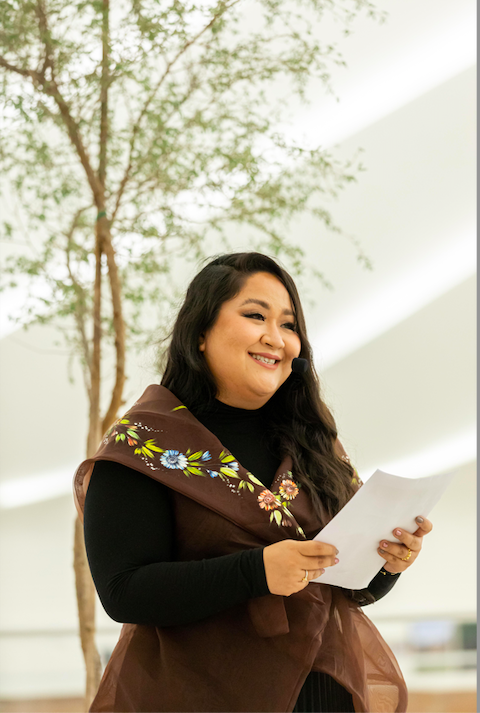
Danabelle Gutierrez recited three poems about tolerance and multiculturalism, including Bodies of Water and Ode to the Love of my Life, a paean to the UAE.
Knowledge and Learning
Knowledge and Learning
The Everywhere Classroom
The Everywhere Classroom is an immersive multi-experience performance centred around learning via play. Audience members choose from a handful of possible "subjects" upon arrival, school bells marking starts and ends. Theatrical and didactic, this performance makes "the classroom" the protagonist.
Participants: Engage 101
You're Going to Need More Concrete
Govind Dhar
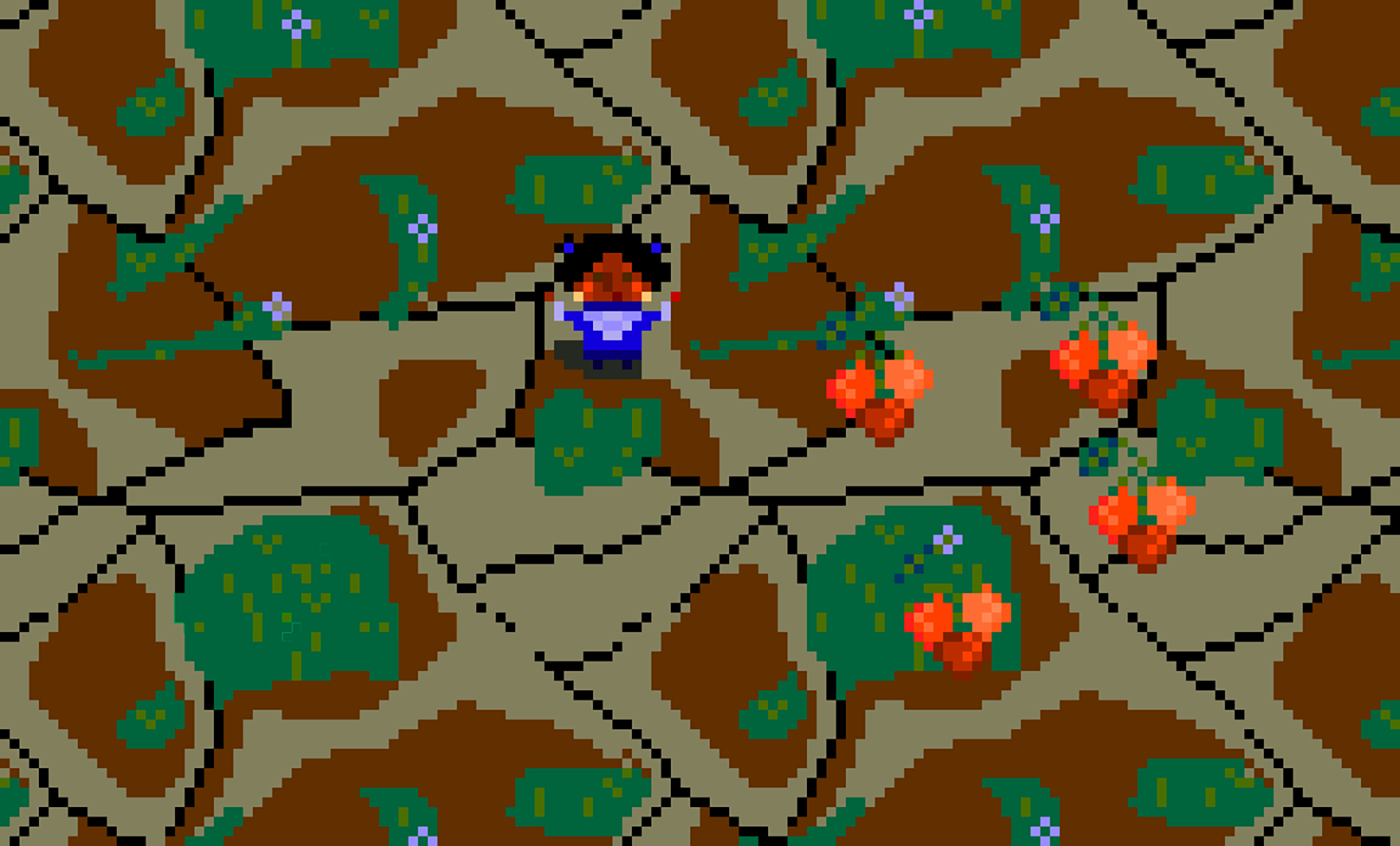
‘The Everywhere Classroom’ engaged volunteers in an interactive game developed by Carlos Páez at the Latvian pavilion. “We found a new mode of participation that allows people to talk to each other in ways that are nonverbal, that can transcend language and culture,” says Páez.
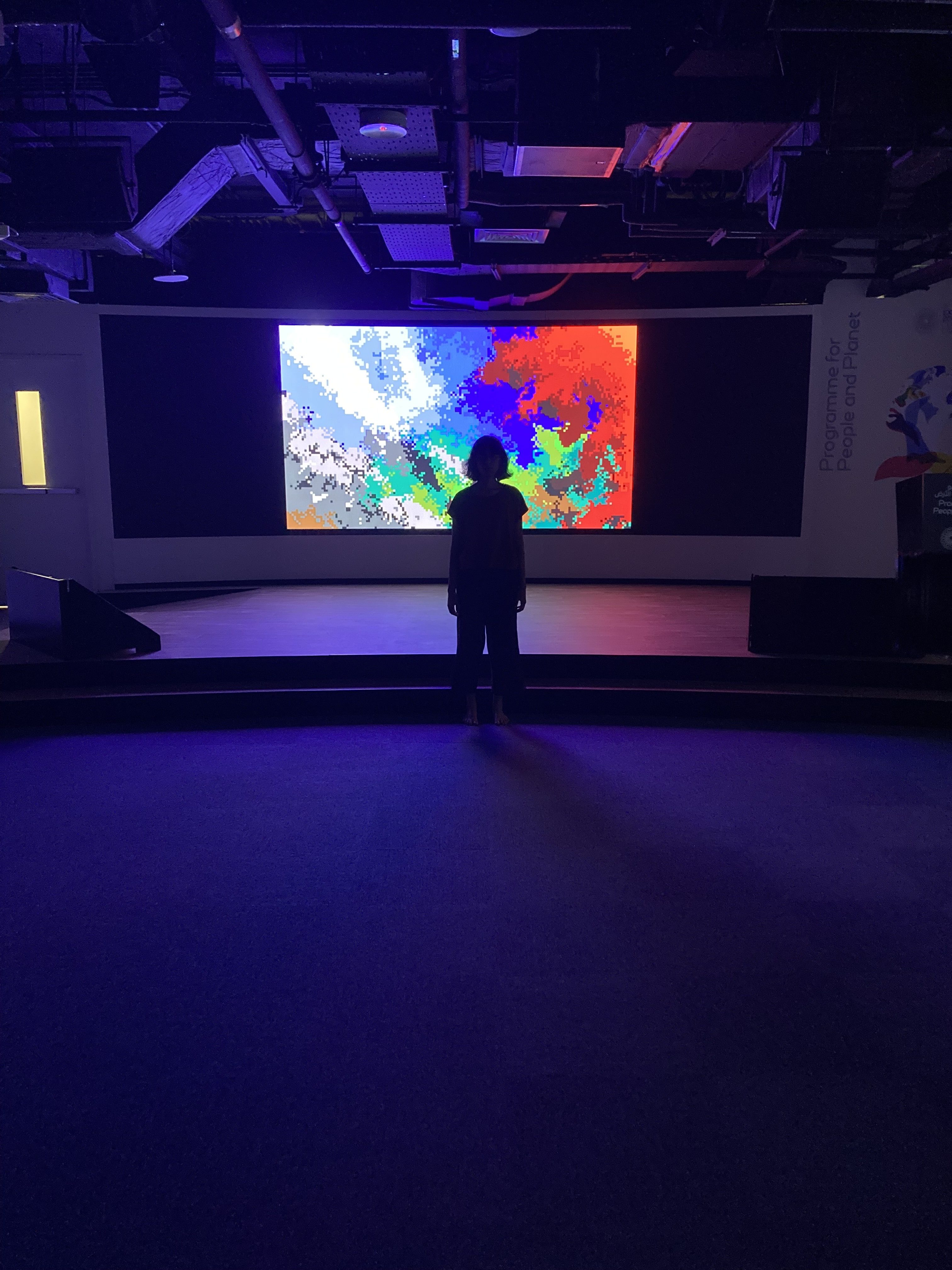
Rules of the Game
The scenario: a mountain village on an alien planet destroyed by wildfires. Volunteers played one of two games while collectively trading resources with virtual travellers, guided by a mysterious voiceover.
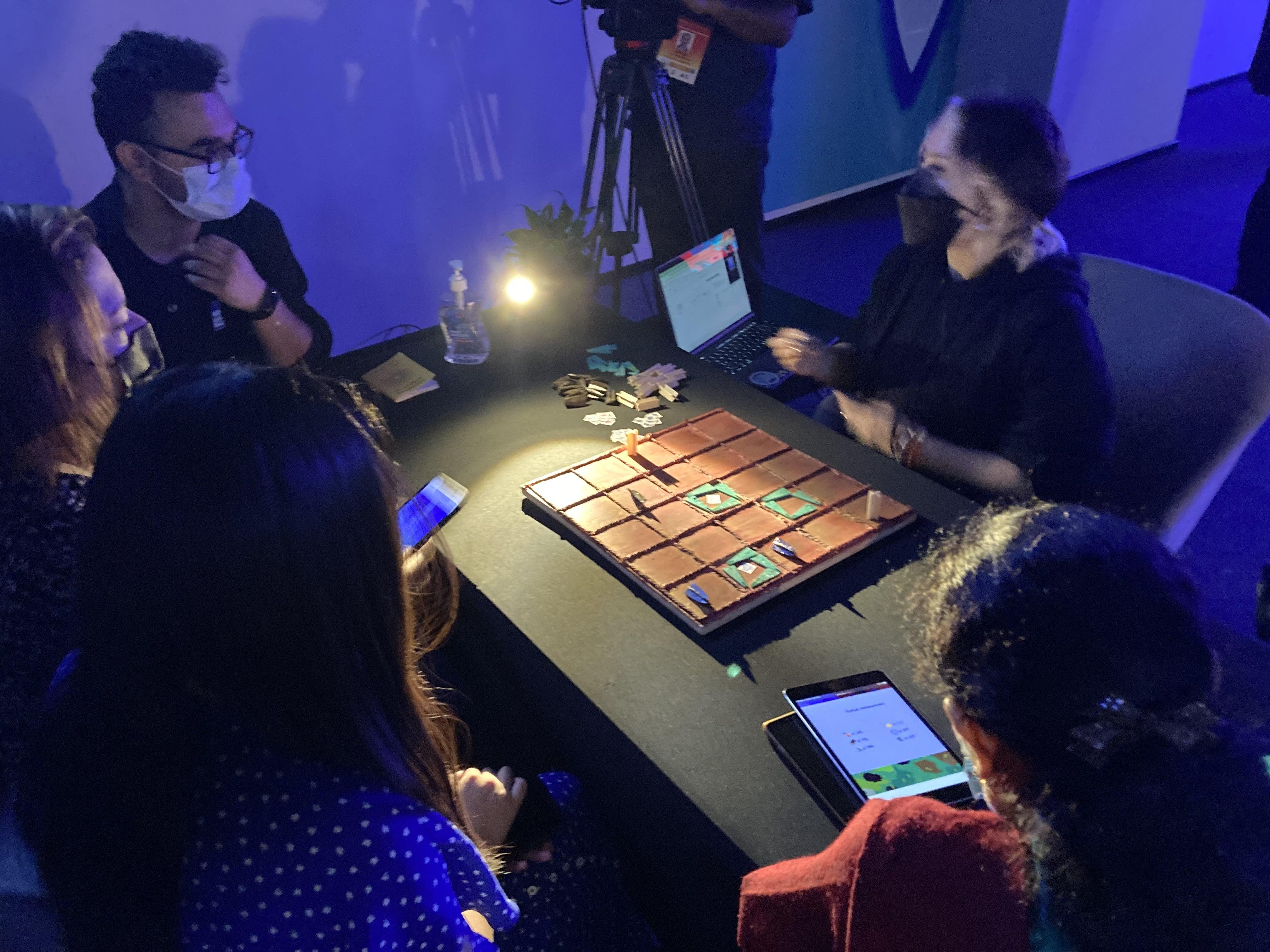
End Game
“When you play most games, you're playing them individually,” Páez told me. “Here I wanted people to work collaboratively.” In getting strangers to cooperate towards a common goal, the Everywhere Classroom creates a goodwill bubble for people to navigate an imagined problem.
Travel and Connectivity
Travel and Connectivity
A Cloud is Nobody's
Conceptual Artist Mary Ellen Carroll in conversation with AI ethicist Renee Cummings to discuss the ethical imagination (EI®), travel, and AI — combining new systems of exchange and value, the ubiquity of the blockchain, and mixed reality (MR), where the virtual and the real interact to create locations where it is possible to travel in time and space, while remaining in the same place.
Big Vapour is Watching
by Govind Dhar
Speakers Mary Ellen Carroll and Renee Cummings crashed through the roof of the DP World pavilion — the former via parachute, the latter via a digital videogame avatar. Mary Ellen Carroll (aka MEC) discussed her 20-year career of socially activist and conceptual commentary using architecture, infrastructure and policy, as art.
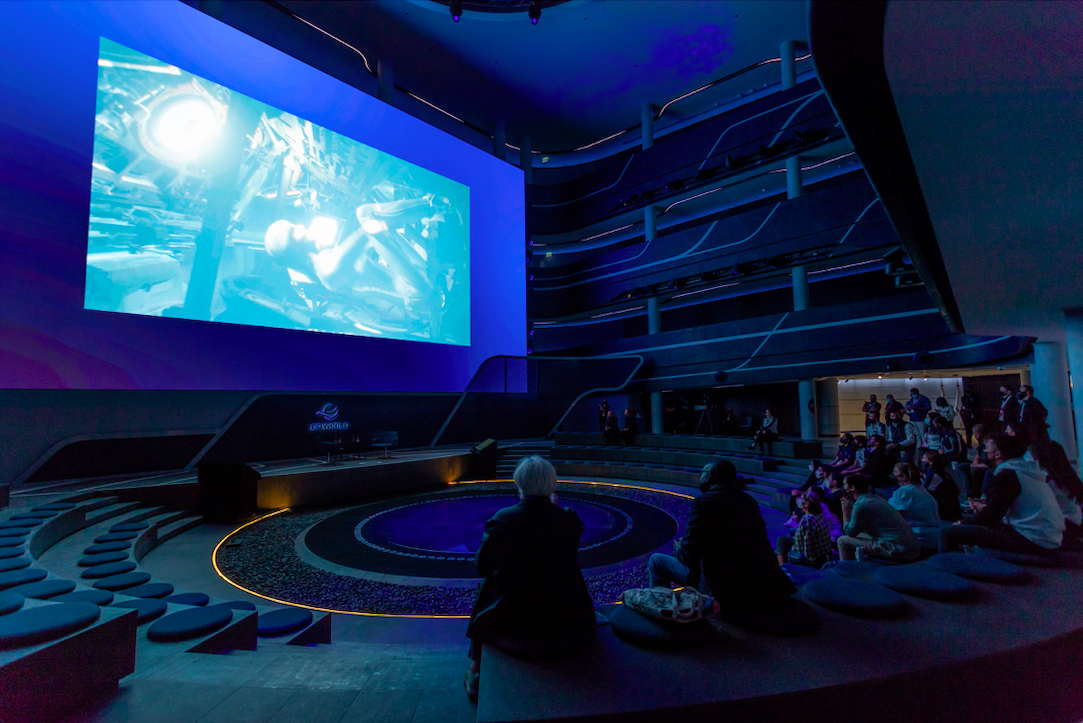
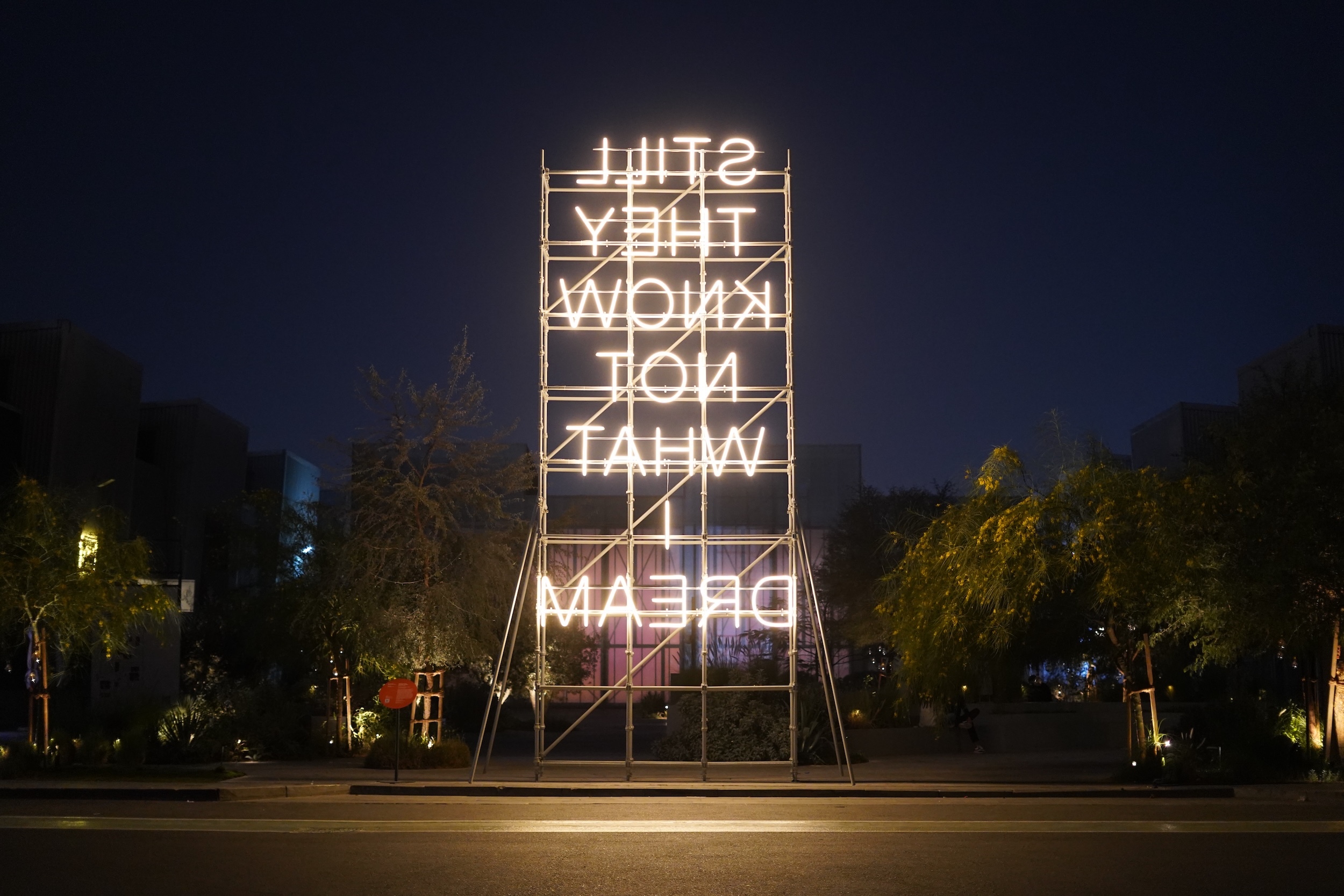
Renee Cummings' work looks at remedying AI trained on data that mirrors historic discrimination. Mary Ellen Carroll's works include Credible Fear (2019), which used a blockchain auction to support detained immigrant families at the US border, and Indestructible Language (2019), a solar-powered neon sentence for COP26 reading ‘It is green even in the dark.’
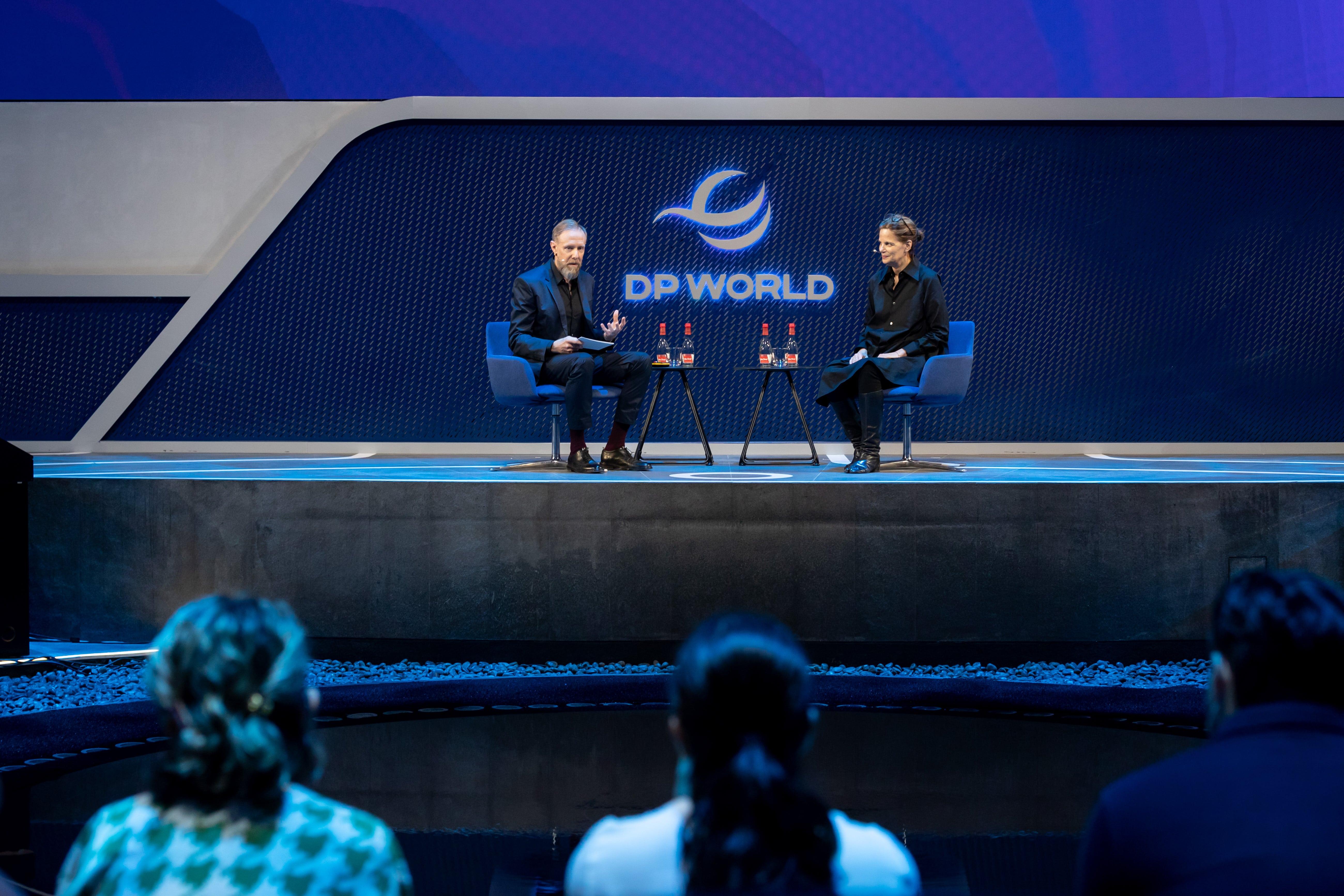
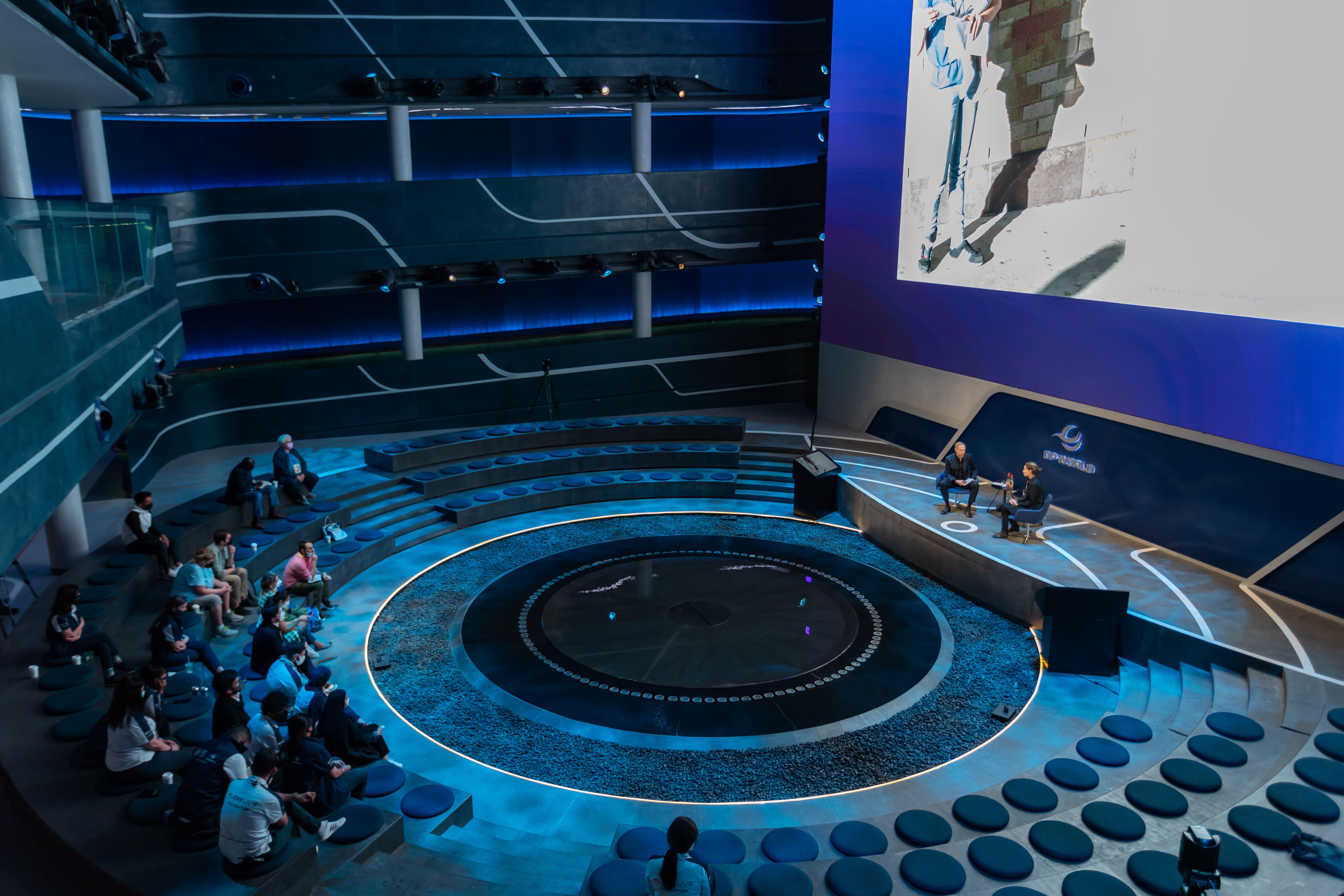
MEC spoke of ‘Ethical Imagination,’ a blockchain registry of ideas. “The premise is that the work of art has only to be itself,” said Ms. Carroll. “It doesn't have to have any other kind of function.”
Global Goals
Global Goals
The wider the vision, the narrower the phrase
Through a commissioned performance, we ask: how can culture interpret the Global Goals for citizens of the world that are at Expo? We invite cultural practitioners to radically challenge the conversation and allow for artistic interpretations of these inspirational objectives.
Throw Your Hands Up in the Air
by Govind Dhar
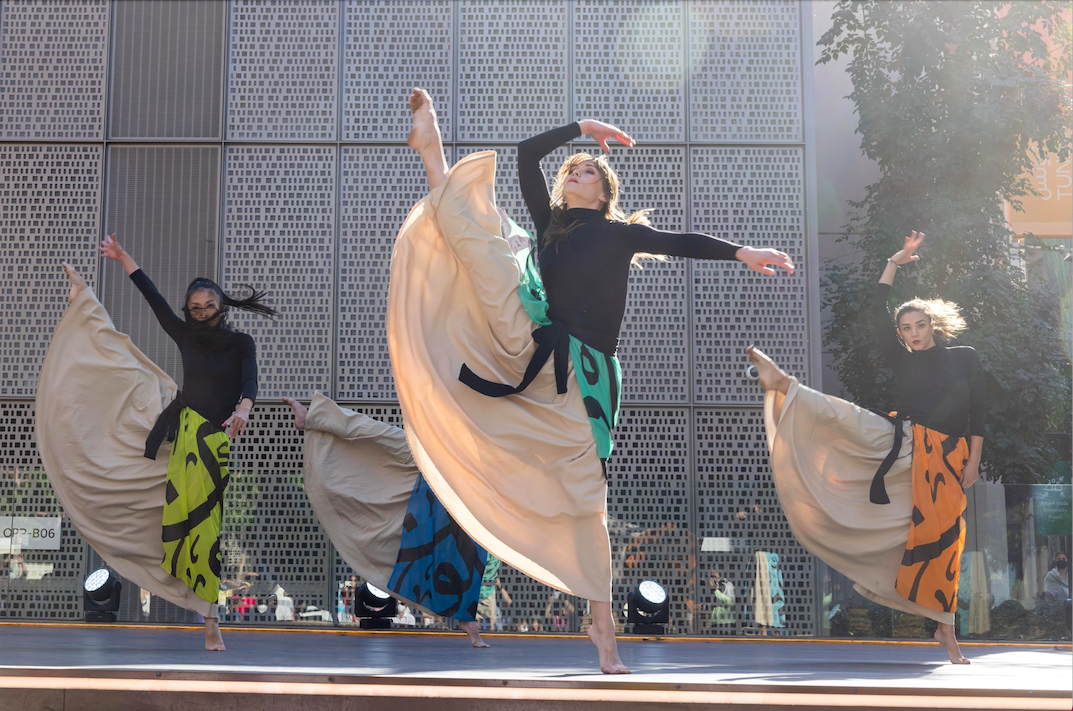
Alserkal Advisory commissioned a performance by SIMA Dance Company at the Sun Stage, responding to the UN's 17 Sustainable Development Goals. Only 16 of the signatory 193 countries are on track to achieve all SDGs by 2030.
Call to Fair
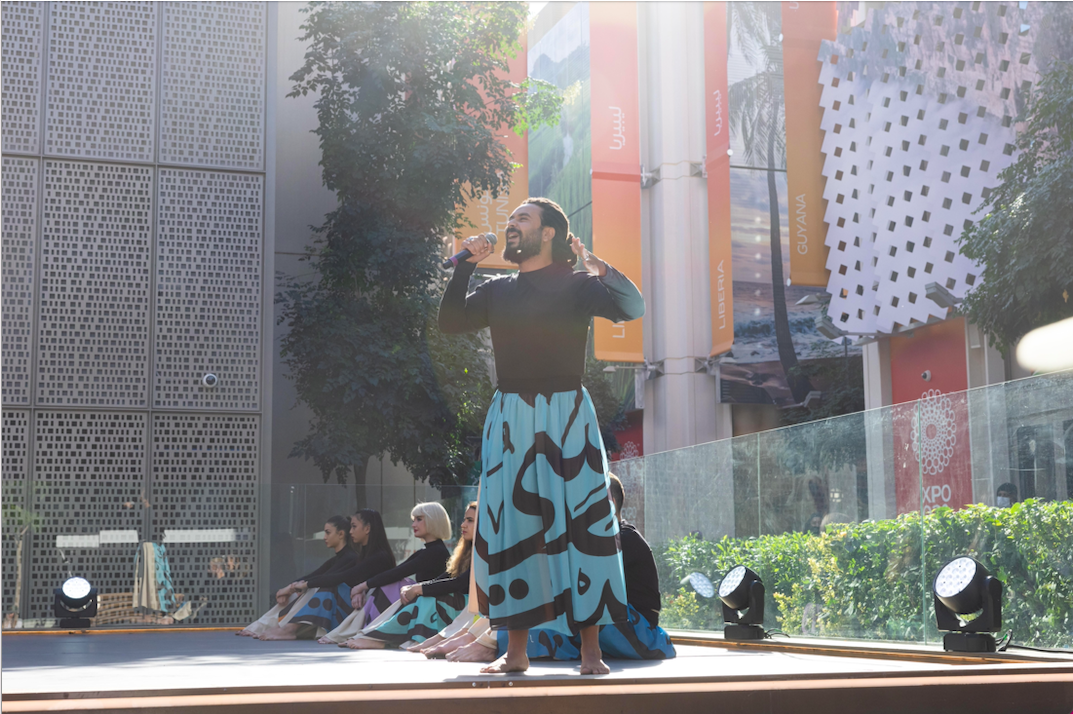
Dancers performed three pieces combining devotional, balletic, and hip-hop motifs, backdropped by the oudh and the wails of the qawwal. Choreographer Alaa Krimed entitled the work ‘The wider the vision, the narrower the phrase.’
Glass Half Empty
The Economist called the 169 SDGs ‘Biblical’ and ‘unfeasibly expensive’ when announced. If 8 out of 10 signatories are over the 50 percent mark for achievement, the glass is already half full.
Health and Wellness
Health & Wellness
Practices of Care and Commoning
This programme invites curators and cultural practitioners to engage in an informal conversation, investigating urgent questions surrounding notions of care, collectivity, and solidarity.
Art is Only as Good as Art Does
by Govind Dhar
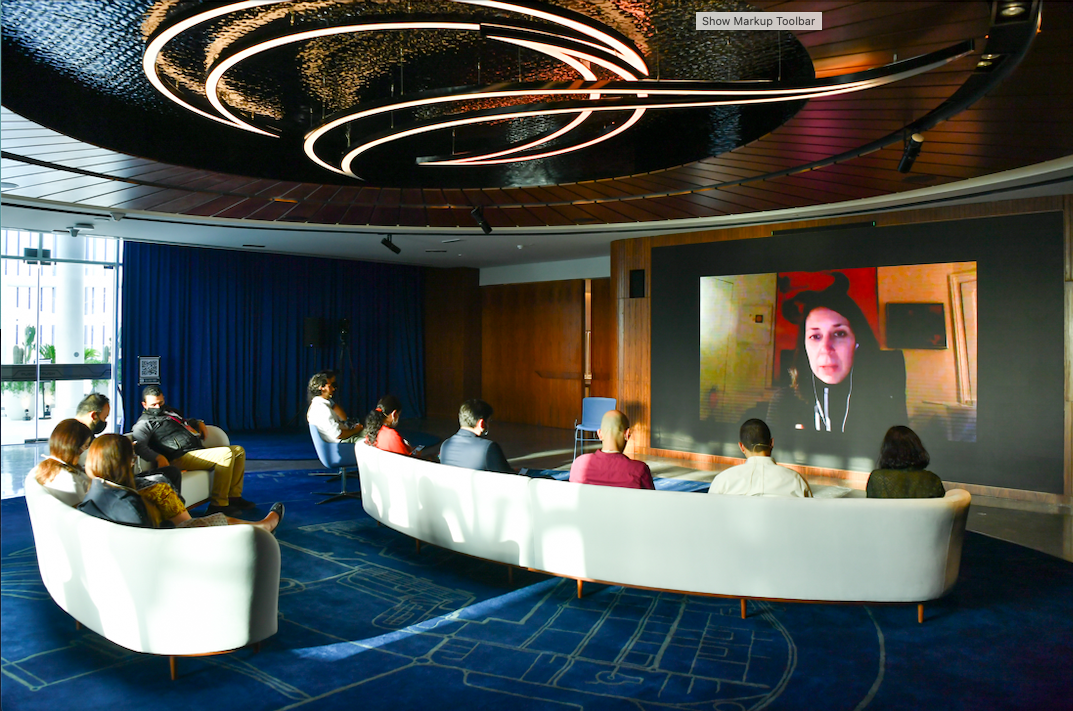
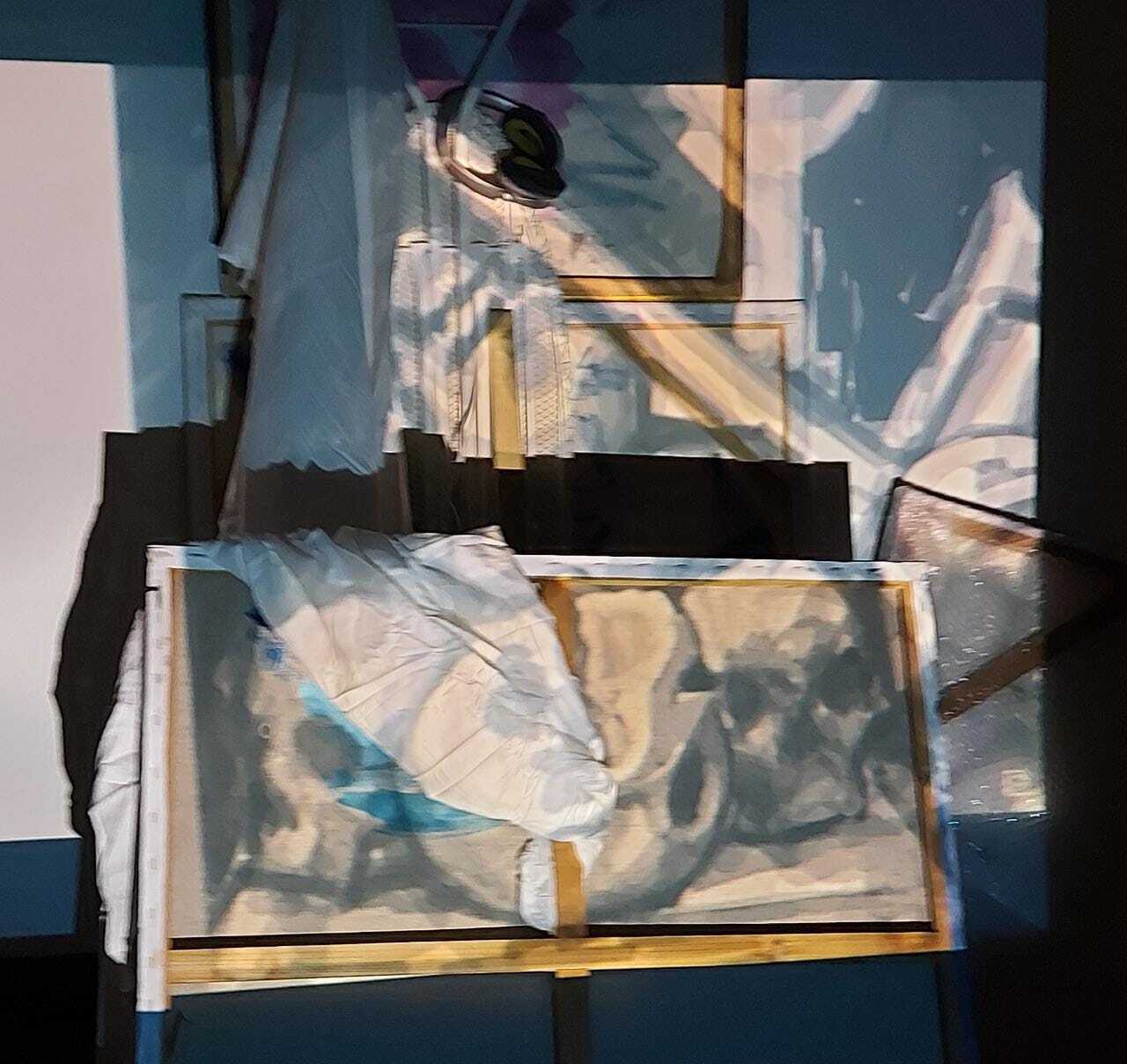
Cultures in Conversation slowed its pace to reflect on health and wellness, preceded by a soundscape and screening by artist collective 3 137.
The Slow Lane
Curator Nataša Petrešin-Bachelez spoke of collective authorship and ‘slow institutions,’ arguing there is a therapeutic aspect to artistic practices in situations of injustice.
Justice
Dr. Léuli Eshrāghi discussed restitution of lands, waters and relics to indigenous peoples, and genuine representation of trans and LGBTQi+ individuals in museums and galleries.
Seeds of Rebellion
Beirut-based Adib Dada's reforestation work has covered over 3,500 square metres with self-sustaining greenery. “Don't wait for the political class to change or help,” said Dada. “Go directly to the community. Do it yourself.”
Food
Food, Agriculture & Livelihoods
Key Ingredients
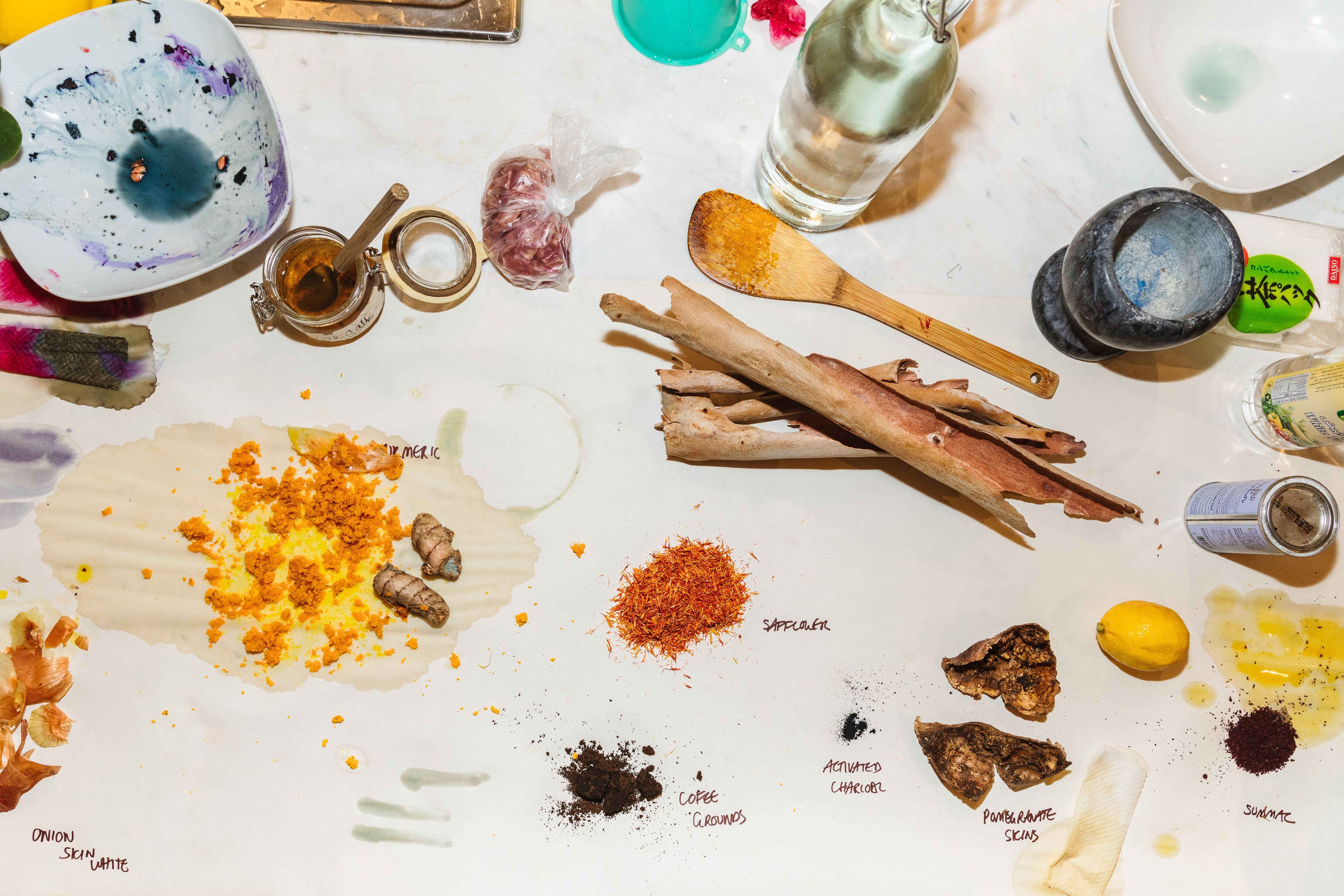
Bringing a playful approach to the intrinsic link between food and culture, this programme invites local, regional, and international artists, chefs, researchers, scientists, and curators to share their stories.
The World's a Greenhouse After All
by Govind Dhar
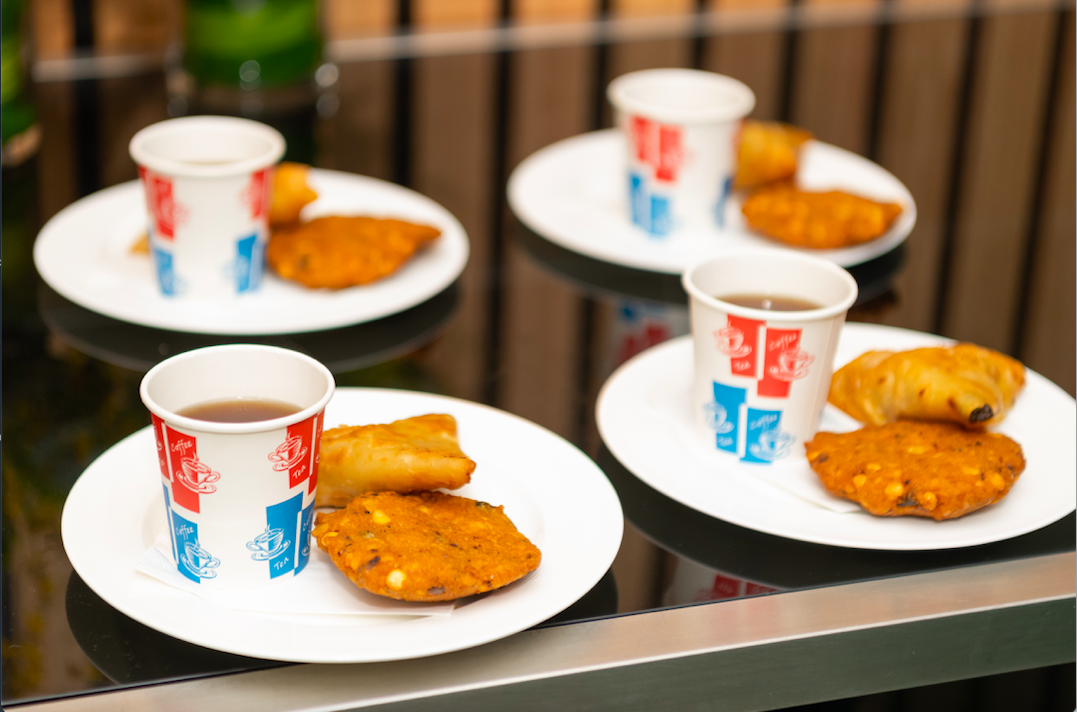
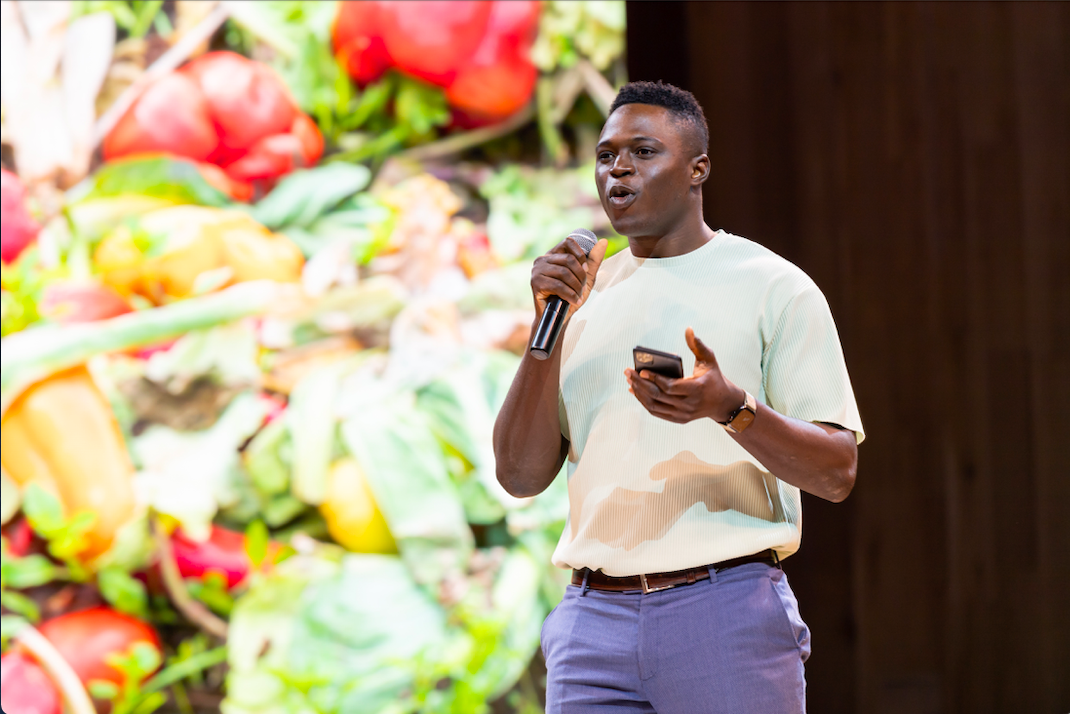
At the end of Food, Agriculture and Livelihoods Week, Alserkal Advisory orchestrated a Pecha Kucha of eight innovators at the Australia Pavilion, capped off with a curated food journey by author Deepak Unnikrishnan, ‘This is Not a Food Tour.’
First, the Bad News…
900 million people starve each year. The current agribusiness model produces 1.3 billion tons of food waste annually. A third of the food produced in the world does not reach the consumer.
Silver Linings
Salma Serry's Sufra Kitchen delves into forgotten recipes to understand identity. Tansha Vohra of Boochi led a degustation of insects, noting 2 billion people worldwide eat them. Daniel Solomon's EroeGo salvages rejected crops.
Follow the Science
Mark Tester of Red Sea Farms works to decrease the water needed for tomatoes from 350 litres to 20. Mario Bernardi's Farmelody helps farmers cut methane emissions through microbiome studies.
Water
Water
The Silencing of Water
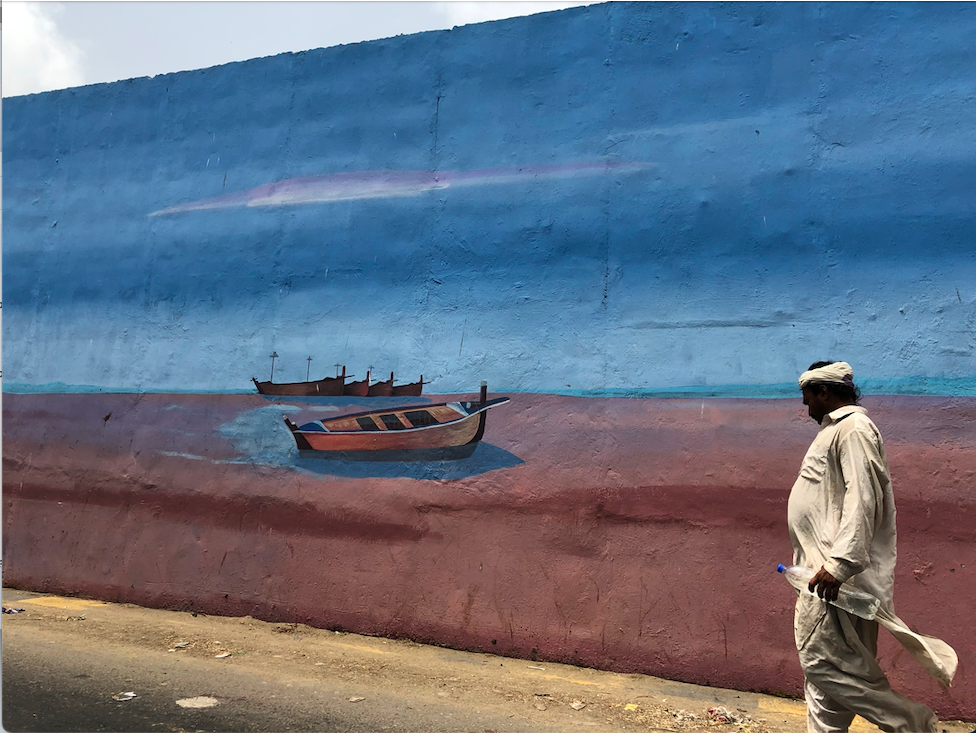
Cultural connections and knowledge were forged through maritime trade over centuries, shaping our cultural identities and belief systems. In this event we explore what can be learnt from the respect that our ancestors had for the elixir of life and how the past connects with the water crises we face today.
Water, Water Everywhere, but Fewer Drops to Drink
By Govind Dhar
For its final talk at EXPO2020, Alserkal Advisory presented discourses on water curated by Nada Raza, spanning spoken word, river research, and pearl diver music, culminating with a sustainable fish tasting at the Brazil pavilion.
Water Music
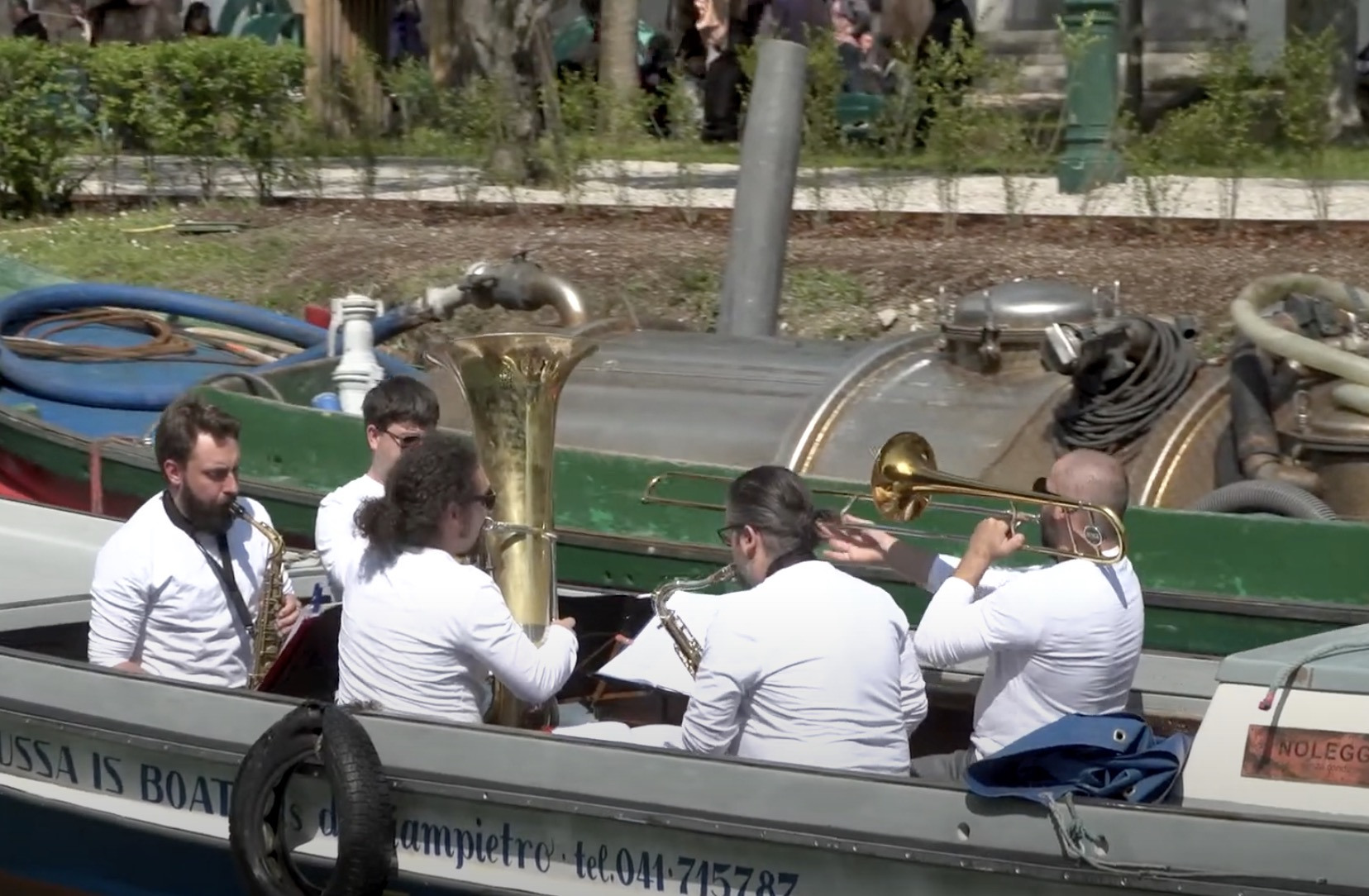
Artist Himali Singh Soin opened with a video exploring the Victorian belief in a glacial apocalypse. Ghazi Faisal Mulaifi's Boom Diwan performed Minarets, jazz fusion with verses from Rumi.
Resisting the Tide
Dr. Vikrom Mathur said glaciers had melted faster in the last four decades than in the last 700 years, pointing to Denmark's Aarhus River project as a model for rehabilitation.
Heads or Tails for the Win
Marine scientist Aaron Savio Lobo described how trawler fishing discards ‘trash fish’ that could feed people instead. 46 percent of our fish now comes from farms.
Food for Thought
“I'm more interested in awareness becoming a movement and then behavioural change,” said Dr. Mathur. “How we convince people to change the way we live and consume is what we have to think about.”
*Alserkal Advisory is an independent multi-disciplinary practice of thinkers, researchers, and specialists covering diverse fields and multiple geographies, embracing a mindful approach to reimagining cultural destinations and crafting audience-specific public programmes.















Stay tuned...

Stay tuned...

Stay tuned...








Stay tuned...