

Undercurrents: Informal Trade and the Silent Routes of the Sea

NOTES FROM THE FIELD — AZERBAIJAN
As part of my Alserkal project, I travelled through Azerbaijan following sections of the International North-South Transport Corridor (INSTC), moving from Baku south toward the Iranian border at Astara and later north along the Caspian coast to the Russian border.
I was interested in what happens around a transnational corridor when infrastructures designed to accelerate the movement of commodities coexist with borders that have become increasingly difficult for people to cross. Rather than approaching the INSTC only through its major ports and construction projects, I tried to inhabit the corridor over an extended period by following railway lines and highways, stopping in border towns, having tea with small-scale merchants, and observing the smaller economies that gather around these infrastructures.
Part of this fieldwork was conducted with geographer and conservation researcher Siavash Ghoddousi, whose long-term interest on the Persian leopard in the Hyrcanian forests introduced a parallel set of questions around ecological movement, borders and mobility.
The journey also developed into a longer archival investigation at the Akhundov National Library in Baku. What I could only begin during my time there has since continued through my collaboration with Lala Alakbar, who has helped me work through Azerbaijani- and Russian-language materials relating to Astara, cross-border trade, and the Caspian.
The following images trace this research as it moved between roads, markets, forests, railway lines, conversations, and archives.
The effects of the closed land borders appeared before I reached Astara. Shortly after arriving in Baku, the representative from the company where I rented a car complained that business has been very slow and that it never properly recovered since the closure of borders due to COVID. Although it was 2025 another six-month extension of the border closure due to the pandemic had just been announced. The company representative remembered numerous Iranian tourists arriving by road during Nowruz; but now, he told me, most of his customers came from Turkey, India and Arab countries. The border was several hundred kilometres away, but its closure was already reorganizing economic life in the capital.
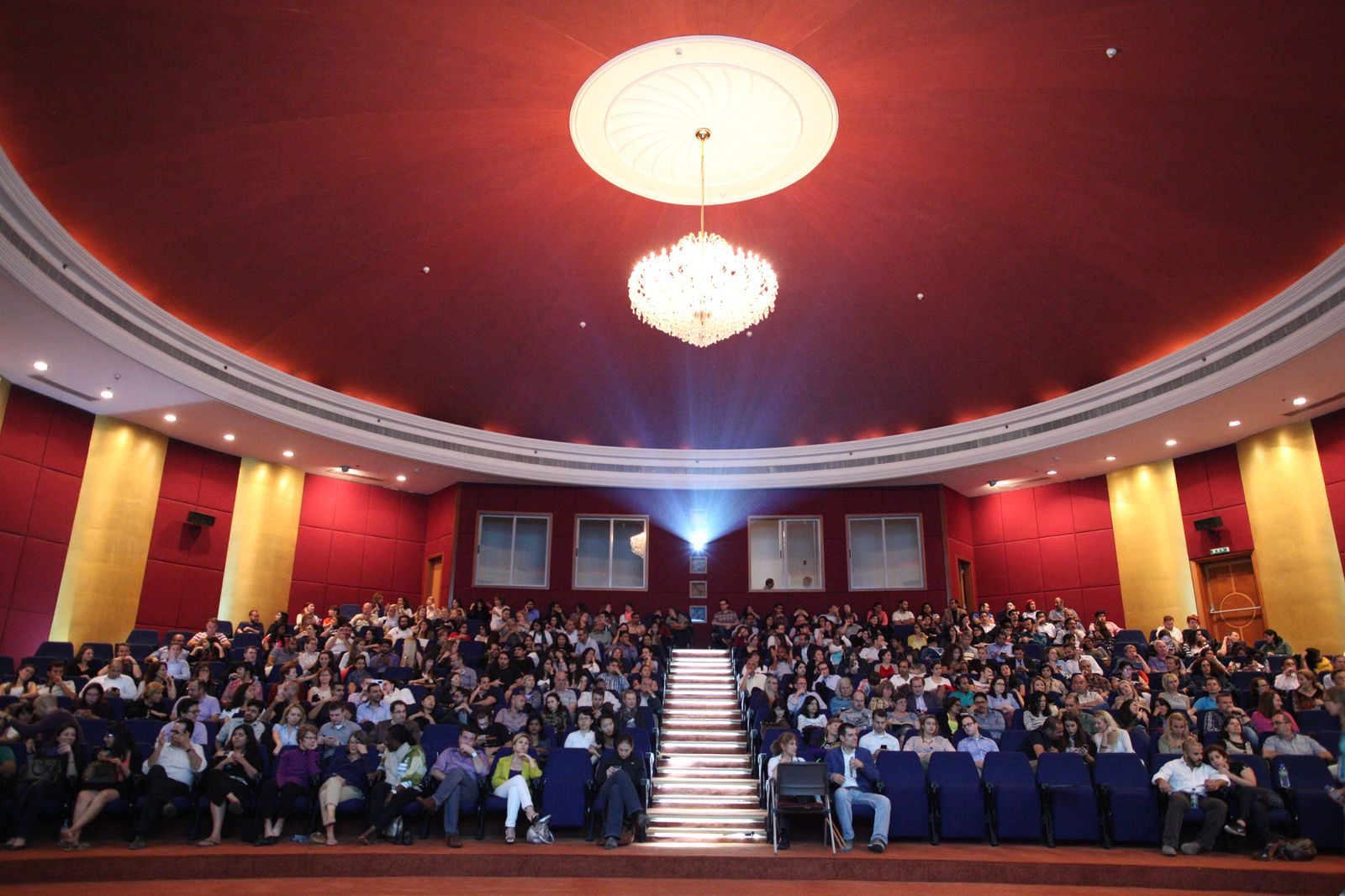
I was lucky to be one the few Iranian tourists in the city around Nowrooz and even luckier to spend chaharshanbe soori in Salam Cinema with great music!
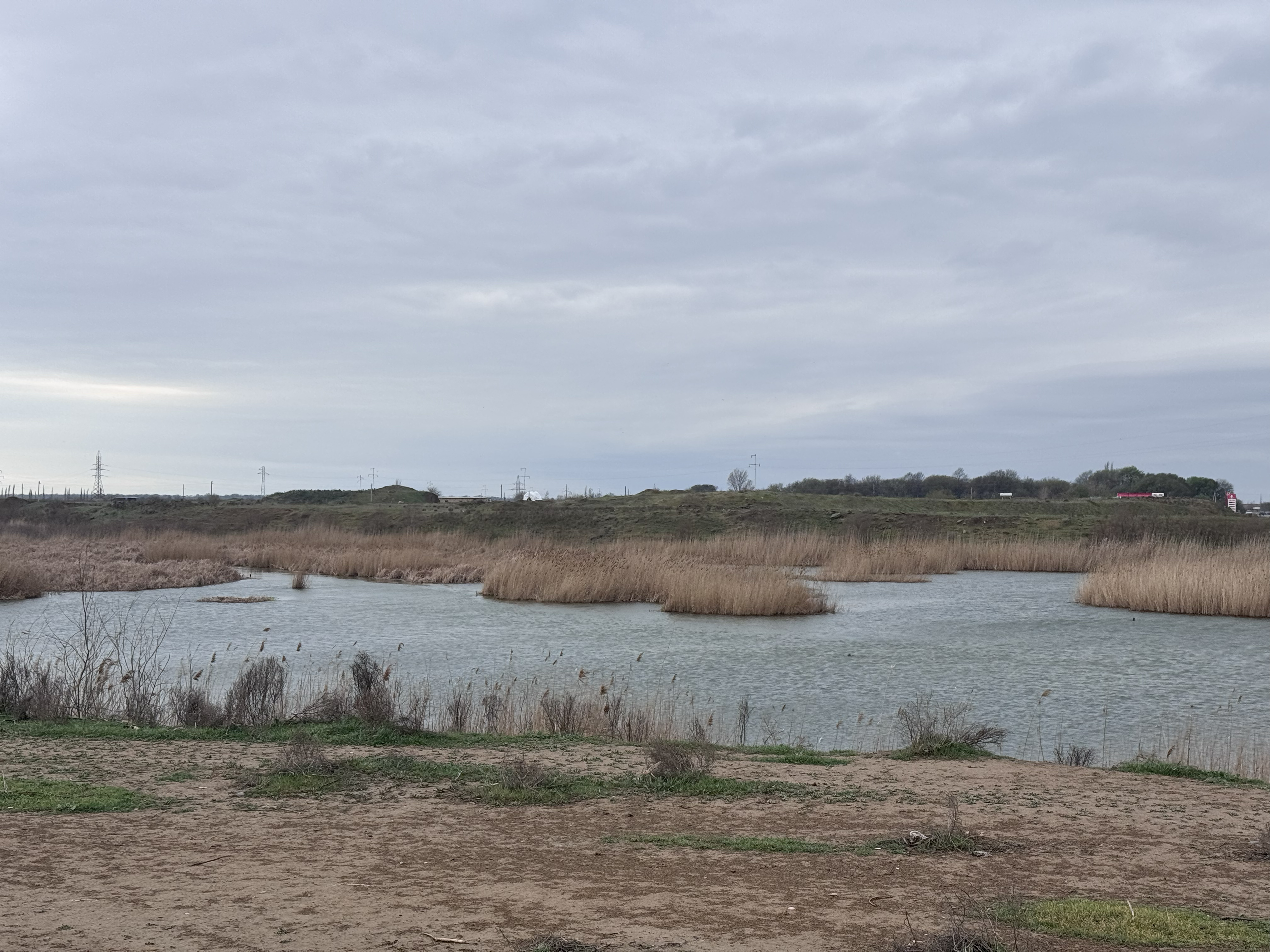
A few days later I drove south through heavy rain toward the border crossing at Bilasuvar. On the Azerbaijani side, I noticed a broad buffer between the border and the nearest buildings. Across the line, Iranian houses, farms and industrial structures appeared much closer and almost adjacent to the border fence.
Although no civilian traffic was allowed, trucks continued to pass. Most had Azerbaijani or Russian plates. Nearby were green pasturelands, large herds and, on the Iranian side, what appeared to be an open-air livestock sorting facility. Human passage had largely stopped; commercial and animal infrastructures had not.

At the Bilasuvar bazaar, several merchants asked if I was Iranian. Their next question was whether I was a TIR driver.
It was a reasonable assumption. Ordinary Iranian travellers could no longer arrive through the land crossing, while freight drivers remained among the few people who continued to move back and forth by road. One shopkeeper told me that business had deteriorated continuously since the COVID-era closure. Despite arriving during the Nowruz shopping season, much of the bazaar was strikingly empty.
Similarly, when Siavash and I eventually arrived in Astara, people were repeatedly surprised to hear that we were Iranian. Several initially assumed that we had somehow crossed the land border on foot and that the border was miraculously just opened to tourists as a gesture of good will during nowrooz holidays.
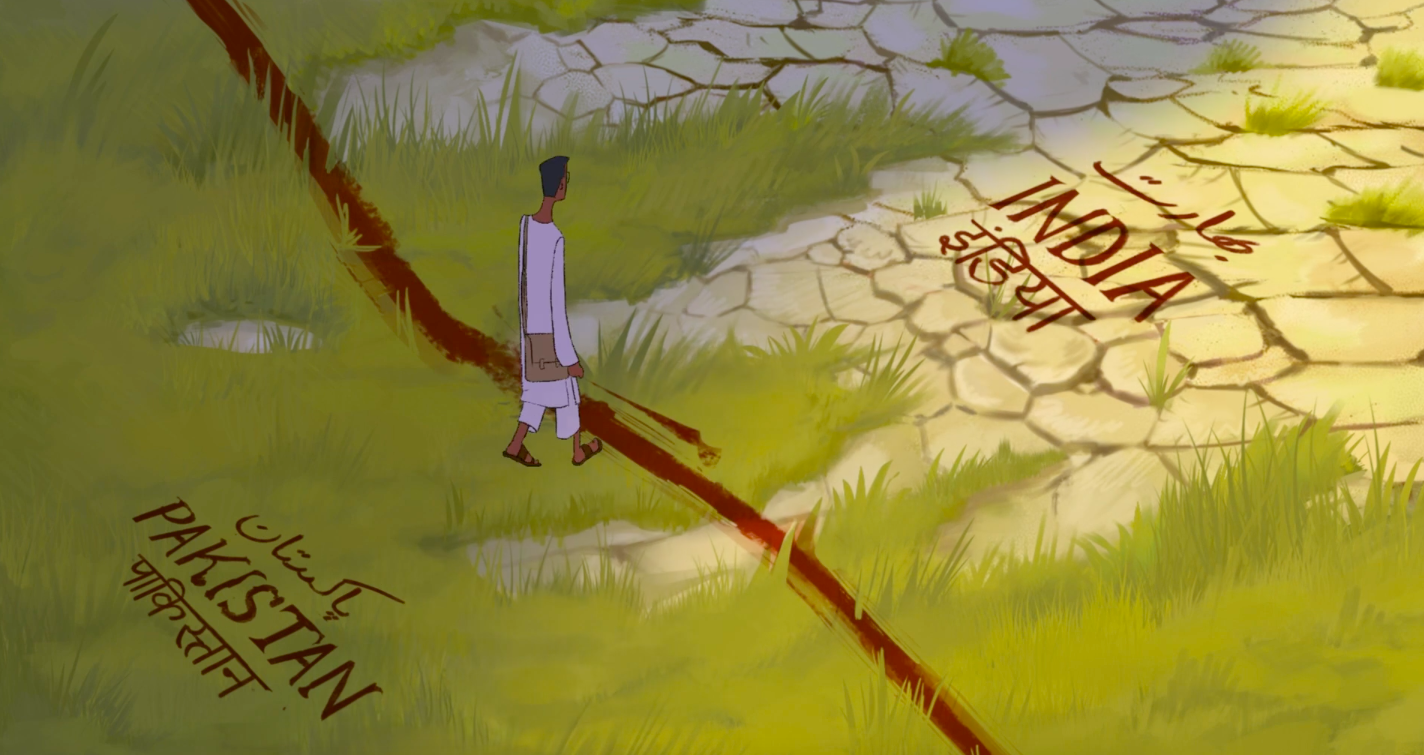
Astara had historically been shaped by movement between the two sides of the border. In fact, it is one city divided in two by the Persian/Soviet border. Yet by 2025 the presence of an Iranian visitor had become unusual enough to require explanation. Hotels appeared abandoned, businesses were quiet, and the infrastructures of an older cross-border economy remained visible even as much of the movement that had sustained them had totally disappeared.
I conducted part of the fieldwork with my friend and colleague Siavash Ghoddousi, an Iranian geographer and conservation researcher who has previously worked on the political ecology of the Hyrcanian forests and Persian leopard populations.
My initial questions concerned trade, sanctions and the INSTC. Travelling with Siavash gradually expanded the research toward another set of movements taking place across the same border landscape. We increasingly became curious: If human passage across the Iranian-Azerbaijani border had become exceptionally restricted, what happened to the bears, leopards, livestock and other animals for whom the political border was superimposed onto a much older ecological territory?

Before travelling south, we met with conservation researchers in Baku to better understand reports of Persian leopards moving through the Hyrcanian forests on both sides of the border.
The leopard became an unexpected guide through the landscape. Following its reported movements required us to think simultaneously about national parks, villages, border check points, pasturelands and wildlife corridors. The same territory was being divided according to several different systems of access, none of which fully coincided with the others.

Near Astara we met Baba Khan, whose encounters with a leopard had become locally (even internationally) well known. He spoke to us about bears and the small number of leopards believed to remain in the area, while his brother recalled an earlier period when movement across the Iranian border was considerably less regulated.
For me, these conversations continually collapsed the distance between environmental and political history. Stories about wildlife quickly became stories about relatives, stolen horses, days of lucrative small-scale trade, border crossings and the changing possibilities of moving through the same mountainous landscapes.

We continued into Sym, a village in the buffer zone of the Hyrcan National Park. Residents described a Soviet-era electrified fence extending along sections of the frontier with Iran, including through the entirety of the mountainous terrain.
At the same time, nearly everyone we spoke to seemed to have a family history that complicated the apparent rigidity of this boundary. One resident remembered relatives crossing informally simply to help with chores or to support family members on the other side building a house before returning home.
It seemed that the contemporary fence cuts through a geography in which kinship, pastoralism, wildlife and commerce have long moved transversally.
The owner of a small supermarket in Sym told me that he had once traded extensively with Tabriz. He still had around 1,000 manat sitting in Iran.
The money was not inaccessible in any formal sense: he could fly from Baku to Iran and retrieve it. But the cost of doing so would defeat the purpose. What had once been a short regional journey now required travelling north to Baku, flying across an international border, and reversing the journey to return home.

After our work in Sym and its surrounding villages, we headed toward Lankaran where we stayed in the home of the mother of a friend we had met in Baku. During a conversation at her apartment, she began talking about the years when she and her partner regularly crossed into Iranian Astara to buy rice and other household goods and bring them back for resale.
She remembered the border through ordinary errands and small transactions rather than geopolitics. These were not exceptional acts of international commerce but part of the economic routines through which neighbouring towns had remained connected.
A segment of the INSTC railway runs through Lankaran toward the Iranian border. Passenger services have stopped for years. Freight trains, however, continued moving. That distinction between cargo and passengers became increasingly important to my understanding of the corridor. Infrastructures have been developing at full speed yet who and what are allowed to move are totally reimagined. The corridor is expanding but many of the communities immediately surrounding it experience a contraction of their own mobility.
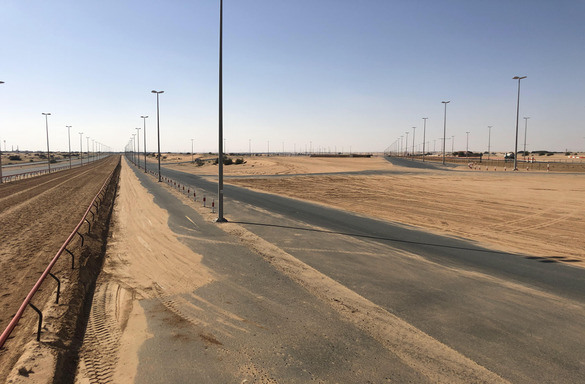
Later we followed the corridor north from Lankaran toward the Russian border. For much of the journey, the railway stretched next to us on the truck road. During the final stretch the old road merged into a recently constructed toll highway running parallel to the Caspian. The road was excellent and almost entirely empty aside from occasional trucks.
Experiencing these moments of speed became important to how I began thinking about mega transversal transit corridors of this nature. Infrastructures built to compress enormous geographical distances can produce a kind of tunnel effect through the territories they cross. Goods move from node to node while the places immediately beside the corridor experience very different conditions of mobility, speed and connection.

The Russian border at Samur felt noticeably different from Astara. Surveillance appeared less intense, people were less surprised to see us near the crossing, and we encountered several civilian vehicles with Russian plates.
At a small café overlooking the border, our presence attracted none of the curiosity we had repeatedly experienced in the south. Even within the same national policy of closed land borders, the experience of the frontier was geographically uneven. It made the comparison with Astara difficult to ignore.

Besides the fieldwork, the archival part of the research began somewhat unexpectedly.
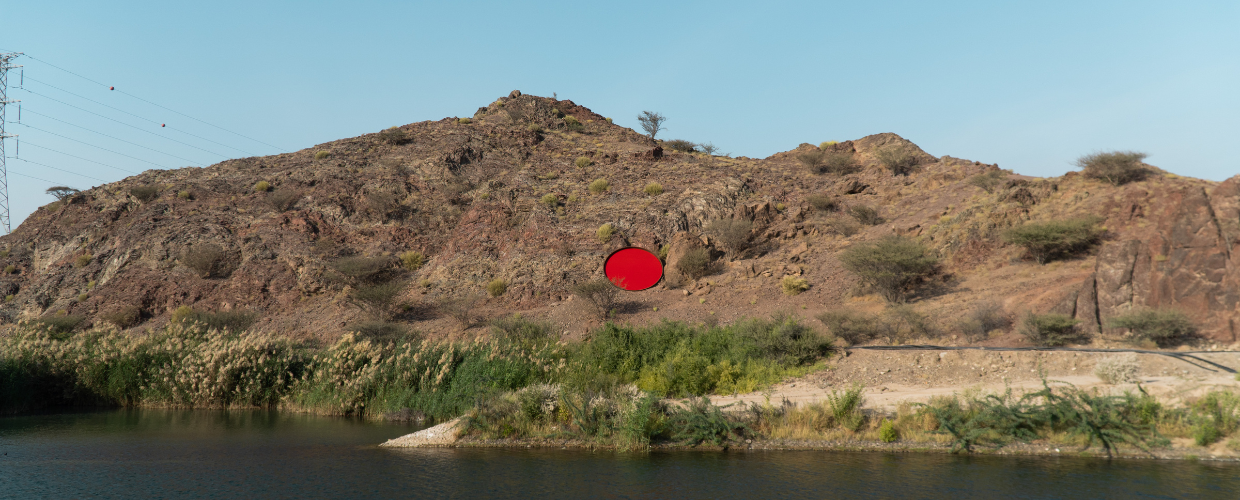
On my first visit to the Akhundov National Library in Baku, I asked a reference librarian for help finding material on Astara. She became excited when she learned that I was Iranian. Her own family had roots in the Iranian province of Eastern Azerbaijan, and our conversation quickly moved from Astara to Iran and eventually to the islands of Kish and Hormuz, which she knew through images of its red soil circulating on social media.
I had travelled to the Caspian to study a corridor connecting the Caucuses to the Persian Gulf, and suddenly Hormuz appeared in an ordinary conversation inside a library in Baku.

The librarian led me toward two bodies of material, including the Astara Gazette, established around the early period of Azerbaijani independence from the USSR.
I spent roughly that day going through and photographing what I could. The newspaper offered something quite different from the state-level documents I had initially expected to find. The editors seemed to prioritize ethnographic accounts over top-down information dissemination.
It was immediately clear that there was far more material than I could properly examine during the remainder of my stay. Earlier materials were largely in Russian, while later sources were in Azerbaijani, and I am not fluent in either. After leaving Azerbaijan, I began working with a new friend, Lala Alakbar who continued the investigation.
I initially travelled to Azerbaijan to follow a trade corridor, but by the end of my fieldwork, the corridor had become more difficult for me to isolate as an object in itself.
The same landscape contained freight trains that moved while passenger trains did not; truck drivers who crossed borders closed to ordinary citizens; leopards moving through national parks divided by electrified fences; families separated from markets and relatives a few kilometres away; and new highways designed to connect economies thousands of kilometres apart.
Rouzbeh Akhbari











Stay tuned...


Stay tuned...

Stay tuned...











Stay tuned...