

The Greening Story
The Greening Story
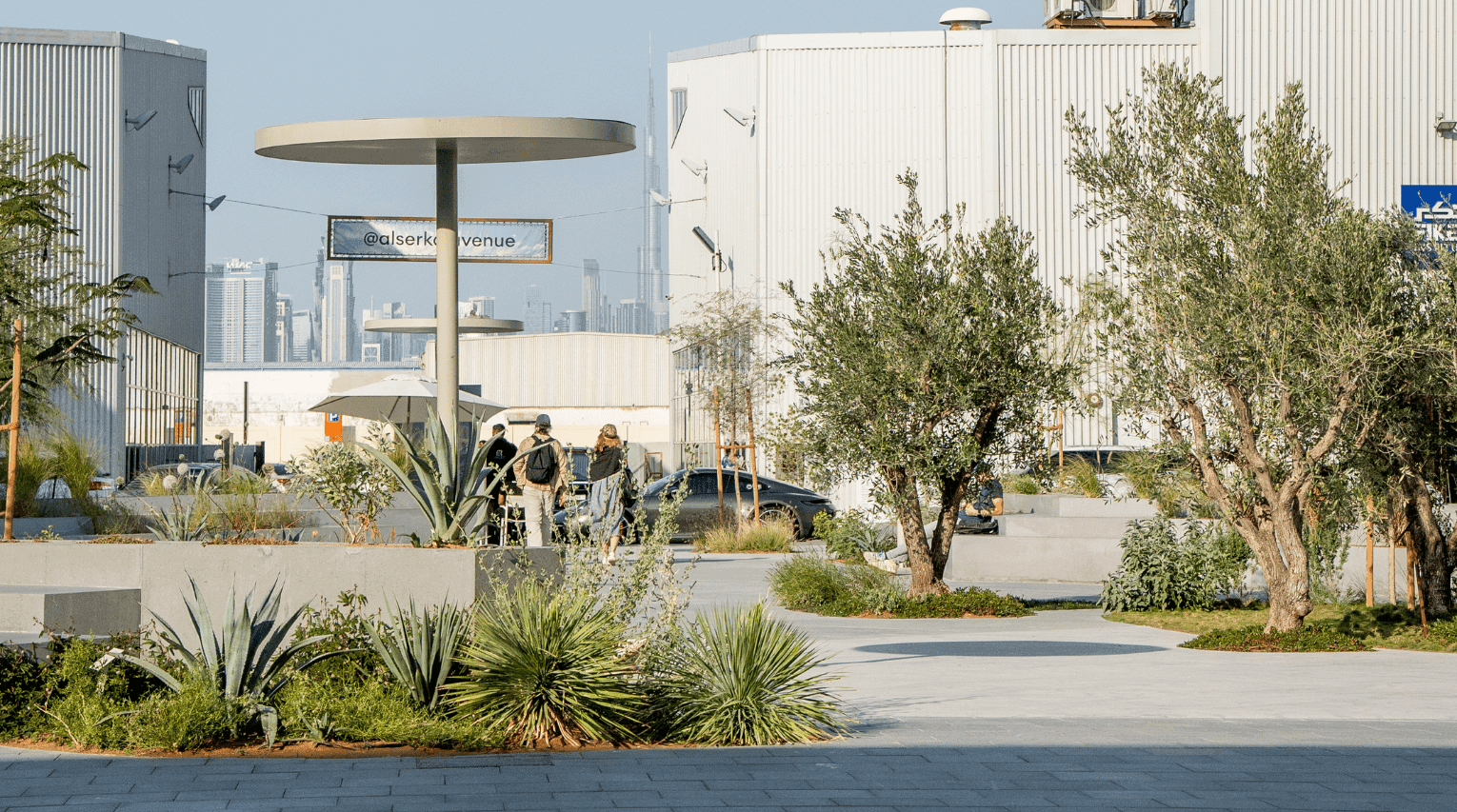
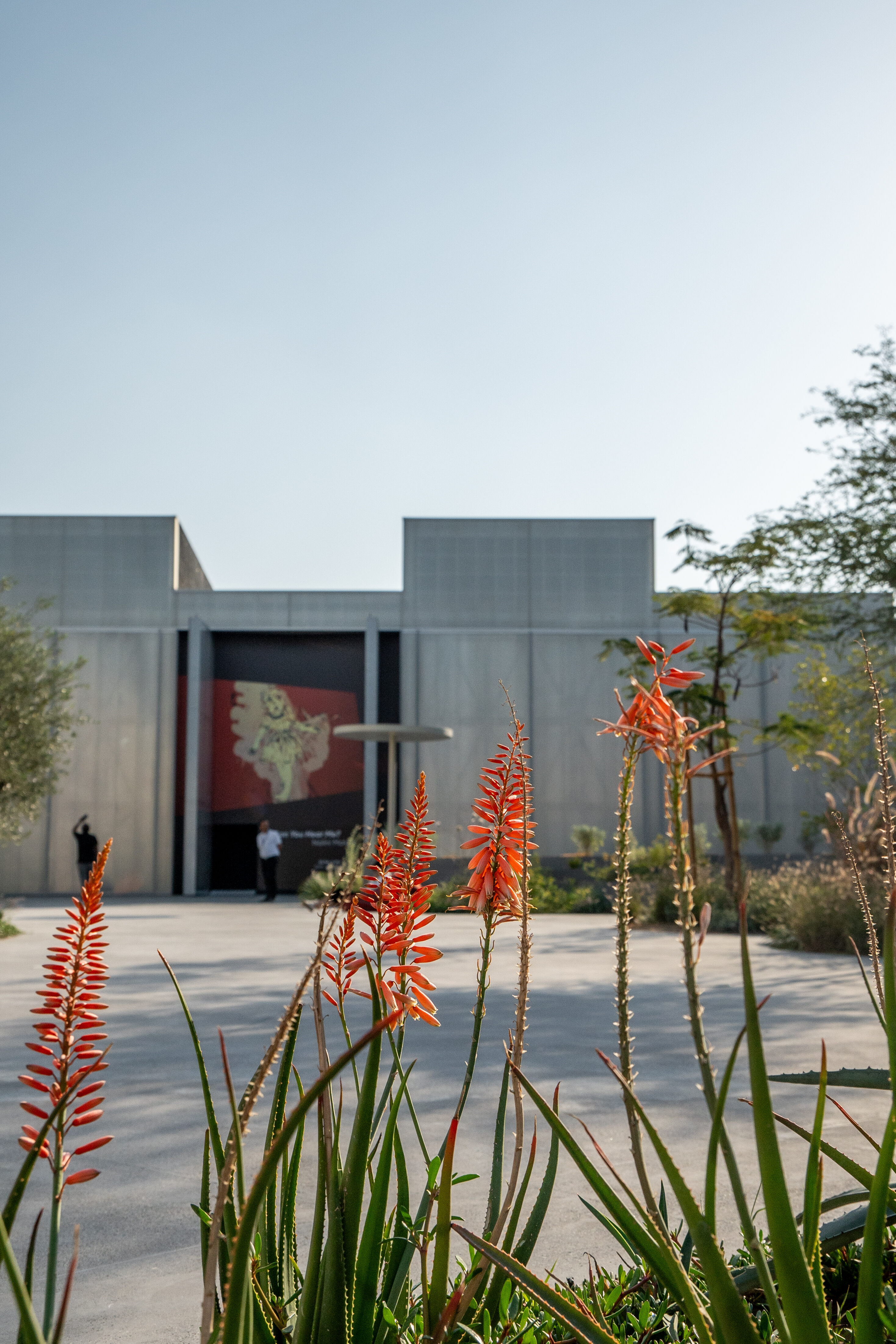
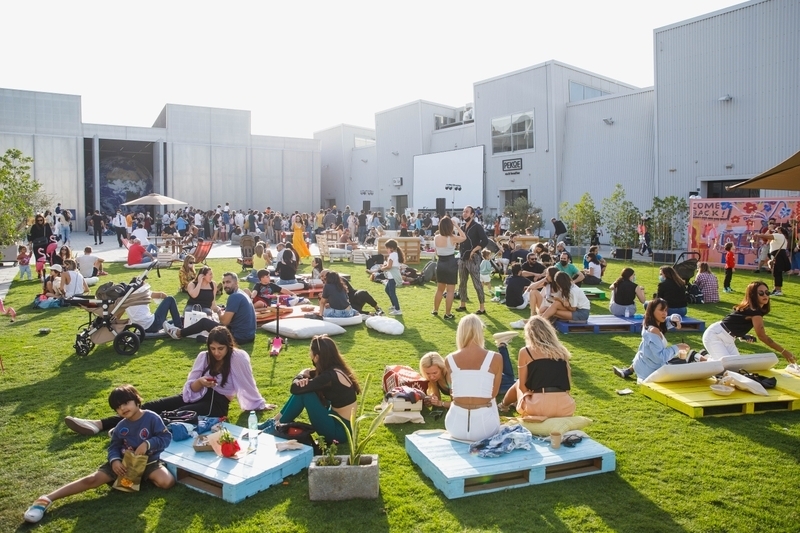
Despite its cool creative atmosphere, Alserkal Avenue as a physical space is subject to relentless sun and unforgiving elements. The Yard is the epicentre of this environmental onslaught. Yet it is also the Avenue’s spatial centre of gravity, where most visitors wander, meet, and dwell.
How can we make the Yard more hospitable? This question preoccupied our internal teams and external collaborators for a few years, actually. We commissioned a study that unearthed some surprising data about heat, people flows, and air circulation. The recommendation we followed was to cool the common spaces, adding multiple enclaves of greenery, while softening the regimented linearity of the lanes.
We then started to think through this ‘greening’ exercise conceptually…and creatively.
In late 2023, the current Yard was born, abounding with Grove Corners, Wadi Pools, and hosting a veritable botanical encyclopaedia of indigenous plants.
Over the past years, as our built environment expanded, the original species that once thrived in the Avenue’s nooks and crannies were banished from their habitat. In re-imagining the Yard, we wanted not only to reinstate the primacy of vanished plants as a necessary gesture of horticultural de-colonisation, but also to humanise our spaces of congregation as a sincere act of hospitality.
About T SAKHI
T SAKHI is a multidisciplinary architecture and design studio co-founded in 2016 by Lebanese-Polish sisters Tara and Tessa Sakhi.
About Zain Masud
Studio Zain Masud is a landscape design practice based in Dubai with an emphasis on native and desert species, sustainable and water conscious approaches.
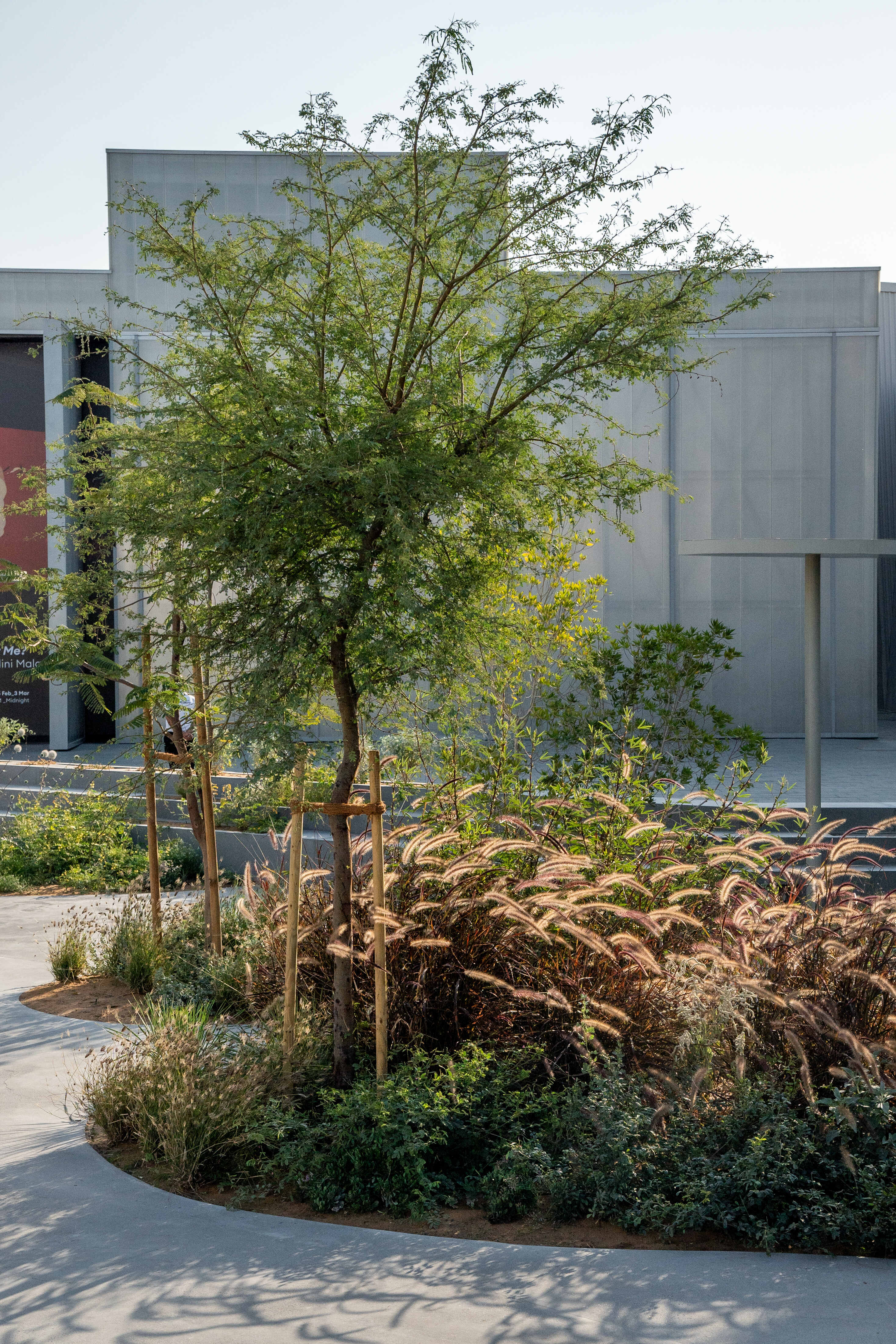
“The grove, a grouping of trees, intentionally cultivated or found growing wild, has a long diverse history entwined with human settlement, rural practices and the culture and politics of cities.
A grove can be a memorial, a place of learning, a site of poetic retreat and philosophy or political encampment, a public park or theatre, a place of hidden pleasures, a symbol of a vanished forest ecology, or a place of gods or other spirits. Groves are both literal and metaphorical manifestations, ways of defining spaces and ecologies in our cultural life. They can add meaning to urban forms and ecologies and contribute meaningfully to the significance of place.”
Jan Woudstra A History of Groves 2017


The Concept
Greening Concept
Words by Zain Masud
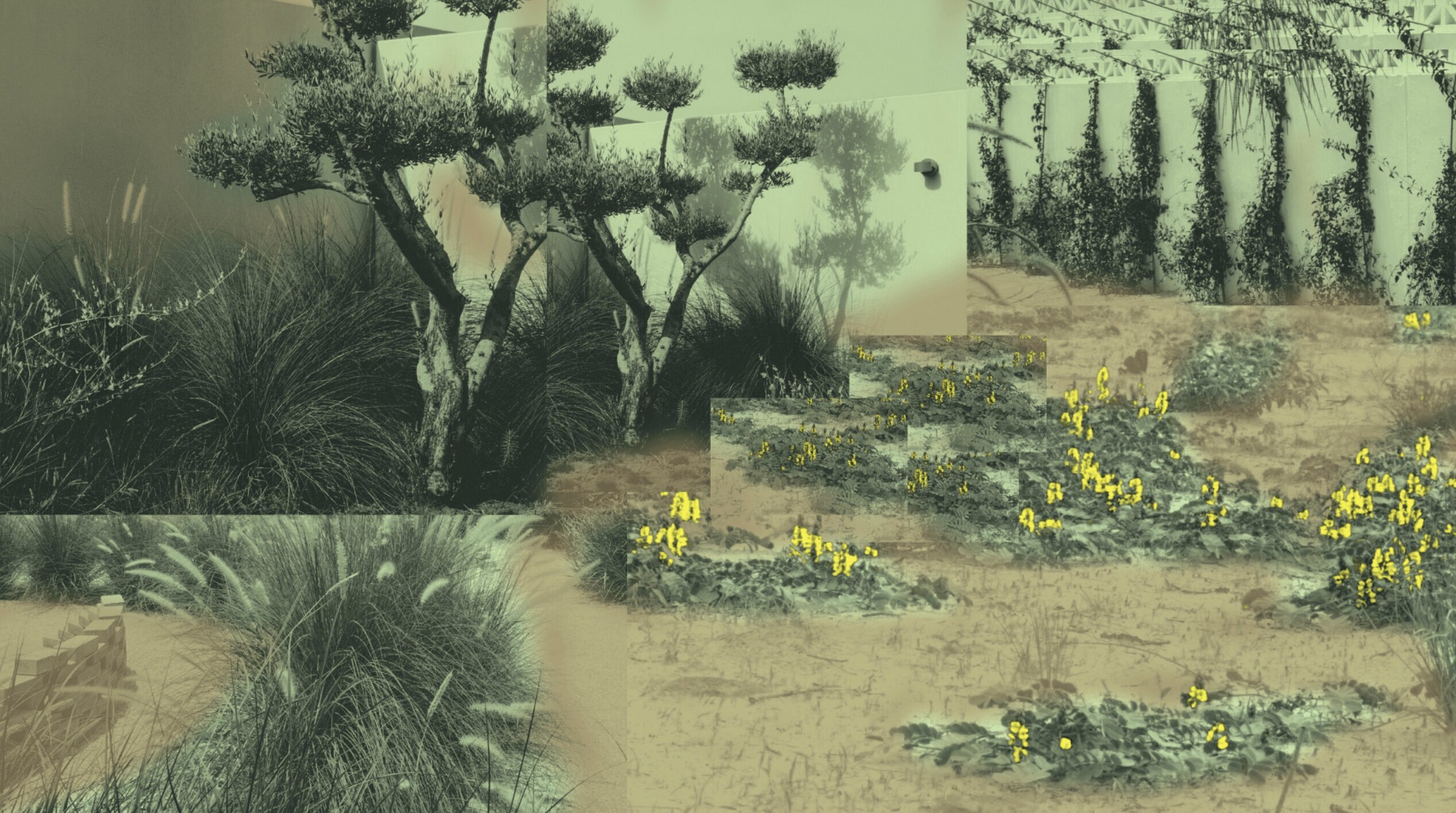
Our concept for Alserkal Avenue’s landscape envisages it as a desert grove. A grove of ideas, of welcome, nourishment, convening and community. A context led, sensorial constellation of gardens within a garden—for humans and non-humans alike—to journey through, find respite and wonder.
We hope to tell a story about a place, its nature and values. Both Alserkal as a palimpsest and where we are in the world, through a landscape that belongs.
Here we encourage the right of return, offering overlooked species of urban topography—the empty lots and pavement seams— the diverse native plants that originally populated the site, an intentional, appreciative home. Together with diasporic desert species, that wind and birds have carried across borders and that have thrived in our geography, they reflect the nature of Dubai’s citizenry and the communities of Alserkal.
Long inspired by Avenue’s evolution, its cultural commissions and interventions, our design references these and employs recycled material, and repurposes Alserkal marble, returning it to the site. With it return the accrued journeys, memories and experiences that have been fostered in, and imbue this place.
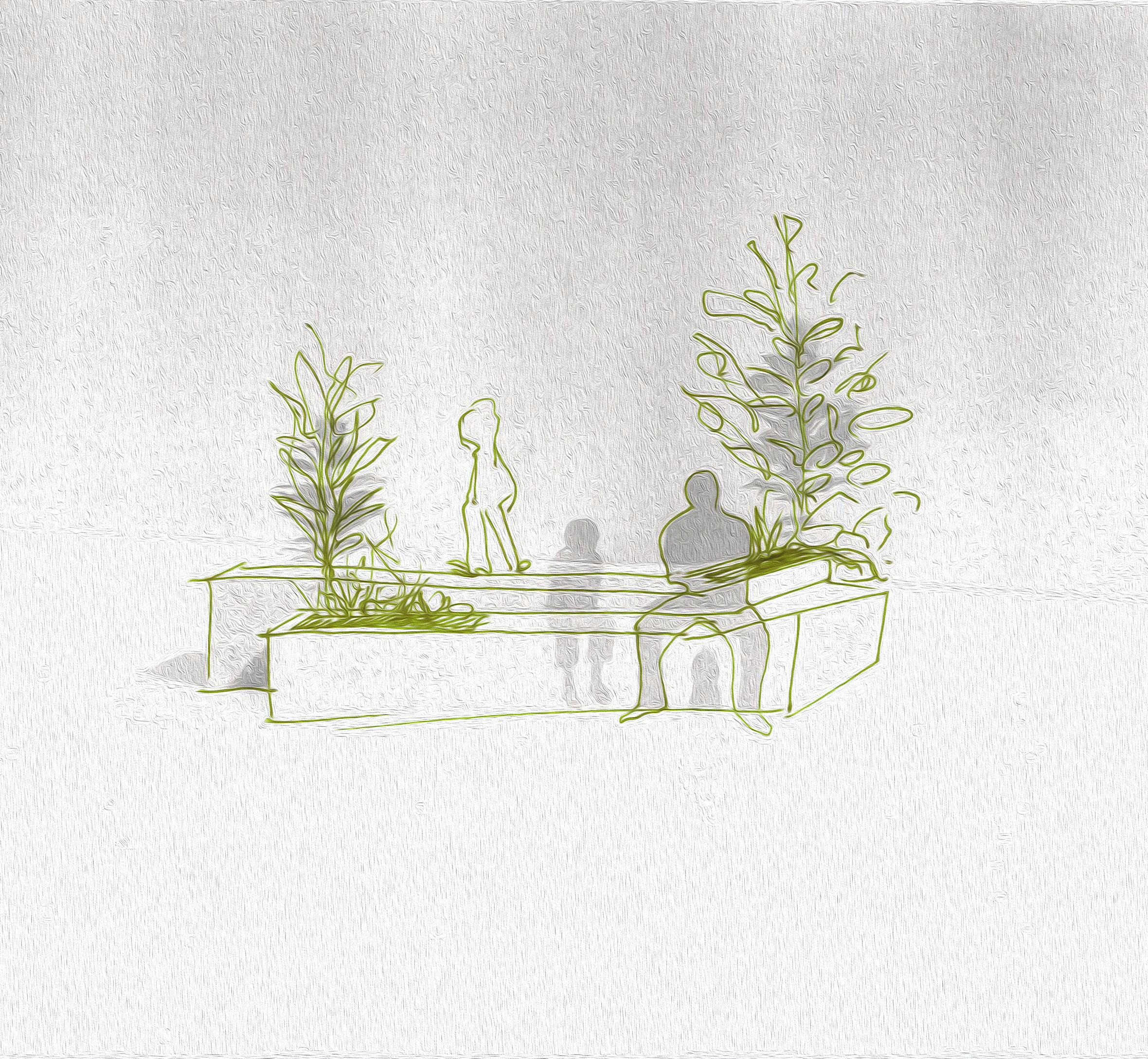
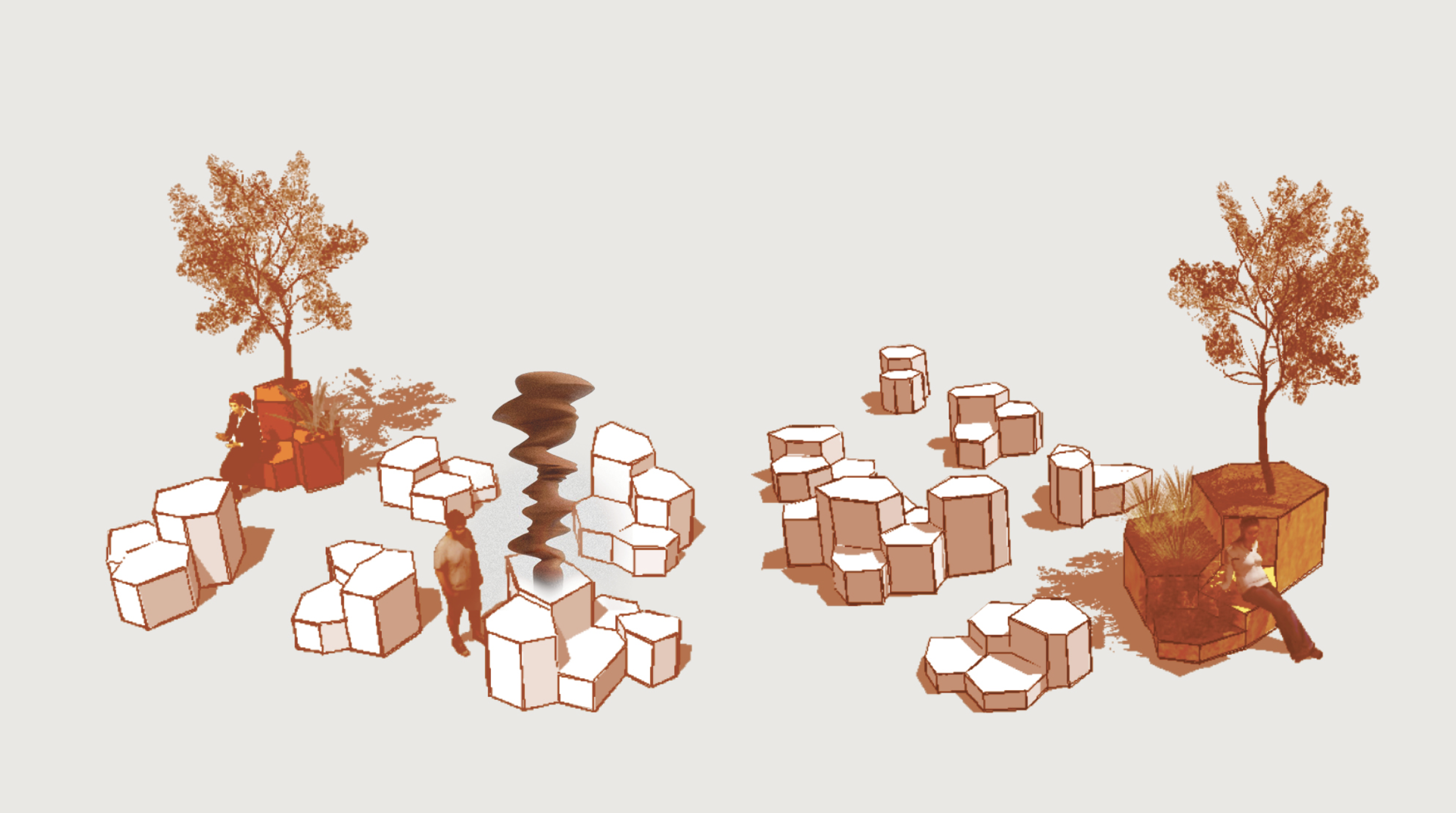
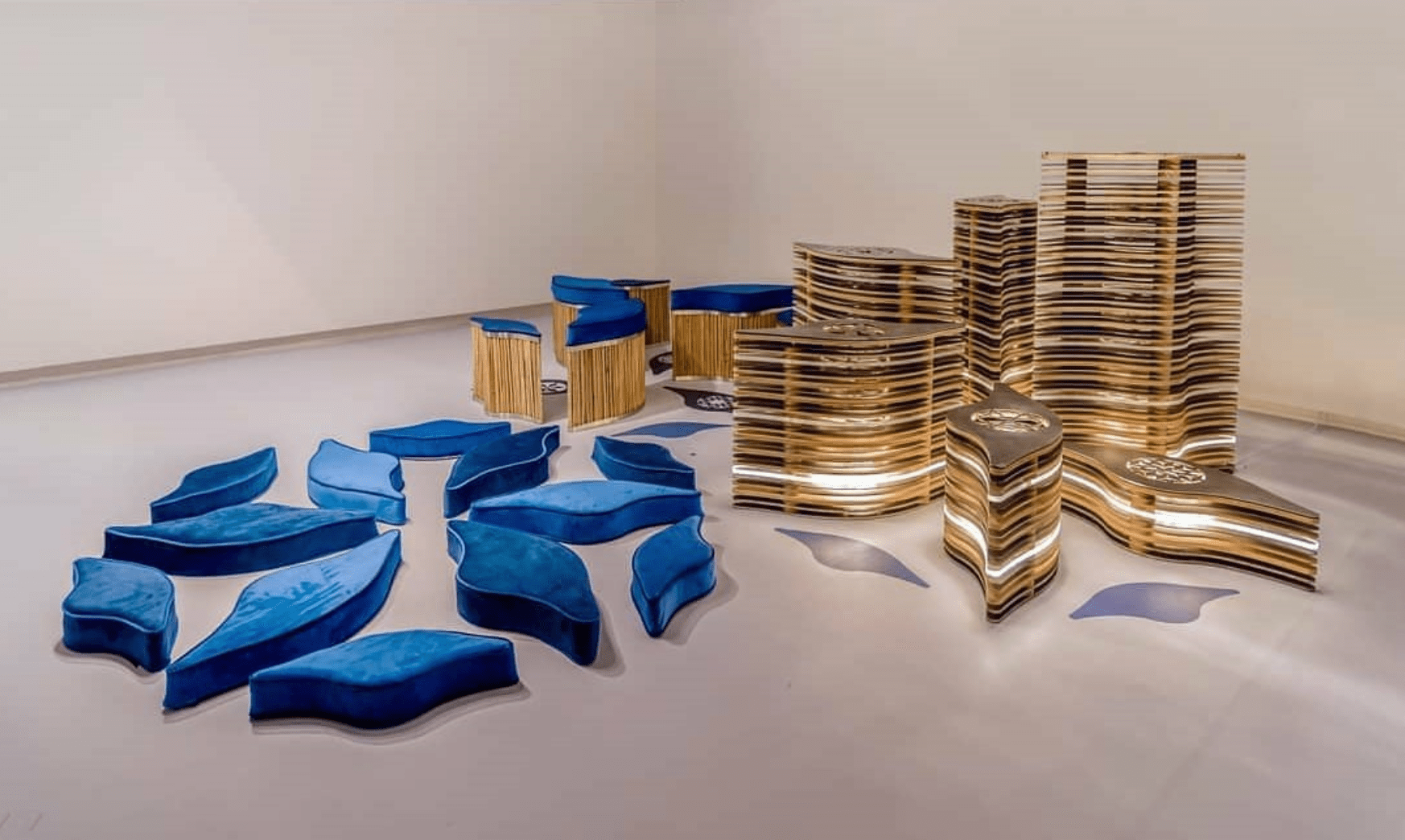
We had the pleasure of collaborating with T Sakhi to design the Public Realm, and to speak to their playful, organic seating and structures. Imagining together a wildness ensconcing these over time, and T Sakhi’s cavernous seatings as apertures through which to frame views and planting compositions.
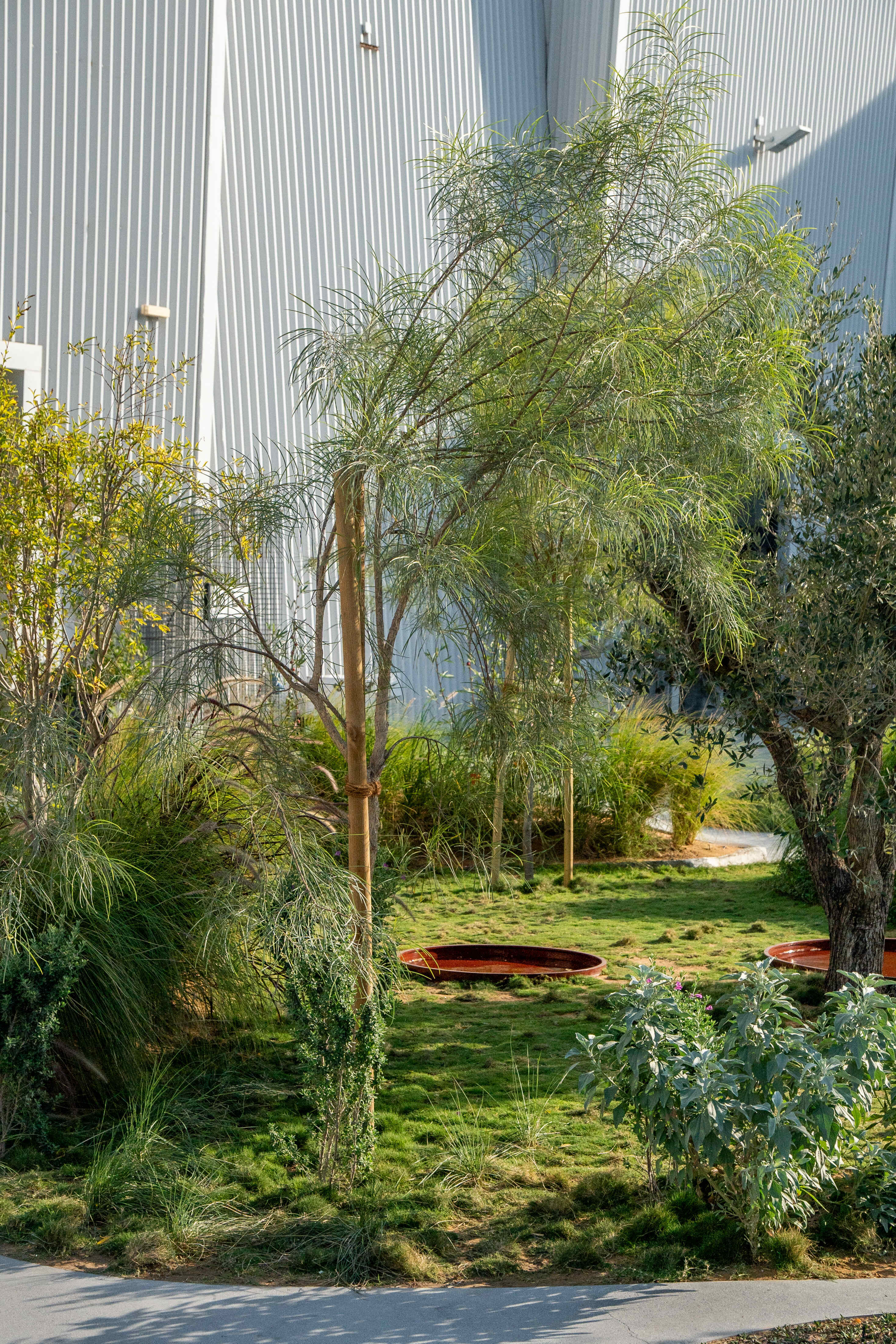
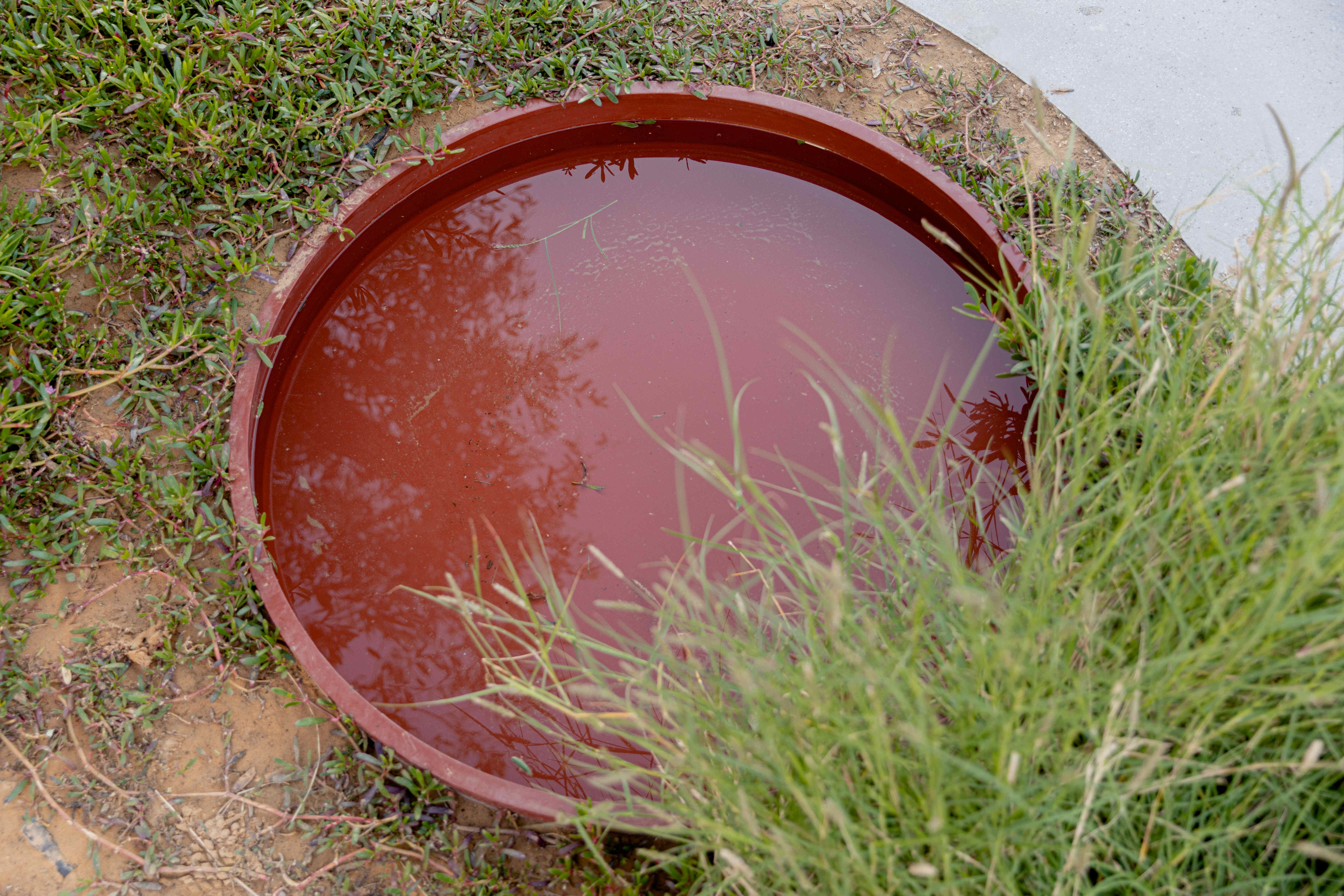
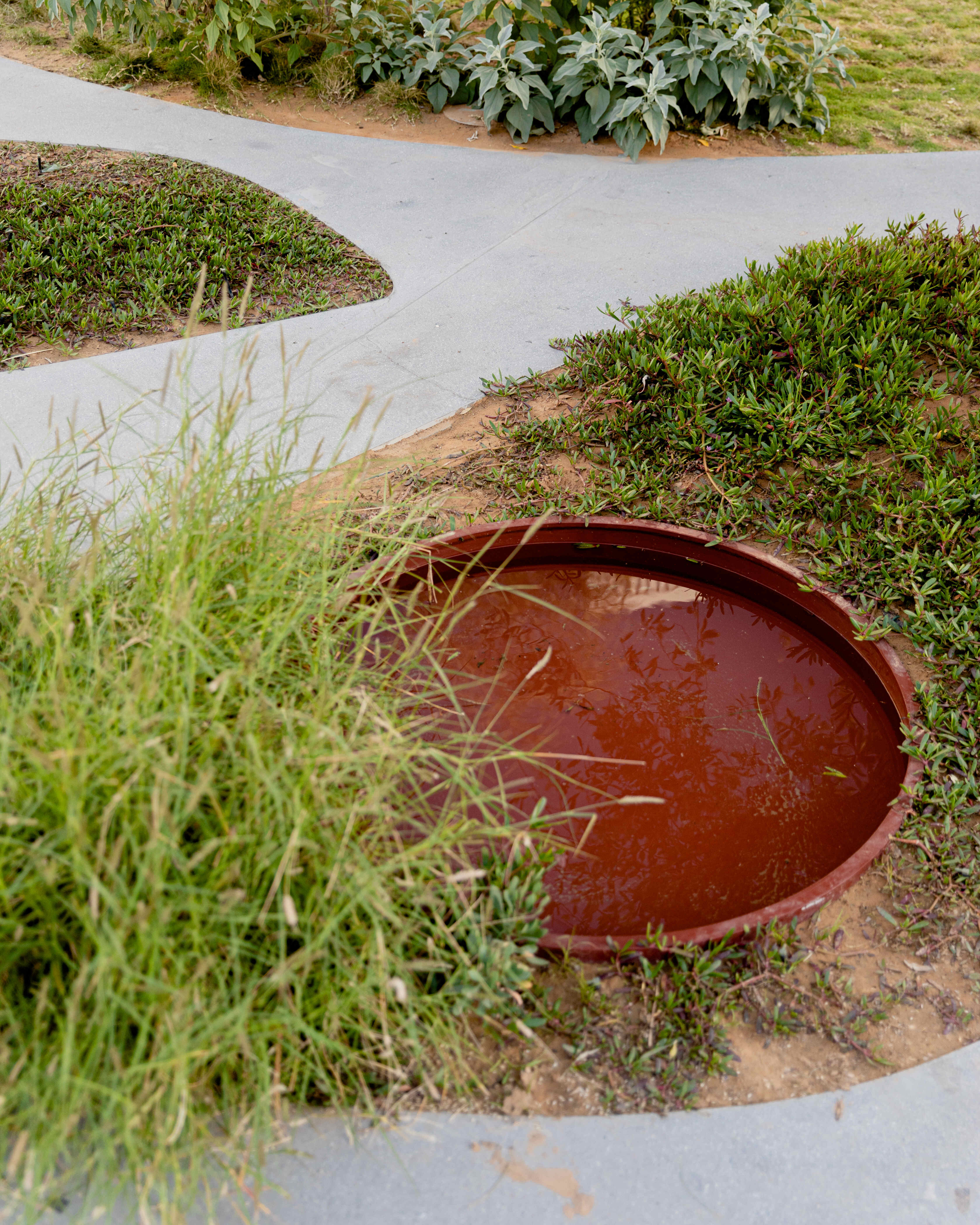
We have drawn on the topography of the UAE where many of our species grow wild. Nuanced and diverse beyond its deserts; the wadis, falajs, geology and mountains have inspired terracing across the avenue, modular clusters of geopots and wadi pools which will fill with water and evaporate with the seasons, providing for birds and cooling the groves.
Working with native and desert plants we celebrate their texture, resilience and tacit wisdom. And a visual, horticultural vocabulary that is homegrown, which belongs. We have an opportunity to know these species rarely found in public space, and share it with the wildlife they conjure around them. Families of plants will be identifiable in botanical libraries, found across the Avenue. Alserkal’s Public Realm becoming an opportunity for observation and learning across generations, a new proposition for a community and a city.
Urbanscape Concept
Words by T SAKHI
Living in an era where authentic connections are replaced with constant virtual connectivity, we seek to offer a space that triggers diverse types of interactions and behaviors whether individually, intimate or large group activities, festivals or private events; a shared foundational value with Alserkal Avenue.
We aim to support and encourage regional and local artisanship, to develop sustainable design processes; an approach to participate in preserving the cultural heritage of the region while supporting its evolution. The site-specific public space enables a program bustling with diverse activities, inviting nature in, as well as integrating the man-made built environment by injecting it with the region’s know-hows in the context of urban design which we are committed to.
Biodiversity and Harmonising with Nature
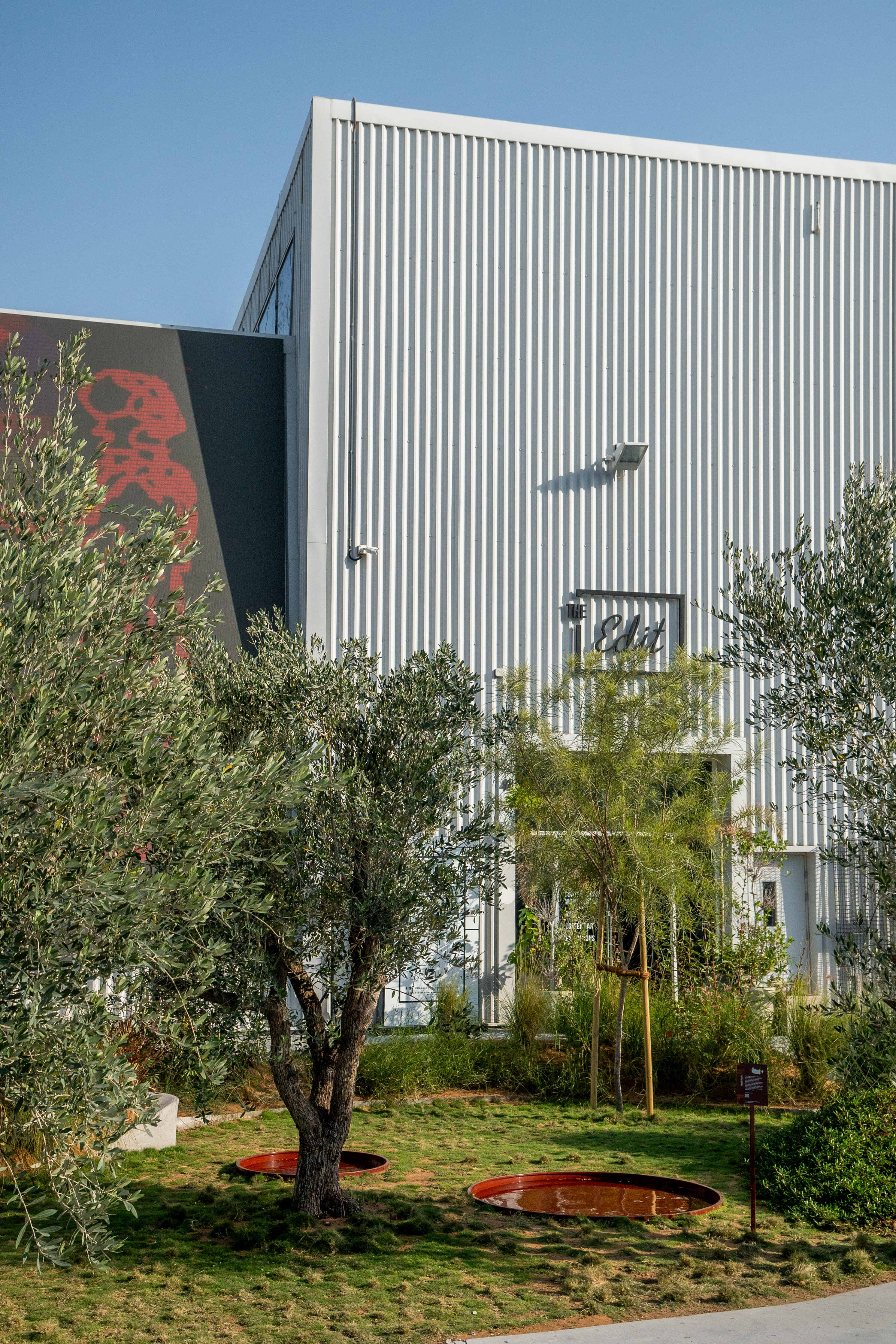
The new interventions thoughtfully seek to soften the existing industrial fabric, creating a delicate balance between the built environment and the local nature. This intentional contrast with the surroundings evokes a sense of nature reclaiming the space, transforming it into an urban oasis where visitors can reconnect with the natural world amidst the city's hustle and bustle. This not only enhances the ecological aspect of the project but also invites local biodiversity to coexist harmoniously with urban spaces and cools down the air temperature during intense heat seasons.
For this, we collaborated with Dubai-based landscape designer Zain Masud and thoughtfully integrate wild lush gardens featuring local indigenous plants and water planes throughout Alserkal Avenue seeking to soften the existing industrial fabric, creating a balance between the built environment and the local nature - an intentional contrast with its surrounding as though nature has reclaimed the space.
Community, Exchange, and Adaptability
The new urbanscape at Alserkal Avenue focuses on further transforming the industrial space into a hub of interconnectivity, awareness, and sociability. The project intends to be a surface for contact, exchange and innovation: a shared space that utilises a wide spectrum of our senses, dedicated to engage and inspire visitors, trigger communal activities, forge connections, develop forward-thinking initiatives, and consolidate the artistic and cultural community. This implements a dynamic flow between indoor and outdoor activities, offering a flexible topography that encourage community members and visitors to creatively appropriate the spaces however they imagine and need, and to accommodate to Alserkal’s multiple and diverse events: food markets, art and cultural exhibitions, poetry readings, group meetings, lunch breaks, music festivals, film projections, health and wellness sports activities, children’s activities, fashion events, and so on.
The Topographies
The topography of the UAE serve as inspiration to the greening features that you see across the Avenue. The wadis, falajs, and mountains of our diverse landscape are seen in terracing, modular clusters of geopots, wadi pools which will fill with water and evaporated with the seasons, and the Grove Corners that become their own ecosystem, absorbing heat and releasing nourishment.
Words by Studio Zain Masud
Grove Corner
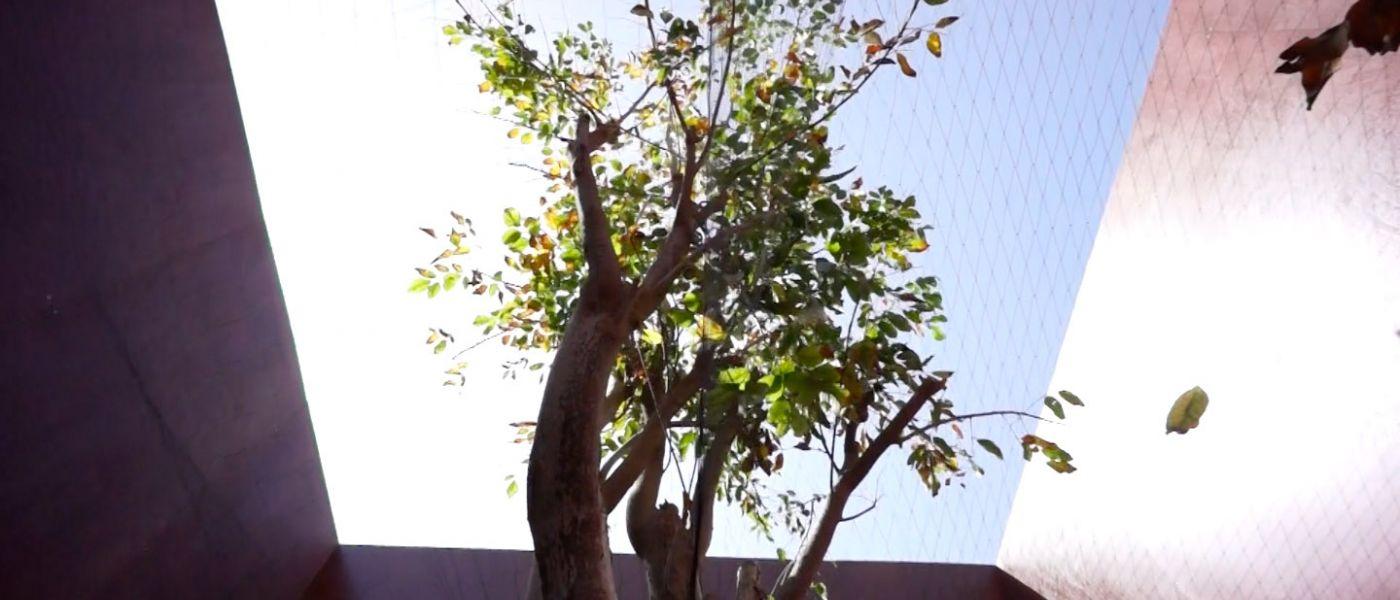
Inspired by the universal significance of groves across geographies and chronologies, as places for convening and nourishment, these grove corners offer intimate gardens within the larger landscape of Alserkal Avenue. Successive chapters to discover on a journey through the Avenue. Grove corners become their own ecosystem, where trees reign, native species return, pace slows and the temperature drops. Here are moments of welcome, rewilding, and respite. A quiet spot where a community of plants absorb the heat and release nourishment and inspiration. Wildlife is summoned to share space enriching the Avenue; its residents and guests, human and non-human alike.
Geo Pots
Referencing the terraced mountain ranges of the UAE and the geometry and groupings found in nature, these modular geologically inspired planters create different compositions of scale and colour, to cluster trees and their companion plants around the Avenue.
Wadi Pools
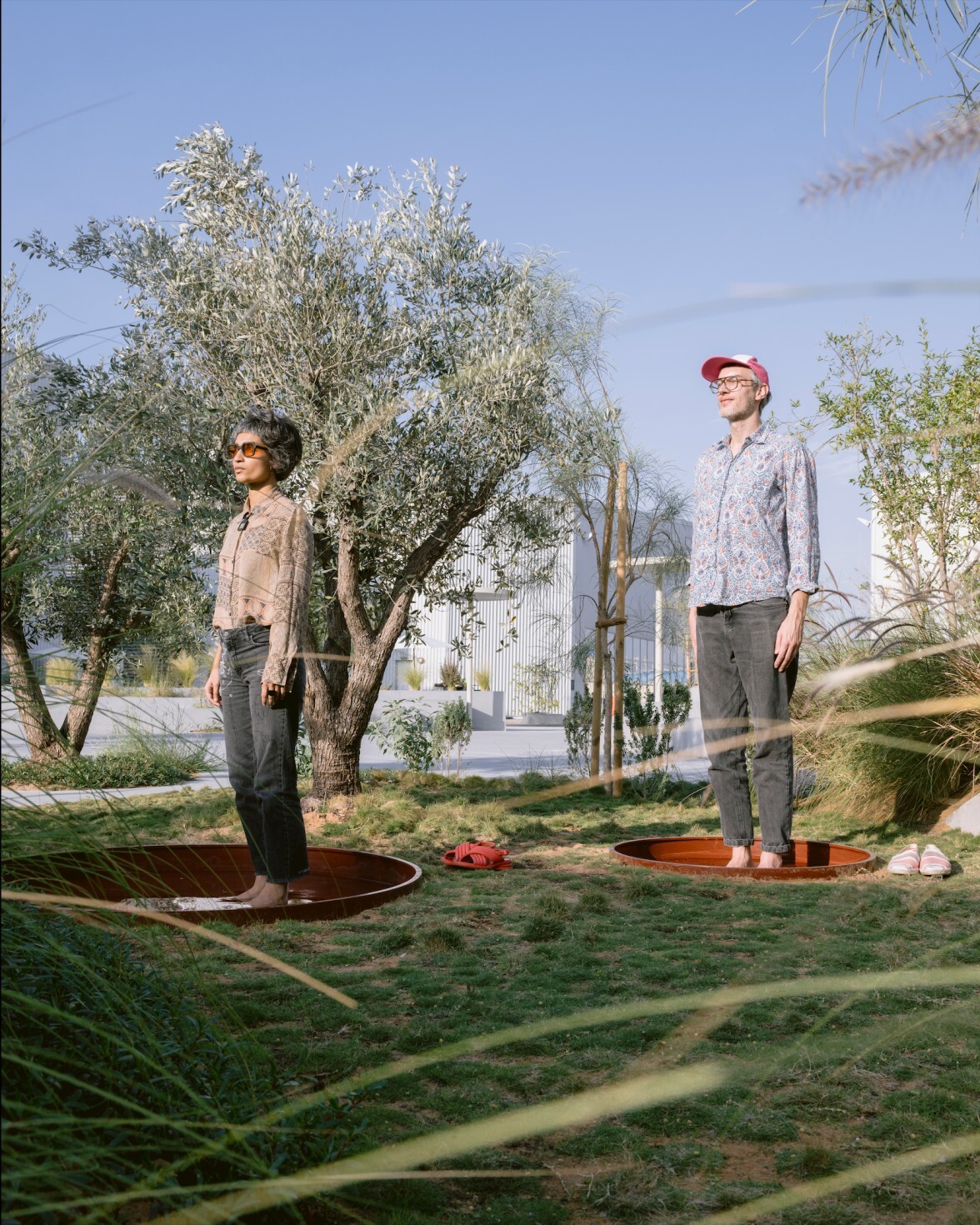
Inspired by the topography and seasons of the UAE, and the preciousness of water, we looked to embed their essence into the ground at Alserkal Avenue. The Wadi Pools are places of contemplation and pause. At times they will be full, reflective reservoirs. Serving birds, dragonflies and other pollinators, cooling the atmosphere as they evaporate. Often, they will lie dry; populated by beautiful local stone, like natural wadis across our geography, waiting for rain. Home to communities of seedlings that have been carried across the Avenue by birds or the breeze, and self-seeded.
Botanical Library
Documenting and archiving the plants that have been 'reinstated' in their natural Yard habitat seemed like an essential gesture to crown the greening project. This library is not just a repository of the plants, but constitutes a learning platform to explore more widely the frontier where botany and culture meet.

Tell Me More: a fun podcast for adults and kids produced by Liz McEnaney and hosted by 8 year old Spatika, and Liz. This is an episode dedicated to the Ghaf tree!
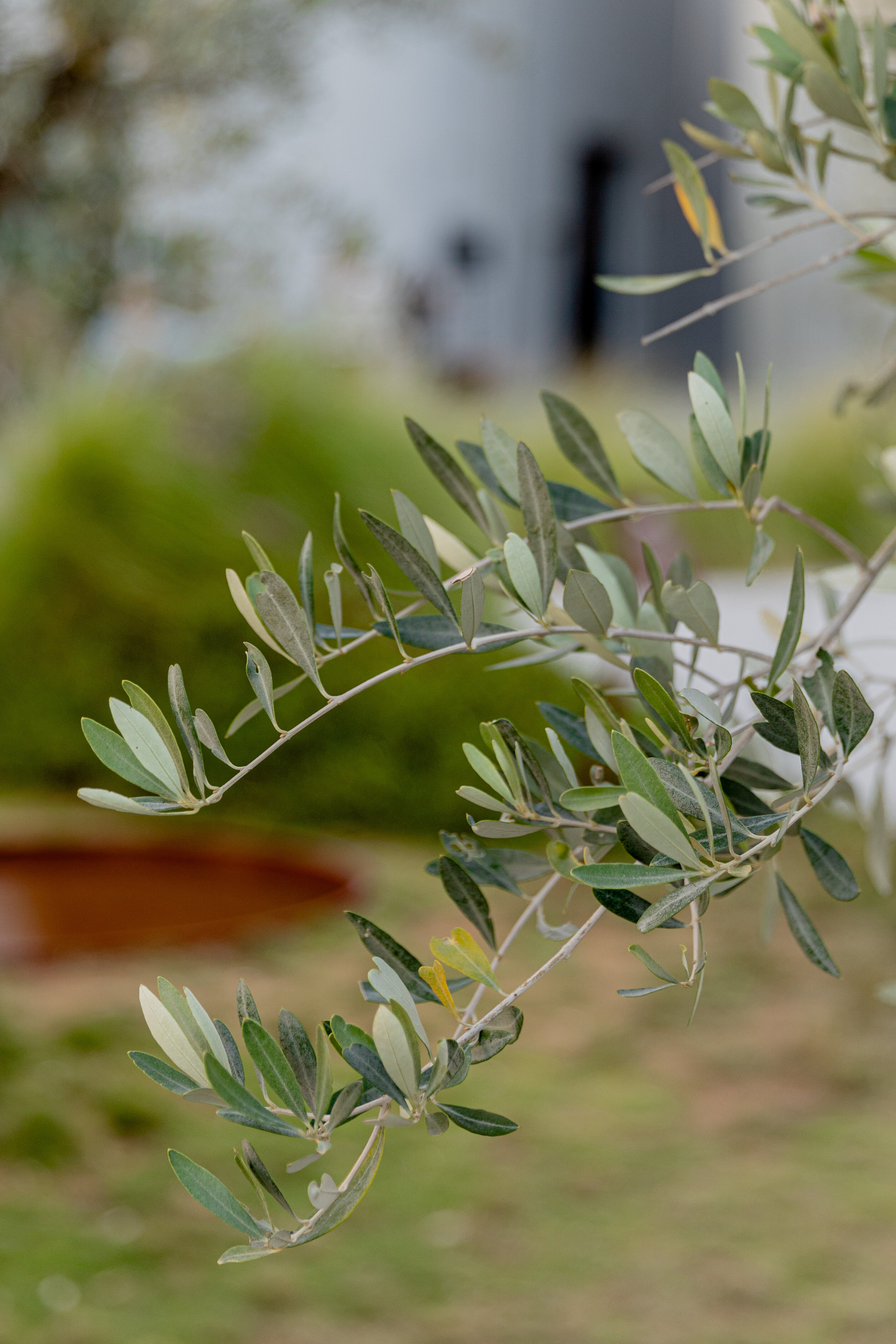
“The olive tree does not weep and does not laugh. The olive tree Is the hillside’s, modest lady. Shadow Covers her one leg, and she will not take her leaves off in front of the storm. Standing, she is seated, and seated, standing. She lives as a friendly sister of eternity, neighbour of time”
from The Second Olive Tree, by Mahmoud Darwish
Alserkal Public Realm Landscape
Key native species in the botanical libraries: Latin, Arabic and common names
| Aerva javanica | al ‘ara, tuwaim / الآرا | Kapok Bush or desert cotton, pearly bush |
| Cenchrus ciliaris | khadir (root of green), sabat / سبط | Foxtail grass, Buffel grass, Sand-burr |
| Tephrosia apollinea | dhafra, nafal / ظفرة | Fish poison tree, Wild indigo, Egyptian indigo |
| Convulvus virgatus | hub al-risha / حب الريشة | Bindweed, Beach morning glory |
| Echinops spinosissimus | shawk al gamal, urth / عرط | Spiny globe thistle |
| Atriplex halimus | qataf / قطف | Saltbush, Sea orache, Tree Purslane |
| Senna italica | ‘ishrig, senna, shajarat ad-dubb sana- عشرق | Portal royal Senna, Italian Senna |
| Limonium axillare | qataf (like T. halimus), shelail, ramth / قطف. شليلة | Sea lavender |
| Zygophyllum qatarense | harm (haram) / الهرم | Qatar desert rose, caper bean |
| Heliotropium curassavicum | رمرام | |
| Hibiscus sabdariffa | Karkade / كركديه | Karkade |
| Encelia farinosa | none, introduced species | brittlebush |
| Prosopis cineraria | Ghaf / الغاف | Ghaf |
| Pulicaria glutinosa | Muhatadi / مهتدي | False fleabane |
| Rhynchosia minima | Baql / بقل | snout-bean, burn-mouth-vine, and jumby-bean |
| Sporobolus spicatus | Abu rakbah / أبو ركبه | Salt grass |
| Leptadenia pyrotechnica | Markh, Ma'aleet / المرخ | Broom Bush |
| Mimosa pudica | حساسة | Touch-Me-Not |
Stories
The stories of our plants
The botanical library in the Avenue is a palimpsest of stories that tells us about our region. Researching their ecological makeup can paint a picture of how our visual landscape has evolved over time. The ways in which bedouin tribes made use of their medicinal qualities, and how roots can enable a tree to survive without water for more than 400 years.
Led by Zain Masud with research by Auguste Nomeikaite and Irene Zoller Huete, take time to read through the stories of the plants of our botanical library.
Roots
Prosopis Cineraria
In Bahrain there is a Ghaf tree that has survived without water for more than 400 years. They call it “the tree of life”.
As with many species that survive in the desert, the secret to the afterlife is in the roots. Ghaf trees’ roots grow 30 to 60m deep under the sandy surface, which enables them to find water when nobody else can. If you spot a grove of Ghaf trees you might have found sources of underground water. These roots are also known to stabilise sand dunes, preventing the desert from taking over.
Tephrosia Apollinea
This dark pink flowering bush takes on many appearances, most commonly a small bush whose root system can grow up to 3m beneath the ground’s surface! This allows the plant to survive in very arid environments, by looking for water deep below ground.
Cenchrus Cilliaris
An aggressive grass, the Cenchrus Cilliaris’ roots are strong and spread quickly and disperse widely, taking all the available nutrients and water from the immediate areas. Sometimes the roots even grow as short rhizomes, making them extra strong in which to spread under the surface. The Cenchrus cilliaris also has allelopathic properties, which means that it exudes chemicals that impede germination and growth of other species.

Migration
Olea Europaea
The domesticated olive tree has been in the world for at least 7000 years.
Exports of olive oil from Palestine date back to the Bronze Age. In the Arabian Peninsula, wild olive trees have existed in higher mountain altitudes. However, the olive trees that produce fruit were brought into the country in the past century. Today, an 800-year-old Olive Tree is planted at Rawdhat in Abu Dhabi. It travelled from his original home in Lebanon, throughout Syria, Jordan and Saudi Arabia. Like this one, many centuries old olive trees in the world have travelled from country to country, and are proudly displayed at sites that are not their home. Olive trees hold meaning and represent the cultures that have cultivated them through thousands and thousands of years.
Acacia Arabica
The gum tree has found one of his homes in the UAE. It is one of the most widespread acacia species, found from South Africa north to Iraq and east to India. This shadowy tree was used at the time of the Pharaohs to produce timber, and it was cultivated by the Nile River forests of Sudan and Egypt. In Sudan, the arabica gum represents an important part of the country’s exports. In the UAE, this fragrant tree has been used as a source of Bedouin medicine and today it helps with land rehabilitation.
Rose Ringed Parakeet
These joyful and exotic birds are displaced from their natural habitats. They are native to Africa and South Africa, and it is important to know that migration is not in their nature. Recently, many countries like the UAE are facing an important challenge in the preservation of the native flora and fauna due to the increased population of the parakeets. How did they get here? People brought them. During the 70´s and 80´s people purchased the parakeets as exotic mascots, but many of them escaped their homes and others were set free. This problem that affects many countries in the world is the result of forcing displacement of flora and fauna across the world.
Travertine marble
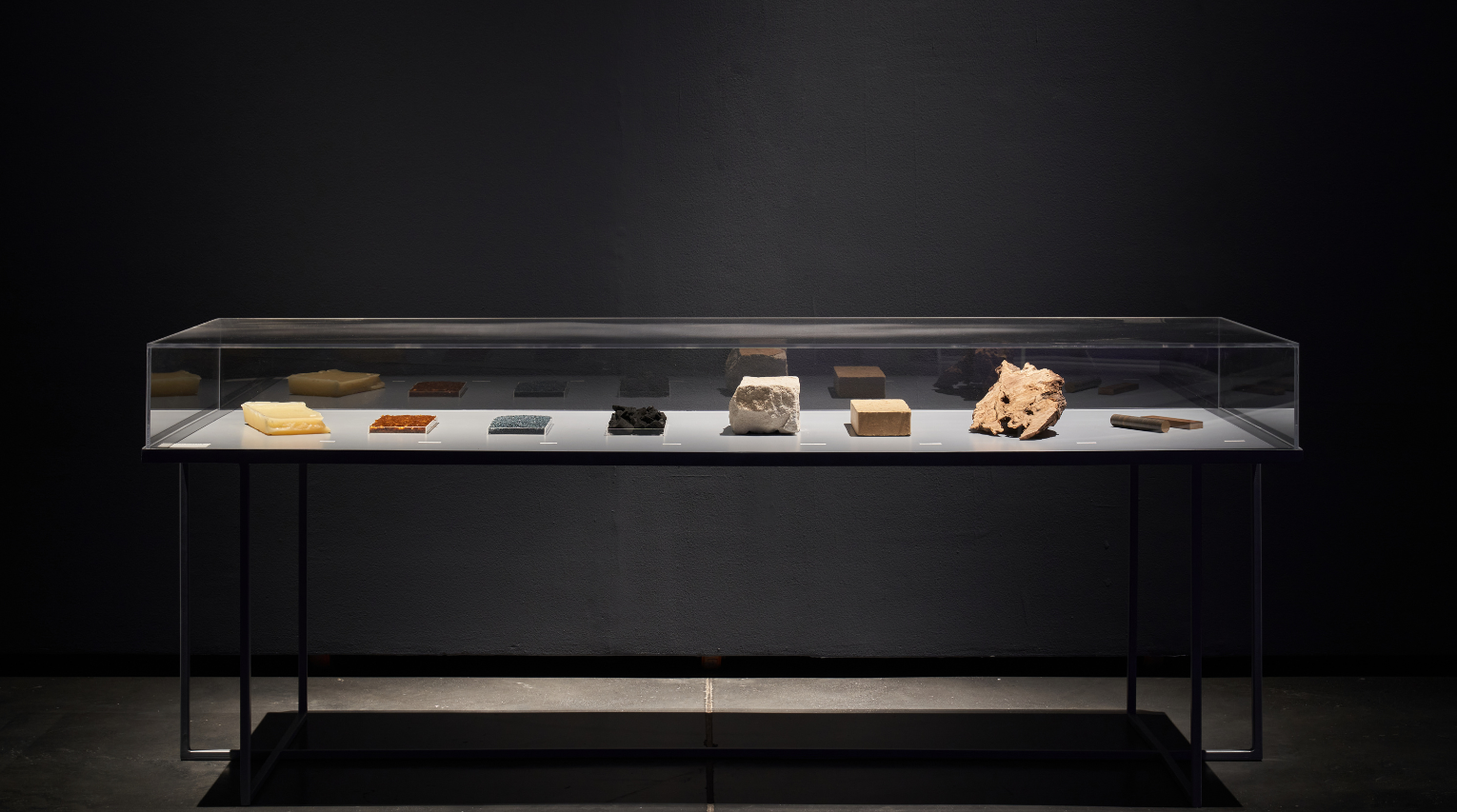
You can find travertine stone in the UAE, plenty of it. It has come from many places over the decades, just like the people who comprise the diasporas and communities of the UAE. Travertine stone takes its name from Tivoli in Italy, one of the first references of existence for this stone. It was the prime building material for ancient Romans. The Colosseum is still majority in place partially because it was built with travertine. Travertine travels from Turkey, Iran, Peru, Mexico and Italy, and today you can find it in back in the Yard at Alserkal Avenue after a short stay in Khawaneej. Alserkal Avenue in a previous time was home to a marble and stone factory. To accommodate its expansion much of Alserkal stone was transported to a beautiful open plot where feral native plants have grown in and around rare marbles and travertines. Today fragments of these find themselves with their companion plants, home in the Yard.

The plants indigenous to our region
Aerva javanica
This branchy bush can be spotted everywhere around the UAE. It grows near roadsides and disturbed sites, sometimes diminishing its value. Aerva javanica is a beautiful gardening plant that has always existed in the UAE wadis. The Bedouin people used its small white flowers to stuff cushions and to cure an important different ailment.
Echinops Spinossisimus
Spinossisimus is the word that refers to the long spines that grow below the flower head. This plant thrives in the desert, in sandy soils and with lack of water. Its flowers are attractive all year round, as the globed purple blooms grow higher than the leaves, drawing spheres of colors in the garden. It is only a matter of learning to love its aggressive appearance, in order to enjoy its beautiful blooms, just like butterflies and birds do.
Chloris Gayana
A plant that has been overlooked as a weed that grows in saline environments. This is a strong grass that can survive in the UAE climate. Its appearance is delicate, with soft red toned heads that move with the breeze enchanting any garden.
Convolvulus vulgaris
The flowering season of this wild bush makes it a must have in your garden. White and delicate flowers tilt over stiff branches, attracting butterflies and bees.
Research project led by Zain Masud
Supported by Auguste Nomeikaite and Irene Zoller Huete

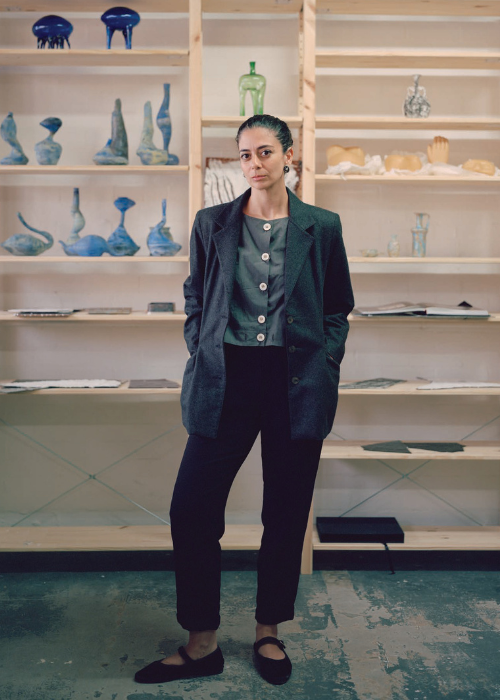
About Zain Masud
Born in Jeddah, Saudi Arabia in 1983, Zain was raised in London. Zain trained in landscape design at the Inchbald School of Design, London. She holds a Masters in History of Art from the University of Oxford, and BA in History of Art from SOAS and UCL, London. She has lived and worked in Paris, Dubai, Moscow and New Delhi and brings to her work unique experience and knowledge across the culture scenes of the Middle East, South Asia, Russia, China and Africa. She continues to work at the intersection of culture and landscape, bridging disciplines and weaving their values into her practice.
About T SAKHI
Based in Beirut, T SAKHI is a multidisciplinary architecture and design studio co-founded in 2016 by Lebanese-Polish sisters Tessa and Tara Sakhi. The studio places human interaction at the core of their practice, drawing from the emotional and physical experiences by incorporating senses and memory. Their synergetic projects are diverse and range from small-scale architecture, urban installations, commercial and residential design, collectable objects, scenography and film. Despite their versatile talents and contrasting affinities, the sisters combine their duality to create a hybrid occidental-oriental inspiration, and collaborate with creatives from different cultures, provoking an exchange and dialogue to reach craftsmanship and innovation. Their work has been exhibited in Beirut, Paris, London, Milan and Dubai, and donated to several NGO’s supporting scholarship for architecture students, fund reliefs for Beirut’s reconstruction, reforestation and sexual health. They have given lectures in Dubai, Sharjah, Sydney and China and participated in talks and workshops with universities and organizations in Beirut, London. Their projects have been nominated for awards in China, Milan and Berlin, and have been highly published worldwide in magazines and online platforms.













Stay tuned...

Stay tuned...

Stay tuned...








Stay tuned...