

Every day I wake up and...
INTRODUCTION
This is an annotated chronicle of conversations held online. Every day for five days, between 30 May to 3 June 2021, Sandi Hilal hosted a drop-in discussion room on Zoom, teasing out the liberatory potential of a space between statelessness and domesticity. Open-format and informal, this artist-led conversation offered a daily moment for us to gather and think together.
7pm Dubai | 6pm Palestine | 5pm Stockholm | 4pm UK | 11am NYC
The writer Reem Farah responded to the conversation in writing each day, giving us a reflective account to draw upon as we built on the discussion together each day.
Every day, I wake up and…
I wake up every morning, and even before getting my coffee, I’m already trying to get myself to Palestine through the news, as if the news is the only way to bring me closer.
I find myself more attracted to images such as Akka people cleaning their streets together after the protest. Or where people in Gaza are seated in their destroyed living room on the sofas, over the rubble of their house. A Gazan woman cooking with her kitchen essentials rescued from under the rubble…
Refusing to forego your humanity and dignity even in a desperate situation takes a tremendous act of will. However hard the news is, I see in these images a glimmer of optimism, sensing that this daily disobedience is a source of hope we can share with the world, to finally live a free life.
I wake up every morning and I’m left alone with my thoughts...
Living in both Sweden and Palestine gives me the chance to live between two extreme conditions. One is a daily life protected in every dimension, fully supported by the state in every respect, allowing you to exist alone without depending on anyone else. Being stateless is a way of life that implies depending entirely on ourselves and our surroundings. We cannot survive alone without others. It affects our relations with our families and neighbors, with the street and the neighborhood where we live. It’s a life that obliges us to be the constant initiators and fixers of our own daily lives.
I wake up every morning with an immense desire to share my thoughts and be in conversation with others. Being left alone with our own thoughts is overwhelming.
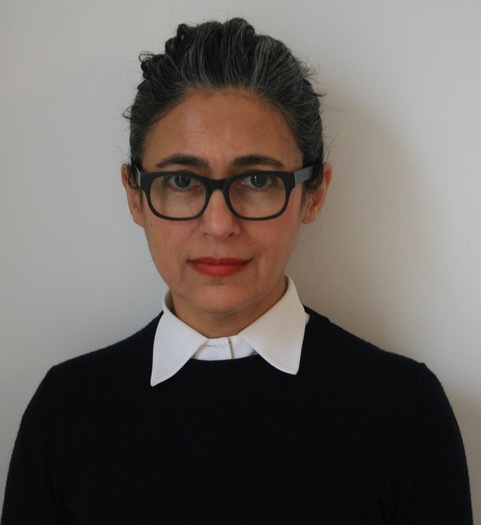
Sandi Hilal is an architect, artist and educator. She has developed a research and project-based artistic practice that is both theoretically ambitious and practically engaged in the struggle for justice and equality.
She is currently the Co-Director of DAAR, Decolonizing Architecture Art Research, an architectural and art collective that she co-founded in 2007 with Alessandro Petti and Eyal Weizman, in Beit Sahour, Palestine – www.decolonizing.ps –alongside her position as Lise Meitner Visiting Professor at Lund University Department of Architecture and the Built Environment
She co-founded Campus in Camps in 2012, an experimental educational program hosted in Dheisheh Refugee Camp in Bethlehem which aims to overcome conventional educational structures by creating a space for critical and grounded knowledge production connected to greater transformations and the democratisation of society.
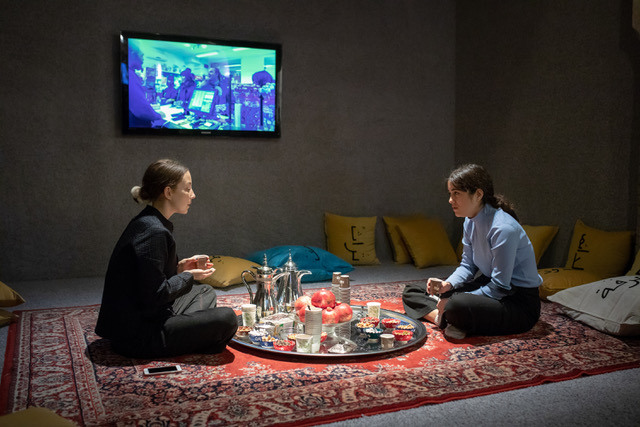
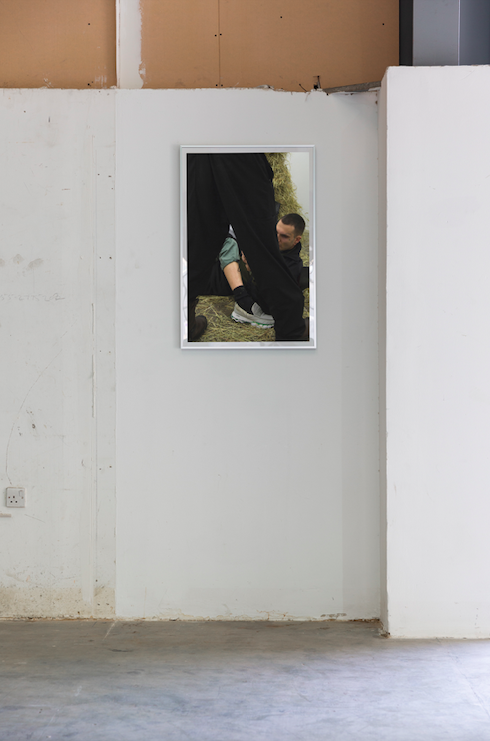
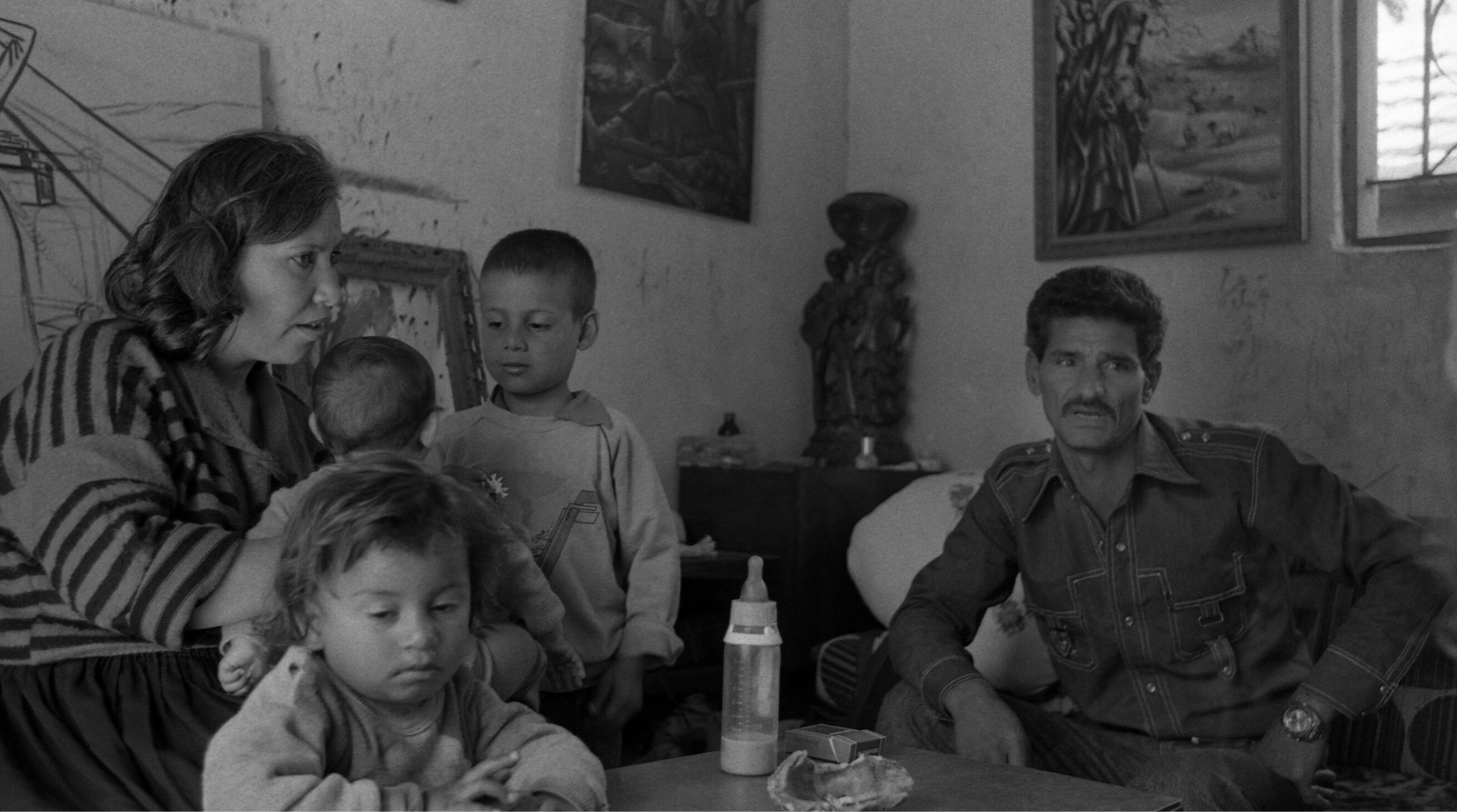
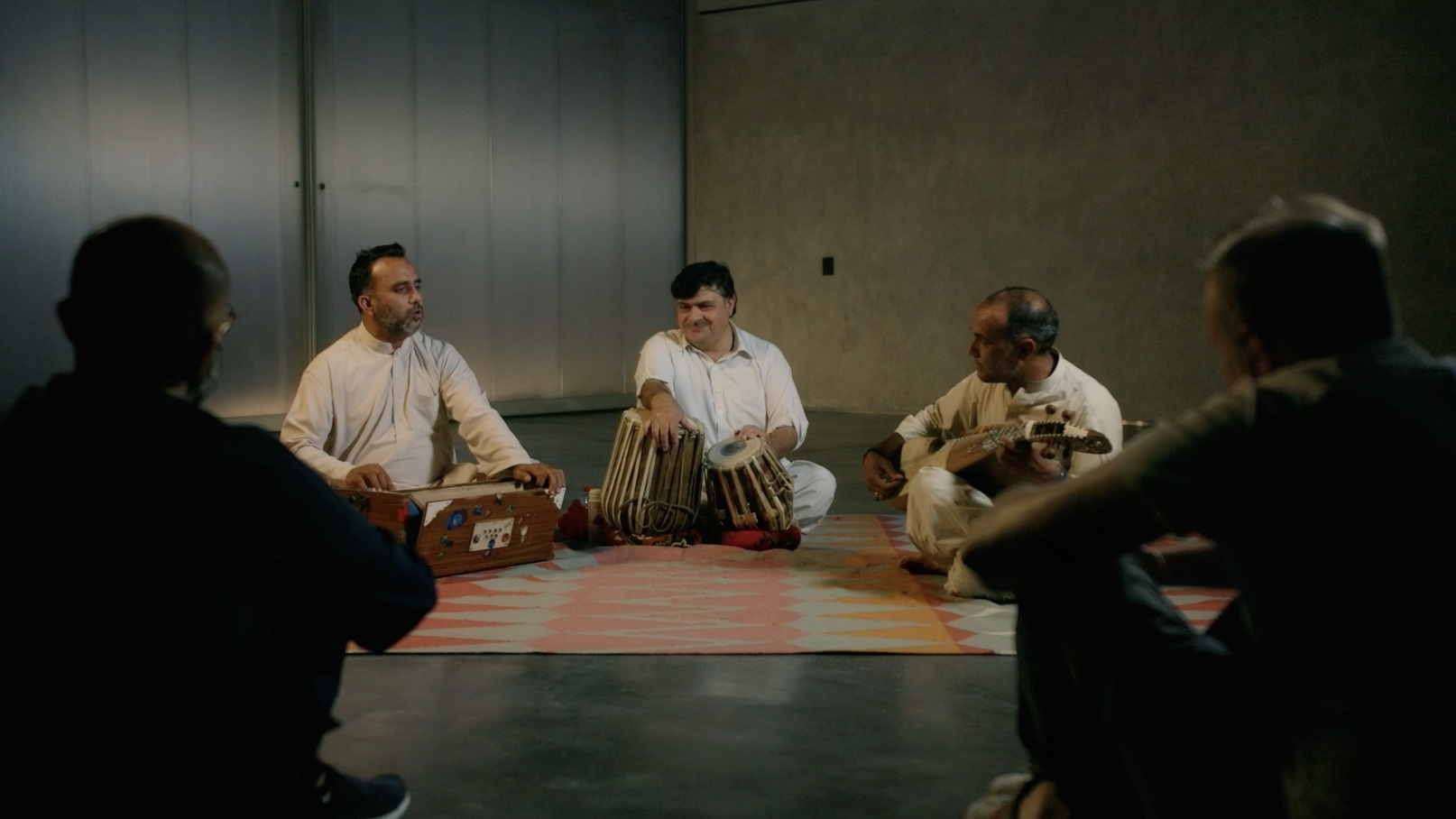
Image credit: Photo by Marcel de Buck, Living room Van Abbe Museum
30 MAY 2021
Reem Farah responds:
Conversations on Palestine in the diaspora can quickly turn towards one’s own identity or proximity to Palestine. But in hosting a series of conversations with the Alserkal community, the artist-architect Sandi Hilal prompted us to talk not of the plight of Palestinians in el dakhil (on Palestinian land) and el kharij (in exile), but about the solidarity of non-Palestinians. It is an unassuming place to begin the conversation, but as I discovered, it is pointed.
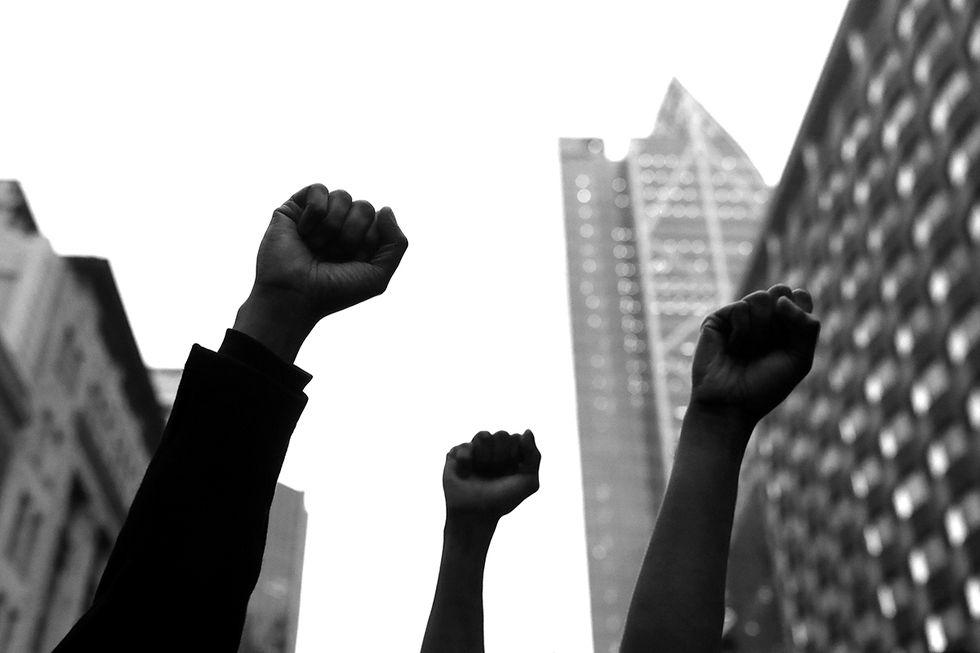
With the rise of migration and social media, social justice struggles have become global issues. From First Nations People to the people of Kashmir, marginalised communities have learnt to no longer appeal to the reason and sympathy of colonisers, but rather to learn of and from shared struggles against colonisation. Solidarity fosters a sense of ownership and accountability against the injustices others endure. This accounts for the resounding bellow of non-Palestinian voices for Palestine today. It is why George Floyd’s last breath under Derek Chauvin’s knee was so resonant; it is why expressed unity from Sheikh Jarrah to Gaza to Al-Lydd is historically significant.
Yet Palestinians are beleaguered by fragmentation and exclusion. Israel classifies every Palestinian in a population registry under an identification system. Freedom of movement is contingent on whether Palestinians hold blue, green, yellow IDs, or none at all. There is no Palestinian who has not felt far from the experience of other Palestinians, or even guilty for relative privileges across borders.
We ask of Palestinians to prove their Palestinian-ness (“Have you been there? Do you have family there?”), to authenticate their experiences (“Do you read Arabic poetry before going to sleep?”), to represent the whole struggle (“What is your position on Hamas?”), and then judge whether they are Palestinian enough. When we question each other this way, we create rifts around what it means to be Palestinian. Does this not replicate what is being done to us by colonisers? Is it not a gesticulation of internalised colonialism?
Steeped in a lifetime of decolonial work, Sandi convincingly argues that if colonisation is separation, then decolonisation should be the undoing of separation. Therefore, she is optimistic about the power of solidarity: she recognises its potential to advance the Palestinian movement and liberate Palestinians from splintering identity politics. She proposes, quite radically, to think of solidarity as community. If we agree that the Palestinian cause is not national nor ethnic but political and rights-based – that it is a struggle for the land and not its borders – then how can we create community that reflects that? Shouldn’t all people in principled solidarity with Palestine, despite their nationality or ethnicity, be welcome to join Palestinians in struggle? Wouldn’t the practice of inclusion challenge the exclusion of Zionism? Wouldn’t it preempt arguments that claim impossibility against the Palestinian right of return, for instance?
I understand, intrinsically, why inclusion in contexts of displacement and statelessness does not come easy. With tempered, sometimes intractable access to land, Palestinians zealously claim their cultural and political identity. We gather to feel a sense of togetherness and, consequently, security. While Palestinian voices are often ignored, white allies of Palestine from North America and Europe possess the privilege of being visible and credible when repeating what we have said, and what has been written off for decades. Although their voices are incredibly effective, sometimes, it feels like allies benefit from a struggle that we are fighting. But they suffer for it too. Allies have sacrificed livelihoods and sometimes even lives for their solidarity with Palestinians. Perhaps real principled solidarity is not about what we inherit as Palestinians, but rather what we sacrifice. Perhaps it is the litmus test for principled solidarity. We ask each other how can we, living under varying degrees of freedom, take a position to demonstrate principled solidarity with Palestine? In the same breath, how do Palestinians offer principled solidarity to marginalized communities in their local and global milieus?
In the Pedagogy of the Oppressed (1968), Paolo Freire warns against repeating the cycle of oppression that comes with othering ‘the other.’ I sifted through my copy for a quote to speak to this. I did not have to look long, as the dedication page simply read:
To the oppressed,
and to those who suffer with them,
and fight at their side.
As Edward Said reminds us, nationhood is a closed discourse. If we take our task seriously, particularly in this historical moment, to lead even our oppressors to seek freedom, then it is incumbent on us not to be territorial in paving the path forward. If not Palestinians, who is primed to bypass national and colonial thinking to serve the struggle of decolonisation beyond Palestine, globally?
In pursuing decolonial solidarity, we can redefine Palestine, and in turn, what it means to be Palestinian. It may be harder to reach a Palestine of no national borders, but it would at least hold boundless possibility.
Key concepts: Alliances, Principled Solidarity, Oppression, Decolonizing Knowledge, Resisting Territoriality, Domestic Disobedience, Optimism
Reem Farah writes about art, politics, and society.
31 MAY 2021
Reem Farah responds:
We, as colonised people, have come so far in communicating our struggle. We have fought back against terminology like ‘building bridges’ that may sound benign but is detrimental when considering power disparities between two sides. We have learnt that we can flip proposed frames entirely when responding to questions that misrepresent our cause.
Today, movement-building has pushed us towards the theory and practice of solidarity, but still, language is slippery. We have not yet developed clear definitions for what it means and looks like to be in solidarity, or how that differs from being an ally. My unsubstantiated understanding is that solidarity happens across struggles while allyship is perhaps more strategic with persons in positions of relative power. In reflecting on the group’s discussion and clarifying my own words here, I should explain that I rely on the term ‘principled solidarity’ to emphasise a solidarity that keeps the integrity of the collective interest over the interests of individuals.
So many of us step into spaces of solidarity and allyship not through states that we come from or live in, but despite them. Statelessness, or displacement and exile is the entry point through which Sandi Hilal and Alessandro Petti have theorised around space and space-making. By inverting the condition of statelessness, it is perhaps possible to explore ‘supra-territoriality’ and other ways that we can shift limiting boundaries of the Palestinian struggle.
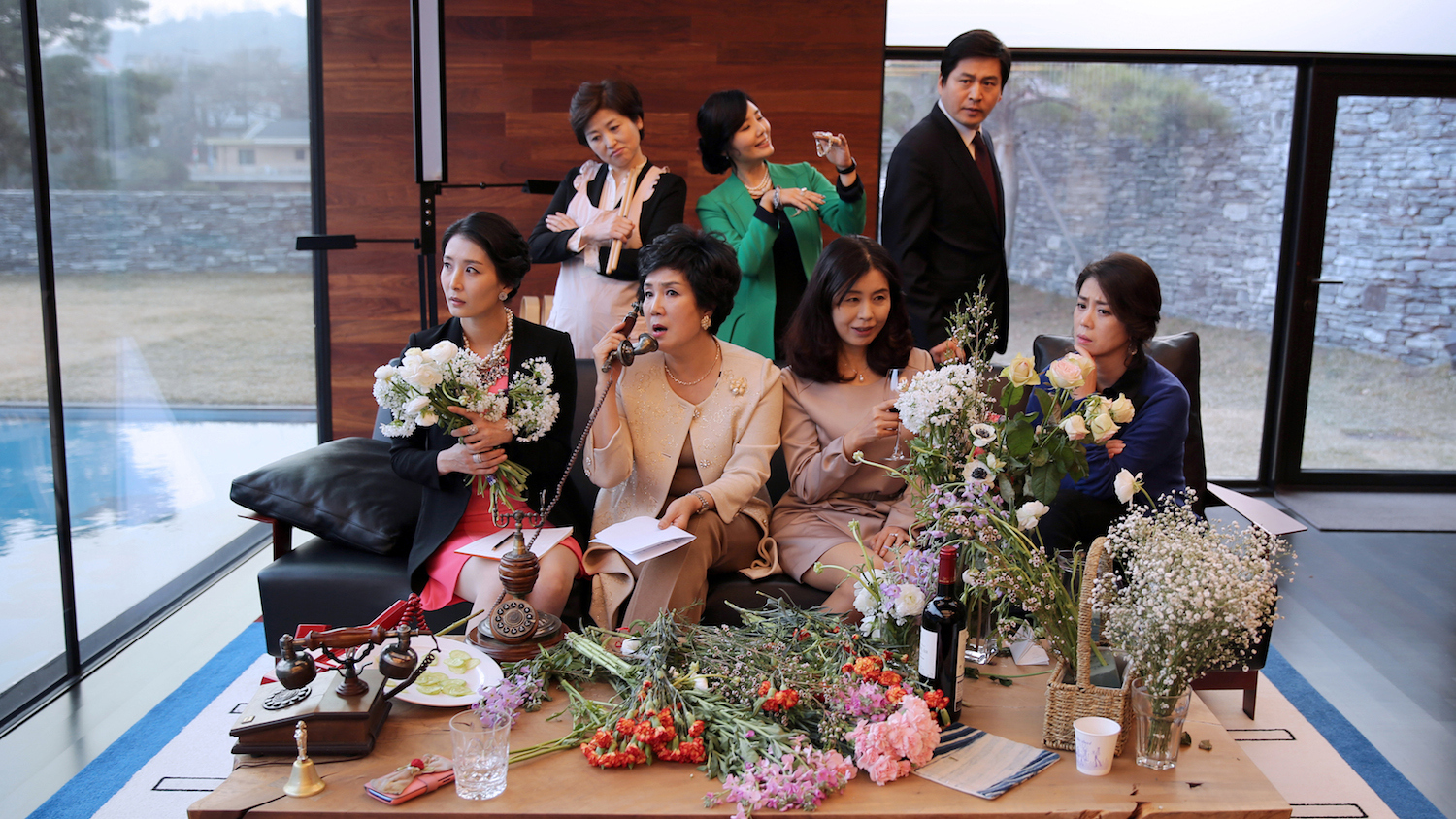
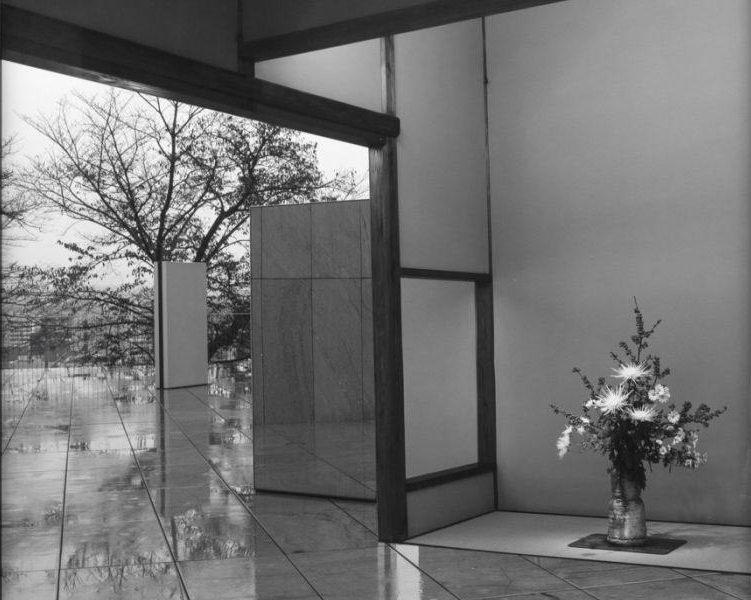
In guiding this exercise, Sandi takes us not beyond borders, or onto the street and its public squares, but to the intimate space of her grandparents’ living room. It is a curated, pristine room that is left unused except for hosting guests. She describes it as a space of ‘individual representations beyond the state,’ where, under a stateless existence, the homeowner is a public figure with political agency. In contexts of unrest and transition, a relative’s home is a refuge, and the living room is situated squarely in its centre. It is in this space that decisions are made, responsibility is shared, and relationships between strangers are bound and sometimes broken.
I can’t help but think here of Sheikh Jarrah and its residents’ compromised living rooms under the impending threat of settlement and expulsion. What set of social processes have the neighbourhood residents adapted in sustaining their existence and resistance? Social media accounts from Muna and Mohammad Al Kurd share how, through resistance, neighbours have become one family that delegates power and responsibility. Under unique configurations of settler colonialism, in attempting resistance and reclamation, the iftar table was spread out not inside the home but on the sidewalk—close enough to house fences, but far enough from settlers on the other side of the street.
In historical contexts of colonialism where the relationship between host and guest have not been reciprocal, the conceptual ‘living room’ has become a setting that conjures, for me, weariness. The British Mandate in Palestine was supposedly established to transition power from the Ottoman Empire to ‘Arab independence,’ but instead, with the Sykes-Picot Agreement and the Balfour Declaration, it ushered in another nation. The film Theeb (2014) directed by Naji Abu Nowar illustrates such colonial encounters. It shows a British officer from the First World War, carrying a mysterious box and arriving at a Bedouin tent (a living and hosting space). As hospitality is constitutive of Bedouin cultural tradition, the Bedouins hosted the officer and escorted him where he needed to go. It is later revealed that the box he carried was a detonator intended to blow up the Hejaz Railway. For colonised people all around the world, the narrative of the native’s hospitality is unfortunately a cautionary tale.
In building anti-colonial and de-colonial movements, activists are no longer politely accommodating the whims of their guests. Instead, they evaluate their words, actions, positionalities, and justifications before investing the labour of educating and building relationships. They reserve the right, no, the responsibility, to ask those who claim solidarity what position they come from and why they have arrived at this particular place.
Over the years, power relations have shifted and the onus for being gracious has switched from host to guest. The political etiquette of being a true ally is recognised in ‘not taking up space’ or deferring to voices on the ground. In this case, it is up to the non-Palestinian ally to learn when to actively listen, when to challenge, when to speak, and what passive gestures are not productive for the movement.
In keeping with the metaphor of the living room, it is up to the Palestinian, or those at the heart of a given struggle, to consider historical lessons and nuance, but not to let fear dictate: to remain gracious, and to keep our doors open for our movements to grow.
Reem Farah writes about art, politics, and society.
1 JUNE 2021
Reem Farah responds:
Months ago, I hosted a small gathering in my apartment. I served makloubeh, a dish I was making for the second time. I made sure that the guests were watching closely when I (with difficulty) flipped the pot, slowly revealing a uniform mold of sticky rice. I was overcome with an unfamiliar feeling of pride. While I am vigilant against liberal-feminism, I cave into Western modernity’s conditioning towards professional pride, shying away from the domestic. I almost felt ashamed for my enjoyment of hosting. Sandi’s thinking around the understated significance of hospitality and host-guest relations as forms of social and political power inspired me to quietly reclaim my pride.
They say that the study of Orientalism is really a study of the West. This epistemological relation applies to Sandi’s exploration of statelessness as a gateway to critiquing states, and the study of domesticity and hospitality as a reflection of the welfare state’s rigidity. Sandi narrates her research as a personal journey of dissonance between her lifelong condition of statelessness and coming to inhabit perhaps the most successful and complete formation of statehood: the welfare state.
When Sandi moved to Sweden, she experienced first-hand the state’s expectation for migrants to assimilate by adopting, individually, the welfare state’s priorities. Having moved there when the state was resettling refugees, she was struck by the passivity of refugees caused by the state’s heightened paternalism. It contrasted with her experience of internally displaced people in Palestinian refugee camps who, in the absence of the state, were incredibly politically active. She recognised how the government’s imposed presence and cultivation of the individual disrupted the formation of other societal relationships, such as those between neighbors. In launching what she called The Living Room project, Sandi found that refugees experienced a glimmer of agency when hosting others in their own living rooms. She posits that through hosting, they were enacting the right of self-representation, something ever-present in statelessness, but not as accessible to refugees or guests in the welfare state.
In architectural discourses, the living room is sometimes considered ‘dead space,’ but when redesigning demolished homes in the neighbourhood of Hay Il Nada in Gaza, Gazans requested foregoing a second or third bedroom to make space for two living rooms. This is how vital hosting is in their lives. Today, viewing images of Gazans whose homes have again become rubble, Sandi notes how even in the rubble, the residents collect fragments of their domestic lives to be and sit together on the ground under what once was a residential building. The absence of living room walls symbolises the always-public dimension of domestic hosting space.
Participants shared codes of hospitality from our own ancestors and neighbours, like in the Afghan culture where no matter who needs refuge, ‘even if your enemy knocks at your door, you have to open it.’ Societal commitment to hospitality and the reliance on neighbours was a way to end tribal feuds, even if this meant reconciling with a history of invasion.
When studying hospitality academically, Sandi followed advice and begrudgingly re-read Jacques Derrida’s Of Hospitality (1998). Using his understanding of desert laws of hospitality from Bedouin cultures, Derrida makes the normative argument for ‘unconditional hospitality’ in response to the crisis of European refugees. While Bedouins depended on codes of hospitality for their survival in nomadic life— securing their positionality as they shift constantly from host to guest—Sandi notes that Derrida argues strictly from the position of a host, never considering the experience of the refugee or guest, secure that Europe would remain the eternal host. At first, I did not see Sandi’s problem with this. Is it not generous to be the host? But she clarified: if Europe remains an eternal host, then their guests (refugees, mostly non-European) are made eternal guests. As one participant in the discussion put it, Derrida’s morality argument is a euphemism for power.
In decolonising the hospitality discourse, Sandi centres refugees as hosts. She watches her grandmother grapple with how they had naively welcomed the British as guests and how the British had constantly refused this invitation. In navigating Sandi’s metaphor of the living room, I too, like Sandi’s grandmother, assumed colonisers to be guests. But Sandi showed us that the coloniser does not yield to being a guest. This, in one sense, is a definition of colonialism: a guest’s insistence to host in another’s home.
Returning to the discussion of solidarity, I now see decolonial solidarity as spaces where colonised people are the hosts. This also means that allies, especially when they come from previously colonising states, are distinctly not the coloniser in their ability and willingness to be gracious guests.
As Sandi says, we would all benefit from being more like Bedouin nomads moving from being hosts to guests: by depending on hospitality to survive, we weave constellations of solidarity.
Reem Farah writes about art, politics, and society.
2 JUNE 2021
Reem Farah responds:
Imagine a dark theatre, a spot-lit living room at centre stage. Backstage left, three actors queue to play the part of the host. Backstage right, their counterparts wait to act the role of the guest. The curtain opens and a play in three acts commences.
The first host/guest pair takes the stage. The host plays the state, and the guest enacts the stateless person (refugee). Then, they switch. The refugee plays the host, the state plays the guest—this time accepting to ‘follow’ the refugee’s cues, and to listen and learn from her.
The second host/guest duo appear in the living room for Act II. The host is the coloniser, the guest is colonised. Then, they switch. The colonised hosts, and the coloniser accepts to be the guest. I like to think that the coloniser apologises, and the colonised presents terms that predicate a process of truth and reconciliation, perhaps reparation.
For the third act, the final pair enters. The context is one of ‘development,’ the host is a ‘saviour’ type, and the guest is the token representative of the powerless. We are possibly inside some UN office. Then, the frame switches and the marginalised person is the host in a grassroots decolonial solidarity space; the ally is principled, deferential, and gracious. The curtain falls.
In the audience, our minds are buzzing. We later sit in our own living room to discuss.
‘C’ says that, to her, the whole living room seemed to transform each time the actors switched roles.
‘W’ is fascinated by how similar the three acts and their political contexts are, how they mirrored one another.
‘N’ points out that there were so many in-built layers in the unravelling relations, race intersected with gender, not to mention class.
‘D’ interjects, And what about internalised colonialism despite race and nationality?
‘M’ thinks aloud about decolonial thinkers: Edward Said’s texts on exile and nationhood, Audre Lorde’s ‘the master’s tools,’ how discourses of master-servant relations could coalesce in host-guest relations.
‘B’ raises the possibility of what may be happening in other rooms of the house. She asks, How do acts of hospitality differ from those of servitude?
‘K’ wonders how this simulation really plays out and affects the world outside the living room. What is happening outside the frame?
The next morning, Sandi, the tireless, humble director, wakes up thinking about what would, could, or should happen in the play’s fourth act? Now that she’s set it all up, she too is bothered by the limitations of the stage, and begins to think about how she could take down the walls. What if she were to draw a street or a corridor outside the door, and more doors along the path? To add more characters to the story, and more actors to the stage?
In previous conversations about Gaza and Sheikh Jarrah—contexts where the living room has literally been torn away—we began thinking about the neighbourhood necessarily upholding the living room space. The neighbour is in the frame—a peripheral and ever-present character. But where is the neighbour in the hospitality narrative? Is s/he also inside the living room? Would s/he have been invited? Did the host borrow sugar or flour from a trusty neighbour in preparation for the gathering? Has the guest’s nosy neighbour opened their door at the exact moment the guest returned home so s/he could hear all about the encounter?
Host-guest relations are important to consider precisely because they unite disparate walks of life, endowing the encounter with potential for socio-political change. To think about neighbours is a significant intervention in the discourse on hospitality: while the host/guest relationship is defined by distance, the relationship between neighbours is shaped by proximity. Unlike host/guest relations, neighbours live in relative equality and can share similar fates by virtue of their proximity. This could lead us to presume relational warmth, but it is complex. Consider accounts of close-knit communities when a neighbour wins the lottery, or what happens in ‘mixed’ or diverse neighbourhoods when sectarian conflict breaks out.
History shows us that, whether in contexts of safety, wealth, and stability or insecurity, poverty, and instability, neighbours prioritise their own self-interest over the neighbourhoods’ interest, often harming one another in the process.
No relationship is without negotiation. The Saudi architect and urban planner Jamal Akbar has recorded the history of Islamic cities where new arrivals to specific neighbourhoods have the ‘right of participation’ to make decisions for what will happen in society moving forward, but not to change what has been decided in the past.
While hospitality is temporary, the labour of sustaining relationships and building community is constant. So much so, that, unlike historical Islamic societies that formulate neighbourhood codes, modern societies have surrendered to the passivity of individualism.
Today we build community across oceans and solidarity along struggles. Shouldn’t we care to kindle relationships with our next-door neighbours?
03 JUNE 2021
Reem Farah responds:
Having engrossed ourselves in the study of hospitality as a discourse of power, we now understand that hosting is a means of shifting power relations and gaining power within landscapes of the state, statelessness, colonialism, even solidarity.
In broadening our understanding of these landscapes, we explore the positionalities and relationships of neighbours. To begin, if hosting is a means of self-representation, neighbouring can be understood as a means of collective self-organisation.
While the study of neighbours is adjacent to the discourses we’ve discussed, I maintain that it holds transformative potential when rooted in the discourse of decolonisation.
The English term ‘host’ is double-edged: it signals an act of generosity, but it can also denote ‘hostility.’ The Arabic word ‘jaar’ has two meanings: to be adjacent, but also to commit an injustice. The contradictions of what it means to host or to be a ‘jaar’ are built into language. It is fitting, as neither term is a comfortable or convenient social relation: both hosting and neighbouring involve power negotiations and a constant give and take.
In pursuing a definition of ‘neighbour’ to simplify a framework of neighbour relations, we found that neighbours cannot be easily classified. You can have a ‘good’ down-the-street neighbour and a ‘bad’ next-door neighbour. Differentiating between each kind of neighbour is futile. It is much simpler not to think of neighbours as singular figures, but rather as small collectives. ‘Neighbours’ are a plural formation like a ‘school’ of fish, or a ‘murder’ of crows. Religious online forums are littered with posts by believers who are trying to distinguish between the neighbour they are told they must love and those they might exempt. But when asked, “Who is my neighbour?” Jesus answered obliquely. He retold the parable of the Good Samaritan in which a Samaritan had mercy on a Jewish traveller while the two groups were at war, implying that neighbours are strangers, even foes.
In thinking particularly about Palestine, we discussed neighbourhood resistance in Sheikh Jarrah and Hebron as outstanding examples of collective self-organisation. But the boundaries of where neighbours begin and end are unclear. We noticed that we must question what distinguishes Palestinian neighbours from the settler colonisers who may be living across the street, alongside, or on top of them. Spatial definitions of neighbourhood are relative and I, like Sandi, insist on breaking from literal geography to differentiate between the neighbour and the coloniser whose role is, by definition, mutually exclusive of that of the neighbour.
If we differentiate this way, however, how is our understanding of neighbours different from our understanding of community? While we have criteria of inclusion and exclusion in the selection of community, neighbours cannot be closely selected based on a subjective set of criteria. This ‘organic’ nature of movement, of negotiating space, and accepting newcomers is unique to neighbouring and imperative for society.
In returning to my stated choice to root this response primarily in a discourse of decolonisation, what makes the study of neighbours significant is that they are situated on land—land which, if you look closely enough, has political gravity. When they meet, one does not invite the other; it is unplanned. They do not meet in one’s living room, but on land. They do not host, they claim.
With the end of the notion of the commons and the onset of modern individualism under global neoliberal economies, people have started to move or to get moved based on the whims of the market. Laws governing traditional practices of sharing land and its resources among neighbours have turned into laws that protect private owners from sharing. Losing connection with our neighbours is symptomatic of losing touch with the land.
Sandi became acquainted with hospitality in her grandmother’s living room; that is where she noticed that hosting was an effective tool for gaining political power in conditions of statelessness. It was not until later that she realised that applying the framework of hosting and ‘the living room’ to contexts of the welfare state would become a means of power transformation, or shifting power relations.
Sandi learned about the power of neighbours during the Intifada. While the power of neighbours is most apparent in neighbourhoods resisting colonisation, neighbourliness may be most needed in states where we have forgotten what it means to be a neighbour. The potential of exploring processes of neighbouring is similar. What is learned by societies resisting colonialism can be antidotes for western modernity and cultures of individualism. Knowledge gained in contexts of statelessness and colonisation can become tools of decolonisation in the global north.






































Stay tuned...


Stay tuned...



Stay tuned...














Stay tuned...