

Locacola (2000-Ongoing)

Coca-Cola is a familiar thirst quencher across the globe, its ubiquity making it a universally recognised product.
However, a closer look reveals that Coke bottles, though seemingly identical, differ subtly from country to country. These variations in taste and appearance highlight the simulacral nature of the Coca-Cola bottle—a semblance of an imagined universal ideal. The concept of a global “Coke” accommodates local tastes, not as a genuine acknowledgement of the "local" but as a calculated consumerist strategy to expand its market. Instead of promoting truly local drinks, Coca-Cola's presence suppresses local flavours, propagating a hegemonic, universal taste. In India, particularly in the early 1990s, Coca-Cola targeted the aspirational postcolonial middle class through advertising campaigns that marketed not merely a drink but a lifestyle. This strategy cemented Coca-Cola's popularity as an "up-market" product, emblematic of global modernity. This incursion of multinational brands into local markets reflects a form of neo-colonisation, marginalising small-scale vendors who produce and sell homemade drinks like sherbets. These vendors, often resourceful and inventive, repurpose discarded branded bottles to package their beverages. Despite limited technical facilities and economic constraints, local recycling practices thrive out of necessity, embodying an "intuitive logic" where nothing is wasted—everything is collected, redistributed, and valued.
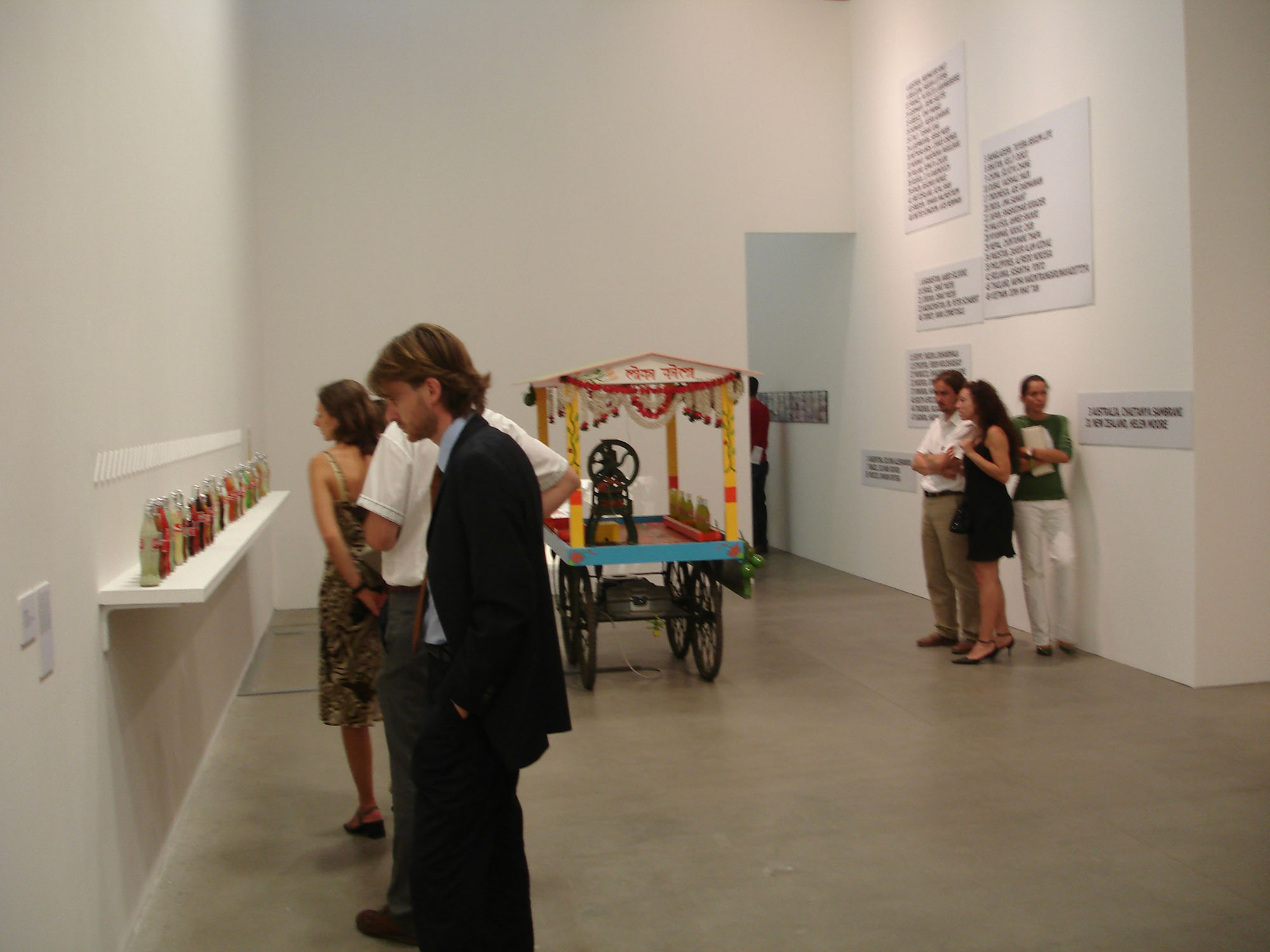
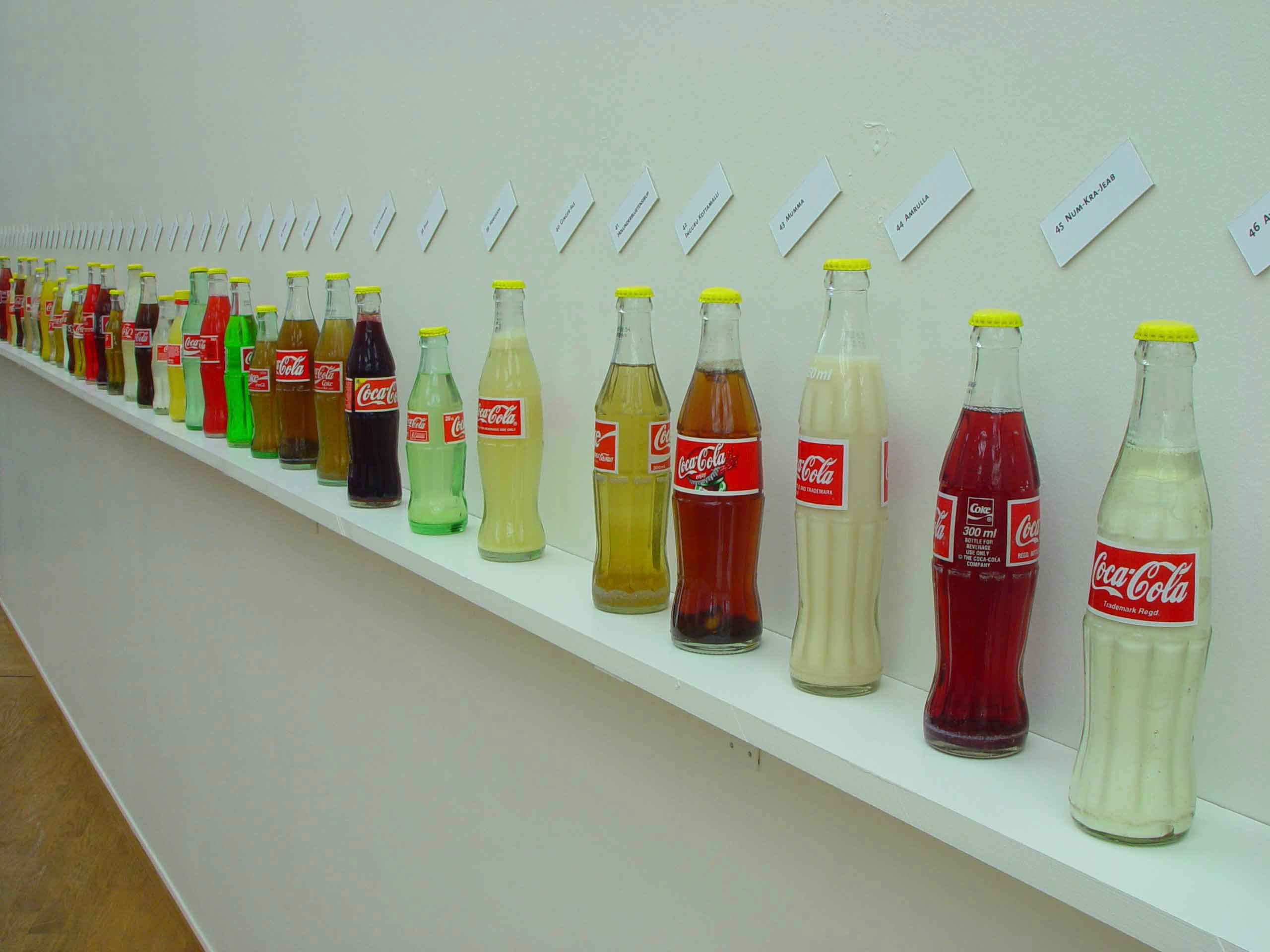
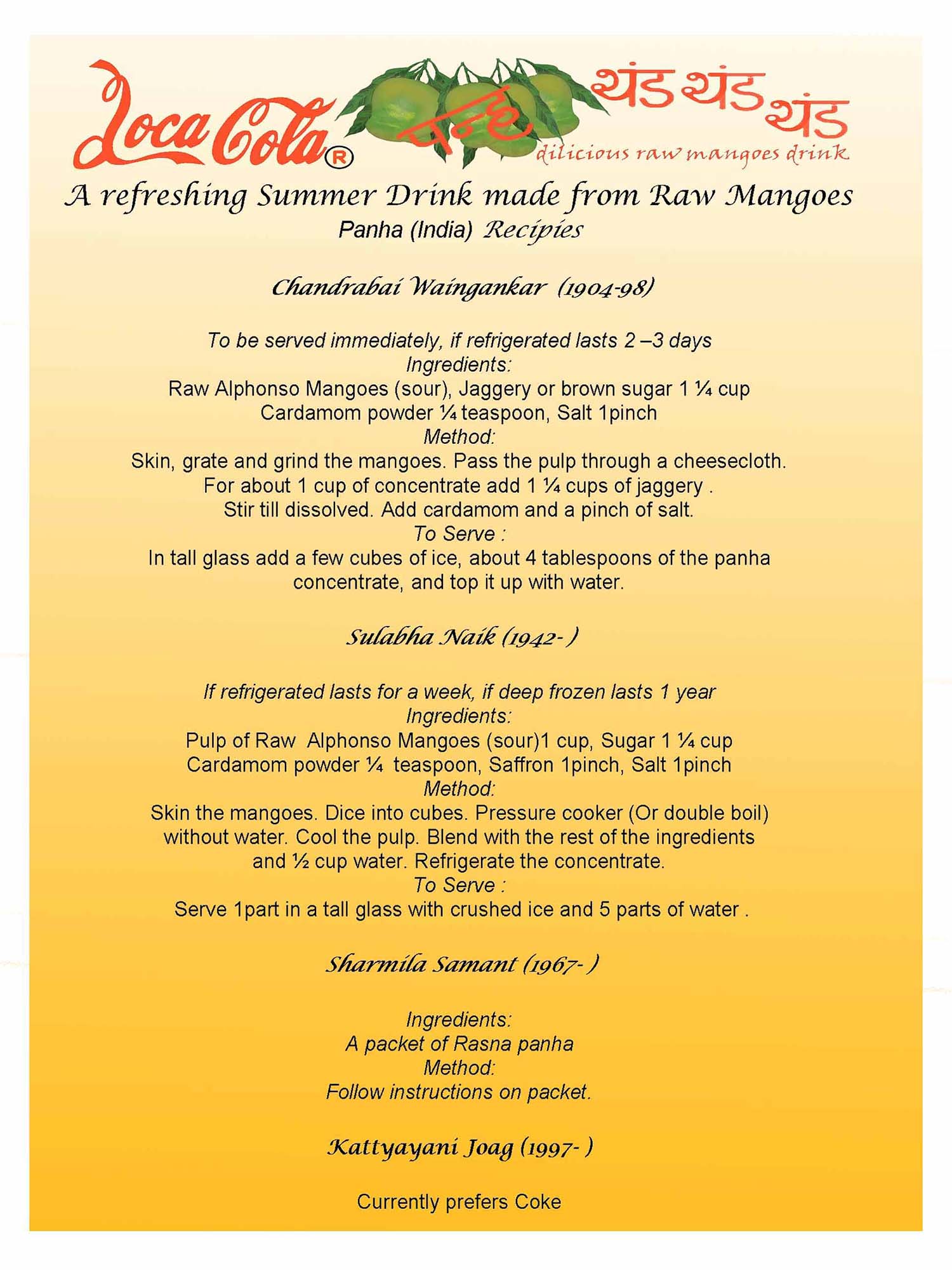
For this project, titled Loca-Cola, which began in 2000 and remains ongoing, the artist collected glass Coca-Cola bottles from various countries where the company has bottling units. Loca-Cola examines this dynamic by collecting glass Coca-Cola bottles from various countries and refilling them with local drinks using domestic methods. By juxtaposing the iconic Coke bottle with distinctly local flavours, the project explores the polemics of "local" and "global." Is the "local" inherently oppositional to the "global," or is it an intrinsic part of it? The realisation of Loca-Cola depends on a collaborative, network-driven process. Friends, acquaintances, and individuals from varied backgrounds contribute to acquiring the bottles and recipes, highlighting the importance of personal involvement, shared belief, and interdependence. This project seeks to illuminate the complexities of local-global interactions, the erasure of the local by global hegemonies, and the resilience of grassroots ingenuity in the face of systemic dominance.
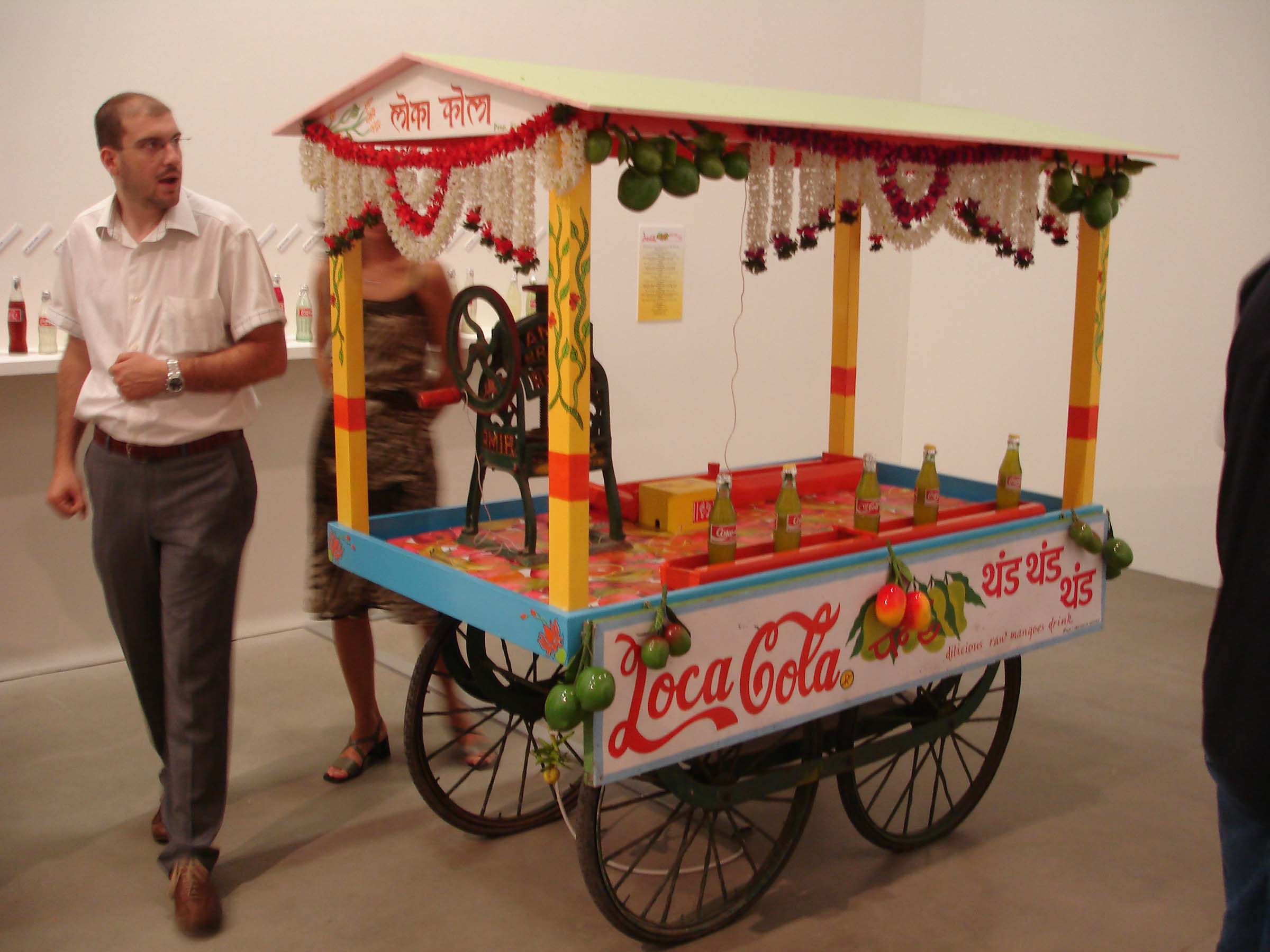
Centerpiece: A pushcart painted to advertise and vend "LocaCola" bottles, filled with Panha (a traditional Indian drink), occupies the center of the room. Beneath the cart, a projector casts transparencies onto the opposite wall, showing the process of making and filling the bottles with local drinks, alongside images of Mumbai street vendors selling homemade beverages or fruit juices. The cart also plays a 35-minute looping soundscape that captures the aural essence of Indian streets—markets, schools, gardens, beaches, fairs—connected by sounds of rickshaws, local trains, and buses. These sounds evoke the spaces where local leisure and homemade drinks thrive.
The event is free. No registration is needed.