Exhibition
16 November 2025–23 November 2025
We must therefore turn our attention skywards: Devadeep Gupta
Exhibition Presented by Prameya Art Foundation & Curated by Anushka Rajendran
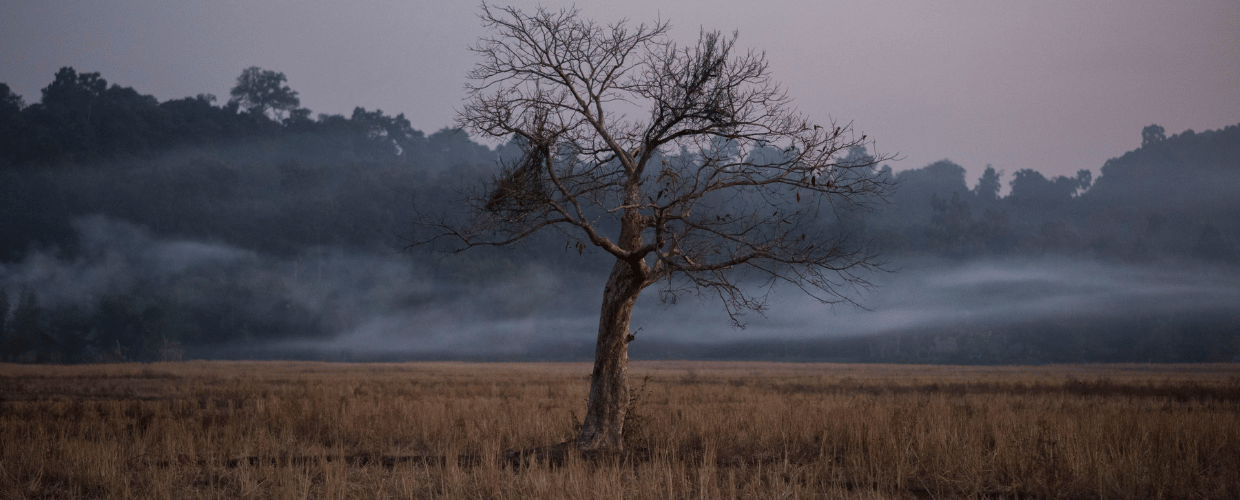
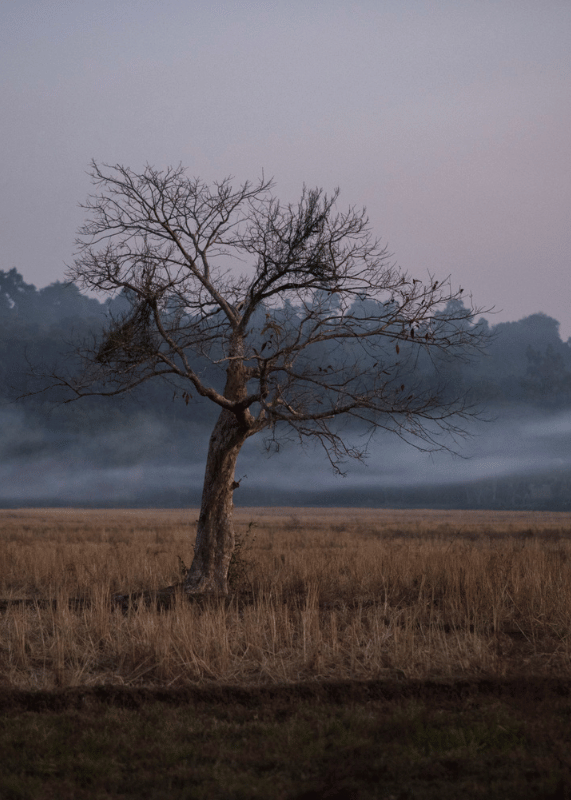
Warehouse 46
Devadeep Gupta’s practice investigates the overlapping histories of colonial extraction, ecological destruction, and indigenous resilience in Margherita, Assam. The British discovery of coal in the Dehing-Patkai rainforest belt in the mid-1800s, led to a rapid establishment of collieries, railways, and settlements that destroyed the forests, and displaced native communities. After independence, state neglect, and corruption enabled cartels to continue exploiting the land, further perpetuating colonial patterns of extraction, and violence.
The complicated entanglement between colonial extraction and apathy, and neo-colonial circuits that perpetuate ecological ruin of an erstwhile lush region, has entrenched itself into the quotidian experiences and rhythms of human and more than human existences that are the originary inhabitants of the land. Amidst unspeakable tolls on mortality and well-being, there are fleeting instances of reparative escape synthesised into the tangible affects of operative violence that offer themselves to us when we turn our attention skywards, to the congregating birds whose calls will no longer remain if historical oppression of the land and its inhabitants continues into futurity.
Curatorial Note
Nestled against the northwestern edge of the Dehing Patkai Rainforest, Soraipung village has long been a confluence of animals, nature and humans. In the village’s north, perched against the tree-line, lies a curious pond. On moonlit nights, it’s said that the rainforest’s beasts and birds convene by the pool, drawn to an adjoining brine-spring. Witnesses describe a striking sight—a transient pledge of peace amongst the beasts as they share the pond’s savoury water.
A decade ago, Bijoy, an indigenous inhabitant of the village picked up a habit of imitating migratory birds. Presently he identifies the calls of over 200 bird-species, and can communicate reciprocally with a dozen species. These days he is engaged in the transmission of his knowledge of migratory birds to his daughter.
Bijoy’s younger brother, Ajay, is part of a young rebellious squad who habitually rob the Company oil-wells scattered deep in the forest. Ajay, despite being completely aware of the consequences of his plunders, challenges the industrial-complex: “Why should I pay for oil taken from my land? Never.”
Meanwhile, a rogue elephant tramples 3 miners to death, who, the villagers speculate, resembled the poacher that killed his parents.The lone elephant in the jungle, unwilling to mingle with other herds – ‘Tempu’, named after a popular minivan, remains a mysterious figure, almost a legend within the village communities.
150 years ago, the British discovered coal amidst the Dehing-Patkai rainforest belt. They swiftly set up deep collieries, bridges and railway lines, razing the primeval foliage. When the colonies were abandoned, they left behind their mining infrastructure, in turn, incubating a powerful cartel that has thrived for 75 years, flourishing under the avarice of State apparatus. Currently, the cartel relentlessly razes the ancient wilds, re-enacting the British extractive enterprise.
The complex entanglement between colonial extraction and apathy and neo-colonial circuits that perpetuate ecological ruin of an erstwhile lush region, has entrenched itself into the quotidian experiences and rhythms of human and more than human existences that are the originary inhabitants of the land. Amidst unspeakable tolls on mortality and well-being, there are fleeting instances of reparative escape synthesised into the tangible affects of operative violence that offer themselves to us when we turn our attention skywards, to the congregating birds whose calls will only remain as inheritances from Bijoy if historical oppression of the land and its inhabitants continues into futurity.
Devadeep Gupta’s practice assembles anecdotal and rebellious ruptures in the everyday, circadian meta-cultural actions, and excavations from archives that are active sites which reiterate their agency in the contemporary. In this project, his process lends itself to portray symbiosis and dialoguing among communities, ecological actors, the petrochemical-industrial-capitalist complex, and transcendent co-existences.
Artist Bio
Devadeep Gupta (B.1989, Guwahati, Assam, India) examines the intricate relationships between human and non-human actors, framed within the dynamics of land and ecological crises. His work puts a particular focus on how perseverant ways of life offer vital insights into resilience and repair in response to environmental emergencies. Inspired by orality, vernacular traditions, and archival history, his works highlight the intersection of agrarian routines and industrial arbitration. Exploring colonial accountability, Devadeep’s interest lies in the present-day impact of extractive processes on eco-cultural habitats. He employs film, installation, sound and performative interventions as his artistic medium. He holds an MFA degree from Bauhaus University, Weimar. Currently, he lives and works in Assam.
Gupta’s exhibitions include prominent shows like the 2024 DYSTOPIA Sound Biennale in Berlin, the Critical Zones at Rencontres Internationales, and the Serendipity Arts Festival in Goa. Past exhibitions include Beyond Migration at the Goethe Institute in Kolkata and Unstable State of Things at the Simultan Festival in Timisoara, showcasing his work's international reach and thematic resonance.